



Kolkata: The light and brightness that Kolkatans are witnessing during Deepawali have turned dark for the family of Md. Shabbir, a store manager of Samsonite showroom, well known retail chain selling luggage and travel gear.
Thirty-four-year-old Shabbir, married to Simrana Fatima was employed with Samsonite India for 13 years and had won best employee award at All India level many times.
On Friday, Md Shabbir reached his workplace on time to open Samsonite’s store at Quest Mall. He had another staff to help in running the store. But the support staff left around 11:45 am to deliver an item to one of their clients. Soon after Shabbir began to feel uneasy, complained of chest pain and experienced a bout of vomiting. Seeing his condition, the housekeeping staff tried helping him by pouring water on Shabbir’s head. She made him sit on a chair. But Shabbir felt his condition worsening and requested the lady to get help and asked her to call his wife. Around 11:58 am, the housekeeping staff called the family about his condition. She also alerted the mall authorities. When the mall authorities arrived Shabbir requested them to take him to the hospital as it was a medical emergency.
However, when the family managed to reach the store in about 15-20 minutes, they saw people surrounding Shabbir and he was gasping for breath. No medical help was provided to him in the entire intervening period.
“We saw the housekeeping staff attending to my brother-in-law who was gasping for breath, while a number of men, some of whom were representatives of the mall, standing and watching him. Understanding the gravity of the situation, we started shouting for the ambulance, my sister called on 102 for an ambulance, but we could see that time was getting wasted and requested for a car/cab. Unfortunately by the time we managed to take Shabbir to Chittaranjan Hospital, he was declared brought dead,” shared Abdul Ali, brother-in-law of the deceased.
Shabbir was a healthy young man with no previous medical history of any kind of health issue.
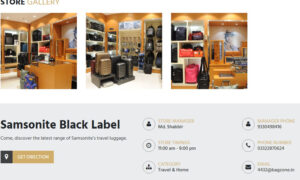
Aggrieved by the loss of a young son, the family members reached Quest Mall on Saturday, and first inquired about the CCTV footage of Samsonite store, but to their shock they were told that the store is running without having any CCTV cameras.
Later they approached the mall authority. Surprisingly, even before talking to the family Sanjeev Mehra, vice-president of Quest Mall, called Karaya police officials and then talked to the family members. He maintained that the matter would be investigated and they would take necessary action like having an ambulance stationed in the mall and instructing all store owners to have CCTV cameras, but he refused to give anything in writing.
When eNewsroom spoke to Sanjeev Mehra he said, “I will inquire within a week and have called the family members to meet me on Friday.”
“We are not demanding any compensation nor have we registered a police case against anyone. We only want to know what happened. How did a healthy man suddenly collapse and die? Why was he left unattended and not provided even basic first aid by anyone at the mall? How does a busy mall like this function without having the basic medical infrastructure in place? Why was the dying man treated like a spectacle for others to just watch him die there?” asks a grieving Najma Rahman, Shabbir’s sister.
“If the Mall authorities will not answer our genuine queries, then we will definitely escalate the matter. The basic premise is not just about the safety of the staff of the malls, but also how equipped are the malls to cater to such emergency situations of people who visit it for shopping,” said Rahman, who was present during the meeting with the vice-president.
Anandiya Bhattacharya, Samsonite’s Zonal Sales Manager, while offering condolences and stating that Md Shabbir was one of Samsonite’s best employees, had nothing much to say about the absence of CCTV. On being asked by eNewsroom he only said, “It has been planned, but we could not get them installed yet. I will inquire again, why it has been delayed.”
Clearly, the non-availability of ambulance and other emergency medical facilities for the staff and visitors , and operating stores without CCTV cameras to one of the most popular malls in the city need to address urgently, but are authorities serious?

