गिरिडीह: झारखंड की हेमंत सोरेन सरकार जिसने पिछले छह महीने में कई सारे महत्वपूर्ण फैसले लिए, ने आज एक और योजना- सावित्रीबाई फुले किशोरी समृद्धि की शुरुआत की जो पढ़ने वाली लड़कियों के लिए लाभकारी सिद्ध हो सकती है।
इसके तहत कक्षा 8वीं एवं 9वीं में ₹2,500, कक्षा 10वीं, 11वीं और 12वीं में ₹5-5 हजार एवं 18-19 वर्ष की आयु की किशोरी को एकमुश्त ₹20,000 की सहायता राशि दी जाएगी।
सरकार का मानना है कि करीब 9 लाख किशोरियों को इस योजना से लाभ होगा।
सावित्रीबाई, भारत की प्रथम महिला शिक्षिका, समाज सुधारिका एवं मराठी कवियत्री थीं। उन्होंने अपने पति ज्योतिराव फुले के साथ मिलकर स्त्री अधिकारों एवं शिक्षा के क्षेत्र में उल्लेखनीय कार्य किए। उन्हें आधुनिक मराठी काव्य का अग्रदूत माना जाता है। उन्होंने बालिकाओं के लिए एक विद्यालय की भी स्थापना की थी।
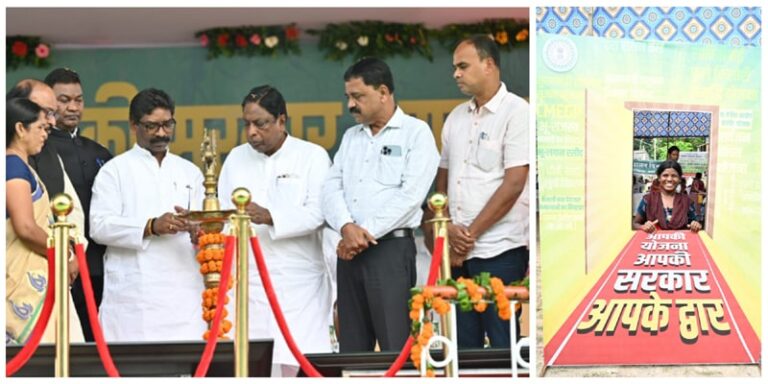
“कल अंतरराष्ट्रीय बालिका दिवस था। यह खुशी की बात है कि आज से राज्य की लाखों बेटियों को सावित्रीबाई फुले किशोरी समृद्धि योजना से जोड़ा जा रहा है। 8वीं कक्षा से 18-19 वर्ष आयु तक की बेटियों को कुल रु 40,000 की सहायता राशि प्रदान की जायेगी,” मुख्यमंत्री हेमंत सोरेन ने गिरिडीह में कहा।
हेमंत सोरेन आज गिरिडीह में सरकार आपके द्वार कार्यक्रम की शुरुआत के लिए आए थे।
“लोगों को हक-अधिकार देने तथा ग्रामीण व्यवस्था को सुदृढ़ करने हेतु आज से राज्यभर में आपकी योजना आपकी सरकार आपके द्वार कार्यक्रम शुरू हो रहा है। आप सभी से आग्रह है आपके क्षेत्र में लगने वाले शिविरों में पहुंचकर योजनाओं का लाभ लें तथा दूसरों को भी प्रेरित करें,” मुख्यमंत्री ने कहा।
हेमंत सोरेन ने आगे कहा, “‘आपकी योजना आपकी सरकार आपके द्वार’ कार्यक्रम के नाम से ही आप अंदाजा लगा सकते हैं कि सरकार का उद्देश्य और मंशा क्या है। योजनाओं की गठरी बांध- बांध कर पदाधिकारी आपके दरवाजे पर नजर आएंगे। बस आपको उस योजना को अपने घर ले जाना है, ताकि आप उसका लाभ ले सकें।”
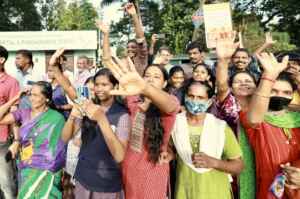
गिरिडीह में लोगों का अभिनंदन स्वीकार करते हेमंत सोरेन | साभार: झारखंड सीएमओ
और ये भी बताया कि वो खुद इस कार्यक्रम की समीक्षा करेंगे, “जो कार्य जिला और ब्लॉक कार्यालय में होता था। वह कार्य सरकार आपके द्वार के माध्यम से आपके गांव पंचायत में होगा। पदाधिकारियों को सख्त निर्देश के साथ आपके बीच में भेजा जा रहा है। कमियों को दूर किया जाएगा। किसी तरह की लापरवाही नहीं होगी। मैं इसकी समीक्षा करूंगा।”
बहुत जल्द झारखंड के हर ज़िले में एक मॉडल स्कूल के स्थापना पर काम हो रहा उसकी भी जानकारी दी।
मुख्यमंत्री ने माइका उद्योग की समस्याओं को भी सुना और कहा कि, “मंत्रिपरिषद से माइका उद्योग की समस्या के समाधान के लिए आगे बढ़ने का निर्णय लिया गया है। बहुत जल्द माइका उद्योग की व्यवसायिक व्यवस्था कैसे स्थापित हो। उसे सामने लाने जा रहें हैं।”
नई योजना, कार्यक्रम और अपने सरकार के काम गिनाने के साथ हेमंत सोरेन अपने भाषण में पूर्व मुख्यमंत्री और भाजपा के विधायक दल के नेता बाबूलाल मरांडी, जिंका गिरिडीह पैतृक ज़िला है पर तंज़ करना भी नहीं भूले।
“उन्होने कहा साथ चुनाव लड़ते हैं। मैं नाम नहीं लेना चाहूँगा, पर मैंने उनके (बाबूलाल) लिए हर जगह प्रचार किया पर वो नहीं जीत पाए, वो एमपी के चुनाव में भी हार गए और एमएलए में दो जगहों से नहीं जीत पाए, तो मैं क्या करूँ, अब मुझे चैलेंज करते हैं,” हेमंत सोरेन ने कहा।
केंद्र की भाजपा सरकार पे आरोप लगाया कि पेंशन के लिए पैसे झारखंड को नहीं दिये। “मैंने प्रधानमंत्री (नरेंद्र मोदी) को कहा झारखंड में बहुत गरीबी है, हमें पैसे दीजिये पेंशन के लिए, पर प्रधानमंत्री जी ने नहीं सुना। पर हमलोगों ने सर्वजन पेंशन की शुरुआत कर दी है, अब कोई एपीएल-बीपीएल (गरीबी रेखा से नीचे या ऊपर) की बात नहीं होगी, बल्कि सबको पेंशन मिलेगा।”
और ये भी बताया कि कार्यक्रम में भाजपा के सभी विधायक-सांसद को न्योता दिया गया था पर कोई नहीं आए।
कार्यक्रम में मुख्यमंत्री के साथ मंत्री आलमगीर आलम और सत्यानंद भोक्ता, झारखंड मुक्ति मोर्चा के गाण्डेय विधायक सरफराज अहमद, गिरिडीह के सुदिव्य सोनू और बगोदर के सीपीआईएमएल विधायक विनोद सिंह मौजूद थे।
पर हेमंत सोरेन का दौरा तब विवाद में आ गया, जब गिरिडीह के उपायुक्त कार्यालय से जारी नोटिफ़िकेशन में मुख्यमंत्री के प्रवास में संभावित नक्सली और दूसरे संगठन के ख़तरों के साथ मुस्लिम क्रियावादी संगठनों को भी खतरा बताया गया तो इस पर विवाद हो गया। कई लोग, जिनमें पार्टी के विधायक सरफराज अहमद और पूर्व काँग्रेस विधायक इरफान अंसारी ने भी आपत्ति जाता दी। बाद में इस नोटिफ़िकेशन को बदला गया।
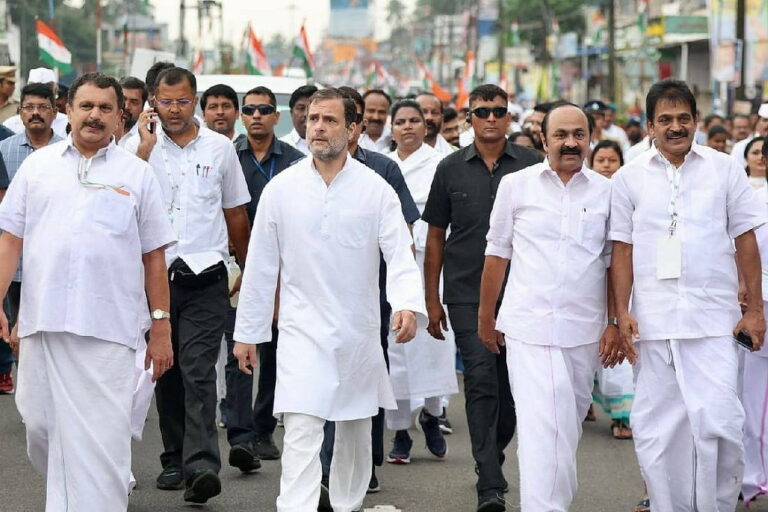
And watching the Bharat Jodo Yatra on the roads of Kerala, it was difficult not to notice the connection between Rahul Gandhi and the people who came out to see him.
It was not only political workers or party supporters. Elderly men and women stood by the roadside. College students gathered on terraces. Homemakers waited outside their houses. Small children ran along the road shouting, “Rahul Gandhi, Rahul Gandhi.”
There was something almost familiar about the way people greeted him. At several places, the interaction looked less like a conventional political roadshow and more like the arrival of someone people had known for a long time.
At one point, the roads were lined with people simply waiting for him to pass.
The music added another layer to the atmosphere. Songs about the Bharat Jodo Yatra played in Malayalam. For someone who did not understand the language, the two phrases that stood out were “Bharat Jodo Yatra” and “Rahul Gandhi”.
The songs were lively and energetic, and the crowd seemed to absorb that energy.
It was around 2 pm, with the Kerala heat and humidity at their worst, when thousands of people were still moving along the highway. The crowd had swelled to more than 20,000.
The sheer number of people walking in that heat was striking.
A Yatra That Begins Before Sunrise
The Bharat Jodo Yatra began its day at around 6 am.
There were different groups travelling with the Yatra. The Bharat Yatris were around 125 people selected from across the country to walk the entire distance from Kanyakumari to Kashmir.
Then there were the Pradesh Yatris, who joined the Yatra in their respective states and generally walked until the next state boundary. Congress leaders and workers from different states also joined for a day or two.
And then there were the locals.
They came in thousands.
The organisation required for moving such a large group every day was itself a story.
At designated camping sites, containers were arranged for the Bharat Yatris. Inside, the facilities were basic. There were two berths, roughly eight feet by four feet, a small washroom and very little space to move around.
After seeing the arrangements, the description of these as “five-star containers” sounded rather different from what was actually visible on the ground.
The Yatra covered roughly 25 kilometres a day. Once Rahul Gandhi and the yatris left the camp in the morning, the camp itself began to disappear.
Containers, fixtures and other equipment were loaded and transported to the next designated camping site.
By the time the Yatra reached the next halt in the evening, the camp was expected to be ready.
The Pradesh Yatris had separate arrangements in the vicinity. At the different halts, arrangements were made for large numbers of people.
The routine was demanding.
The Yatra started around 6 am. There was usually a short break around 11 am for tea and light refreshments. By then, the number of people walking with the Yatra could rise dramatically.
The march continued until around 2 pm, when the participants stopped for lunch and rest.
The Yatra resumed at about 4 pm and continued until the evening, usually reaching the day’s destination around 8 pm.
Schools, local grounds and dharamshalas were among the places used for breaks and halts.
People greet Rahul Gandhi and Bharat Jodo Yatri from a bus rooftop
The Pain Behind the March
The crowds were perhaps the most visible part of the Bharat Jodo Yatra. But the physical strain on the people walking every day was much less visible.
The women among the Bharat Yatris were dealing with some particularly painful consequences of the long-distance walking.
During breaks, when they removed their shoes, the injuries became visible. Some had large boils on the soles and upper parts of their feet.
The pain was visible on their faces.
But once the break was over, they put their shoes back on and returned to the road.
The selection process itself had been demanding. Around 24,000 people had applied for the opportunity to become Bharat Yatris, from which around 125 were selected.
Walking alongside Rahul Gandhi for months was not going to be a symbolic exercise. It meant spending day after day on the road, covering roughly 20 to 25 kilometres, often in difficult weather.
The real test was not simply whether someone could walk.
It was whether they could keep walking when the feet hurt, the body was tired and the next morning’s journey was waiting.
At the end of the day’s march, the Bharat Yatris would prepare for the following day.
There were patriotic songs and songs of courage at the camps. After spending hours on the road, it was striking to see the energy with which many of them spoke, sang and prepared themselves for another early start.
The next morning, they were back.
As Rahul Gandhi took his first steps on the road, the crowd around him became a curious mixture of movement and discipline. There was plenty of noise and excitement, but thousands of people somehow continued moving in the same direction.
Females greet Rahul Gandhi and Bharat Jodo Yatris at Kochi
The Man Who Was Already on the Road
Every morning, Digvijaya Singh, the convener of the Bharat Jodo Yatra, would start early with a group of Seva Dal workers.
He would often walk several hundred metres ahead of the main Yatra.
It was a small but revealing part of the operation. Before the main crowd arrived, someone had to be on the road, looking at what lay ahead.
The Yatra was not just about Rahul Gandhi walking from one place to another. Behind the scenes was a constantly moving operation involving accommodation, food, transport, security, route management and thousands of people joining at different points.
The scale of the exercise became apparent only when one looked beyond the main procession.
And yet, on the road, much of that organisation disappeared from view.
What people saw was Rahul Gandhi walking.
And thousands walking behind him.
A 1970s Photograph and a Family Connection
There was also a very different kind of moment during the Kerala leg.
At the base camp on the first night, Digvijaya Singh showed visitors the arrangements inside the containers.
Jairam Ramesh was nearby, talking to members of the team. Singh called him over and told him about Yassir and his father.
Ramesh then showed a photograph on his mobile phone.
It was an old wedding photograph from the 1970s, from the wedding album of the late R. Kumaramangalam, who was the first national president of the National Students’ Union of India.
The photograph had several young political figures in it.
Among them were a young Ashok Gehlot, who had been the first NSUI president of Rajasthan, and Hasnat Siddiqui, the first NSUI president of Madhya Pradesh.
For Siddiqui’s son, seeing that photograph was an unexpected moment.
It was not just the photograph itself. It was where the photograph appeared.
A picture from the 1970s, belonging to an old wedding album, had somehow travelled decades later to Kerala and ended up on Jairam Ramesh’s mobile phone during the Bharat Jodo Yatra.
Digvijaya Singh pointed out the coincidence. He had been talking to Ramesh about Siddiqui’s father shortly before Ramesh showed him the photograph.
And there, unexpectedly, was the younger Siddiqui’s father, standing alongside young political leaders who would go on to occupy important positions in Indian politics.
For a journey that was attracting tens of thousands of people every day, it was a remarkably small and personal moment.
The Bharat Jodo Yatra was undoubtedly a major political mobilisation. But walking alongside it in Kerala revealed another side of it.
People came to see Rahul Gandhi. Some came to walk with him. Children ran beside the procession. People stood on rooftops and by the roadside.
For many, it appeared to be less about a speech or a political meeting and more about getting close enough to see, greet or walk alongside the person at the centre of the Yatra.
And somewhere in the middle of that enormous moving crowd, a photograph from the 1970s brought one family history unexpectedly back into the present.
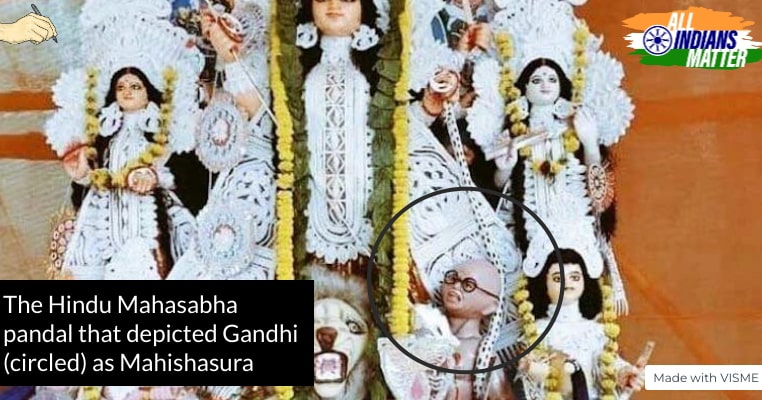
Recently, a Durga Puja pandal built by the Hindu Mahasabha in Kolkata portrayed Mahatma Gandhi as Mahishasura dying at the hands of Durga. As desired, it got a lot of notoriety and global publicity for the organisers. For them, notoriety is great and they got it in abundance. The Hindu Mahasabha chief asserted that for them Gandhi was a demon and they had done nothing wrong in depicting him as one. Later, there were many posts on social media justifying and praising the depiction. The Hindu Mahasabha achieved its objective spectacularly.
What they failed to realise was that, if Bapu were alive, he would have thanked and praised them. Bapu, the champion of the oppressed and downtrodden, who always identified with them and called himself the first Harijan, would have considered the insult an honour. He would have seen it as a reaction to him having done something right.
The entire episode got me thinking about right and wrong and good and evil and whether they’re sometimes a matter of perspective. Just as history is written by the victors, mythological portrayals of good and evil depend on who was victorious and who was vanquished. So, in recent years, there have been several attempts at retelling tales from the point of view of those branded as villains – for instance, Ravana.
Maybe we should look beyond the indoctrination that we have been subjected to since childhood to at least know the other point of view, even if we don’t accept it.
Durga Puja and Navratri are celebrated as a war between good and evil. We all grew up listening to the tales of gods and goddesses taking various forms to battle with and finally slay demons. Whether it was Ram versus Ravana or Durga battling Mahishasura, there were many such tales. For us, as children, they were fascinating stories of heroism and valour.
While these stories asserted the importance of identifying good and evil, they also established a hierarchy where good was personified by the divine and bad by the sub-human, evil demon. Take the story of Durga and Mahishasura. Durga or Shakti was created by a coalition of gods, a divine, holy conception whereas Mahishasura was the result of the union between a human and a buffalo. His conception itself suggested debauchery and an unnatural, immoral corruption. So, we are conditioned to believe that only evil can result from this and that slaying it is a justified and holy duty. Thus, we are indoctrinated.
But there is another side.
Some of the original residents of India, the Mul Nivasis, whom we call Adivasis, worshipped those whom we have branded as demons. In Jharkhand, Bihar and West Bengal, there lives a tribe that is even today known as Naamshudra and Asur. Most of these tribals use Asur as a part of their name or surname. They believe Mahishasura was their forefather, a great hero and a chieftain. Even today, they worship him. On Dussehra or Dashami, when we celebrate the slaying of Mahishasura, the Asur mourn his death. Incidentally, the city of Mysuru also derives its name from Mahishasura.
Today, the Asur are on the verge of extinction, their numbers depleting fast. They are forced to live on the fringes of society, neglected, oppressed and subjugated, suffering the fate of the vanquished.
Coming back to mythology, the demon is always portrayed as being initially very devout and virtuous. Before going rogue, he is shown to have been a great devotee and as having done intense penance for which he received superhuman powers as boons. This is done to emphasise the value of unquestioning devotion and being subservient to God. But then the boons corrupt the demon and turn him irreversibly evil, forcing the gods to destroy him. In my view, this too is a clever form of indoctrination and conditioning. The purpose is to instill in us a fear of the wrath of God, and this is true across religions – Hinduism, Islam, Christianity. Such tales serve to validate that fear.
When a religion becomes dominant, its hierarchies have to be enforced by demonising some people and mythology is used to institutionalise these social structures. So, we have been indoctrinated to not even consider the Shudra as human, which then makes every atrocity heaped on him acceptable. How many of us pause to consider the feelings and sensitivities of Adivasis, Bahujans and Dalits?
Asuras were the precursors of Shudras. They were condemned as forces of evil and their annihilation justified as a God-ordained duty. And so we have become desensitised to the injustice perpetuated on Shudras in the name of faith. This is the truth. Those who triumph are hailed as heroes and their victories eulogised. The vanquished are condemned, oppressed and relegated to oblivion.
Mythology has achieved this discrimination most successfully. The slaying of Mahishasura is just one story; the stories of Ravana, Bhasmasura and other Asuras all follow a similar trajectory, justifying the domination of the upper castes and the subjugation of those condemned to the lowest rungs of society.
Coming back to Bapu, he would have urged the authorities to not file cases against the Hindu Mahasabha. The bullets pumped into Bapu by Hindu Mahasabha member Nathuram Godse were described as a martyr’s medals by Bapu’s youngest son, Devdas. He knew that you can kill a man but not an ideology. Indeed, if anything, martyrdom made Bapu even more of an icon than he was in life.
Whether you see him as a demon or the force that battled demons like caste, sectarianism, subjugation and poverty depends on your perspective. But, as thinking, responsible citizens, we must also ask why we carry the perspective we do.
Kolkata: Three Indians fighting hatred in new India are the picks from the Peace Research Institute Oslo (PRIO) for the Nobel Peace Prize 2022.
Software-engineers-turned-fake-news-busters Pratik Sinha and Mohammed Zubair have been shortlisted along with social activist and former IAS Officer Harsh Mander, who chose to resign post 2002 Gujarat Riots and float his campaign Karwan-e-Mohabbat (Caravan of Love) at a time when mob lynching was at its peak in India.
While the fact-checkers have been relentlessly working to take on fake news and its repercussions in India, the world’s largest democracy, Mander was seen traveling states after states with his Karwan-e-Mohabbat to meet mob lynching victim families apart from other work he and his NGO is doing. His NGo has been raided by central government agencies too.
Zubair along with Pratik and his mother Nirjhari Sinha co-founded a fact-checking website Alt News in 2017. The independent media organization, also a member of Digipub (an association of digital-only media outlets) operates from both Ahmedabad and Kolkata.
Ruling Bharatiya Janata Party (BJP) or its party members have often been found guilty of spreading fake news through its IT Cell. When they founded Alt News, the fact-checkers not just had the challenge of busting fake news but also of having to face several court cases in their bid to expose the news and tweets based on fake images and videos.
Zubair was recently arrested for highlighting fake news and use of Twitter to propagate hatred in the Indian heartland. He was arrested for tweeting a meme, which was four-years-old.
When contacted, a humble Pratik Sinha told eNewsroom, “We are among the favourites only. But it is good that the world is recognizing the importance of fact-checking.”
So far only two Indians- Mother Teresa and Kailash Satyarthi bagged the Nobel Peace Prize.
The winner for the Nobel Peace Prize 2022 will be announced at 11 am local time on Friday in Oslo, Norway.
The Peace Prize is one of the six awards established by Swedish chemist and inventor of dynamite Alfred Nobel in 1895. The prize is known as the most prestigious in the world and conferred to those ‘who are considered the greatest benefit to humankind.
Notably, The Peace Research Institute Oslo, is neither a member of the Nobel Peace Prize Committee nor is associated with the Nobel Foundation. It shortlists people for the Peace Prize on annual basis.
According to the official site of Nobel Prize, a nomination for the Nobel Peace Prize can be submitted by any person who meets the nomination criteria. A letter of invitation is not required to submit the nominations. The three Indians have been nominated by PRIO.However, the responsibility for the selection of the winners rests with the five-person Norwegian Nobel Committee, which is also appointed by Norway’s parliament.
Kolkata: The Bharatiya Janata Party seems to be distancing itself from the man who is in the middle of a raging controversy in Kolkata and Bengal as Durga Puja enters the auspicious Navami Tomorrow.
However, it is not really helping the rudderless party, already quite discredited in West Bengal, with multiple factions and leaders pulling this way and that.
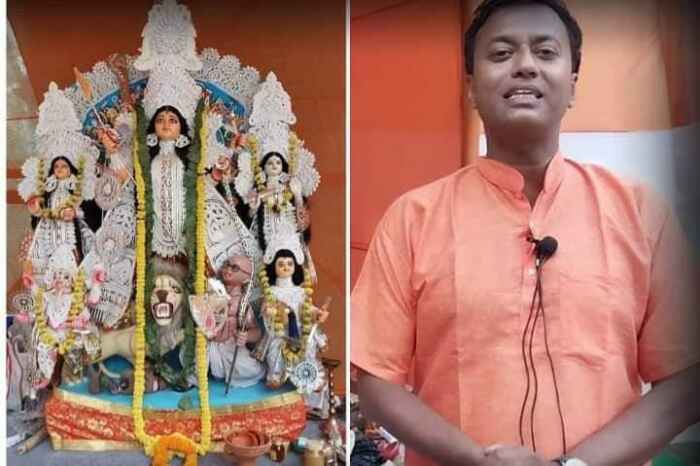
Chandrachur Goswami, president of Akhil Bhartiya Hindu Mahasabha, who is yet to be arrested by the Kolkata Police for his perverse depiction of Mahatma Gandhi at a Puja Pandal in Ruby Park, Kolkata had once contested the election against Chief Minister Mamata Banerjee.
Goswami has a post-graduate degree in environmental science and also has a Masters Degree in Music, according to sources. Goswami has work experience as a ‘lecturer’ in some universities and handles multiple responsibilities of the Hindu Mahasabha. He is also editor-in-chief of ‘Swastika Digital TV’, which is allegedly backed by the BJP. The 33-year-old is a registered player of the Bengal Badminton Association.
He stood as an independent candidate against Mamata Banerjee in the Bhavanipur by-election in 2021. He got just about 81 votes.
This time Goswami wilfully got involved in the sordid controversy over the idol of Asura in the Durga Puja. The Hindu Mahasabha’s Durga Puja in Ruby Park has depicted Mahatma Gandhi as an asura, wearing spectacles; the Mahatma is being killed by the goddess in the depiction. Th entire episode has shocked the neighbourhood and visitors to the pandal. Even in social media, there has been widespread condemnations.
Watch the video of Chandrachur Goswami in which he mentions his roles in the BJP
Significantly, the BJP in Bengal has distanced itself from the Puja, even while Prime Minister Narendra Modi has paid homage to the Mahatma on his birth anniversary on October 2 at Rajghat in Delhi.
The Hindu Mahasabha president in an interview during the Bhavanipore by-election claimed that Amit Shah had positioned him at the BJP’s Vidwajjan (intellectual) Committee. He also mentioned that he campaigned for BJP candidates during assembly polls in 2021.
So far, two complaints— one from the Congress and another by CPI(ML) have been filed with the police against Goswami and his organization.
“Congress cadres have also gheroed the Kasba police station demanding action against Hindu Mahasabha members,” informed Koustav Bagchi, who had lodged a zero FIR on October 2 itself.
Ironically, the police has only ordered the organizers to change the looks of the Gandhi/asura idol by removing his spectacles — apparently, a moustache and change of looks have now happened since the controversy burst out in the open.
When contacted, an official at the Kasba police station in South Calcutta, told eNewsroom, “An FIR has been registered on the issue.”
Kolkata: Mohandas Karamchand Gandhi, affectionately called Mahatma and Father of Nation, is globally acknowledged for fighting against the British regime and his non-violence theory has been depicted as an Asura in Kolkata’s Ruby Park Puja Pandal. The pandal has been organized by Hindu Mahasabha.
Mahatma Gandhi was shot down by a member of Hindu Mahasabha, Nathuram Godse on January 30, 1948, five months after India got independence.
This year Durga Puja’s Maha Saptami coincided with Gandhi Jayanti. It was also the first puja celebration after it getting listed in UNESCO’s Representative List of Intangible Cultural Heritage of Humanity. However, the heritage tag could not save it from being used as a political tool.
Since Sunday, on Gandhi Jayanti, when the matter got highlighted, Hindu Mahasabha members shamelessly defended their act, “Mahatma Gandhi did not do anything for the country and India was partitioned because of him,” said an organizer.
The organizers also mentioned that they used the opportunity to have a politicised Devi set in the Puja Pandal as it coincided with Gandhi Jayanti.
“As this year it was on the same date, so we plan to depict Goddess Durga killing Mahatma Gandhi,” he added.
Today, Atanu Chakravarty, secretary, Kolkata district committee, CPIML lodged an FIR in this regard and demanded exemplary punishment in the case.
TMC Rajya Sabha member Jawhar Sircar tweeted on the issue stating that it shows the criminal mentality of Hindu Mahasabha.
Since the matter came to light, it shocked everyone and people started demanding action against the Puja organizers. But to their surprise, Kolkata police did not take any exemplary action and the only action police initiated was that they told organizers to put a moustache and hair on the idol looking like Mahatma Gandhi. Which organizers followed, reported The Wire.
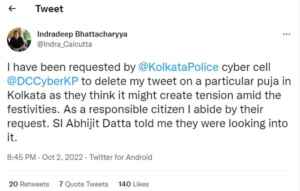
Surprisingly, police also ordered a journalist to delete his tweet which highlighted the issue.
But this is not an isolated case of the saffron camp using Puja to spread its ideology or justify violence. Bharatiya Janata Party too has targeted its opponent using puja. This year BJP kept the theme– atrocities against women and post-poll violence in Bengal.
In Kankurgachi ‘Shri Shri Saraswati and Kalimata Parshad’ puja committee had kept their theme as ‘Meyeder Kanna, Roktakto Bangla’ (Cry of Mothers, bloodshed in Bengal).
The pandal is made with black cloth as both the pandal and the idol are depicting the post-poll violence in the state. The idol of the Goddess is kept in dark and sounds of cries are being played.
Though it is being done by the puja committee behind the committee is BJP.
BJP’s own Durga Puja at EZCC’s theme is ‘atrocities against women’.
According to BJP state president Sukanta Majumdar, “Incidents of atrocities against women are on the rise in Bengal, hence the theme. We have decided to bring a woman priest to perform the rituals.”
Saffron camp’s touch is also there in BJP leader Sajal Ghosh’s Santosh Mitra Square. The theme in this puja is ‘Azaadi ka Amrit Mahotsav’.
India Gate, Red Fort and Parliament’s images will be seen in light and sound.
In Saltlake’s BJ block another BJP leader Umashankar Ghosh Dastidar made his Durga Puja theme as Ayodhya’s Ram Mandir.
Slamming the saffron camp, TMC spokesperson and state general secretary Kunal Ghosh said that no BJP leaders are involved with any puja.
“This makes it clear that BJP doesn’t have any public connection. None of them are connected with any puja. They have hired a government hall to perform puja. Even if BJP plays politics over Durga Puja, the common people of the state won’t accept it,” said Ghosh.
মহাত্মা গান্ধী সত্য ও অহিংসার নীতির একজন নিবেদিতপ্রাণ অনুসারী হিসেবে, আমি প্রায়ই ভাবি, মহাত্মা আজ বেঁচে থাকলে আমাদের হিন্দি ছবির গান সম্পর্কে কী মতামত দিতেন? যদিও তিনি অবশ্যই আধুনিক চলচ্চিত্রের ‘অপব্যবহারকারী মিউজিক’ এবং কটূক্তির সমালোচনা করতেন, বিশেষ করে যেহেতু মহাত্মা চলচ্চিত্র শিল্পকে 1930-এর দশকে “এটি যে মন্দ কাজ করেছে এবং করছে” হিসাবে প্রকাশ করেছিলেন, এটি খুব সম্ভবত যে জ্ঞানী ব্যক্তি সুবর্ণ যুগের অনেক চলচ্চিত্রের গানের প্রশংসা করতেন যা শুধু মানবতাবাদকে অনুপ্রাণিত করে না বরং ভারতের ধর্মনিরপেক্ষ এবং বহুত্ববাদী ফ্যাব্রিককেও শক্তিশালী করে।
আমি সবসময় মনে করি যে রফি-সাহির-এন দত্ত ক্লাসিক- তু হিন্দু বনেগা না মুসলিম বনেগা (ধুল কা ফুল) সমস্ত একাডেমিক প্রতিষ্ঠানের জন্য সর্বজনীন প্রার্থনা হওয়ার যোগ্য। এটা আমার ন্যায্য অনুমান যে গানটি মহাত্মার মানবতাবাদের আদর্শকে সমর্থন করে বলে এটি তার প্রতি অনুগ্রহ খুঁজে পেয়েছে। দেশভাগের গণহত্যার দ্বারা গভীরভাবে ব্যথিত একজন মানুষ হিসাবে, উপরের গানের প্রতিটি লাইনের পাশাপাশি ইনসান বানো করলো ভালই কা কোন কাজ (বৈজু বাওরা) ভালবাসা, শান্তি এবং সাম্যের পবিত্র বন্ধনে মানুষকে একত্রিত করার জন্য তাঁর প্রার্থনার সাথে অনুরণিত হবে। এছাড়াও, যেহেতু মহাত্মা একজন কঠিন টাস্কমাস্টার ছিলেন, তাই ইনসাফ কি দাগর পে বচ্চন দেখাও চল কে (গঙ্গা যমুনা) এবং হাম লায়ে হ্যায় তুফান সে কাশতি নিকাল কে (জাগৃতি) দ্বারা প্রতিধ্বনিত অনুভূতিগুলি তার হৃদয়ের কাছাকাছি ছিল বিশেষ করে যেহেতু তিনি মানুষকে চেয়েছিলেন জাতির প্রতি তাদের কর্তব্য ও দায়িত্ব সম্পর্কে সচেতন হতে হবে।
মহাত্মার হৃদয় ভালবাসায় পূর্ণ ছিল এবং তিনি সকলের সেবা করতে ইচ্ছুক ছিলেন। জাতপাত ও সাম্প্রদায়িক বিদ্বেষের দুষ্ট রাজনীতির অবসান ঘটাতে আজীবন ব্যয় করে, এটা স্পষ্ট যে লতা-রফির হৃদয়বিদারক কেয়া ধরতি অর কেয়া আকাশ সবকো পেয়ার কি পিয়াস এবং সেইসাথে রফি সাহেবের পেয়ার কি রাহ দেখা দুনিয়া কো রোকে জো-এর চলমান আবেদন। নফরাত কি আঁধি (লাম্বে হাত) তার হৃদয়ে অনুরাগ খুঁজে পেতেন। আমি নিশ্চিত যে তার দৃঢ় প্রত্যয় যে “চোখের বদলে চোখ, শুধুমাত্র সমগ্র বিশ্বকে অন্ধ করে দেয়” এবং “আপনি অবশ্যই সেই পরিবর্তন হতে হবে যা আপনি পৃথিবীতে দেখতে চান” তাকে প্রার্থনা-গানের সাথে বন্ধনে নিয়ে যাবে। এ মালিক তেরে বন্দে হাম (দো আঁখিন বারাহ হাত) এবং তু পেয়ার কা সাগর হ্যায় (সীমা) যা সকলের জন্য জ্ঞান এবং আশীর্বাদ চেয়েছিল!
অনেকেই জানেন না যে চার্লি চ্যাপলিনের আইকনিক চলচ্চিত্র “মডার্ন টাইমস” এর পিছনে মহাত্মা গান্ধী ছিলেন অনুপ্রেরণা এবং তিনি প্রদীপের তিরস্কার, দেখ তেরে সংসার কি হালত কেয়া হো গেয়ে ভগবান (নাস্তিক) কে উপেক্ষা করতেন না যা শোষণের জটিল রূপগুলিকে আবদ্ধ করে। হতদরিদ্রদের মর্যাদা ও কল্যাণের জন্য কাজ করে, মহাত্মা হয়তো রাজনীতিবিদ-আমলা-ব্যবসায়ী জোটের কাছ থেকে আরও সংবেদনশীলতা চেয়েছিলেন যেহেতু দিওয়ানা আদমি কো বনতি হ্যায় রোতিয়ান (কালি টপি লাল রুমাল) এবং গৃহহীনদের আন্তরিক আবেদনের সাথেও চিহ্নিত করতেন। আমাদের মাধ্যমে তৈরি আমরা সাহারার (সীমা) সমর্থন ছাড়াই।
আফসোস, আধুনিক বিশ্বে মহাত্মা গান্ধী এর মতো একজন মানুষ নেই যাকে এর ঘুম এবং আত্ম-ধ্বংস থেকে ঝেড়ে ফেলার জন্য। আজ যখন নেশাগ্রস্ত রাজনৈতিক শাসকরা কৃষক ও শ্রমিক শ্রেণীর মৃত্যু ও দুর্দশার প্রতি অন্ধ, তখন মহাত্মা হয়তো হ্যায় বাহার-এ-বাগ দুনিয়া চাঁদ রোজ, চাঁদ রোজ (বুম্বাই কা) এর মতো উপদেশ দিয়ে জনসাধারণকে ঝাঁকুনি দিতে পারতেন। গায়কদল)। এটা অনুমান করা যুক্তিসঙ্গত যে বাপু এবং তার নিষ্ঠুর কিন্তু ‘বিশাল’ অনুসারী লাল বাহাদুর শাস্ত্রী, যার সাথে তিনি তার জন্মদিন শেয়ার করেন, মেরে দেশ কি ধরতি সোনা উগলে (উপকার) এর ফাঁকা স্লোগান দিয়ে কখনই চিহ্নিত করতেন না এবং সবকিছু সত্ত্বেও জাফরান রাজনীতিবিদদের জিঙ্গোবাদ এবং বুক ধড়ফড় করা, মহাত্মা রফির জিনহেন নাজ হ্যায় হিন্দ পার ওহ কাহান হ্যায় (প্যাসা) দিয়ে দরিদ্রদের দুর্দশা দেখে চোখের জল ফেলতেন। দেশে ধর্ষণ মামলার বিপজ্জনক বৃদ্ধি এবং নারী জনগণের করুণ অবস্থা মহাত্মার চোখকে আর্দ্র করে তুলত এবং তিনি বুঝতে পারতেন সাহিরের কামড়ানো ব্যঙ্গের মাধ্যমে প্রকাশ করা তাদের বেদনা: আওরাত নে জনম দিয়া মর্দন কো, মর্দন নে উসি বাজার দিয়া (সাধনা)।
এটা একটা দুর্ভাগ্য যে, স্বাধীনতার ভোরে মহাত্মাকে সাম্প্রদায়িক শক্তির হাতে হত্যা করা হয়েছিল এবং আমরা টুতে হুয়ে খোয়াব নে (মধুমতি যেহেতু মহাত্মা গান্ধী র ভারতের স্বপ্ন ভঙ্গুর হয়ে আছে। বাপু যদি বেঁচে থাকতেন, তাহলে আমার কাছে কোনো কিছু ছিল না। সন্দেহ ছিল যে তিনি সমস্ত অশুভ শক্তির বিরুদ্ধে অক্লান্ত পরিশ্রম করতেন এবং বাতা মুঝে ও জাহান কে মালিক, কিয়ুন আদমি কো রুলা রাহা হ্যায় (এক শোলা) দিয়ে সর্বশক্তিমানের কাছে ব্যাখ্যা চেয়েছিলেন। মুক্তি পেলেও তিনি বেঁচে থাকলে মিতব্যয়ী মহাত্মাকে অমর রফি-সাহির-বর্মন ক্লাসিক ইয়ে দুনিয়া আগর মিল ভি জায়ে তো কেয়া হ্যায় দিয়ে চিহ্নিত করতেন। সম্ভবত পণ্ডিত নেহেরু ছাড়া অন্য কারও চেয়ে বাপু বুঝতেন যে ‘আচ্ছে দিন। ‘(ভালো দিন) জনসাধারণের সাথে বিশ্বাসঘাতকতা করার মতো শূন্য স্লোগান ছিল ওহ সুবাহ কাভি তো আয়েগি’র তীব্র আকাঙ্ক্ষার মতো।
As a devoted follower of Mahatma Gandhi’s principles of truth and non-violence, I often wonder what the Mahatma would have opined about our Hindi film songs if he had been alive today? While he would have surely been critical of the ‘abusive muse’ and cacophony of modern films especially since the Mahatma had expressed film art as “the evil that it has done and is doing” way back in the 1930s, it is highly likely that the wise man would have applauded many film songs of the Golden Era that not just inspire humanism but also strengthen India’s secular and pluralistic fabric.
I’ve always held that the Rafi–Sahir-N Dutta classic- Tu Hindu Banega Na Musalman Banega (Dhool Ka Phool) deserves to be a universal prayer for all academic institutions. It’s my fair guess that it would have found favour with him since the song advocates the Mahatma’s ideals of humanism. As a man deeply distressed by the holocaust of partition, each line of the above song as well as Insaan Bano Karlo Bhalai Ka Koi Kaam (Baiju Bawra) would have resonated with his prayers to unite people in sacred ties of love, peace and equality. Also, since the Mahatma was a tough taskmaster, the sentiments echoed by Insaaf Ki Dagar Pe Bachchon Dikhao Chal Ke (Ganga Jamuna) and Hum Laaye Hain Toofan Se Kashti Nikal Ke (Jagriti) would have been close to his heart especially since he wanted people to be conscientious of their duties and responsibilities towards the nation.
The Mahatma’s heart was full of love and he was willing to serve everyone. Spending a lifetime in ending vicious politics of caste and communal hatred, it is obvious that the heart-rending Kya Dharti Aur Kya Aakash Sabko Pyar Ki Pyaas (Pyaar Ki Pyaas) by Lata-Rafi as well as Rafi Sahab’s moving appeal for Pyaar Ki Raah Dikha Duniya Ko Roke Jo Nafrat Ki Aandhi (Lambe Haath) would have found affinity within his heart. I am convinced that his conviction that “an eye for an eye, only ends up making the whole world blind” and that “you must be the change you wish to see in the world” would have led him to bond with prayer-songs like Ae Malik Tere Bande Hum (Do Aankhein Barah Haath) and Tu Pyar Ka Sagar Hai (Seema) that sought enlightenment and blessings for everyone!
Not many know that Mahatma Gandhi was the inspiration behind Charlie Chaplin’s iconic film “Modern Times” and he would not have overlooked Pradeep’s rebuke, Dekh Tere Sansaar Ki Haalat Kya Ho Gayee Bhagwan (Nastik) that encapsulates convoluted forms of exploitation. Working for the dignity and welfare of the downtrodden, the Mahatma might have desired more sensitivity from the politician-bureaucrat-businessmen nexus since Deewana Aadmi Ko Banati Hain Rotiyan (Kali Topi Lal Rumaal) and would have also identified with the fervent appeal of the homeless made through Hamein Bhi Dedo Sahara Ke Besahare Hain Hum (Seema).
Alas, the modern world does not have a man of Mahatma Gandhi’s stature to shake it out of its slumber and self-destruction. Today, when the intoxicated political rulers are blind to the death and plight of the farmers and labour classes, perhaps the Mahatma could have jolted the masses with a piece of advice like Hai Bahar-e-Baag Duniya Chand Roz, Chand Roz (Bumbayi Ka Chor). It is reasonable to assume that Bapu as well as his puny but ‘gigantic’ follower Lal Bahadur Shastri, with whom he shares his birthday, would never have identified with the empty slogan shouting of Mere Desh Ki Dharti Sona Ugle (Upkaar) and despite all the jingoism and chest-thumping by saffron politicians, the Mahatma would have shed tears at the plight of the impoverished with Rafi’s Jinhen Naaz Hai Hind Par Woh Kahan Hain (Pyaasa). The dangerous rise in rape cases in the country and the pitiable condition of women folk would have moistened Mahatma’s eyes and he would have understood their pain expressed through Sahir’s biting sarcasm: Aurat Ne Janam Diya Mardon Ko, Mardon Ne Usey Bazaar Diya (Sadhana).
It is a misfortune that the Mahatma was killed by communal forces at the dawn of independence and we are constrained to dab our eyes with Toote Hue Khwabon Ne (Madhumati since the dream of Mahatma’s India lies in shambles. If Bapu was alive, I have no doubt that he would have tirelessly worked against all evil forces and sought an explanation from the Almighty with Bataa Mujhe O Jahan Ke Malik, Kyun Aadmi Ko Rula Raha Hai (Ek Shola). The Mahatma died in distress because of India’s partition and communal furies it unleashed but had he been alive, the frugal Mahatma would have identified with the immortal Rafi-Sahir-Barman classic Ye Duniya Agar Mil Bhi Jaye To Kya Hai. Probably, more than anyone else except Pandit Nehru, Bapu would have understood that ‘achche din’ (good days) was as empty a slogan to betray the masses as the fervent wish of Woh Subah Kabhi To Aayegi.
Berasiya (Bhopal): It seems that gradually, Madhya Pradesh is coming into the grip of fodder shortage. Fodder scarcity has led its prices to rise many folds and many farmers are finding it difficult to take care of cattle. As a result, milk – considered to be a good source of protein is getting increased and in the long run, could affect the health of hundreds and hundreds of children.
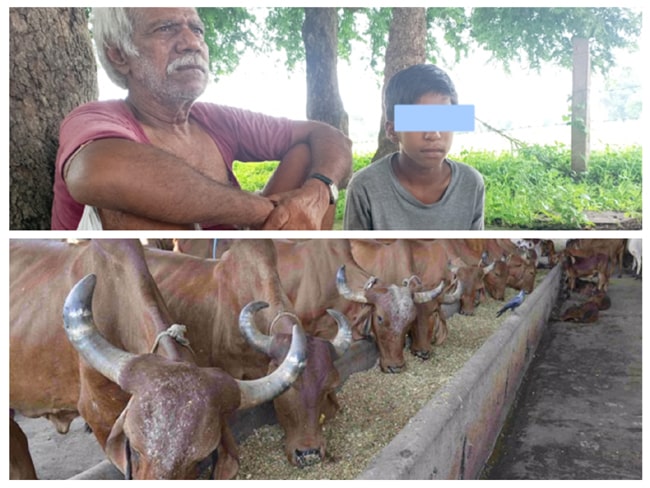
Consider this. Since the evening of August 2, 10-year-old Harsh Singh [name changed], resident of village Mankhyaiee in Berasia tehsil, district Bhopal is unable to get milk following the death of a calf.
“A glass of milk is my everyday routine before going to CM Rise School where I am studying in Class VI. However, our cow stopped giving milk immediately after the calf died, ” Harsh told me, sitting next to his grandfather on the compound of a temple located on the outskirts of the village on August 9.
Harsh’s grandfather, Khuman Singh feels that milk in the local market is available but the price is too high for him. His two sons are the earning members of the joint family.
“Here the cost of milk is Rs 40 per litre. In the last year, the price of milk has shot up like the price of diesel and petrol,” Khuman Singh said but maintained silence about the possible reason behind the calf’s death.
With his only cow unable to produce milk, Khuman is finding it difficult to buy another cow.
“Buying cattle is very lucrative,” he said by adding “moreover, the price of dry fodder has risen many folds in the last few years. Also, charagah is a designated land for use by cattle and not agriculture because of the fine grasses] or land of commons where natural grasslands are part of the landscape is no longer available”.
Such charagahs are mainly used for agriculture purposes, he added.
Kishori Lal Ahirwar, Sarpanch of village Mankhyaiee, ignored to reply on the status of Charagahs of his village but feels that changes in farming methods and climate-induced changes could be the reason behind the disappearance and not so-proper growth of natural grasslands in his village.
Kishori Lal, the Sarpanch | Credit: Anup Dutta
“All such reasons could be behind natural grasslands and dry fodder shortage,” Kishori Lal Ahirwar while accepting the fodder deficit in his village and expressing his inability to overcome the situation.
Both dry fodder and green fodder are equally important for the animals.
This year, in the month of January-February, several districts of Madhya Pradesh reported deaths of cows in gaushalas. While these were blamed on corruption in the shelters, misuse of government funds and animals kept in unhygienic conditions, the lack of accessible cattle feed cannot be ignored as a major cause.
Taking a genuine step, in March this year, the Department of Animal Husbandry and Dairying in Madhya Pradesh sent a letter to the district collectors, asking them to ban the export and transport of straw and related materials. This was followed by the collectors by banning the movement until June 30.
Last year, the Indian Grassland and Fodder Research Institute’s report completely touched on a different aspect. In its report, the Indian Grassland and Fodder Research Institute estimates that by 2030, there could be a drop of 65.45 per cent in green fodder and 25 per cent in dry fodder, if stringent measures are not taken right away.
The idea of the report titled ‘Revisiting National Forage Demand and Availability Scenario’, released late last year by the Indian Grassland and Fodder Research Institute points toward a shortfall of up to 29 per cent in the availability of feed, including fodder.
There is a deficit of 23.4 per cent in the availability of dry fodder, 11.24 per cent in that of green fodder, and 28.9 per cent for concentrates, says the report.
All this means that for every 100 kg required, India is short of 23.4 kg of dry fodder, 11.24 kg of green fodder, and 28.9 kg of concentrates.
Giving a graphical account, Deo Narayan Singh who currently works at the Department of Agronomy, Banaras Hindu University in his review paper titled A review of India’s fodder production status and opportunities gives a graphical account towards a new phenomenon.
Sketching an in-depth analysis of the challenges, opportunities, and status of fodder production in India, the research paper says India caters to approximately 20% of the world’s livestock population and about 17.5% of the human population on just 2.3% of the world’s land area. The human population is increasing at a pace of 1.6% per annum, while the livestock population is increasing at a rate of 0.66% per year. These increasing human and animal populations are fighting tooth and nail for land resources for food and fodder production, respectively. As a result, cultivated fodders occupy only 4% of the entire cultivable land in the country. Presently, the country faces a net shortfall of 35.6% green fodder, 10.5% dry crop leftovers, and 44% concentrated feed ingredients, maintains the research paper.
The option for increasing the land area under fodder cultivation is very limited, says the paper.
Hence, it is a big challenge in front of us to utilize the available meagre land wisely with its fullest potential to produce the fodders for the animals. This could be achieved by adopting suitable cropping systems, incorporation of fodder crops in food and other cash crop-based cropping systems on a rotational basis, production of fodder on degraded lands by adopting fodder-based agroforestry systems and exploring other options of green fodder like Azolla, says the research paper of Deo Narayan Singh.
The cropping system with forage crops provides a potential alternative to overcome the fodder problem as it utilizes the resources more efficiently, Singh added. Several other experts hint at several challenges, opportunities, and how wise use of land to its fullest potential could produce fodder for the animals.
India has the world’s largest number of farmers and livestock and Madhya Pradesh is no exception. The total number of animals has spiked and so is milk production. According to the Economic Survey of Madhya Pradesh, milk production rose from 13,445 thousand metric tons in 2016-17 to 17,999 thousand metric tons in 2019-20.
However, in the last six months, the Sanchi Milk Co-operative Federation has twice increased a hike in the prices of milk in the state.
First, it increased its price in March. The price of milk in different categories was raised from Rs 3 per litre to Rs 5 per litre. Again in August when Amul and Mother Dairy announced a hike of Rs 2/litre on fresh milk, Sanchi again increased its price by two rupees per liter.
Experts think that fodder scarcity is one of the main reasons behind the rise in milk prices. They feel that rising milk prices are bound to leave an impact on the health of every citizen, especially children.
“Due to increase in milk prices, the commodity is becoming out of reach from the hands of children in the State that has a high stunting rate of 42 per cent. Here, 3.3 million, under-five children are stunted and 2.7 million are wasted,” says State’s eminent writer on human trafficking, environmental and social issues Amitabh Pandey.
Having not received proper nutrition, they are either stunted or short for their age, he feels. Meanwhile, for Harsh, daily life is now even more hectic than ever before. After his school, Harsh has to search for or arrange fodder for the cow.
After the Asia Cup humiliation, India defeated the World T20 champs in scintillating fashion at Hyderabad to bag the series 2-1. It was the Clash of Titans and a series where teams wanted to fare well with an eye on the World Cup in October. Having lost the first game after setting a big target and winning the next match curtailed by rain, India needed something spectacular to clinch the decider. Chasing 9.5 runs per over target and losing the openers, it was Virat- King Kohli, who proved that his class is permanent and his lean batting form just an aberration.
The last few years for Kohli were possibly the worst phase of his career. With the dip in form came the brickbats which the former captain mentioned took a toll on him mentally. His frequent breaks before the Asia Cup had critics tearing their hair out suggesting that he play more games to gain his form back. But the right-hand batsman revealed that he was exhausted and needed time with himself to prepare.
As Kohli returned refreshed for the Asia Cup, he started shining, highlighted by the century against Afghanistan. And now the classy, match-winning fifty against the Aussies marked Team India’s 13th successful run chase in the format in 14 attempts since 2021. India also notched up their 21st T20I victory in the calendar year, the most ever recorded by a team in men’s T20Is breaking Pakistan’s record of 20 T20I wins last year.
Beyond the records and statistics, the biggest plus from the Australia series was Indian batting firing at almost full steam. Though India lost the series opener, Hardik Pandya and KL Rahul smashed superb half-centuries to help India score an impressive 208/6. In the truncated second game of eight overs per side, skipper Rohit Sharma hit a sparkling, unbeaten knock (46 off 20 balls) that took India to victory. Finally, in the decider, Virat Kohli played the sheet anchor role to perfection. Kohli’s well-calculated effort in combination with Suryakumar Yadav’s brilliant 69 helped the Indian team chase down a stiff target. Having regained his form, Kohli looked close to his best in the decider with the Aussies.
Besides Kohli’s welcome return, Suryakumar Yadav stole the show against the world champions. He began the series with an aggressive knock of 46 off 25 balls in the first game but was dismissed for a first-ball duck in the second. In the decider, however, he played perhaps the most outstanding innings of his international career till date. Given the quality and range of his strokes, Surya was superlative, smashing 69 off 36 balls with five fours and five sixes. The confidence and consistency of his power-hitting lend a special edge to Indian batting for the T20 World Cup.
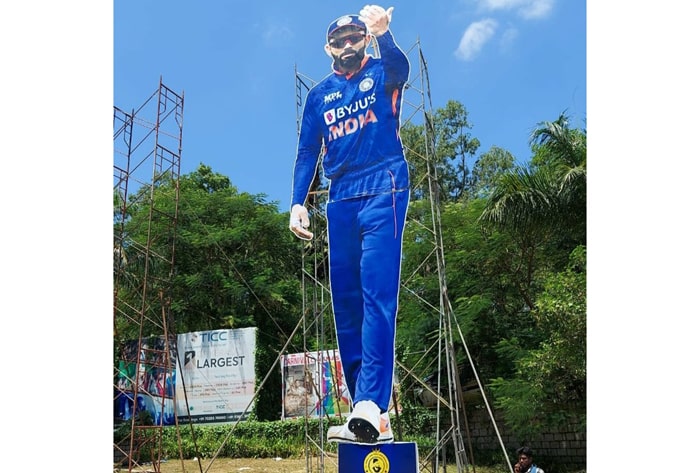
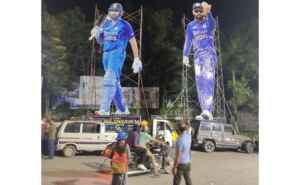
People in Trivandrum watching cutouts of Rohit Sharma and Virat Kohli
If the batting unit is now firing like a well-oiled machine, the bowling attack remains a huge worry for the Rahul-Rohit think-tank. However, Axar Patel has plugged the massive void left by Ravindra Jadeja’s absence. Injury to India’s supreme all-rounder was a major headache for the World Cup but Axar’s fine spells against the Aussies meant that Jadeja’s absence wasn’t felt as much as was feared. By picking up eight wickets at an economy rate of just 6.3, Axar became the Player of the Series and seems a worthy replacement for Jadeja.
Axar’s terrific spells were, however, the only silver lining in the dark clouds around India’s bowling unit. In a high-scoring series, the limitations of the Indian attack stood exposed. After the Asia Cup jolt, the return of Jasprit Bumrah and Harshal Patel was expected to bolster the bowling attack. Though the duo showed glimpses of their skill, death bowling remains a grave concern. Bhuveneshwar Kumar’s bowling in three games was a major let-down, as in the Asia Cup. Leaking runs all through the series at an economy rate of 13, Bhuvi took just one wicket. If Cameron Green targeted him at the top of the order, he also struggled to find his yorkers in the death overs. With leg spinner Chahal also ineffective, the bowling unit needs to perk up rapidly if India hopes for glory at the World Cup.
Clearly, a lot of questions remain unanswered as far as Indian bowling is concerned.
The Men in Blue now compete with South Africa, a team they are yet to beat at home in a bilateral series. Temba Bavuma, the South African Captain, is coming back from an injury which will strengthen their batting. David Miller, who had a smashing IPL season, will be a huge threat at the end of innings – adding to the death bowling worries of India. In the absence of their explosive batsman, Van der Dussen, South Africa will also have an opportunity to fine-tune their already strong unit as they come to the series with winning momentum. For Indian batters, Rabada and Company are bound to be another tough challenge.
Both teams will seek to sharpen their strengths and work out the best team combinations in these 3 matches. These are the final few games before the teams head to Australia for the World Cup. The win against Australia gives India a winning momentum, one which they would like to continue as a tougher challenge would be to win the World Cup away from home. India has been dominant at home previously as well but fizzles out abroad on fast-bouncy pitches. Facing the tall South African bowlers will be an ideal preparation as the countdown begins for World T20 in October!