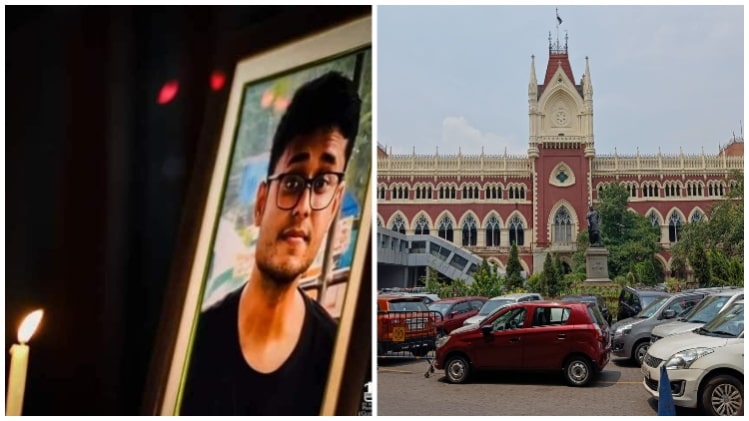
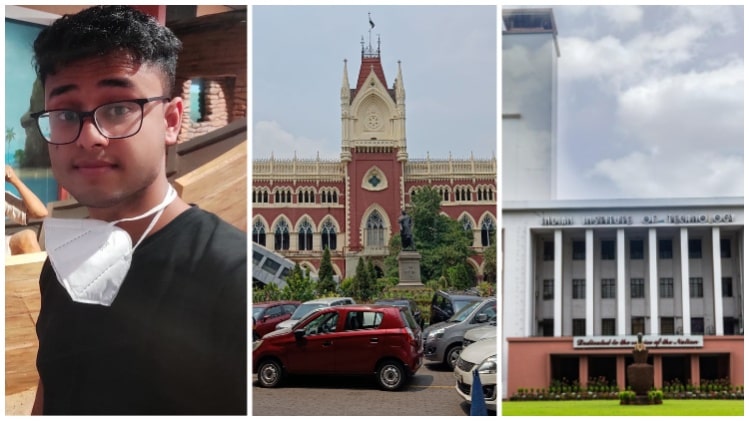
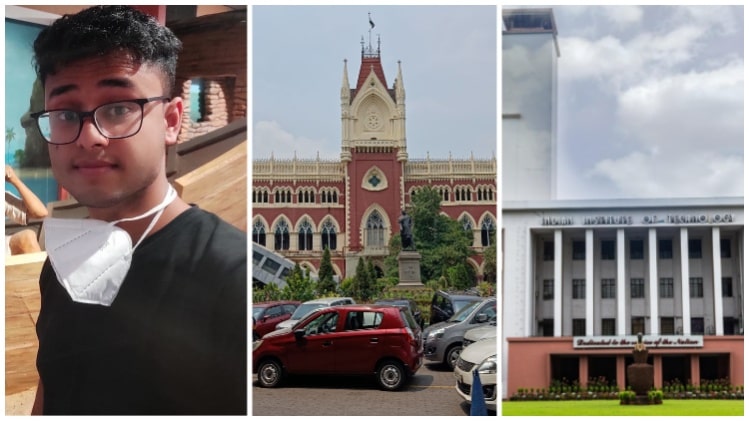
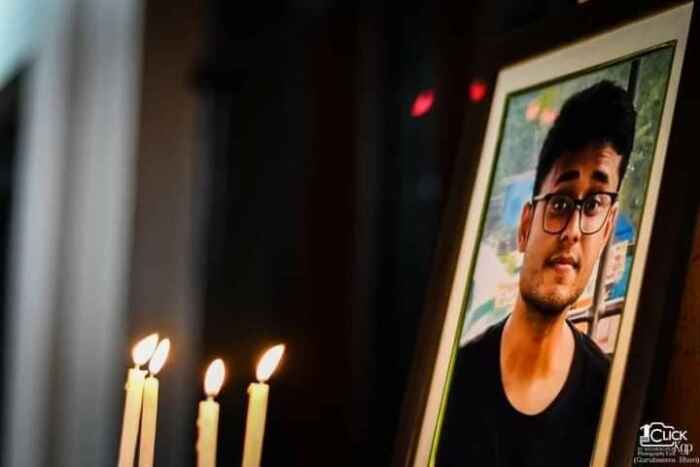
Kolkata: The Calcutta High Court, which after seeing the second postmortem report by the forensic expert had called the death of IIT Kharagpur student Faizan Ahmed, a ‘homicide’ in its order has also expressed ‘surprise’ at the fact that the doctors in their first autopsy report missed out on vital aspect of the deceased’s body.
In the four-page order comprising 19 points, the court of Justice Rajasekhar Mantha further instructed, “The Director of the CFSL shall cause an enquiry into the circumstances under which the omission occurred.”
On October 14, a third-year Mechanical Engineering student of IIT Kharagpur Faizan Ahmed’s partially decomposed body recovered from a hostel room. IIT authorities claimed that the 23-year-old Faizan, a resident of Tinsukia, Assam has committed suicide because he was in depression.
However, the family of Faizan, his mother Rehana and Salim Ahmed had refuted it and asserted that their son, who had secured AIR 11 in JEE, 2020 and was a member of Aerial Robotics as well as Robosoccer got murdered. The students of IIT Kharagpur had also protested for justice for more than a fortnight inside the campus. However, it did not make much difference to the authorities, while the first postmortem report did not hint at any injury in the body and the matter remains a suicide one.
Witnessing all these, Faizan’s parents moved to the High Court. The court, after going through the first postmortem report and police case diary, found that there is no conclusive report on the cause of death. It asked retired forensic expert Dr Ajay Kumar Gupta to submit his report in this regard. Dr Gupta went through the video clippings of the first postmortem report and suspected that there were signs of Hematoma in the body of Faizan. He then requested the court to conduct a second autopsy. The court ordered the same to know the cause of the death. The body of Faizan was buried in Dibrugarh, from where it was exhumed and an autopsy was conducted on May 27 at Calcutta Medical College and Hospital.
Two hundred and thirty five days after the recovery of Faizan’s body, the court of Justice Mantha observed on June 6, “The matter now becomes an investigation into a likely Homicidal murder.”
And while ordering to Kharagpur police that it further adds, “There are serious questions that are required to be addressed by the police and the IO.”
Listen to the first reaction of Faizan Ahmed’s family and lawyer
The next order reads, “On the adjourned date the investigating officer shall submit a further report after considering the second postmortem report. The investigating officer shall be free to add additional sections to the FIR and include other persons as accused for investigation.”
The court ordered both police and Director CFSL to present a case diary by the next date and submit a fresh forensic report in a week.
The order said, “A fresh forensic report is submitted within a week of receipt of the samples. An expedition is required in the facts of the case.”
The court also felt a deep appreciation for the work done by the retired forensic expert Dr Ajay Gupta, and amicus curiae Sandip Kumar Bhattacharya, for declining any remuneration for appearing in the court.
It also instructed the police to arrange the re-transport of the mortal remains to Dibrugarh and handing it over to the family members of the deceased for the final burial.
কলকাতা: একটি বড় উন্নয়নে, আইআইটি খড়গপুর ফয়জান আহমেদ এর মৃত্যুতে, যার মৃতদেহ গত বছরের অক্টোবরে তার হোস্টেল রুমের মধ্যে পাওয়া গিয়েছিল, কলকাতা হাইকোর্ট, ‘দ্বিতীয় ময়নাতদন্ত রিপোর্ট’ দেখার পরে এটিকে ‘হত্যা’ বলে পর্যবেক্ষণ করেছে। ‘
আদালতের বিচারপতি রাজশেখর মন্থা আরও বলেছেন যে পরবর্তী শুনানিতে, তদন্তকারী সংস্থা কে হবে তা নির্ধারণ করা হবে।
14 অক্টোবর, 2022-এ, তৃতীয় বর্ষের মেকানিক্যাল ইঞ্জিনিয়ারিং ছাত্র ফাইজান আহমেদের আংশিক পচনশীল দেহ, যিনি গবেষণা দলের এরিয়াল রোবোটিক্স এবং রোবোসকার দলের সদস্যও ছিলেন, আইআইটি খড়গপুর ক্যাম্পাসের ভিতরে একটি হোস্টেলে পাওয়া গিয়েছিল।
আইআইটি খড়গপুর ফয়জান আহমেদ
তিনসুকিয়ার বাসিন্দা, ফয়জান, যিনি 11 তম এআইআর-এর সাথে 2020 সালে জয়েন্ট এন্ট্রান্স পরীক্ষা (জেইই) পাশ করেছিলেন, তিনিও আসাম সরকারের কাছ থেকে স্কলারশিপ পেয়েছিলেন।
ঘটনার পরে, আইআইটি কর্তৃপক্ষ এটিকে আত্মহত্যার ঘটনা বলে দাবি করেছিল। 23 বছর বয়সী যুবকের প্রথম পোস্টমর্টেম রিপোর্টে মৃত্যুর কোনও নির্দিষ্ট কারণ নিশ্চিত করা যায়নি। ফাইজানের শরীরের ভেতরে কোনো বিষাক্ত পদার্থ পাওয়া যায়নি বা বাইরে কোনো ঝুলন্ত চিহ্ন ছিল না।
প্রকৃতপক্ষে, প্রথম ময়নাতদন্ত রিপোর্টের মধ্য দিয়ে যাওয়ার পরে, অবসরপ্রাপ্ত ফরেনসিক বিশেষজ্ঞ অজয় কুমার গুপ্ত, যাকে হাইকোর্ট তার রিপোর্ট জমা দেওয়ার নির্দেশ দিয়েছিলেন, দাবি করেছিলেন যে প্রথম পোস্টমর্টেম রিপোর্টের ভিডিও ক্লিপিংগুলি হেমাটোমার একটি কেস নির্দেশ করে। ডাঃ গুপ্তার আবেদনের পরিপ্রেক্ষিতে হাইকোর্ট ফাইজানের লাশের দ্বিতীয় ময়নাতদন্তের নির্দেশ দেন। দেহটি ডিব্রুগড় থেকে উত্তোলন করা হয়েছিল এবং কলকাতা মেডিকেল কলেজ হাসপাতালে নিয়ে যাওয়া হয়েছিল, যেখানে এটি 27 মে করা হয়েছিল।
শুনানি শেষে ফাইজানের পরিবার ও আইনজীবী (রেহানা আহমেদ, সেলিম আহমেদ, অনিরুদ্ধ মিত্র ও সরফরাজ আলম)
আজ, আদালত শুনানির সময়, আইআইটি খড়গপুরকে এখন পর্যন্ত পোস্টমর্টেম রিপোর্টের অনুলিপি পেতে দেয়নি, কারণ তারা অভিযুক্ত হতে পারে।
মামলার শুনানি করার সময়, বিচারপতি মান্থা একবার বলেছিলেন: “আইআইটি খড়গপুরও নথিগুলিকে ফাঁকি দেওয়ার চেষ্টা করেছে।”
এদিকে, মামলার প্রতিনিধিত্বকারী আইনজীবী রঞ্জিত চ্যাটার্জি, আতিস বিশ্বাস, নীলাদ্রি সেনগুপ্ত এবং অনিরুদ্ধ মিত্র এটিকে ফয়জানকে হত্যার সত্যতা প্রতিষ্ঠার দিকে একটি বড় পদক্ষেপ বলে বর্ণনা করেছেন।
আদালতের শুনানির পর রঞ্জিত চ্যাটার্জি ইনিউজরুমকে বলেন, “দ্বিতীয় পোস্টমর্টেমে হত্যার একটি মামলা প্রতিষ্ঠিত হয়েছে এবং মাথায় ও বুকে আঘাতের কারণে প্রচুর রক্তক্ষরণ হয়েছে।”
অ্যাডভোকেট চট্টোপাধ্যায় আরও যোগ করেছেন, “সেকেন্ড পিএম রিপোর্টটি আইও-কে হস্তান্তর করা হবে তবে এই পর্যায়ে আইআইটি নয় কারণ তাদের হত্যার সাথে জড়িত থাকার সম্ভাবনা রয়েছে।”
রেহানা এবং সেলিম আহমেদ, ফাইজানের মা ও বাবা, যারা তাদের একমাত্র সন্তান ফাইজানের ন্যায়বিচারের জন্য অক্লান্ত লড়াই করছেন, তারা ইনিউজরুমকে বলেন, “আজ আদালতের আদেশ প্রমাণ করেছে যে আমার ছেলে আত্মহত্যা করেনি। তিনি দুর্বল মানুষ ছিলেন না। সে খুনী ছিল. আইআইটি খড়গপুরে তাঁর মৃত্যুর খবর পাওয়ার পর থেকে আমরা সবসময় এটি বজায় রেখেছি এবং বিশ্বাস করেছি।”
eNewsroom যোগাযোগ করার চেষ্টা করেছিল, VK তিওয়ারি, ডিরেক্টর, IIT খড়গপুর কিন্তু কলের উত্তর পাওয়া যায়নি।
তবে, এখন সবচেয়ে বড় প্রশ্ন, আইআইটি ক্যাম্পাসের ভেতরে ফয়জান আহমেদকে কারা হত্যা করেছে?
বুধবার, 14 জুন উত্তর খুঁজতে আদালত একটি তদন্ত সংস্থা গঠন করবে
Kolkata: In a major development, in the death of IIT Kharagpur student Faizan Ahmed, whose dead body was found inside his hostel room in October last year, Calcutta High Court, after going through ‘second autopsy report’ observed that it as a ‘homicide’.
The Court of Justice Rajasekhar Mantha further said that in the next hearing, it will be decided who will be the investigating agency.
On October 14, 2022, the partially decomposed body of third-year mechanical engineering student Faizan Ahmed, who was also a member of the Aerial Robotics and RoboSoccer teams of the research team, was found in a hostel inside the IIT Kharagpur campus.
A resident of Tinsukia, Faizan, who had cracked the Joint Entrance Exam (JEE) in 2020 with 11th AIR, was also getting a scholarship from the Assam government.
After the incident, IIT authorities were claiming it is a case of suicide. The first postmortem report of the 23-year-old youth could not ascertain any concrete cause for the death. No poisonous substance found inside nor was any hanging mark outside Faizan’s body.
In fact, after going through the first autopsy report, retired forensic expert Ajay Kumar Gupta, who was instructed by the High Court to submit his report, claimed that the video clippings of the first postmortem report indicated a case of hematoma. On the request of Dr Gupta, the High Court had ordered a second autopsy of Faizan’s body. The body was exhumed from Dibrugarh and flown to Calcutta Medical College Hospital, where it was performed on May 27.
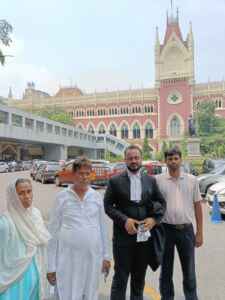
The family of Faizan and lawyer after the hearing. From left (Rehana Ahmed, Salim Ahmed, Aniruddha Mitra and Sarfaraz Alam)
Today, during the hearing the court, also did not allow IIT Kharagpur to get a copy of postmortem report as of now, as they may be the accused.
While hearing the case, Justice Mantha once said: “IIT Kharagpur has also tried to fudge the documents.”
Meanwhile, lawyers representing the case Ranjit Chatterjee, Atis Biswas, Niladri Sengupta and Aniruddha Mitra described it as a major step towards establishing the fact that Faizan was murdered.
Ranjit Chatterjee told eNewsroom after the court hearing, “The second postmortem establishes a case of homicide with death occurring due to profuse bleeding from injuries in the head and chest.”
Advocate Chatterjee also added, “Second PM report will be handed over to IO but not IIT at this stage because of their likely involvement in the murder.”
Rehana and Salim Ahmed, mother and father of Faizan, who are fighting a tireless battle for the justice of their only child, Faizan, told eNewsroom, “Today, the court order proved that my son had not committed suicide. He was not a weak human. He was murdered. We always maintained and believed in this ever since we got the news of his death at IIT Kharagpur.”
eNewsroom tried contacting, VK Tiwari, Director, IIT Kharagpur but the calls remained unanswered.
However, now the biggest question is, who killed Faizan Ahmed inside the IIT campus?
The court will institute an inquiry body to find the answers on Wednesday, June 14.
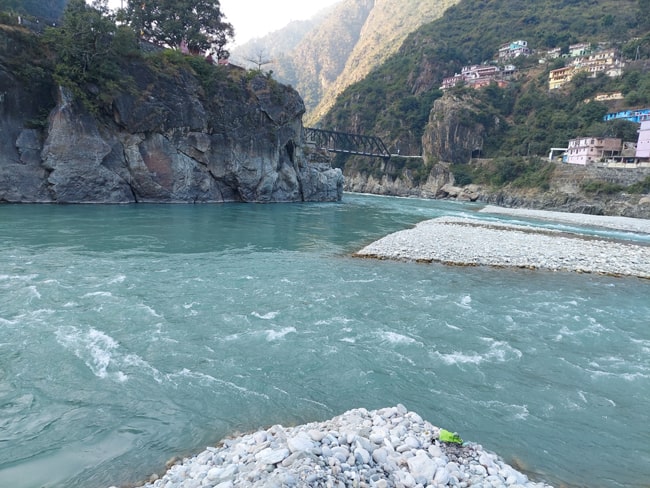
Ganga is India’s most revered river which flows from the Himalayan region of Uttarakhand through different streams and rivers with extraordinary natural beauty travelling through deeply difficult terrain, overcoming hurdles, big gorges and curves. It not only satiates the spiritual life of Hindus who call it Ganga Maa or ‘Maa Gange’ but also builds a civilisation around it. Cities flourished on the bank of Ganges all over the country though the Ganga river valley system is powerful and unique yet in Uttarakhand region, it is enchanting and can fulfil your spiritual needs too. Trekking to Gangetic valley and its different tributaries in Uttarakhand gives you an understanding of the Ecosystem of the state and how people are closely associated with it. Ganga is not merely a river system but the surroundings of rich biodiversity. Hence, you cannot really understand the Gangetic valley civilisation without studying the ecology of the Alpine Meadows, which are locally known as Bugyal and the rich food culture of Uttarakhand.
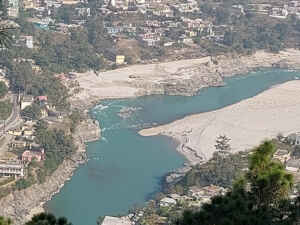
Uttarakhand is the source of three river systems that emerge from Himalaya. They are Kali in the East, Bhagirathi-Alaknanda in the Centre and Yamuna Tons in the Western part of the state. Broadly, Ganga emerge from the confluence of river Bhagirathi and Alaknanda at Devprayag, one of the five main prayags of the Hiamalayas and then move through a deeply fascinating landscape, passing through beautiful curves at the Vyasghat where river Nayar flows into it and then move towards the plains and Muni Ki Reti in Rishikesh is the first town to welcome it.
However, it is important to look at all the major confluences in the Alakananda which ultimately make it more powerful and bigger than Bhagirathi when both of them merge in each other to make Ganga at Devprayag. Alaknanda is said to be flowing from the Satopanth glaciers and immersing various other Himalayan rivers into it such as Dhauli Ganga at Vishnu Prayag, Nandakini at Nand Prayag, Pindar at Karnprayag and Mandakini at Rudra Prayag, at Devprayag and move towards Rishikesh in the plains as Ganga. Travelling through various parts of Uttar Pradesh, Bihar and Bengal, Ganga enters Bangladesh as Padma when crossing from Murshidabad. The total length of Ganga is 2,510 kilometres[1] when it finally culminates in the Bay of Bengal.
After emerging from Uttarakhand, Ganges become mightier as numerous other powerful rivers merge in it throughout its journey towards its culmination at Ganga Sagar in Bengal on one side and Bangladesh on the other side as the river bifurcate with one part moving towards West Bengal while other moving towards Bangladesh.
The making of Ganga is fascinating and the subject of the current work is confined to Uttarakhand yet in this introduction, we would like to provide a glimpse of the magnificent journey of Ganges and its major tributaries of Ganga till it empty itself in the Bay of Bengal.
The first state after Uttarakhand where Ganga flows in is Uttar Pradesh where it enters into district Bijnaur adjacent to Haridwar district of Uttarakhand. The river travels more than 1140 kilometers[2] in the state of Uttar Pradesh and pass through 25 districts such as Bulandshahar, Hapur, Meerut, Mujaffarnagar, Aligarh, Kasganj, Sambhal, Amorha, Badayun, Shahjahanpur, Hardoi, RaiBareilly, Unnao, Farukhabad, Kanpur, Prayagraj, Varanasi, Ghazipur, and Balia. Two most important pilgrim Centres of Uttar Pradesh, Varanasi and Prayagraj are situated on the bank of Ganga and attract millions of visitors from around the world. Interestingly, Ganga has its biggest confluences with river Yamuna at the Prayagraj. Let us look at the important tributaries and confluence of Ganges in Uttar Pradesh. There are 49 other districts through which various tributaries of Ganges pass through.
River Alaknanda at Srinagar Garhwal | Credit: Author
Yamuna
The first big confluence of Ganga in Uttar Pradesh is river Yamuna at Allahabad. Yamuna too flows from Uttarakhand’s Yamunotri region at the peak known as Yamunotri Glacier in the Uttarkashi district at the altitude of 6387 meters, pass through a beautiful Yamuna valley in the district of Tehri Garhwal as well as Dehradun. At the Dakpathar border the river enter into Paunta Saheb in Himachal Pradesh and move towards Yamuna Nagar in Haryana and then to Delhi. Mathura and Agra are two most famous cities on the bank of Yamuna, the former known for the Lord Krishna while the latter for the extraordinary and immortal buildings, forts and of course, Taj Mahal.
Yamuna finally merges in Ganga at the Allahabad, now known as Prayag Raj and moves towards another mythologically one of the ancient cities of the world, named as Kashi or Varanasi. Before its immersion in Ganga at Prayagraj, Yamuna travels about 1,376 kilometers[3] from its source at Yamunotri and has more than 40% of the catchment area in the Gangetic valley. The major tributaries of Yamuna are Tons, Hindon, Ken and Chambal.
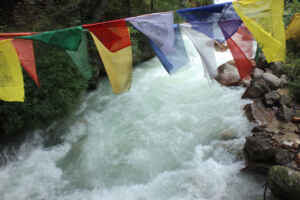
Sharda or Kali: Sharda River is also known as Mahakali or Kali river in the Himalayan region of Uttarakhand as well as Nepal. Actually, it flows from the Kalapani mountain range in the Pithoragarh district in Uttarakhand bordering Nepal. While in Uttarakhand, it is more known as Kali nadi or Sharda nadi, crossing the border in Nepal, it is known as Mahakali nadi. While the river has its origin in the numerous Himalayan streams, the border villages of Lipulekh and Kalapani in Uttarakhand are considered the source of this river. It moves towards the downside in Tanakpur and Banbasa opposite Mahendranagar district of Nepal. A big reservoir divides the river between India and Nepal. From Banbasa, Tanakapur it moves in the Tarai region of Uttar Pradesh through Lakhimpur Khiri and moves towards Baharaich district where it merges into river Ghaghara. Sharda or Kali river is known for its ferocity during the monsoon and has caused heavy devastation in the Tarai region. There are two big barrages which become the dividing lines between India and Nepal at the Tanakpur barrage and Sharda Barrage at Banbasa in Uttarakhand. Pancheswar dam is being built over it now.
Chambal: Chambal is one of the most important and known rivers emerging from Mhow district in Madhya Pradesh. It is famous for its ravines in Madhya Pradesh, Rajasthan and Uttar Pradesh border. It travels 965 kilometers including about 360 kilometers in Rajasthan and flows into river Yamuna near Etava. It enters Uttar Pradesh through Dhaulpur and covers a journey of 32 kilometers before it flows into Yamuna at Bhareh town in Etawah district of Uttar Pradesh. In Rajasthan, Chambal passes through some of the most exciting and extraordinary routes.
River Bhagirati at Harsil near Gangotri | Credit: Author
Bihar
After Uttar Pradesh, Ganga flows through Bihar State and covers 12 Ganga districts and 33 districts where various tributaries of Ganges pass through. The total length of the Ganga river in Bihar is 260 kilometer. A number of rivers that originate from Nepal are ultimately empty at the Ganges which include Baghmati, Boodhigandak, Sone, Mahananda, Ghaghara, Kosi and Gandak.
Ghaghara: Ghaghara is one of the biggest tributaries of Ganges after Yamuna. Ghagara too is the Himalayan river and is called Karnali in Nepal. The total length of river Karnali in Nepal is 507 kilometres. River Sharda merges into it. Ghaghara is also an extremely powerful river and ferocious during the Monsoon season. From Nepal to Revalganj, in district Chhapra, Bihar where Ghaghara merges in the Ganges, the total length of the river is said to be 1080 kilometres.
Gandak: Another powerful river which flows through mountains on the Nepal Tibet border in the Mustang valley and is known as Gandaki or Kali and becomes Narayani river after meeting Trishuli in Nepal. becomes Gandak or Gandaki in India. It finally merges in Ganga in Hajipur near Patna but before that it passes through Champaran, Saran and Mujaffarpur district of Bihar. In total, it travels about 630 kilometres from Nepal to India including 330 kilometres journey in Nepal.
Kosi: River Kosi is known as the curse of Bihar because of massive destruction and devastation due to floods in Monsoon. The river emerges from the Nepal-Tibet border and passes through various districts of Bihar and flows into Ganga at Kursela town in district Katihar.
Jharkhand: Ganga enters in Jharkhand from Sahebganj district and Dhanbad, Bokaro and Ramgarh are districts from where the most powerful tributary of the region, Damodar flows into it.
River Damodar: Damodar river originates from Chhotanagpur plateau in Latehar, Lohardaga district of Jharkhand state. It passes through Hazaribagh, Ramgarh, Kodarma, Giridih and Dhanbad before entering Bardhaman and Hooghaly district of West Bengal. Damodar river too is considered to be a ‘curse’ in many places of Bengal because of the massive flooding and devastation it causes during the monsoons. It is considered to be the biggest river of Jharkhand and travels to 592 kilometers including 302 kilometers in West Bengal before flowing into river Howrah or locally termed as Ganga in Shyampur, West Bengal.
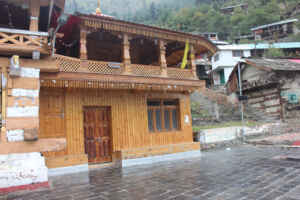
A beautiful wodden house in village mukhba near Gangotri | Credit: Author
West Bengal
In West Bengal the one Ganga district where Ganga passes through is Malda. After passing through Katihar, Munger, Bhagalpur, Ganga enters Jharkhand’s Sahebganj district before entering into West Bengal where it flows into Berhampur city, the administrative headquarters of district Murshidabad. An artificial canal takes 50% of Ganges water towards Kolkata in the river Hooghly which too is locally known as Ganga and then ultimately goes to Haldia and Gangasagar which is the most famous pilgrimage for Hindus. The Ganga Sagar Delta is the place where Ganga finally flowed into Bay of Bengal, is about 100 kilometers from Kolkata city. Thousands of pilgrims come to this place every year during the Gangasagar mela during Makar Sakranti in the month of January.
Mahandanda river, One of the Monsoon fed rivers emerging from the hills of Darjeeling district, passes through a certain portion of Bihar and enters into Bengal again. It enters into Bangladesh from Uttar Dinajpur district and ultimately merges into Ganges at Godagari Ghat after completing 360 kilometers.
Bangladesh
A large number of people in India consider Gangasagar as the ‘ultimate’ journey of Ganga but the fact is Ganga is bifurcated and one part goes towards Hooghly while the lower part moves towards Bangladesh. Interestingly, Ganga in Bangladesh is known as river Padma and joined by many other tributaries including Jamuna river, which is actually the lower stream of Brahmputra. Near Chandpur, the lower channel of Brahmputra named as Meghna meets Padma and moves towards the Bay of Bengal. After a journey of 264 kilometre they culminate through four ‘mouths’ in the massive Bay of Bengal via Tetulia, Shahbazpur, Hatia and Bamni.
A heritage of Indian culture
Theimpact of Ganga on human life in India is unprecedented. Its journey from Himalayas to Bay of Bengal is exciting and fascinating which need to be explored further to make people aware of the fact that Ganga is not merely the spiritual life of Indians but culture flourished on its banks and farmers grew varieties of crops which fed India. The Upper Gangetic belt in Uttar Pradesh is one of the most fertile regions of Paddy, Rice, Sugarcanes and numerous varieties of pulses and vegetables. City blossomed on the bank of Ganges and became not merely pilgrimage Centres but industrial hubs. Rishikesh, Haridwar, Mujaffarnagar, Meerut, Bareilly, Kanpur, Allahabad, Varanasi, Ara, Patna, Bhagalpur, Behrampur, Barddhaman, Kolkata, and Haldia are some of the most important cities near Ganga. If we count the cities on the tributaries of Ganges, then it will be a very large part of Uttar Pradesh and Bihar.
Though many of the tributaries of Ganga have been termed as ‘Curse’ in various states because they brought enormous devastation in monsoons such as Sharda, Kosi and Chambal yet after their ‘merger’ yet they have strengthened the magnitude of the Ganges.
Though in terms of length Brahmputra is 916 kilometers in India which covers Arunchal Pradesh, Assam, West Bengal, Meghalaya, Nagaland and Sikkim and Indus rivers are bigger than Ganges but their stretch in India is too short comparatively to Gangas and it remained the biggest river of India. The Indus river arises in the Kailash mansarovar and enters India through Ladakh and flows into Pakistan through Gilgit and Baltistan. All the five rivers of Punjab namely, Jhelum, Chenab, Ravi, Beas and Satlej ultimately merge in Indus in Pakistan.
Ganga, Brahmputra and Indus are actually having their origin in Himalayas and pass through Tibet and India. While Ganga and Brahmputra empty at the Bay of Bengal, Indus goes to Pakistan and finally flows into Arabian Sea near Karachi. Hence, a careful study in terms of contribution to India’s water supply as well as agricultural sector, Ganga remains the most powerful and unparalleled.
Our rivers are the biggest assets of our nations. They are truly our cultural heritage as they built a lively civilisation and rich bio-diversity around them. There was nothing wrong in the idea when people of India termed Ganga as ‘mother’ but the issue is whether we really respect that heritage in terms of protecting it from all kinds of ‘assault’ or have reduced our love to mere rituals which sometimes create more crisis for these rivers than not doing so. Ganga needs to survive if our civilisation has flourished and feel proud of the rich heritage.
गत 28 मई (2023) को प्रधानमंत्री नरेंद्र मोदी ने संसद के नए भवन का उद्घाटन किया. यह भवन पुराने भवन की तुलना में कहीं अधिक ठाठदार है. विपक्ष की अधिकांश पार्टियों ने उद्घाटन कार्यक्रम का बहिष्कार किया. उनका तर्क था कि इस भवन का उद्घाटन राष्ट्रपति द्रौपदी मुर्मू को करना था. संविधान के अनुच्छेद 79 के अनुसार संसद में राष्ट्रपति, लोकसभा और राज्यसभा शामिल हैं. इस प्रकार, राष्ट्रपति, संसद का हिस्सा होते हैं. उन्हें इस समारोह से बाहर रखना अपने पर हर चीज़ के केंद्र में अपने को रखने की मोदी की प्रवृत्ति का सूचक है.
इस भव्य कार्यक्रम के दो पहलू महत्वपूर्ण हैं. पहला यह कि उसमें बड़ी संख्या में साधु, पंडित और कई मठों के मुखियाओं ने भाग लिए. भगवान शिव और गणेश का आव्हान किया गया और हिन्दू कर्मकाण्ड हुए. यह निश्चित रूप से हमारे देश और हमारे संविधान के धर्मनिरपेक्ष चरित्र को क्षति पहुँचाने वाले थे. मोदी ने तमिलनाडु के मयिलाडूथुरई के निकट स्थित एक शैव मठ थिरुवदुथुरई अधीनम के प्रतिनिधियों से सेंगोल नामक राजदंड स्वीकार किया. तमिलनाडु के विभिन्न अधीनमों के प्रतिनिधियों और लोकसभा अध्यक्ष के साथ प्रधानमंत्री ने सेंगोल को नए भवन में स्थापित किया.
ऐसा बताया गया है कि यह सेंगोल सत्ता हस्तांतरण का प्रतीक है. यह चोल राजाओं की परंपरा का भाग है, जिसमें नए राजा को उसकी शक्तियों के प्रतीक के रूप में सेंगोल भेंट किया जाता था. परंपरा के अनुसार राजा अपनी शक्तियां, पुरोहितों के ज़रिये, सर्वशक्तिमान ईश्वर से प्राप्त करता था. प्रधानमंत्री इसी ‘गौरवशाली परंपरा’ को पुनर्जीवित करना चाहते हैं.
हमें यह भी बताया गया है कि देश की स्वतंत्रता के समय लार्ड माउंटबेटन ने सत्ता के हस्तांतरण के प्रतीक के रूप में यह सेंगोल जवाहरलाल नेहरू को सौंपा था. यह एक मनगढ़ंत कहानी है. कांग्रेस के जयराम रमेश ने एक ट्वीट में कहा, “एक राजसी राजदंड, जिसकी परिकल्पना तत्कालीन मद्रास प्रान्त की एक धार्मिक संस्था ने की थी और जिसे मद्रास में बनाया गया था, को अगस्त 1947 में जवाहरलाल नेहरू को सौंपा गया था…परन्तु इसका कोई दस्तावेजी प्रमाण नहीं है कि माउंटबेटन, नेहरू या राजाजी ने इस राजदंड को ब्रिटेन से भारत को सत्ता हस्तांतरण का प्रतीक बताया. इस आशय के सभी दावे कोरे और विशुद्ध बोगस है. ये दावे केवल कुछ लोगों की दिमाग की उपज हैं, जिन्हें पहले व्हाट्सएप के ज़रिये फैलाया गया और अब सरकार के भाट मीडिया संस्थानों के ज़रिये प्रचारित किया जा रहा है. राजाजी के जीवन और उनके कार्यों के बारे में गहन ज्ञान रखने वाले दो विद्वान अध्येताओं, जिनकी साख पर कभी कोई बट्टा नहीं लगा, ने इस दावे पर आश्चर्य व्यक्त किया है.”
निश्चित रूप से शैव मठ के पंडित की इस भेंट को उनकी और उनकी भावनाओं की क़द्र करते हुए नेहरु ने स्वीकार कर लिया होगा. परन्तु उसे अपने प्रधानमंत्री कार्यालय में रखने की बजाय उन्होंने इलाहाबाद के संग्रहालय में रखवा दिया. नेहरु सहित स्वाधीनता संग्राम के सभी बड़े नेता, राजशाही और राजाओं में तनिक भी श्रद्धा नहीं रखते थे. वे प्रजातंत्र में आस्था रखते थे जिसमें जनसामान्य चुनावों के ज़रिये सत्ता अपने नेताओं को सौंपते हैं. प्रजातंत्र में जनता का राज होता है और शक्ति का स्त्रोत न तो ईश्वर होता है और ना ही उनके प्रतिनिधि होने का दावा करने वाले पंडित और पुजारी. भारत की शासन व्यवस्था प्रजातंत्र पर आधारित है. प्रजातंत्र का एक मूलभूत तत्व यह है कि शासक (प्रधानमंत्री या राष्ट्रपति), धार्मिक गुरु (राजपुरोहित) के प्रति जवाबदेह बादशाह नहीं होते. वे जनता और संविधान के प्रति जवाबदेह निर्वाचित प्रतिनिधि होते हैं.
द्रविड़ मुनेत्र कड़गम के संस्थापक सी.के. अन्नादुरै ने सेंगोल को सत्ता के प्रतीक के रूप में प्रस्तुत करने के खिलाफ एक तीखा लेख लिखा था. उनके अनुसार, “आपको (नेहरु) पता है कि प्रजातंत्र के आगाज़ की राह प्रशस्त करने के लिए उन्हें इससे (सेंगोल) से छुटकारा पाना ज़रूरी था. मठों के मुखिया डरे हुए हैं. उन्हें डर है कि आप वही करेंगे जो आपने सीखा-जाना है. इसलिए वे अपनी रक्षा के लिए स्वर्ण तो क्या नवरत्नों से जड़ा राजदंड भी आपको भेंट कर सकते हैं.”
हिन्दू कर्मकाण्ड को प्रधानता देना भाजपा-आरएसएस के एजेंडा का हिस्सा है. वे हमारे देश के बहुवादी चरित्र को कमज़ोर कर देश पर हिन्दू राष्ट्रवाद को थोपना चाहते हैं. यह हिन्दू राष्ट्रवाद, दरअसल, हिन्दू राजाओं द्वारा स्थापित नियमों और परम्पराओं पर आधारित है. इसे ही उनके चिंतकों ने हिन्दू राष्ट्रवाद का नाम दिया है. यह मात्र संयोग नहीं है कि नए संसद भवन का उद्घाटन विनायक दामोदर सावरकर के 140वें जन्मदिन पर किया गया. सावरकर हिन्दू राष्ट्रवाद के प्रणेता हैं, जिन्होंने अपनी पुस्तक “हिन्दू राष्ट्रवाद ऑर हू इज़ ए हिन्दू” में इसे प्रस्तुत किया था. यह पुस्तक धर्म को राष्ट्रवाद का आधार बताती है और ऐसी पहली पुस्तक है जो “द्विराष्ट्र सिद्धांत” की खुलकर वकालत करती है.
मोदी जी ने जो तमाशा किया उससे जाहिर है कि वे आस्था को संविधान के ऊपर रखना चाहते हैं. उन्होंने घोषणा की “आज, भारत पुनः प्राचीन काल की गौरवशाली धारा की ओर मुड़ रहा है.” उस “प्राचीन गौरवशाली काल” के मूल्य क्या थे? एक तानाशाह राजा हुआ करता था जो जातिगत और लैंगिक ऊंच-नीच से सराबोर समाज पर शासन करता था. उस “गौरवशाली काल” के नियमों और मान्यताओं को मनुस्मृति में परिभाषित किया गया है. इस पुस्तक को अंबेडकर ने सार्वजनिक रूप से जलाया था. अंबेडकर के अनुसार, प्राचीन काल में ऐसी ही पुस्तकों के कारण समाज में दलितों और महिलाओं का दोयम दर्जा था.
संघ के चिंतक इस आयोजन को गौरवशाली बता रहे हैं. उनके अनुसार यह हिन्दुओं की उस गौरवशाली परंपरा को पुनर्जीवित करता है जिसमें धर्म राजनीति से ऊपर था और राजा का कर्तव्य था कि वह धर्म के दिखाए रास्ते पर चले और यह भी कि सेंगोल इसी परंपरा का प्रतिनिधित्व करता है. सरकार का कहना है कि यह राजदंड परंपरा की निरंतरता का प्रतीक और पवित्र संप्रभुता और धर्म के राज को साकार स्वरूप है. आरएसएस के राम माधव के अनुसार (इंडियन एक्सप्रेस, 29 मई, 2023), “नए संसद भवन में सेंगोल की स्थापना के समय उसकी ऐतिहासिकता बहस का मुद्दा नहीं हो सकती बल्कि मुद्दा यह है कि वह ‘धर्मदंड’ है और भारत की सभ्यागत परंपरा में राजनैतिक सत्ता पर नैतिक और आध्यात्मिक की सर्वोच्चता के प्रतीक है.”
वे आगे लिखते हैं, “भारत की सभ्यागत परंपरा में राजाओं और बादशाहों को कभी सर्वोच्च सत्ताधारी नहीं माना गया. चाहे वे किसी भी राजचिन्ह हो धारण करते रहे हों – मुकुट, राजदंड या स्वर्ण वर्तुल – राजाओं को उनके राजतिलक के समय ही दरबार का पुरोहित याद दिलाता था कि धर्म अर्थात नैतिक-आध्यात्मिक व्यवस्था ही सर्वोच्च प्राधिकारी है.
एक तरह से यह आयोजन हिन्दू राष्ट्र की स्थापना की ओर एक और कदम है. इससे यह भी पता चलता है कि मोदी के मन में राजा बनने की कितनी तीव्र अतृप्त इच्छा है. इस कार्यक्रम में राजतंत्र के मूल्यों को आधुनिक वेशभूषा में प्रस्तुत किया गया और धर्म के नाम पर प्रजातांत्रिक मूल्यों को कुचलने को औचित्यपूर्ण ठहराया गया. इसी तरह की कट्टरता हम इस्लाम के नाम पर पाकिस्तान में, ईसाई धर्म के नाम पर अमेरिका में और बौद्ध धर्म के नाम पर श्रीलंका में देख सकते हैं. जिस समय उद्घाटन का भव्य कार्यक्रम चल रहा था उसी समय पुलिस प्रजातांत्रिक ढंग से आंदोलनरत पहलवानों के साथ बेरहमी से हाथापाई कर रही थी. यह है हमारी सरकार की प्रजातंत्र के प्रति प्रतिबद्धता.
Delhi: Khalid Saifi, a social activist was arrested on February 26, 2020, in the Khureji Khas locality of Delhi amid the Anti-CAA (Citizenship Amendment Act) protests. Later, three separate First Information Reports (FIRs) were filed against him. The 41-year-old activist has been in jail for 1190 days now.
Nargis Saifi, the wife of activist Khalid, in a heartfelt conversation with eNewsroom, shared her fight for justice and struggles to support family which has three children also but do not want to bow down before the unexpected challenge life threw on her.
Life Is A Challenge, without Khalid
It is an exhausting battle for justice for Nargis, a homemaker. She stands alone in her relentless pursuit to seek justice for her husband. Life has become challenging for her as a Muslim woman. Nargis never ventured out alone before Khalid’s arrest and now she is forced to do things independently including attending court hearings. “Every step I take is met with unwarranted scrutiny and questioning from others. The audacity of those who raise questions while failing to provide me with the necessary support is disheartening. However, I draw strength from my children and my husband. I will continue to fight for him as he vigorously fought for others,” said Nargis with determination.
The couple’s communication is limited to five-minute phone calls thrice a week. “We don’t get to know each other’s well-being properly. He is diabetic with high blood pressure issues. His spirit remains unbroken despite the challenges and custodial torture he faced. He is innocent. I take immense pride in my husband and the other political prisoners, and I am honoured to be his wife,” Nargis proudly said.
The repercussions of Khalid’s arrest have been deeply felt with relatives and friends distancing themselves from the family. “His arrest has isolated us in such a way that people avoid visiting or calling us with the fear of phone tapping and surveillance of our home,” her voice lowered in disappointment.
Khalid’s absense has made it challenging for Nargis to single-handedly manage the household responsibilities and with financial difficulties. She has depend on the support of Khalid’s friends to sustain the family. “His once thriving tours and travel business has been utterly destroyed. I find myself completely dependent on others for covering my children’s tuition fees and managing essential household supplies,” said Nargis in grief. She continued that the business partners have distanced themselves from us. They never answered the calls.
Children Matured Before Time
As Khalid’s stay in jail gets longer, their young children have matured and learned to cope with the family’s difficulties. Nargis has to spend hours in Courtrooms and her absence, Yasa (14), the eldest of three kids, shoulders responsibilities such as cooking food and taking care of his siblings. “My kids have stopped going to relatives or attending functions because of stupid questions like, “Do you miss your Abbu?” It becomes a painful reminder amplifying their mental trauma. They are managing things by looking at my struggles. They had to grow up before time,” said Nargis, the mother of three children. The once cherished tradition of summer trips and weekend strolls, which Khalid lovingly organized, now remains a distant memory for Nargis and her children.
Maryam (9), the youngest child shares a close bond with Khalid. “She was just 6 years old when Khalid was arrested. It was challenging for her but now she is at least satisfied that her Abbu has done nothing wrong. Besides, the other two Yasa and Taha (13), have been an active part of protests,” informed Nargis.
February 26, The Fateful Day
Nargis recounted the day of her husband’s arrest. She said that Khalid was having breakfast when his phone abruptly rang, delivering the distressing news of a police attack at the protest. Citing the violence I dissuaded him from going but he reassured me, “Nothing will happen. I’ll be back.” Moments later, a group of people rushed to our home, informing me that Khalid had been arrested. His phone had been switched off. Initially, I held onto the hope that he had been merely detained.
Late at night, Khalid called from an unknown number. There was palpable anguish in his voice, unlike anything I heard before. He conveyed that he was brought to Karkardooma Court and was transferred to Mandoli jail. “Just come to meet me tomorrow,” he said in a strained voice. The next day, I saw him in a wheelchair, bearing the marks of brutal torture. My heart sank with the gravity of his situation,” Nargis’s voice got heavy.
Khalid was walking when he was arrested by the police near the Khureji Khas protest site on February 26. He was brought in a wheelchair to Karkardooma court for a hearing on 11 March resembling custodial torture. “It is going to be a long battle. You must remain courageous and patient. Nobody will support me. Do not shed tears. Do not cry,” Nargis recalled Khalid’s words.
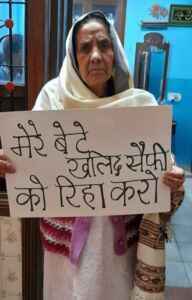
Mother of Khalid Saifi, demanding the release of her son | Courtesy: Facebook/ Nargis Khalid Saifi
Media Trial, The Worst Trauma
Nargis vividly recalls the distressing memory of Khalid’s alleged torture in custody where he was deprived of proper medical care, leaving his wounds to heal on their own. However, the media trial around Khalid’s case was the most devastating blow for Nargis and her children. “They broadcasted images of my husband on television with a label of terrorist. We immediately disconnected the television connection to this day. My 6-years-old daughter was asking questions. Although my children didn’t need much explanation because they have seen their father fighting for others just for the sake of truth and justice. My family was immensely disturbed and retreated ourselves within the confines of our home,” said Nargis. She continued that we removed social media and even stopped attending gatherings. In fact, people disconnected themselves from us after this media trial. “If it wasn’t Covid then this media trial may have taken any turn on us,” rued Nargis.
Activist’s Bail Order Reserved Since January
Advocate Tamanna Pankaj told eNewsroom that Khalid’s bail order is reserved since January, and the lawyers have moved a fresh application in the High Court to present additional arguments based on parity, given that the matter has been disposed of by the Supreme Court. The next hearing is scheduled for July 7th. “While I maintain faith in Allah there remains a sense of fear due to the prolonged delay in the legal proceedings,” said Nargis.
According to the advocate, Khalid has been granted bail in FIR 44/2020 in which he was allegedly subjected to torture at the Jagatpuri Police Station and obtained both bail and discharge in FIR 101/2020 which was related to the Khajuri Khas case. Currently, FIR 59/2020 is pending which involves charges under the Unlawful Activities Prevention Act (UAPA).
The Delhi Police Crime Branch filed chargesheets against 15 individuals under FIR 59/2020, which pertains to the Unlawful Activities Prevention Act (UAPA) and various sections of the Indian Penal Code. The chargesheets were related to the Delhi riots in 2020 which led to the death of 53 people including 38 Muslims and 15 Hindus. The riots broke out on February 23, 2020, in Northeast Delhi allegedly after the hate speech by BJP leader Kapil Mishra.
Khalid, In The Eyes Of A Friend
Advocate Tamanna, also a close friend of Khalid, was associated with United Against Hate (UAH) where she met him, a remarkably chilled person. Khalid bhai, as she fondly calls him. “He will hang out with you. He offers cigarettes and makes smoking companions. The first thing he will ask is do you smoke? He often delivers his messages to Nargis bhabi through me. Even, I love you, without hesitation. Tere Liye Koi Parchi Ki Zaroorat Nahi Hai (You don’t need a note),” as he always says,” Tamanna said with laughter.
Tamanna mentioned that Khalid bhai remains calm, always wearing a smile on his face regardless of circumstances. He consistently assists others and strives to ensure everyone receives proper representation. Khalid Bhai helped many people when he was free. Now people are reciprocating by aiding his family.
And wife Nargis, a fighter summed up, by saying, “Khalid Mere Liye Hain Aur Mein Unke Liye Hoon. Hum Dono Ke Pas Is Time Bas Itna Hi Hai Aur Kuch Nahi (Khalid is for me, and I am for him. At this moment, that’s all we have and nothing else).”
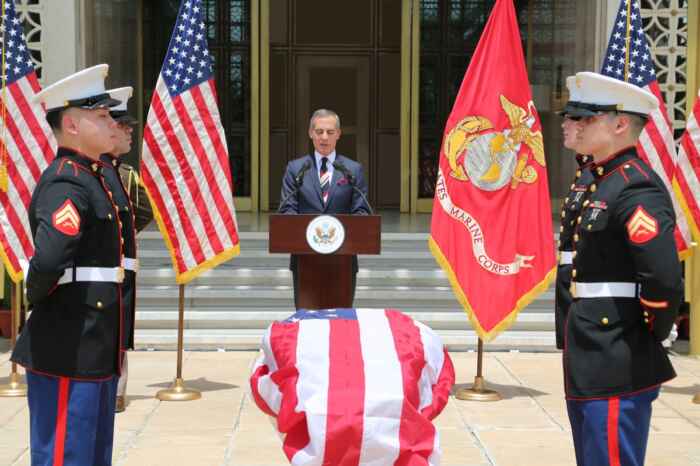
Kolkata: The last remains of Major General Harry Kleinbeck Pickett, one of America’s most highly decorated officers who served in both World War I and World War II, is set to return home to the United States for reburial at Arlington National Cemetery. Following his death in 1965 during a visit to Darjeeling, West Bengal, Major General Pickett was laid to rest in a local cemetery. In a collaborative effort between his family and the US Government, close coordination has taken place with Indian counterparts to facilitate the repatriation of his remains.
Melinda Pavek, the US Consul General in Kolkata, emphasized the primary objective of US government public servants to safeguard and support American citizens. Reuniting Major General Pickett with his beloved family in the United States, the country he valiantly defended in both World Wars, is considered a privilege and an honour. Pavek expressed gratitude for the support received from the Government of India and the state of West Bengal, which played a crucial role in making his return possible.
Commissioned into the United States Marine Corps in 1913, Major General Pickett achieved the extraordinary distinction of serving with distinction in both world wars. During World War I, he played a pivotal role in the capture of the German cruiser SMS Cormoran in Guam in April 1917. Twenty-four years later, as the Commanding Officer of the Marine Barracks at Pearl Harbor, he and his fellow Marines courageously engaged Japanese warplanes during the infamous surprise attack on December 7, 1941.
The American Citizens Services (ACS) Unit of the U.S. Consulate General Kolkata worked diligently alongside S. Ponnambalam, the District Magistrate of Darjeeling, and John Pinto International funeral services to locate Major General Pickett’s grave site in Darjeeling. Eventually, the Singtom Cemetery was identified as his resting place. With the assistance of the Special Secretary, Home & Hills Department, West Bengal, the necessary approvals for the exhumation were obtained.
The approval granted by BP Gopalika, Additional Chief Secretary, Government of West Bengal, has paved the way for Major General Pickett’s remains to be transported to the United States this month. The United States government expresses profound gratitude to all those involved in the arduous process. Noteworthy individuals who contributed to the endeavour include Arunima De (Special Secretary to the Government of West Bengal), S Ponnambalam (District Magistrate, Darjeeling), the Superintendent of Police, Darjeeling, the Chief Medical Officer of Health, Darjeeling, the Executive Office, Darjeeling Municipality, the Executive Health Officer, Rev. Father Patrick Pradhan of the Cemetery, Darjeeling, and Father Paul D’Souza, whose invaluable assistance ensured the successful exhumation.
Pavek underscores this accomplishment as a testament to the strategic partnership between the United States and India, as both nations are stronger when they support their citizens. The forthcoming reburial at Arlington National Cemetery will serve as a final tribute to Major General Harry Kleinbeck Pickett’s remarkable service and unwavering dedication to his country across two momentous conflicts.
Kolkata: Calcutta High Court ordered a second autopsy to get a clear understanding of the death of IITian Faizan Ahmed. The third-year student of the Indian Institute of Technology (IIT), Kharagpur student, whose partially decomposed body was recovered from the hostel room of IIT-Kharagpur in October last year.
Faizan was buried in Dibrugarh from where his body was exhumed and flown to Kolkata, following the court order. On Saturday, the second autopsy was conducted at the Calcutta Medical College and Hospital.
The recommendation for the second autopsy was made by Dr Ajay Kumar Gupta, a retired forensic expert from the CID, West Bengal, who had been asked to look into the postmortem, forensic report and police case diary, by Justice Rajasekhar Mantha, in February, earlier this year.
There are several points which indicate why there is a need for a thorough investigation into the death of one of India’s brilliant minds – Faizan Ahmed.
eNewsroom, while going into the details of the case found some stark contradictions in post-mortem and police reports. The forensic expert Dr Gupta pointed out the contradictions in the post-mortem report while Faizan’s lawyers highlighted the case diary, during Justice Mantha’s hearing.
But before going to the technical aspect of the case, let us know who Faizan Ahmed was.
Member of Aerial Robotics Research and RoboSoccer teams
Friends of Faizan, define him as ‘cut above IITians’. Before cracking Joint Engineering Entrance (JEE) he was the winner of three gold medals at the state-level ‘Mathematics and Chemistry Olympiad’ — twice in Mathematics, and once in Chemistry.
After joining IIT-Kharagpur as a mechanical engineering student, he was selected for a few ambitious robotic projects funded by the Government of India. The research group is sponsored by SRIC (Sponsored Research and Industrial Consultancy) as part of the Centre for Excellence in Robotics.
The 23-year-old genius was also a member of the Kharagpur RoboSoccer Students’ Group (KRSSG).
Faizan used to take online Mathematics classes as well. He had created a profile at sites like SuperProf.com.
While the trial in the case is yet to begin, there were three important reports submitted so far in this case — postmortem, police and forensic report.
Watch what Faizan’s parents said when they reached Kolkata with the dead body for second autopsy
Post mortem report
The three-page report (copy with eNewsroom), could not ascertain the cause of death of the IITian. The only thing it mentioned was that no external injuries were found on the body of Faizan.
But in the forensic report, this point did not stand. Dr Gupta claimed that the post-mortem video that he got shows a Haematoma over the RI parieto-temporal area of the scalp.
The autopsy report also mentions several injury marks on the left arm of Faizan. But the forensic expert in its report ruled them out for being the cause of death and claimed in its report that it could be ‘fabricated cut marks’.
The first autopsy report also did not mention the presence of any poison or alcohol in the body of the deceased.
Preliminary Forensic Report by Dr Gupta
In one paragraph of his 9-page report (copy with eNewsroom), Dr Gupta writes, “I would like to submit that after comparison of the pertinent findings in the documents i.e. (i) Post-Mortem Report (ii) the Post-Mortem video by me, my preliminary opinion is that the findings in these two documents are not adequate to draw a final conclusion as to actual cause and manner of death of Faizan Ahmed, Muslim Male, aged 23 years. I am enclosing herein pertinent findings regarding injuries seen on dissection of the dead body i.e. over vault of head, front of left side of chest close to left axilla of Faizan Ahmed, aged 23 years, in videoclips on the Post-Mortem Examination of Faizan Ahmed, aged 23 years which clearly and definitely reveal that there is no mention about these injuries in the Post-Mortem Report No. 1289 of 2022 of Faizan Ahmed, aged 23 years. (sic)”
Holes in police theory of suicide
Police filed three reports in hundreds of pages long after four months of Faizan’s death. But it could also not reach any conclusion on the cause of death.
One of the reasons the reports cited was the use of the anti-depression drug, Betacap. A wrapper containing six tablets was found in the hostel room of Faizan, indicating four tablets had been used.
According to one report the death took place because of the slashing of veins and excessive bleeding.
But Faizan’s lawyer Ranjit Chatterjee pointed out that as per the case diary, the recovery of the blade used for slashing was recovered from the garden area and not the room where Faizan was found dead.
What Faizan’s lawyers argued
The lawyers representing Faizan’s parents also highlighted several major holes in the police inquiry during the High Court hearing on May 19 before Justice Rajasekhar Mantha.
Among them were police highlighting the presence of six Betacap 20 mg tablets (out of ten in the strip) in the room of Faizan, and suggesting that he might have used four tablets together. Ranajit Chatterjee argued that before the court, “Only the use of 1000 mg would be fatal for the person, but intake of 80 mg (4×20 mg) could not be fatal for anyone.”
The senior lawyer also told the court about the presence of a second blood group at the door of the hostel room where Faizan was found dead.
Chatterjee informed the court, “University records tell that Faizan had O+ blood group. But another group, AB+, found the room.”
Justice Rajashekhar Mantha too expressed surprise and reacted, “It means, there was another person there!”
Faizan’s counsel also pointed out one more thing, which police did not give much importance to during the investigation – the presence of sodium nitrate powder in the room of the deceased. The yellowish powder is used to preserve meat and is also one of the components used to embalm or preserve dead bodies.
“There was mysteriously no smell even after three days of the death,” Chatterjee told the court while mentioning the presence of sodium nitrate in the room.
Aniruddha Mitra, another counsel representing Faizan’s parents, told eNewsroom, “It is a challenging case for us too. So we are giving our best. We have got some other vital information too. And we hope the second autopsy will prove that we are going in the right direction and that Faizan’s death was not due to suicide.”
सन् 1955 की गर्मियों में भारत के प्रथम प्रधानमंत्री जवाहरलाल नेहरू को उनकी खुद की सरकार द्वारा भारत रत्न देने की घोषणा की गई। नेहरू उस वक्त यानी 1955 की जून-जुलाई में यूरोप के दौरे पर थे और यूरोप के विभिन्न देशों में तैनात भारत के राजनयिकों को साल्जबर्ग में संबोधित कर रहे थे, ऑस्ट्रिया के चॉन्सलर जूलियस राब से वियना में भेंट कर रहे थे। देश का यह शीर्ष सम्मान जब उन्हें देने की घोषणा की गई, उस समय वे वियना में ही थे। “कला, साहित्य और विज्ञान के उत्थान तथा सार्वजनिक सेवाओं में उच्चतम प्रतिमान स्थापित करने वालों के लिए” स्थापित किए गए भारत रत्न सम्मान का यह द्वितीय वर्ष था। भारत के राष्ट्रपति द्वारा जारी अध्यादेश के तहत इसे कायम किया गया था। प्रथम भारत रत्न सम्मान, अपने स्थापित किए जाने के वर्ष 1954 में सी राजगोपालाचारी, सीवी रमन और एस राधाकृष्णन को प्रदान किया गया था।
तत्कालीन राष्ट्रपति राजेंद्र प्रसाद के संबंध अपने प्रधानमंत्री जवाहरलाल नेहरू से ठीक नहीं थे। दोनों के बीच कई मुद्दों पर मतभेद थे। इसके बावजूद राष्ट्रपति राजेंद्र प्रसाद ने नेहरू को भारत रत्न प्रदान करने की पूर्ण जिम्मेदारी स्वीकार की। 15 जुलाई 1955 को इस बाबत प्रसाद ने कहा, “चूंकि यह कदम मैंने स्व-विवेक से, अपने प्रधानमंत्री की अनुशंसा के बगैर व उनसे किसी सलाह के बिना उठाया है, इसलिए एक बार कहा जा सकता है कि यह निर्णय अवैधानिक है; लेकिन मैं जानता हूं कि मेरे इस फैसले का स्वागत पूरे उत्साह से किया जाएगा…”
फलस्वरूप जवाहरलाल नेहरू को देश का यह शीर्ष सम्मान प्रदान किया गया। उनके साथ ही दार्शनिक भगवानदास व टेक्नोक्रेट एम विश्वेश्वरैया को भी भारत रत्न से विभूषित किया गया था। कूटनीतिज्ञ से राजनीतिज्ञ बने शशि थरूर ने सन् 2003 में प्रकाशित हुई अपनी किताब ‘नेहरूः द इन्वेंशन ऑफ इंडिया’ में इस बाबत लिखा, “एशिया का प्रकाश’ अब औपचारिक रूप से ‘भारत रत्न’ था।”
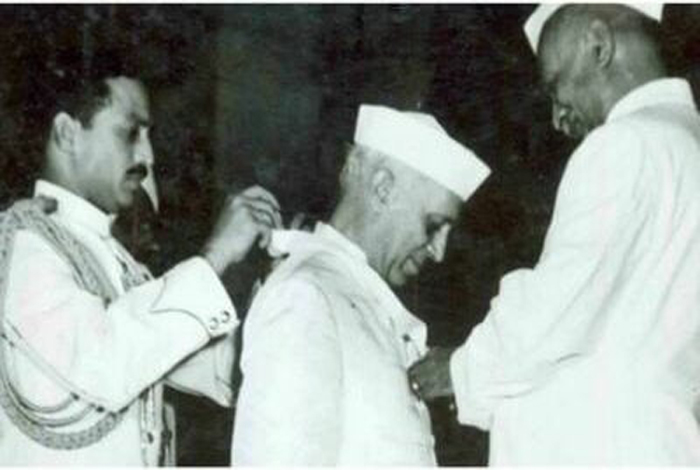
7 सितंबर 1955 को विशेष रूप से निमंत्रित प्रतिष्ठित भद्रजनों के बीच एक गरिमामय समारोह में नेहरू को भारत रत्न से विभूषित किया गया। राष्ट्रपति भवन में आयोजित इस सम्मान समारोह में तत्कालीन केंद्रीय गृह सचिव एवी पाई ने सम्मान पाने वाली विभूतियों के नाम उच्चारित किए, लेकिन नेहरू का प्रशस्ति-पत्र नहीं पढ़ा गया। प्रशस्तियों की आधिकारिक पुस्तिका में प्रधानमंत्री का महज नाम दर्ज है। उनके द्वारा की गई सेवाओं का वहां कोई जिक्र नहीं है। सामान्यतः यह उल्लेख परंपरागत रूप से उस पुस्तक में किया जाता है। पुराने समय के लोग कहते हैं कि देश व समाज के लिए नेहरू के अप्रतिम योगदान का चंद पैराग्राफ में जिक्र करना कठिन होगा, इसलिए उसे छोड़ दिया गया।
एक प्रतिष्ठित अखबार में छपी इस कार्यक्रम की रिपोर्ट के मुताबिक नेहरू जब यह उपाधि प्राप्त करने मंच पर पहुंचे तो सभागार हर्षध्वनि से गूंज उठा। राष्ट्रपति ने उन्हें ‘सनद’ व मेडल से विभूषित किया।
शशि थरूर ने इस मौके का उल्लेख अपनी पुस्तक में यूं किया है- “इस समारोह में उन (नेहरू) का एक फोटो है। सफेद अचकन पर लगा हुआ सुर्ख गुलाब का फूल, लगभग किसी युवा जैसे छरहरे, खड़े-खड़े मुस्कुरा रहे हैं और राष्ट्रपति उनके सीने पर अलंकरण लगा रहे हैं।तब वे छाछट वर्ष के थे मगर… राष्ट्रीय व अंतरराष्ट्रीय मंचों पर एक महान व्यक्तित्व के रूप में स्थापित।”
दिसंबर 1971 में जवाहरलाल नेहरू की सुपुत्री इंदिरा गांधी भी एक महान व्यक्तित्व के रूप में इसी तरह के समारोह की ओर बढ़ रही थीं। इसी साल के प्रारंभ में उन्होंने देश के लोकसभा चुनाव जीत कर सत्ता प्राप्त की थी। फिर उन्होंने एक निर्णायक युद्ध में पाकिस्तान को परास्त कर बांग्लादेश निर्माण का मार्ग प्रशस्त कर दिया। इसी उपलब्धि पर वर्ष 1971 के लिए, मार्च 1972 में इंदिरा गांधी को भारत रत्न देने की घोषणा की गई।
जैसा निर्णय सन् 1955 में तत्कालीन राष्ट्रपति ने लिया था, वही भूमिका इंदिरा गांधी के समय राष्ट्रपति वीवी गिरी ने निभाई। उन्होंने इंदिरा को भारत रत्न देने की पूरी जिम्मेदारी स्वयं स्वीकार की। बाद में नेहरू व इंदिरा दोनों ने यह कर्ज उसी ढंग से चुकाया भी।
सन् 1962 में डॉ. राजेंद्र प्रसाद जब बतौर राष्ट्रपति सेवानिवृत्त हुए, तब उन्हें भारत रत्न से विभूषित किया गया। इसी तरह बतौर राष्ट्रपति वीवी गिरि का कार्यकाल अगस्त 1974 में पूर्ण हुआ और वर्ष 1975 में वे भारत रत्न हो गए।
हालिया बरसों में सूचना के अधिकार पर काम करने वाले उत्साही कार्यकर्ताओं द्वारा नेहरू, इंदिरा, प्रसाद, गिरि सहित अन्य गणमान्य नागरिकों को भारत रत्न देने संबंधी रिकॉर्ड की मांग की गई। तब प्रधानमंत्री कार्यालय तथा राष्ट्रपति भवन द्वारा उन्हें जानकारी दी गई कि इन महानुभावों के महती योगदान से संबंधित जानकारियों व उनकी उपलब्धियों संबंधी कोई रिकॉर्ड मौजूद नहीं है।
लेखक ने भारत के प्रधानमंत्री नाम से एक पुस्तक भी लिखा है, जिसमें भी इस ऐतिहासिक संदर्भ का वर्णन आया है।
Have you ever met a dog barking history and sociology?
Meet Lora—the she dog! She tells the history of about 100 years encapsulating three generations in pre-British and post-British India with the sensitivity of a social psychologist.
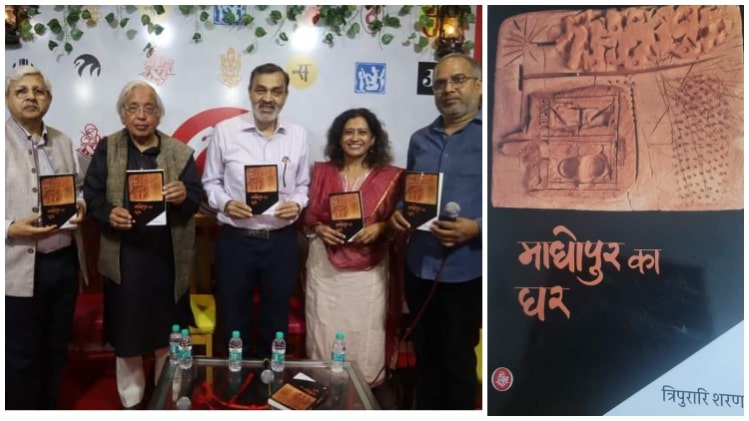
Lora is a pet canine and key character in Madhopur ka Ghar –a novel in Hindi authored by senior Indian Administrative Service (IAS) officer of Bihar cadre, Tripurari Sharan and published by Rajkamal Prakashan . It’s not easy to present a dog as a storyteller but Sharan has done it with felicity. And that’s what makes the novel, set in the planes of north Bihar, unique.
Lora ka Akhyan—Lora’s narrations—are cardinal chapter in which Lora begins detailing her experience with Baba (grandfather) and her master and Dadi (grandma). Baba is a reasonably educated person whose journey begins as a teacher at a ‘Delinquents’ Home’ in the sylvan hills of Hazaribagh in British India. Dadi is a finicky housewife of an old man with feudal upbringing but having taste for modernity and inclusiveness within the limitations of that era.
Baba loves Lora and respects Dadi. He goes out on work and meets his friends. Dadi lives at home; she too has a small community around her to talk to and mingle with. The life and litany of Dadi and Baba is the staple of ‘Lora ka Akhyan’ that the dog narrates in detail.
Initially, the story gives the impression that it’s a folktale involving the enchanting tales of typical Baba, Dadi, uncles, aunts, animals and birds that have usually been the part of India’s joint family system. But as the story progresses it delves deep in the struggle of the people of three generations. It narrates the saga of displacement, deprivation, poverty, disparity and untouchability in a vivid style.
Despite most of the objectionable social practices that divide the people and fuel constant conflict among them that the novel reflects with due literary panache, what it also reflects with equal diligence is the spirit of co-existence that keeps them together for generations. The hallmark of the novel weaved in simple words and plain sentences is that it tells the saga of conflict and co-existence with a sense of dispassion and neutrality.
For instance here is the story of illiterate, poor, and landless villager Zahoor Mian: Devoid of means to meet his and his mother’s basic necessities Zahoor goes out to Calcutta—now Kolkata– to earn his living. He has left behind his emaciated mother at his ramshackle hut. He himself lives in a small sack that’s an abode of a dozen of other cotton mills’ labourers in the city
Life is hard for Zahoor and other migrant workers but they have solace in earning the pittance that helps them keep their body and soul together and the home fire burning at their village. The remittance sent by Zahoor to his mother on the gap of a few months is the only source of money to her mother battling hard in the vice-like grip of money lenders.
The other day he receives a postcard from his mother and gets it read by one of his literate friends. His mother has explained about an excruciating pain in her knees that has debilitated her beyond recovery.
The letter has mentioned about the ‘Doctor Saheb’—a third generation zamindar and owner of Bishunpur haveli—who has counselled Zahoor’s mother to call her son back on the promise that he would pay good money to Zahoor for looking after his property at the village.
Zahoor comes back and becomes a manager at Doctor Saheb’s haveli. Here Zahoor as his name suggests is a Muslim youth. The Doctor Saheb, an upper caste Hindu, has appointed him on wages. But the relationship between the master and the manager is not constricted to that of work and wage.
Zahoor becomes a part of Doctor Saheb’s family. He might not be sharing lunch and dinner with the family members at the same table but serves as an avuncular uncle/brother to the children singing the song and sharing stories of Mela—a film that he had watched in the course of his Calcutta sojourn.
The reader can find the element of coexistence in the saga of Zahoor, Doctor Saheb and the latter’s children playing in the mango orchard that laces the narrative with the local flavour and aroma.
My only criticism of the book and that’s a minor one is that the writer has groomed Lora into a magnificent story teller but has stripped her off her own characteristics of a canine. Had the author retained the canine features of Lora the book, probably, would have been as fascinating for the children as it is for the young adults and seniors.
Still it’s a must read work. For me it was unputdownable. It ended my drought of reading Hindi books. I had read a Hindi novel after years. And let me be honest in admitting that I couldn’t put it down before completing it.
Sharan, a former chief secretary of Bihar, is Information Commissioner of Bihar government, as of now. Despite his demanding schedules he has retained his flair and creativity. Wish him to write more books in the months and years to follow.