



Given an opportunity, everyone would love to explore the world in ways to their liking. Some create opportunities, some get them on a platter. But not everybody has a faculty of observation that enables them to compile their experiences lucidly and become a storyteller for life.
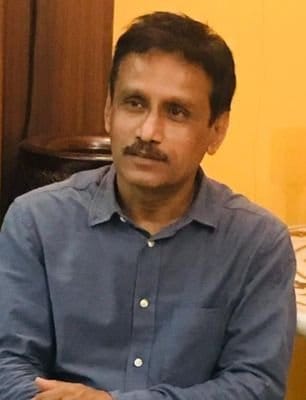
Sundeep Bhutoria, a social and cultural activist, is one of them. A globetrotter, it’s difficult to say whether he was consumed more by wanderlust or by his work that now extends to welfare, international cultural cooperation and promotion and preservation of Indian arts.
Encapsulating his initial trips to foreign shores in My Life My Travels, his candid travelogue is an honest attempt to record what he saw, learned and came up against when he was younger and wide-eyed. He met many world-famous, interesting, and occasionally vile personalities along the way.
The book is full of anecdotes and trivia like a restaurant in Japan named Ganga selling not only alcohol and meat but also beef with naan. He found similarities between some Indian customs and beliefs and those practised abroad. He had pleasant surprises and unpleasant encounters. He met people of Indian origin who refused to identify themselves with India, and also those who possessed a foreign passport but said they were Indians at heart.
In his own words, he didn’t know how to follow literary conventions and wrote the anecdotes in an unpolished and disorderly fashion, just like his journeys. Irrespective of what he says about his work, there’s a timeless feeling to some pieces; many anecdotes are downright funny and many thought-provoking.
From London to 9/11: Extraordinary Stories from a Global Journey
On his first visit to London, he spent a few hours in the night cowering behind a roadside bench in absolute fear. All because every time he passed a lamppost, the lamp would get switched on or off. He had no idea that the lampposts were automated! He requested a milkman around 6 am to accompany him home. The milkman was in stitches while explaining to him that the bulbs lit up when shadows fell on them!
In another anecdote, he narrates how his hunger pangs led to the arrival of Scotland Yard. His midnight foray to the kitchen triggered a security alarm. No wonder, he describes London as a city of automated things and automated people after that visit. Later he found solace in the fact that the door of the British Parliament, while it was being reconstructed after a devastating fire, was sent from India. “It’s a matter of pride that the British, who ruled us once, today pass through a door made in India to decide their own future.’’ He once wrote in the visitors’ book in the London Museum that Indians should be allowed to see the Kohinoor diamond for free, or at least at a discounted rate, because it belonged to their country.
Culture, Food and Identity: Lessons from Travelling the World
A vegetarian, he often found himself short of choices to satiate his hunger. Though many cities across the world have restaurants serving Indian food, there are still places where strict vegetarians have to either go hungry or take an extraordinary step like removing non-vegetarian pieces from a food item to make it palatable rather than dying of hunger.
On a visit to Machu Picchu, the old civilisation of Peru, he survived only on apples for two days. On the third day, he bought a ‘vegetarian’ sandwich, removed pieces of fish and ate the bread after washing it with milk. Fish and eggs were included in the ‘vegetarian’ category of food served to international travellers. A category called ‘Indian Vegetarian’ was not available. While travelling through parts of South America, he had to make do mostly with brown bread and coffee. Once he was shocked to find that the rice he bought was greased with beef oil. The large, white and shiny grain had made him suspicious. His broken Spanish helped him avert what would have been an assault on his traditional sensibilities.
He admits to developing a feeling of reverence for Mahatma Gandhi only after his visits abroad, especially to South Africa. He found Gandhi statues in places like Caracas, Santiago and other cities of Chile. It was in Johannesburg, Durban and Pietersburg that the greatness of the Father of the Nation was drilled into him.
Near Death, Gandhi and Global Encounters: A Traveller’s Memoir
The most memorable episode of his life happened when he was in New York to participate in the annual meetings of the World Federation of United Nations Associations (WFUNA) and the world’s non-governmental organisations. He was staying in Millennium Plaza, located just opposite the United Nations.
Hectic meetings throughout the day ensured that the author and his friends reached the World Trade Centre (WTC) late one evening. They were advised to come again early the next day to avoid crowds and for a better view from the top. The next morning was the day of the 9/11 terror attacks. The author would have been in the WTC at the time of the attack, but luckily for him, got a call to visit the United Nations instead.
When the plane crashed into the building, the author, unaware of the terror plot, complained to a waiter that “Americans boast so much about themselves and yet cannot even fly planes properly.’’ The same waiter had suggested to him the previous evening to migrate to America! A while later, the author saw another plane crashing into the second WTC tower. Trapped in the hotel, he had a harrowing time over the next 72 hours with rumours about more explosions and blasts flying thick and fast.
During his travels, the author saw ancient cultures and modern societies while encountering and, usually, overcoming language barriers and other inconveniences.
In his foreword to the travelogue, Bollywood actor Anupam Kher has noted that “he (Bhutoria) has travelled and experienced the adventures life has offered him with open arms.’’
In famous poet and lyricist Javed Akhtar’s words, “This is a lively and engaging travelogue by a writer whose expanding world of people and places is held at its core by a deep love for India. An interesting addition to travel writing.’’
One can complain that the pieces are short and lengthier versions could have been equally readable.

