

Kolkata: At a time when a lot of hatred is being spread in the name of religion, not just in India but globally, two colleges in West Bengal chose to do what not many would have imagined.
Bethune College, one of Asia’s oldest women college and Midnapore College chose to offer Humanity along with Hinduism, Jainism, Buddhism, Christianity and Islam as a choice for religion for applicants applying for their undergraduate course.
The move was lauded by many on social media. Almost a month down the line, since the two colleges made this move, eNewsroom contacted principals of both the colleges to know how many students had actually opted for humanity as religion.
Dr Gopal Chandra Bera, while highlighting the same said, “Around 200 applicants have opted for humanity as their religion among the 7000 odd application that we had received for the undergraduate courses that we have on offer.” He then added, “Let me tell you that this number might seem too little for some but for me, I am quite happy with this number, to begin with. Of course, even I was expecting a little higher percentage.”
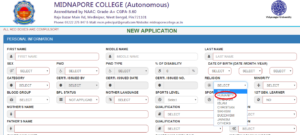
On the contrary, when Mala Ray of Bethune College was contacted to know the number of applicants, she said, “We have been very busy with the admission procedure, so we don’t have any statistics on the same. Also, we had made no instructions to the service providers to keep an account of the number of applicants opting for Humanity as religion. The idea was just to give humanity as an option to students who are atheists or non-believers and are not comfortable with citing their religious beliefs.”
However, on being asked if this could be replicated by other schools and colleges to promote Humanity among children and youth. Both the academic heads agreed on the same. Ray said, “Of course this can be used to promote humanity among youth.”
While Dr Bera added, “With us promoting Humanity as a religion could be a way of sensitizing the future generation to give it more priority than the religion they follow back home. Given the time we are living in this move can definitely make them more tolerant.”
Endorsing the move, sociologist Bula Bhadra said, “This is a very liberal move. To be honest, why would the religion of a student be known if when they come to study. Revealing one’s religious identity is a traditional compulsion and I am glad that two colleges from Bengal have chosen to initiate this educational reform.”
She further added, “I am of the opinion that there should be no need to mention one’s religion while applying in schools and colleges. However, this simple move of introducing Humanity as religion is an excellent move, given the present scenario that we are living in.”