Unsung Hero: Bhopal’s Syed Abid Helps Bring Stranded Citizens Home From Across The World

Bhopal: A man has been quietly helping Indian citizens caught in difficult circumstances in countries across the world for years.

Known for lending a helping hand to any family whose kin is trapped far away, he uses all his links and puts energy into the efforts to bring the person back home.

Syed Abid Hussain has mastered the skill to deal with the bureaucracy in different countries and with the use of social media, reunites such people with their families.

By profession, Abid is neither a bureaucrat nor a politician, who has contacts and departments to follow their instructions but he is just a painter and single man army.

And even not being associated with any government organisation, he has so far helped hundreds of people stuck in countries spread over the Middle East, West Asia, Europe and other parts of the world. Abid keeps getting calls and messages from families who have their kin caught in a country and even those whose whereabouts are not known.

The ‘Mesiah’ has developed a style of his own to resolve these cases. Whether it’s the case of a person who is untraceable or has been kept unlawfully by someone in a foreign land, Abid uses social media, particularly Twitter, to bring focus on the disappearance of the person or his plight. He tags officials of the particular country, their embassies and the Indian Embassy.

He also messages prominent personalities of the particular country, including peaceniks or activists, film actors, journalists and urges them to raise the issue. Subsequently, it comes in media in those countries, gets attention and opens the door to the person’s return.

During the Russia and Ukraine crisis, he helped dozens of youth to return with his efforts.

“I don’t have a strong financial background but I never take a penny for this work. It’s just for the sake of humanity and social work”, he says.

The number of people Abid helped bring back to the country is uncounted now. “I don’t do it for any number or statistics, I stopped counting, the figure is more than 500,” he says. “Whenever I get a call I start working on the mission. I feel that the victim’s family must not get depressed and lose hope”, he adds. One of the first cases that brought him nationwide attention was when he helped the family of a missing boy, Kailash Arjunwar.

“I found through a newspaper report about Kailash, who is from Madhya Pradesh that he had somehow overstayed on the other side of the border and was caught, and kept in jail. I began my efforts. After a long process, Kailash was rescued with the help of the foreign ministry. I constantly kept raising his issue until it got resolved”, he recalled.

Recently, Abid helped get 12 people from a country in West Asia to return to India. These people, Harendra Ram, hails from Siwan (Bihar), Jai Soorat (Ghazipur), Dharmendra Kumar (Deoria), Sheetal Singh (Kapurthala), Husan Lal (Jalandhar), Surendra Verma (Sant Kabir Nagar), Ved Prakash (Kushinagar), Hardas Prakash (Ghazipur) and Shiv Locahn of Mau along with others were reunited with their families.

From yet another country, he helped bring 48 persons back to India, in January.
A painter by profession, he was born in Faizabad, UP.

Abid, 38, says that when he started helping people stuck in foreign lands, he came to know about a lot of factors, especially how some people who are less educated are fooled by their employers or agents who take them to those countries but they end up working as bonded labourers sometimes & are even not allowed to contact families.

When Abid comes to know about a family that has a person ‘lost’ in a country, he takes documents and contacts the government, foreign ministry, the particular country’s consulate and embassies in both countries. Mostly he manages to get them returned. Former Minister for External Affairs Sushma Swaraj also used to know him for his efforts.
Sandeep Kumar, who was helped rescued by Abid recalls, “Our company had promised a job in the construction sector. After paying money to the agent, we were cheated.” “Our families told Abid bhai, who started the campaign because we couldn’t do anything. He also ran a hashtag to save us and this led to action (return),” says Sandeep, who is thankful to the activist for his role.

In the case of Babar Ali, who was stuck in Mozambique, the family approached Abid. “Babar was promised a big salary but when he reached there, he was not paid and made to work 18 hrs daily apart from harassment and torture”, said his family members. “He made a video and managed to send it. Then Abid took up the case and the Embassy acted, bringing Babar back”, a family member mentioned.

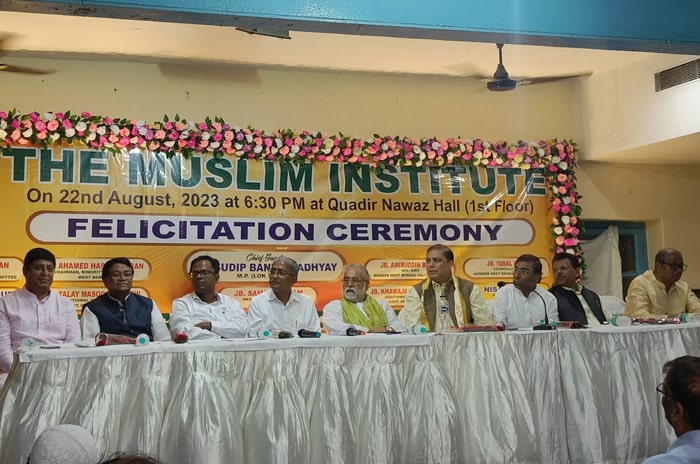
Abid has been felicitated many times and got awards too for his work.

Abid has been affectionately called ‘Bajrangi Bhaijan’ because of the movie and the similarity of his work with the Salman Khan starrer Bollywood flick.

Will Balancing Acts Of Election Year Budget Create Jobs?

0

Will the 10-lakh crore of capital expenditure make the Indian economy robust enough to create hundreds of thousands of jobs?

Will it generate tax revenue enough to fuel its expenditures and fill the gap between the income and expenditure of the government?

Or is the Budget 2023-24 an election-year exercise to appease all with little hope of fulfilment of any of the promises made?

Even the most ardent admirers of Modinomics will have to ponder over these pertinent questions if they analyse the last full- budget presented before the General Elections, next year.

The Finance Minister Nirmala Sitharaman appears to have passed the political test of coming out with a budget that targets its constituencies-the OBC, Dalits, tribals, other subaltern sections and the younger generation though symbolically, rather than in substance.

She announced that 38,000 teachers will be appointed for 748 tribal schools under the Prime Minister Particularly Vulnerable Tribal Groups Development Mission and allocated Rs 15,000 crore for it, she tried to lure the people living in the tribal areas, whom the BJP loves to call ‘vanvasi.’

As many nine states are going to polls this year, and many of them have a sizable number of scheduled tribe populations. Meghalaya, Mizoram and Tripura are the states with majority of tribal population.

Similarly, Nirmala Sitharaman allocated Rs 79,000 core, a whopping hike of 66% for the Prime Minister Awas Yojna, a house construction scheme for the rural poor.

She has also promised to transfer a huge amount of Rs 2.2 lakh crore to 114 million farmers.

The finance minister announced an outlay of Rs 10 lakh crore for the capital expenditure or the capex, as it is popularly called. She signalled to the construction sector and everyone else related to it that they might make a killing. She also might have thought that it would boost steel, cement and other related fields and create hundreds of thousands of jobs.

Similarly, Sitharaman wanted to woo the younger generation searching for jobs by announcing certain sops for the MSMEs, startups, green energy and labs for future technologies.

Prime Minister and his colleague Sitharaman have complained many times that not more than two percent of the vast population of more than 130 crore pay direct taxes. While preparing the budget of the year, the Finance Minister chose to appease the middle class taxpayers by symbolism rather than in substance.

She announced that people with an annual income upto Rs 3 lakh will not have to pay, earlier this limit was Rs. 2.5 lakh. So, she gave a relief of Rs 50,000 only. Considering the RBI-estimated inflation rate of 5.2%, this will be much less, starkly insignificant.

But the finance minister has other plans for the taxpayers as well. Considering the fact that there are not many takers of the New Tax Regime, introduced three years back, she made an interesting announcement-those with an annual income of less than Rs. 7 lakh will not be taxed. The minimum tax rate of 5% will be levied on annual income of Rs 7 lakh to 9 lakh. She also announced certain deductions and reductions to incentivise people of other income brackets to shift to the new tax regime.

The New Tax Regime has no deduction or concession.

The budget has some inherent flaws indicating that either the Finance Minister is a too optimistic person, completely disconnected from the economic realities of the country or she has tried to fool the country deliberately.

The budget has projected a nominal growth rate of 10.5%, assuming that the inflation rate will not be more than 4%. But the RBI has projected an inflation rate of 5.2% for the first half of the financial year. Even if the inflation rate for the second half of the financial year is 4% as projected, the average inflation rate will be 4.6%. It will upset the budget estimates.

Clearly, the budget has over-estimated the growth prospect.

Sitharaman has tried her best to strike a balance between good politics and good economics. But it seldom happens.

By cutting subsidies, freebies and also pumping money into capital expenditure, she has tried to prepare a budget that angers no one and also generates some inputs for real and long-time growth.

But the finance minister has not made arrangements to generate enough revenue to fuel the expenditure. She has tried to appease the middle-class in symbolism with no substance. She has ruthlessly cut the allocations for MGNREGS and other employment generation schemes, with no alternative ways for job-creation. Sitharaman has cut subsidies leaving the most vulnerable segments of the society in lurch.

A good politics is a bad economics and vice-versa. An attempt to juggle up both is bound to fail.

Meanwhile, the finance minister has slashed the allocation for the Ministry of Minority Affairs by about 38%.

She made an outlay of Rs 3097.60 crore, much less than last year’s allocation of 5020.50 crore.

Out of the total outlay, Sitharaman has made an allocation of Rs. 1,689 crore for education empowerment while Rs. 64.4 crore has been allocated for Skill Development and Livelihoods.

Welcoming the budget, Minority Affairs Minister Smriti Irani tweeted that the prime minister and the finance minister has ‘truly epitomised inclusive development’

Narendra Modi cabinet has no Muslim minister. It is also for the first time that the largest ruling party has no Muslim member in the parliament.

Journalist Siddiqui Kappan Released From Jail ‘On Bail’ After 28 Months

0

Lucknow: Journalist Siddique Kappan released today from Lucknow jail after being granted bail. He was arrested over two years ago on his way to report the alleged rape and murder of a Dalit woman in Hathras, Uttar Pradesh. It sparked nationwide as well as outside India protests.

The UP police claimed that Kappan was going there with the intention of creating unrest and charged him with sedition and under the Unlawful Activities Prevention Act (UAPA). The Enforcement Directorate later filed a money laundering case against him, accusing him of receiving money from the banned People’s Front of India.

In September 2022, the Supreme Court granted Kappan bail in the UAPA case, observing that no formal charges had been filed against him and the “Toolkit” document recovered by the state police only propagated a call for justice in the rape case. Three months later, he was granted bail in the money laundering case as well. However, he remained in jail due to bureaucratic lapses until he was finally released.

Opposition parties and civil society groups have condemned Kappan’s arrest as politically motivated and an attempt by the Uttar Pradesh government to avoid negative media coverage. The police have claimed that Kappan and others arrested with him are members of the banned Popular Front of India and its student wing, the Campus Front of India.

However, Kappan has repeatedly denied any involvement in terror activities or financing and argued that he was on his way to Hathras for journalistic work.

After his release, Kappan stated that he will continue to fight against the “draconian laws” and said he doesn’t know who benefitted from his being in jail. The opposition and civil society groups have also criticized the BJP government’s efforts to muzzle the media.

“False allegations were put against me. I am happy to be out now,” said Kappan.

US National Press Club Urges Indian Government to Rescind Ban on BBC Documentary

0

Washington: National Press Club, a leading voice for press freedom in the United States and worldwide, has strongly condemned the ban on BBC Documentary- India: The Modi Question by the Indian Government.

The international press body argued with the Government of India to let people decide whether to watch or not.

Meanwhile, hundreds of students are getting suspended or being detained for screening the documentary on university campuses across India.

NPC’s president Eileen O’Reilly as well as Gil Klein, president of the National Press Club Journalism Institute jointly issued a statement on the decision by the government of India to censor the airing of a BBC news documentary probing the role Prime Minister Narendra Modi may have played in the 2002 Gujarat riots.

It reads, “India should be proud that it is the largest democracy in the world, but it cannot hold on to that identity if it continues to erode press freedom, persecute journalists, and suppress news that holds a mirror up to its shortcomings. Since Modi came to power, we have watched with frustration and disappointment as his government — time and time again — has suppressed the right of its citizens to a free and independent news media.”

And added, “We strongly urge the government of India to rescind its ban on the BBC documentary and to allow the citizens of India to decide for themselves whether they agree or disagree with its findings. The BBC is one of the most respected news sources in the world and is known for its high editorial standards.

We also demand in the strongest terms, the government stop its persecution of journalists and suppression of press freedom in India.”

After the BBC aired a two-part documentary entitled ‘ndia: The Modi Question’ on Jan. 17, the Indian government used its emergency powers to ban it from being aired in the country. Modi’s government also forced Twitter and YouTube to block the documentary in India under an unjust 2021 information technology law, which the National Press Club has previously criticized.

The BBC documentary examines PM Modi’s role in the 2002 Gujarat riots when he was chief minister of the western Indian state. During the riots, thousands of predominantly Muslim Indians were killed, many were raped and Muslim establishments were set on fire. 

The Indian Supreme Court exonerated Modi in 2012 of wrongdoing but the documentary notes the British Foreign Office produced an unpublished report claiming Modi was ‘directly responsible’ for enabling the impunity of violence that led to the killings.

Founded in 1908, the National Press Club is the world’s leading professional organization for journalists.

The National Press Club Journalism Institute promotes an engaged, global citizenry through an independent and free press. The NPCJI is the nonprofit affiliate of the National Press Club.

Glorious Triumph for Indian Girls in Inaugural U19 T20 World Cup – Women’s Cricket in India Ready for Big Leap!

0

The Indian Under-19 Women’s Cricket Team scripted history by thrashing England and lifting the maiden ICC U-19 Women’s T20 World Cup 2023. At Potchefstroom in South Africa, the Shafali Verma-led side turned January 29 into a Super Sunday for Indian Sport with their clinical demolition of England by 7 wickets. By being crowned World Champions in the inaugural U-19 Women’s T20 World Cup, the ‘Women in Blue’ won their first-ever ICC title nearly 50 years after women’s cricket began in the country.

The English side was undefeated in the tournament but in the one-sided final, they were simply no match to the Indian eves who dominated from the start. Captain Shafali Verma, who is also a member of the senior team, decided to field first. An excellent bowling effort saw India skittling England out for just 68. Fast bowler Titas Sadhu bowled with discipline and her tight spell was rewarded with 2 wickets for just 6 runs. Spinners Archana Devi and Parshavi Chopra also picked 2 wickets each, setting up an easy task for the batters.

Indian girls didn’t have any difficulty in chasing a below-par total of 69 runs and romped home in barely 14 overs!! The English side was outplayed, thoroughly. Somya Tiwari and Gongadi Trisha stitched a breezy 46-run partnership to ensure a famous victory for India after a quick start by Shafali.

Prior to the dominant display in the final, India topped their Group D, which had South Africa, UAE and Scotland. But in the Super Six round against Australia, the team was bundled out for 87, which the Aussies chased comfortably. The Indian team bounced back with a thumping win over Sri Lanka and assured themselves a semi-final spot against New Zealand. All-round brilliance in the Semis saw the Indians crush the Kiwis by eight wickets.

India’s triumph at the inaugural U19 T20 World Cup is being seen as a sign of far happier days for women’s cricket in the country. It comes just days after Women’s Premier League (WPL) netted huge gains. Just broadcasting rights alone fetched Rs 951 crores. And five franchises were sold for a massive Rs 4,669 crore. In fact, the bidding for teams of the inaugural WPL broke the records of the inaugural men’s IPL in 2008.

team india u19 t20 world cup women cricket

Most experts believe the U-19 glory as a culmination of a process that has been gathering pace over the past decade. It comes three months after Indian girls lifted the Asia Cup for the seventh time in October 2022. That victory came barely a month after the men’s team had failed to even reach the finals of the Asia Cup. 

Earlier, in ICC events in the last few years, India had narrowly missed title triumphs. In the 2017 ODI World Cup, little-known Harmanpreet Kaur from Punjab had played an amazing knock of 171, which got India to the final – and women’s cricket suddenly gained mass recognition in the country. Despite India’s narrow loss in that World Cup final, when the team returned home, fans thronged the airport in thousands. It was the first major sign that fans had started recognizing that it was not only the Men in Blue but also the Women in Blue who were playing stellar cricket and deserved their love and support.

If that wasn’t enough, India also reached the final of the 2020 Women’s T20 World Cup but lost to Australia. Besides Harmanpreet and the equally popular Smriti Mandhana, it was the-then-16-year-old Shafali Verma who played a crucial role in that tournament and became an overnight sensation in the country. This lot has, of course, benefitted tremendously from the experienced duo of former skipper Mithali Raj and Jhulan Goswami, who were active stars till recently.

Similarly, in the Commonwealth Games in 2022, Indian women won the silver medal after a narrow 9-run loss to Australia in the final. The Indian women nearly pulled it off against the five-time T20 champions Australia as captain Harmanpreet Kaur almost took India home with a fluent half-century in the chase of 162. She smacked the Aussie bowlers all around the park and stitched a 96-run stand with Jemimah Rodrigues. But India lost their last seven wickets for 34 runs and that collapse helped Australia to clinch the Gold. 

The glorious triumph in the Under-19 category now seems a fitting tribute to the efforts put in by countless players over the past 5 decades. It’s a win especially for a range of exceptional women whose names rarely figure in India’s glorious cricket history. These include among many others the pioneers like Shanta Rangaswamy and Diana Edulji who played for India for decades but hardly earned a penny to the long-serving Anjum Chopra, Mithali Raj and Jhulan Goswami to the current lot of Harmanpreet and Co.   

The first title triumph in an ICC event comes just a few weeks ahead of WPL, the world’s richest women’s sports league. The string of recent successes were finally rewarded by the BCCI when it announced pay parity in October 2022 for its contracted women cricketers. As a result, women cricketers will be paid the same match fee as the men, which is Rs 15 lakhs for Test matches, Rs 6 lakhs for ODI matches and Rs 3 lakhs for T20I games. By every reckoning, becoming U-19 World Champions is a watershed moment that could usher in a glorious future for women’s cricket in India with fans getting more chances to ‘bleed blue’!

What BBC Missed In Its Documentary India: The Modi Question

0

British Broadcasting Corporation (BBC)’s two-part documentary, India: The Modi Question has been released. The Government of India has banned the first part, so the second has also been removed from major social media platforms. The first part largely focused on the Gujarat riots 2002. This made many question why BBC needed to show a two-decade-old issue now? Even concerned citizens, who are worried about the wide-spread Islamophobia and the hate-filled environment in India seek answers to it. The second part of the documentary, came with all the answers, as it highlights the Narendra Modi government’s work done in the last eight years, or anti-Muslim acts.

It starts with mob lynching cases, Kashmir (abrogation of Article 370), reports on citizenship issue which led CAA-NRC protests in the country and also mentions about hate speech being made against Muslims in the country. It shows Assam was the lab for Citizenship Act and Jharkhand as the epicenter of mob lynching cases in India.

Second part begins with the Alimuddin Ansari case, he was lynched in Ramgarh in 2017. All the killers in this case are out on bail. Ansari’s was the first lynching case in India in which conviction took place. But, Jharkhand High Court granted bail to the accused and later Jayant Sinha, BJP’s Hazaribagh MP and then a minister in Modi cabinet had garlanded the murderers when they came out from the jail. It makes one wonder whether it was the impact of Ansari case that helped the killers get bail even after conviction in another lynching (Latehar case) where two people, including a 12-year-old boy who was beaten and then hanged to death – the first one in Jharkhand. Between 2016 to 2019, over 26 lynching cases took place in the state, and Hemant Soren-led JMM government came to power with the promise to make a law against lynching. Hemant fulfilled the promise but the bill was returned by the center appointed Governor.

The BBC team talks to Ansari’s wife, Mariyam Khatoon, and victims of citizenship issues as well as the protestors.

But, even for an organization like BBC, which made two episodes of almost an hour each, missed ‘two’ important issues that the Muslims faced or are still facing during the Modi regime. Or it can be said that since BJP came to power with a full majority in India, the party and its supporters remain involved in so many types of anti-Muslim activities that the two-hour-long BBC documentary could not cover it all.

Covid spreader

First, when the lockdown was imposed to break the chain of Covid-19 pandemic, the Tableegi-Jamaat was blamed as the spreader of the deadly virus, within a few days of imposition of the shutdown. Thousands of jamaat people were arrested, detained and humiliated. The markaz at Nizamuddin, Delhi was shut down. Later the media ran a campaign against Jamaat and tried to malign them in every possible way. When such things were happening, no ruling party BJP leader including Prime Minister Modi or Home Minister Amit Shah or anyone else condemned the act. BBC too missed this important issue in the two part series of India: The Modi Question.

Economic boycott

Another important issue, the call for the economic boycott of Muslims, which is an ongoing project, has not been mentioned. From time to time, the boycott calls took place but it intensified after Covid-19 lockdown. After every call, which takes place anywhere in India (especially in Hindi heartlands) Muslim hawkers (venders) get beaten, their identity is cross checked and are barred in several areas or localities. However, it could not find a mention in the docu-series.

BBC could have easily found both, the Jamaat victims and Muslim hawkers who could narrate their plight. They could have also questioned former Rajya Sabha Member and BJP leader Swapan Dasgupta about these issues, as he was given ample time to talk at length in the video.

The BJP leader got a chance to rebut every point mentioned by the BCC. But, no one can deny that what the BBC have shown in its two-part series has not taken place in the world’s largest democracy during BJP rule.

Politics of demolition

Besides the two issues that BBC did not cover, the bulldozer (in) justice against Muslims could also have been added in the documentary. From Delhi, Uttar Pradesh to Madhya Pradesh and in many parts of the country, this method has been used in recent times to further target the largest minority.

Earlier in India, in every criminal or civil case, due process used to be followed. But now, police have bypassed all the judiciary process and within two days, houses of the accused are being demolished.

Even during Covid lockdown evictions took place on a large scale.

Unofficial data shows that between March 2020 and July 2021 (during lockdown), 2. 57 lakh homes were demolished across the country. In the year 2021, total 3. 48 lakhs homes demolished. Datas also revealed that most of these states where it has been done are being ruled by the BJP.

After the citizenship issue, it has also created a humanitarian crisis in the country.

However, as it’s a very recent and latest addition among the many atrocities committed by the Modi-led BJP government, it may not come under the planning of the makers.

I was discussing it with senior journalist Uttam Sengupta, who agreed and said, “Hope it may lead to BBC to come up with another episode in future.”

BBC Documentary: India’s Secular Image Dented Due To Islamophobia Practiced By Modi Govt

0

Will the controversial BBC documentary help the BJP and Narendra Modi? Will the saffron brigade keep the pot boiling till the next General Election to create a new narrative?

Both the parts of BBC documentary India: The Modi Question has created an uproar in the country though it has not been screened officially. The government has asked Twitter and YouTube to block the link to the documentary.

Any attempt to screen the documentary exploring the politics of Narendra Modi and the Bharatiya Janata Party after the Gujarat riots of 2002 has been muzzled.

After the JNU Students Union declared to screen the documentary, the university administration issued a notice threatening strict disciplinary actions against those who dared to violate its dictate and get involved in the screening.

When the students of the reputed central university gathered to watch it, the electric current went off. The discom ruled out an outage and made it clear that there was no paucity of the current. Another central university in the capital, Jamia Millia Islamia, called the police and did not allow any student to enter the campus to stop the screening.

Why is the government or those closer to the ruling dispensation so afraid of the documentary?

There is no startling revelation, nothing new, nothing that has not been reported earlier.

Those opposing the documentary accuse the BBC of being biased.

Really?

Ex-BJP MP Swapan Dasgupta and an office bearer of the youth wing of the saffron party have been quoted copiously. They have defended the party, the government and the leader. Dasgupta has gone to the extent of saying that there was a conspiracy to finish off Modi, politically.

The BBC has used the old Narendra Modi interview, taken by Jill McGivering. The then-Gujarat CM bluntly told her that the BBC had no right to interfere in the functioning of the government. He also said to her that Britain has no right to talk about human rights, though the BBC does not represent Britain or the UK government.

So, the charges of being biased and lopsided are baseless.

And what about the accusations of imperialistic motive and colonial mindset for making this documentary?

The BBC documentary is based on a report prepared by the British Foreign Office. It also uses a bite of the then-UK Foreign Secretary Jack Straw.

The British Foreign Office has been accused of making a false report on Weapons Of Mass Destruction in Iraq just before it joined the US bandwagon and destroyed Saddam Hussein’s regime.

But can it be said that the Gujarat riots did not occur or that the Muslims were not killed?

What the British Foreign Office said had been said a number of times before.

The BJP and its outfits are trying their best to not allow screening of India: The Modi Question anywhere.

By doing this, they are creating a new narrative, a narrative of an international conspiracy to defame the Hindu religion, India and its leader.

The saffron brigade may keep the pot boiling till the next general election to be held in 2024. It may further consolidate its vote bank.

But this documentary has the potential of damaging the image of the Indian Prime Minister.

Most international human rights groups have criticised Modi and his government for reasons other than the Gujarat riots.

The CAA, the NRC and the treatment of Muslims in the country have alarmed them. Amnesty International, the Human Rights Watch group of the US, the United Nations Human Rights Council and other groups have slammed India and expressed their concerns many times.

India has been condemned at the meetings of the UNHRC and other UN agencies. Even the Gulf Co-operation Council and friendly nations like Iran, and the United Arab Emirates have criticised it.

European Union members and friendly countries like France, the UK and Germany have too slammed India under the leadership of Modi.

The image of India has changed over time during the rule of the saffron party. Earlier it has been known as a secular, liberal, vibrant democracy. That image has been dented and India stands wounded.

Now India is seen as a country where Islamophobia is on the rise, people are lynched for eating beef and their religious places are attacked.

When the entire Muslim world, particularly the Middle East rose in arms at the obnoxious comment on Prophet Muhammad by the then BJP spokesperson Nupur Sharma, it was not just the comment. It was the image of Islamophobia and persecution of Muslims that made them upset.

The issue of the BBC documentary was raised in the British House of Commons and PM Rishi Sunak backed his Indian counterpart. He said that he did not believe the documentary.

The western world is silent or in support of Modi. These are the same countries that have backed the military dictatorship of Pakistan and countries in Latin America and Africa. The same countries are now backing Modi.

China has emerged as the main challenger to the US hegemony and is poised to replace it as the superpower of the world. It is to be countered and checked in control.

India can do it effectively. Delhi can provide a counterweight to Beijing in the South China Sea, the Indo-Pacific region and the politics of Southeast Asia.

The entire western world and most other countries are silent due to geopolitical compulsions.

What is Modi government hiding and why at all?

0

Choli ke peeche kya hai

Choli ke peeche?

Chunri ke neeche kya hai

Chunri ke neeche?

We were adolescents when this song from Khal Nayak started titillating us week after week on a show called ‘Superhit Muqabla’ on Doordarshan. Those were not the days when Bengalis knew Hindi almost as good as their mother tongue. Even the parents sending children to English medium schools were not falling over each other to make Hindi the second language. Therefore, we took some time to make out what ‘choli’ and ‘chunri’ meant. How the testosterone levels shot up once we did, is hard to explain to today’s smartphone generation. However, it was not long before somebody decided to play spoilsport and reached the doors of judiciary, alleging the song is obscene. A public debate broke out and soon we found ‘Superhit Muqabla’ was not showing that song anymore. Those who said those four lines sung by Ila Arun were not obscene, pointed to the next few lines sung by Alka Yagnik:

Choli mein dil hai mera

Chunri mein dil hai mera

Yeh dil mai dungi mere yaar ko, pyaar ko.

One could see Nina Gupta lip syncing the first four lines of the song as a question to the luscious Madhuri Dixit on screen. And Madhuri replying with the next three, which clearly explain the thing that is inside her ‘choli’, under the ‘chunri’. So there is no scope for imagining anything remotely obscene – ran the logic. As far as I can remember, the charge of obscenity against the song could not be proved. Hence the makers of the film did not need to cut the song out of the film or re-release it with fresh lyrics, which was the case with another song of the same era. The song was ‘sexy sexy sexy mujhe log bole’ from Khuddar. The court ordered makers to change it to ‘baby baby baby mujhe log bole’. In any case, the debate around ‘choli ke peeche’ could not crush our libidinous excitement. Each one of us drew our own conclusions about what Madhuri’s ‘choli’ held.

Every time the discussion about Gujarat riots 2002 starts afresh and Narendra Modi’s responsibility for it is called into question, I can’t help remembering everything that happened around that song. You have to be patient and go a long way to get a woman’s ‘dil’ (heart). We as teens neither had so much patience nor the intent; our thoughts were only skin deep. We were happy thinking about only that meaning of the song. Whenever we heard it being played on some loudspeaker, we would share a mischievous smile. It’s not that there was nobody with nobler feelings among us. Those boys used to fume. Some of them, with milder temper, even tried to convince us that we were completely off the mark about the meaning of those lines. Thanks to Anand Bakshi, we could understand that a single word can have multiple layers of meaning long before listening to Rabindranath Tagore’s songs or reading William Shakespeare.

Poets of the Romantic Revival in England used to believe human beings are essentially divine. Therefore, they stay innocent for some years even after being born. Then experience spoils them, innocence gets lost. This is why William Blake wrote complementary set of poems called Songs of Innocence and Songs of Experience. William Wordsworth went a step further and wrote this world is a prison and “Shades of the prison-house begin to close/Upon the growing Boy”. But when series of incidents like Gujarat 2002 happen, one can’t help wondering whether human beings are essentially divine or predatory. Looking back, I feel Gujarat 2002 was the coming of age moment for India’s religious fascists. Madhuri’s ‘choli’ was the experience with which we graduated out of innocence; while post-Godhra riot was the experience with which the Hindutva brigade graduated out of the hooliganism of razing a mosque to the cool use of state machinery in implementing their genocidal agenda.

The highest court of the land has ruled in multiple cases that there was no bigger criminal conspiracy behind murder, rape and displacement of thousands. The then chief minister Narendra Modi had no hand in it either. That should have been the end of it who can doubt the Indian justice system? Everyone knows it is the most neutral and trustworthy justice system in the world. That is why the Modi government is hell-bent on cancelling the collegium system for appointing judges. The government thinks it is undemocratic. Law minister Kiren Rijiju and Chief Justice DY Chandrachud are fighting a war of words almost on a daily basis. How absurd! The system that crushed every political conspiracy against Modi by ruling he is as sacred as a lotus, is now deemed undemocratic by his own government!

While this is going on, comes the BBC documentary India: The Modi Question, saying “Fee fi fo fum, we smell a pogrom”. And the choli question comes up once again.

At this point, let me make it clear why I have chosen this typically lewd objectification of the female body as my example. The reason is simple. I repeat, each one of us had drawn our own conclusions about what the lyricist meant by ‘choli’. Whenever we heard the song somewhere, we winked at each other. Same kind of signalling about what actually happened in Gujarat after Godhra, goes on between BJP and its supporters. Most things shown in the BBC documentary are stale news for Indians. Perhaps the only new information is, the British government had run its own investigation, which concluded that Modi himself was responsible for the death of so many innocents. All the proofs and witnesses cited in the documentary have found space in some Indian media or the other in the last two decades. In fact, Rakesh Sharma’s documentary Final Solution is more spine-chilling than the BBC one. When that documentary was uploaded on YouTube, the government did not have the powers to make YouTube and/or social media platforms block it in India. However, so many people reported the video that YouTube did block it for some time on the pretext of violating community standards.

So, questions have been raised before and every single time BJP leaders and supporters have come up with two answers. One group has always said, all allegations are false. Supreme Court has given clean chit. There can’t be anything more reassuring. Another group says whatever has been done was well-deserved. Muslims should be kept in leash. Amit Shah, for example, told ANI last year that the allegations against Modi were politically motivated. People who made those allegations should apologise since the Supreme Court has exonerated the Prime Minister. But more recently, while campaigning for the Assembly elections in Himachal Pradesh, he said in 2002, Modiji taught a lesson to those who spread violence. That is why Gujarat has found perennial peace.

Everyone, therefore, is left to draw their own conclusions. We used to do the same thing. Some of us thought about Madhuri’s heart, others about her flesh. If you don’t know that this reduction of female body to mere flesh is hallmark of Hindutva, ask Bilkis Bano.

Government of India has ordered blocking of all links to the BBC documentary on YouTube. Many tweets have been deleted, too, for sharing that link. It won’t be mere nostalgia to say our innocent life was better than this experienced life. Because back then the Indian state only regarded sex as obscene. A little bit of coyness could save a film. Makers could get away with it by changing a few words in a song or by spiking a couple of kissing scenes. That, too, would be done only if somebody went to court. But today the government has amended the Information Technology Act to enable erasure of anything it does not like. It can just mark it untrue and get it deleted from the internet. This is exactly what has been done to the BBC documentary. Before this, last Tuesday, a few proposed amendments were uploaded on the MeitY website. Those show the government is planning to give unprecedented powers to its Press Information Bureau. In future, any news that PIB terms fake news would be prohibited from sharing on social media. The onus will be on the platform to ensure it is not shared by anybody.

That means this deletion business is not going to end with the BBC documentary. Rather, it’s the start. Tomorrow you could just post that there was a riot in Gujarat in 2002, and the government could order it deleted. Who knows? Perhaps Ehsan Jafri was never killed; it’s fake news. Bilkis was never raped; that’s fake news, too. If PIB thinks so.

Of course the government agencies can go that way. But the more they act like that, the more questions will be asked about what is there behind the ‘choli’. We may also need to ask why the government needs a choli at all. The who’s who among the accused and convicted of Gujarat 2002 are out of jail anyway. The only people behind bars are innocents like Umar Khalid and Sharjeel Imam, who have refused to grow up, continuing to believe humans are essentially good-natured.

We can console ourselves by thinking the government still has some shame left, that is why the need for the ‘choli’. However, it is difficult even for a high-handed government to keep its ‘choli’ in place in the age of internet. Spring is not far behind and if you take a boat ride along the river flowing beside Kolkata in spring, you would see some poor souls defecating on the bank. They sit with their backs to the river because they would like to believe you cannot see them since they cannot see you. Blocking information within a country in this age of information boom is a bit like that. You can call this self-deception. But autocracy can’t survive without self-deception.

Postscript: The BBC documentary is going to have a Part 2 as well. To quote a popular Kangana Ranaut character, “Abhi To Humein Aur Zaleel Hona Hai”.


The piece is a translation of Bangla article published at the Nagorik.net.

One Sankranti So Many Celebrations

0

Lohri is here. If one were to understand India’s diversity, one may study the so many names and rituals with which this Sankranti is celebrated all over India in mid January. Yet none can miss the underlying unity that binds all of India during this exact time of the year.

It is observed as Paush Sankranti in Bengal, Pongal in Tamil Nadu, Uttarayan in Gujarat, Bhogali Bihu in Assam, Lohri in Punjab and Jammu, Maghi in adjoining Haryana and Himachal, as Makara Sankramana in Karnataka and Saen-kraat in Kashmir. It is called Makara Sankranti in Odisha, Goa, Maharashtra, Andhra, Telengana and Kerala and in Gangetic north India. It is Sukaraat in Madhya Pradesh and Khichdi Parwa in parts of Bihar, Jharkhand and Uttar Pradesh. This is not only in India — our festival becomes Maghe Sankranti in Nepal, Songkran in Thailand, Moha Sangkran in Cambodia, Thingyan in Myanmar and Pi Ma Lo in Laos.

Its astrological significance is that the sun enters Capricorn (Makara) zodiac constellation and this ends the inauspicious phase of Paush (mid-December to mid-January). It also marks the commencement of the northward journey of the sun, Uttarayan.

Tamils celebrate with a lot of fervour for four days, burning all old clothes in a bonfire, and up in Punjab too the Lohri’s ceremonial fire is as important. Telugus also celebrate it over four days too, but the joy of the Tamils is that their winter monsoon crop is ready by. They boil the new rice and some moong-dal with milk and jaggery, until it all spills over. It is greeted with cheers of “Ponggalo Pongal” and the blowing of many conch shells.

All over the north, sweets made of sugar-cane and sesame (rewri and gajjak) are distributed. As we know, four items are essential for every kitchen, two, namely salt and spices, were in abundance in India. But our ancients were always worried about the other two i.e., oil (from sesame) and sugar. Til is the mother of all vegetable oils in India, which is why the word tailam or tel is derived from if. Sankranti was basically a form of rejoicing at the arrival of both crops and both these two critical kitchen items.

But in ancient Bengal, sugar cane or sesame were not plentiful and therefore palm trees supplied an aromatic gur and grated coconut was more in use. That is why Bengal’s sweet delicacies like pulir pitha, paati-shapta and tiler naru are made from palm sugar and local coconuts.

Assam also gets a new rice crop and its Bohgali Bihu is thus a harvest festival — marked with fast, feast and bonfires. All over the north, from Punjab to Bihar, a kihchdi of dal, rice and seasonal vegetables, is an additional treat, other than til, jaggery and milk-based sweets. Halwa is yet another popular in certain States like Punjab and Maharashtra, and many use suji as a base. Tamils and some others prefer milk, rice pudding and sweet payasam.

But Ganga snan, the annual ritual holy bath, is a common binder throughout India and people who stay far away make do with their local river. Legends say that all the 60,000 sons of Raja Sagar were burnt to ashes by Kapil Muni in his rage (for insulting him) on Sagar island. They were restored to life when Sagar’s great grandson, Bhagirath, got the Ganga down to earth, through the locks of Siva’s hair — to flow over Sagar island and his ancestors’s ashes.

Cattle too go through this mandatory bath Some southern States organise bullock cart races and Tamil Nadu goes one step ahead, by conducting dangerous ‘bull taming’ contests, called Jalli-kkattu. In Kerala, the erstwhile Buddhist deity ‘Saastha’, who now resides in the extremely popular Hindu temple of Sabarimala, also receives his dues from lakhs of pilgrims who undergo a lot of self torture for penance, just to meet him on this very day.

Many states like Gujarat and Jharkhand celebrate by flying kites on this day. Bhuinya tribals of Odisha and the western frontier of Bengal celebrate their ‘Tusu’ during this period, while in Manipur, many tribes pray to Lining-thou, their supreme god. In far off Arunachal Pradesh, the Ramayana, Mahabharat and Kalika Puran are invoked during this seasonal worship. Incidentally, even crows are invited with claps and rhythmic folk songs in the hilly regions of Uttarrakhand: the variety is, thus, mind boggling!

O Oscar, My Oscar

0

Omar Sharif was disheartened as he could not win an Oscar for his lifetime performances in Dr. Zhivago. He however did receive a nomination. He was consoled by Gregory Peck and Sophia Loren, who confessed that racial issues dominated the Oscars. In those days Oscars were truly coveted like Golden Palme O Dour at Cannes or Golden Lotus at Berlin Film Festivals. David Lean and William Wyler were critical of the Oscars when Satyajit Ray’s Devi did not receive an Oscar nomination.

Six decades later the scenario is worse. It is astonishing how RRR received accolades at the New York critics circle and is almost ready to officially compete for a Best Foreign Language Oscar. Director S. S. Rajamouli has even won an award in New York. A sensible mind which is cine-literate is skeptical about how such a content-less film filled with special effects, gimmicks and unnecessary gesticulations can compete for the legendary Oscars.

Last year a brilliant film like Ticket to Paradise went unnoticed in many countries. An aesthetically rich content-oriented film with excellent direction by Ol Parker, and memorable performances by George Clooney and Julia Roberts, it made many remember earlier classics like Brief EncounterIndiscreet and Never Say Goodbye. Julia Roberts has gone on record stating it as one of her favorite movies. Is the golden charm of classic Hollywood ending with a tragic note? Only time will tell.

From the 30s to the 80s, the Oscar charm held sway. The situation started deteriorating from the mid-90s. In this millennium there are many controversies about the Oscars. Many conscious minds connected with the cinema medium are questioning the authenticity and impartiality of the Oscar jury. Both Sophia Loren and Peter O’ Toole after winning their lifetime Oscars have officially stated on stage that Hollywood films and Oscars were losing sheen.

oscar awards rrr Indian films foreign language movies
Indians who won Oscar. (Top to bottom) Gulzar, Bhanu Athaiya, AR Rahman, Resul Pookutty, Satyajit Ray | Courtesy:newsmeter

There is an interesting anecdote about the Oscars. Sean Connery did tell Richard Attenborough, he was never surprised he did not win an Oscar either for Marne or Forever Forester. He also confessed his winning a Supporting actor’s Oscar for Brian D’ Palma’s, The Untouchables was by sheer coincidence as acting-wise he did not have much to contribute to the film. It also remains a wonder why superb films like A Bridge Too Far or Cry Freedom did not get Oscars. The mention of A Bridge Too Far brings to light how war epics like Longest DayTora Tora Tora among others. never won Oscars. George C Scott refused an Oscar for his haunting performance in Patton saying he was not interested in awards which were not always justified. Paul Newman after winning an Oscar for Color of Money never termed it a great achievement.

Let us come to a point. Meryl Streep received thirteen Oscar nominations and won it twice. Her third Oscar if she wins one will surpass the earlier record of the inimitable Catherine Hepburn. The million-dollar question remains how Ingrid Bergman, Sophia Loren and Ava Gardner did not receive so many nominations. 

Joan of Arc, Snows of Kilimanjaro and Voyage prove beyond doubt, the trio were better performers compared to Meryl Streep, Gregory Peck (Keys to Wisdom), Anthony Quinn (Old Man And The Sea), Richard Burton (Becket) stand testimonies of acting leagues ahead than any of today’s Hollywood actors.

Steven Spielberg, Martin Scorsese and Christopher Nolan are top-notch directors of the past three decades. Spielberg has himself agreed he is no match for a John Ford or David Lean. Martin Scorsese and Christopher Nolan have also stated it is too difficult for them to match a Frank Capra or a William Wyler.

From India, Bhanu Athaiya or Satyajit Ray winning Oscars is appreciable. For Slumdog Millionaire (2008), A.R. Rahman or Resul Pookutty won Oscars for music and sound recording.

But Mrinal Sen, Adur Gopalakrishnan, and Girish Karnad were not happy with Slumdog Millionaire’s music and sound recording winning Oscars. Mrinal Sen had said that he lost faith in the Oscars. According to him, the original score of Ali Akbar Khan in Devi, Satyajit Ray’s music of Charulata, and the sound recording of Mangesh Desai deserved Oscars. Many such examples prove My Oscar; My Beloved Awards are losing credibility.