MP Jawhar Sircar Highlights ‘Biggest Threat’ India Faces Today during Nabi Diwas Event

Kolkata: “I write about Nabi Diwas, not just this year, but every year. Tell, me how many people know about this celebration, but how many people do really know the details about this day. We say we are secular, we know each other but in reality, we only know very little. Ramadan is arriving. And all that we know is that they offer namaz and fast during this month but not more than that. To remove the divides that exist, we need to know beyond whatever little we know,” was how Rajya Sabha MP Jawhar Sircar began his keynote address at Nabi Diwas.

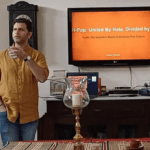
Sircar along with writer and researcher Bishendu Nanda, Prof Oyazul Haque, president Bongio Sankhalaghu Buddhijbi Manch, Abdur Rahim, Founder Sirri Saqti Academy, Ahamed Hassan, Editor, Puber Kolom along with several other speakers were present at Puber Kolom’s programme to mark the birth anniversary of the Prophet Muhammad’s birth anniversary.

Sircar, during his 30-minute long speech chose to highlight the ‘biggest threat’ that India is facing today. According to him, the country in its history of the past 500 years has never had the misfortune to face what its citizens are having to face today – the politics of hate. The former bureaucrat, said, “To understand what we are facing today, we need to understand how it all began. It was with the Common Wealth Games, which was quickly followed up by the India against corruption movement and the last nail was the Nirbhaya rape case. The media along with some forces that didn’t want UPA II to perform blew each of the cases out of proportion that impacted the public memory. And mind you, I am not telling you all this as a politician, but as a bureaucrat who saw all this happen.”

He then paused and added, “What was the result – UPA out, a new party was born. And what about the Gandhian, who shouted for a corruption free India. He can be seen nowhere. The other sage who was part of the movement, now owns a huge brand – Patanjali. The other two faces were rewarded by being made the Governor and Chief Minister of Delhi. But what about India being made corruption free? Tell me, didn’t Delhi get flooded despite the elaborate preparation for the G20 summit? I don’t want to get into the debate of dynastic politics, for to have a dynasty, you need to have a family first.”

As the crowd applauded, he went on to say, “The third and the most important people that these people need is ‘you’. Without the Indian Muslims, they can appease the majority. The attention from corporate appeasement, rising inflation, declining job creation is being diverted by the politics of hate, which can’t be without the Muslims. So, am making a request. Please before taking any action think of the repercussions. Majority of the majority is against the politics of hate and they will stand by you during this last leg. So, in the coming elections all that you need to is what you all have been doing as voters till date – vote in a united way for a candidate in you area so that they can emerge winners and represent you at the Parliament, which now looks like a high-end five star hotel.”

While, Sircar had no qualms about using the platform for a political discourse, there were other speakers who chose to highlight issues Muslims face, while few shared anecdotes on how the Prophet was and the need to follow the path shown by him.

Researcher Bishendu Nanda, asserted that the British came to India, during the Mughal era, a period that many want to be erased, because India was the richest during that time. “Unlike what many speak, the Hindus during that period were never as threatened as the Muslims in India are today. The Mughals actually united the princely states into the India that we know today. They made India so economically strong that the Europeans came to India in search of opportunities and enslaved us for their benefits.”

Rahman of TSSF during his session chose to highlight the traits of Prophet Mhammad that Muslims need to imbibe to be a better person. He said, “We need to have the purposefulness and vision of the Prophet. The heart of the messenger of God to forgive, love. And above all a sense of righteousness, to stand for what is wrong, never to deprive anyone of what truly belongs to them.”

While, Hassan chose to say, “The Nabi Diwas was designed to create a dialogue between the Muslims and the non-Muslims to break myths, stereotypes before the audience. We hope the continue doing the same the near future.”

Bangladesh PM Hasina’s UN Visit: A Message to World Ahead of Elections

0

After a successful cameo at the G20 summit in Delhi earlier this month, Bangladesh Prime Minister Sheikh Hasina’s recent visit to the US to participate in the UN General Assembly meets has been closely watched for messages by the international community.

With elections just around the corner, the PM seeking another term in office has been facing wider scrutiny on the conduct of elections and press freedom.

Speaking at the UNGA last week, the message from the Awami League leaders was quite unequivocal as she tried to put to rest issues raised on the conduct of free and fair polls.

“Bangladesh will continue to promote democracy, rule of law, and freedom of expression in line with Bangladesh’s constitution,” she said while addressing the General Debate of the 78th session.

In an apparent reference to US visa curbs on unnamed Bangladesh officials, Hasina iterated that the human rights issues are not politicized to put pressure on developing countries.

Hasina’s party has been in power for 15 years now and will square off with the opposition led by the Bangladesh Nationalist Party BNP in elections slated to be held in January 2024.

The Awami League government has projected itself as the deterrent against religious fundamentalists and militancy. This includes the conviction of the accused including former ministers in the smuggling of arms from Chittagong Urea Fertiliser Ltd jetty for insurgents in the north-east.

Bangladesh has also opened channels of economic cooperation including approval of the four transit routes through Bangladesh to the land-locked north-east.

On the other hand, the opposition Bangladesh National Party (BNP) has also come under intense scrutiny during PM Hasina’s recent visit to the US. The controversial display of both the Pakistani flag and the BNP flag during a protest outside the UN headquarters in New York has ignited a heated debate back home.

In terms of political messaging just ahead of the upcoming polls, the images coming from NY couldn’t have come at a worse time for a party that has found it difficult to find its feet after being in the opposition for a decade and a half now.

Bangladesh has over 119 million voters, and the numbers do not look good for the party, if it goes to the polls without forming strong electoral alliances.

BNP, led by Tarique Rahman, the party chairperson Khaleda Zia’s first son used to be in a political and electoral alliance with the outlawed Jamaat-e-Islami,

Founded by military dictator General Ziaur Rahman, the BNP initially followed a centrist agenda. However, over the years, the party inclined towards right-wing politics in 2001, when it gave two ministries to Jamaat, which won 4.28% of votes.

The alliance is in tatters now as the BNP is trying hard to create an umbrella alliance that will include the centrist and leftist political forces. In the process, the BNP may also try to woo the 5% voters of Jamaat.

The BNP’s overtures to India are also linked to its posturing on Jamaat, a long-standing ally of Bangladesh.

As for India, the strategic importance of Bangladesh with regard to its northeastern states is critical. The states are landlocked by Bangladesh and Myanmar and are connected to the mainland through a narrow passage called the Chicken’s Neck.

The Awami League for one has clearly demonstrated to India over the past 15 years that it will not allow its territory to be used by the north-east insurgent groups.

A strong democracy in Bangladesh is critical for the entire south-Asian region. And that’s the larger message which needs to resonate among all the key players as Bangladesh approaches its elections early next year.

Words like Katuwa, Mullah, Atankwadi by BJP MP were also for global Muslim leaders too whom Modi hugs

0

[dropcap]T[/dropcap]he new Parliament building has forever been marked by the viciousness and obstinacy of the saffron mentality. The true face of the Sangh Parivar has been exposed. What goes into a bowl drips out. BJP may try to hide as much, but what it has been taught or trained by the RSS scholars in Sakhas cannot be hidden, nor can the mentality get masked. From the old Parliament building to its new building, the BJP MPs led by their head Narendra Modi went carrying a copy of the Indian Constitution. They must have gone with it but these are the people who are far from believing in the Constitution. They just flaunt the Constitution inside and outside the parliament. How much glory was being spread in the happiness of going to the moon, Indian scientists went to the moon, but the Sangh Parivar could not get out of their dirty mentality. The same dark mentality, the same dominance of darkism is riding in their hearts and minds day and night. Allama Iqbal had said about such people a long time ago.

The seeker of the passages of the stars… could not travel in the world of his thoughts

Who arrested the rays of the sun … The dark night of life could not be charming!

Ramesh Bidhuri is not alone in the Sangh Parivar who is making a name for himself in his bad language and misbehaviour. The Sangh Parivar is full of such people.

Narendra Modi’s language itself reflects a dirty mentality. They recognize people by their clothes. He did not regret the massacre of Muslims in Gujarat. When asked, he says that if a dog’s paw comes under the wheel of a car, then it must be painful. This person had no qualms about using insulting words or phrases for all Muslims.

Ramesh Bidhuri belongs to the same family. How can his language and speech be different from Modi’s? His speech is being discussed all over the world. Al Jazeera news channel has also publicized the bad language of this BJP leader. It is possible that apart from English, it has been translated into Arabic as well. If not presented, an Arabic scholar should translate it from Hindi to Arabic so that even those lovers of Narendra Modi who embrace him, know how Modi’s colleagues treat Muslims. On the sidelines of the G20 summit, Modi was repeatedly seen hugging Mohammed bin Salman. Mohammed bin Salman is also included in the words that Ramesh Bidhuri chose to address MP Danish Ali.

On one hand, Mohammed bin Salman is embraced as an agent of wealth and money, and on the other, he or more specific Muslims like him are given titles like Katwa (circumcised), Bhadwa (pimp), Atankwadi (terrorist) and Mullah (slang for Muslims). The Arabs know how dirty Sangh Parivar’s mentality is. Many years ago, speaking in Cochin, Kerala, Modi had said that Muslim boy’s minds can be purified and work can be taken from them. Arab countries will be aware of the Sangh Parivar mentality today if not tomorrow and its effects will be far-reaching.

Thinking about Indians especially Indian brothers from Arabs. For this, the people of India should tell the truth to the Sangh Parivar that the people of the Sangh Parivar are not serving the country and the nation with their bad language, but they are defaming the nation.

Indians who are working or doing business in Arab countries will have to bear the brunt of this. Ramesh Bidhuri did not suddenly show foul language and misbehaviour but it seems that it was a well-thought-out scheme that was being attempted. In which there was a huge failure of the Sangh Parivar. The plan was that the Bahujan Samaj Party MP Kunwar Danish Ali would get angry and go out of his way to say something that would allow the Sangh Parivar to say what Muslims do.

It was good and very good that Danish Ali did not lose his temper but showed his humility and tolerance. Worked with patience due to which the oppressor remained oppressor and the oppressed remained oppressed.

All the opposition parties are condemning those who were happy or laughing at the tyrant’s cruel act. The step forward taken by Rahul Gandhi is highly commendable. Opposition parties are assuring Danish Ali of their support. Rahul Gandhi not only assured but also reached Danish Ali’s house unannounced, and hugged Danish Ali. Also by meeting his family members and assuring them that the Congress Party stands with Danish Ali and his family members. This is the first time that the leaders of the opposition parties and the Congress party have openly come forward on the issue of Muslims. This is a commendable display by the ‘India’ alliance in a way that should be applauded.

Muslim organizations should also come forward and seriously appreciate the tolerance of Kunwar Danish Ali and support him that he did not get agitated or swayed but acted like a good parliamentarian demonstrated by Danish Ali repeatedly saying that if justice is not done to him, he will resign from Parliament. Danish Ali hopes for loyalty from those who may not fully understand the concept of it.

Danish Ali should follow the advice of famous journalist Ravish Kumar and accept his suggestion. He should resign from such a parliament in which he was mistreated and many of the misbehaving party were laughing and tapping the table with glee.

In the same Parliament, MPs of opposition parties are suspended for the entire session for the smallest matter. Aam Aadmi Party’s Sanjay Singh and Raghav Chadha were suspended for merely protesting. Congress MP Adhir Ranjan Chaudhary was immediately suspended by the Speaker for using a wrong word, but Ramesh Bidhuri was merely warned by the Speaker not to make such a mistake in the future. It was like a father lovingly telling his son not to make a mistake in the future. The speaker’s bias is visible.

MP Danish Ali has written to the Speaker, demanding justice and requesting that the matter be referred to the Privileges Committee. No action has yet been taken in this matter and no action is expected.

Narendra Modi and the chief of the Sangh Parivar, is silent. It seems that their mouths are locked. Even if Narendra Modi spoke, it would be mere pretence and exhibition. MP Pragya Singh Thakur many years ago termed Gandhi’s killer Nathuram Godse as Desh Bhakt (patriot). At that time Amit Shah was the president of the BJP, and he sent a show-cause notice to Pragya Singh Thakur. Prime Minister Narendra Modi said in a press conference that he has suffered a lot, and he cannot forget such a painful thing in his life. To date, Modi’s heartache has not been revealed and no action has been taken against the MP who said Godse as desh bhakt. Then how can it be expected that action will be taken against Ramesh Bidhuri who is a member of the same party?

Bidhuri not only abused them and showed Islamophobia but also threatened them that he would see Danish Ali outside. If Ramesh Bidhuri had said the same thing outside Parliament, Danish could have filed an FIR against him. Bidhuri could have been sued, but what is said in the Parliament, case could not be lodged outside on it. It is the Speaker’s prerogative to act or the Privileges Committee to act.

Danish Ali should consult the leaders of the opposition parties and take some effective steps as soon as possible. The effective step should be that he does not delay in resigning from Parliament. His resignation may also be a huge slap on the face of the Sangh Parivar.


It is a translation of an Urdu piece by Abdul Aziz.

Bhopal Gas Disaster: A Case Study in the Failure of Environmental Regulation

0

Bhopal, Jabalpur, New Delhi: The morning on a day in the year 1974 dawned clear and sunny as the cattle belonging to residents of Chola area strayed into the area of a pool fed by a rubber pipe issuing from the Union Carbide India Limited (UCIL, Bhopal was then under the control of Union Carbide Corporation (UCC) – a US multinational company, which currently is owned the Dow Chemical Company (Dow), a subsidiary of Dow Inc), Bhopal.

“They drank the water and died soon after. Analysis of the soil showed contamination with heavy metals. In water from wells outside the plant area, toxic chemical substances were found. UCIL did not divulge these findings”, wrote Ingrid Eckerman, MD, in her book titled “The Bhopal Saga- Causes and consequences of the world’s largest industrial disaster”, published by Universities Press, Hyderabad, India.

It was normal. However, the incident turned out to be dangerous on multiple counts.

In the history of Bhopal, this was the first incident when living creatures died due to poisoned water. Fatefully, because of the UCIL pesticide plant. And the worse that the incident was largely ignored.

Precisely, a decade later, on the intervening night December 2-3, 1984 when poisonous gases from the UCIL plant which were heavier than air, spread across 40 sq kms of area, the City became a bearing witness to the moment when our beliefs about industrialisation and development changed.

The escaping of toxic gases covered about 36 of the 56 municipal wards, leaving in its wake more than 20,000 dead (over several years) and inflicting injuries in varying degrees on over 550,000 others.

The gas disaster brought the operations of UCIL, Bhopal to a sudden halt. This was again dangerous on multiple counts.

To begin with, the waste that was generated during UCIL’s operation from 1969 to 1984 dumped in and around the plant leading to severe soil and water pollution were left behind.

Not only this, nearly 345 tonnes of toxic waste stored at the plant site was left with the city’s then population of around 900,000 people of Bhopal to live with the consequences of Bhopal disaster.

On the basis testimonies of ex-UCIL workers and CSIR and IICT findings submitted in the USA and in the Supreme Court of India, Ingrid Eckerman in her book “The Bhopal Saga (2004)” presented a descriptive picture of chemical waste dumped by UCIL in and around the factory. She mentioned 22 different types of chemical, amount used in the factory and about the nature of chemical pollution caused by them to air, water and soil.

In a preliminary study titled “Assessment and Remediation of Hazardous Waste Contaminated Areas in and around M/s Union Carbide India Ltd., Bhopal” that was jointly carried out by the National Environmental Engineering Research Institute (NEERI), Nagpur, and the National Geophysical Research Institute (NGRI), Hyderabad, during 2009- 2010, it was estimated that “the total quantum of contaminated soil requiring remediation amounts to 11,00,000 MT [metric tons]”.

Another 345 tons of toxic waste is stored in a shed within the plant.

The state (Madhya Pradesh) government and the Bhopal Municipal Corporation never took any scientific study to monitor the situation. Nothing initiated to safely dispose of the toxic waste with the latest available remediation technology. However, no study to estimate the extent and gravity of the damage has been carried out by the centre or the state government to date. The groundwater in the areas that were completely devastated during the gas leak and reported maximum number of deaths is polluted. 

Activists working among the gas victims feel that UCC played rough with the local environment and treated them in a very careless manner.

The utter callousness with which UCC treated the environment is also alarming, says a paper titled “The path to sustainable development: Lessons from the Bhopal disaster”, presented at the Right to Development Anniversary Event organised by the office of the High Commissioner for Human Rights, United Nations Organisations, Geneva.

Quoting article 4.2 of the UN Declaration on the Right to Development ND Jayaprakash, joint secretary, Delhi Science Forum and co-convenor, Bhopal Gas Peedith Sangharsh Sahayog Samiti (Coalition for supporting the cause of gas victims) laid emphasis on the need for “effective international cooperation” for “promoting rapid development of developing countries”.

“Unfortunately, the requisite sustained action for promoting “international cooperation” is still missing. Instead, it is largely the colonial/imperialist mindset and exploitative attitude, which continue to dominate the North-South relationship”, says the paper presented by Jayaprakash in Geneva on December 2, 2014, the eve of the 30th anniversary of the Bhopal disaster.

“Much after the disaster, it became known that pre-disaster dumping of toxic waste in and around the Bhopal plant had resulted in contamination of soil and ground water over a large area”, he said.

Intake of contaminated groundwater has created new victims. According to a preliminary study in 2010, over 1,100,000 metric tonnes of contaminated soil alone require remediation, he added.

An action plan developed by stakeholders to decontaminate UCIL’s plant site is ready. It just needs to be implemented, says A Down to Earth report titled Action Plan on Environmental Remediation in and around UCIL, Bhopal published on AUGUST 29, 2013.

At the initiative of the Centre for Science & Environment, a voluntary scientific organization, a roundtable meeting was held in Delhi on 25-26 April 2013 in which organizations representing the gas victims along with representatives from the Central Pollution Control Board, CSIR institutions, IITs, and representatives from the chemical industry chalked out a tentative Action Plan to remediate the contaminated site at Bhopal.

Initial attempts to discuss the said Action Plan with the union and the state government did not bear fruit.

Eleven years ago, on August 9, 2012, the Honourable Supreme Court in para 35 (12) of the order dated 9 August, 2012 W.P. (C) no. 50 of 1998 directed as follows:

“… we direct the Union of India and the State of Madhya Pradesh to take immediate steps for disposal of this toxic waste lying in and around the Union Carbide factory, Bhopal, on the recommendations of the Empowered Monitoring Committee, Advisory Committee and the NIREH within six months from today…. We direct a collective meeting of these organizations to be held along with the Secretary to the Government of India and the Chief Secretary of the State of Madhya Pradesh within one month from today to finalize the entire scheme of disposal of the toxic wastes.”

The response from the governments (state and the centre) was tepid.

The truth is that eleven years have passed and the one-month time given by the Supreme Court till this date has not arrived.

There is nothing on record to show that the state government had actually ever pursued the matter with CPCB or with the concerned ministries at any time during the last ten years.

The contamination of soil and groundwater are indiscriminate and do not distinguish between a survivor/victim of Bhopal Disaster or a normal Bhopal resident; they (contamination of soil and groundwater) contaminate the environment for decades; and the effects are felt for generations.

Does it not sound weakening of the rule of law when there has been no resolution even knowing the fact that our country had passed new laws such as the Environment Protection Act (EPA), 1986 and the Public Liability Insurance Act (PLIA), 1991 and amended existing ones, such as the Factories Act, 1948, to rein in the public costs of industries working with hazardous technologies and chemicals after the Bhopal Disaster that killed over 15,000 people and affecting over 600,000 after methyl isocyanate escaped from the now defunct Union Carbide Plant on the intervening night of 2-3 December 1984.

The long story hinting a trust deficit on the rule of law cannot be taken granted, at least not again for Bhopal, the city that became a witness to mass burial ground not so long ago.


Anup Dutta is a fellow of Vikas Samvad Constitution Fellowship 2022.

Dastangoi Celebrates Prophet Muhammad’s Act of Kindness: The Grape Story

Kolkata: Once Prophet Muhammad was sitting with his Sahabas (companions). When a guest came to meet him with some grapes as an offering. The poor fellow who had brought the grapes was looking at Prophet Muhammad with great affection. Prophet Muhammad picked one grape and ate it. The fellow kept looking at Prophet Muhammad and he continued eating it. He was very happy that Prophet Muhammad liked his grapes and finished it. Normally, when some offerings or gifts were given to him, he used to share it with everyone. When the guests left the place, the Sahabas asked Prophet Muhammad, why did he not share the grapes with anyone else. The Prophet replied, that the grapes were sour and if I would have shared with you all, and if someone would make it obvious with their facial expression that the grapes were sour, then he (the guest) might not feel good. So I ate it all, without making him feel that it was sour.

A unique forty-five-minute long Dastangoi — oral form of storytelling, to mark the historical value, bust misinformations and to celebrate the spirit of the Prophet– Chaar Sikkay was organised for the first time in Kolkata.

What was more interesting was the choice of Dastango – Zahid Hussain and Palash Chaturvedi, who took the audience through the life of the Prophet, without being preachy.

The duo began the narration, with anecdotes from the life of The Prophet that were seamlessly woven with dialogues to accentuate the spirit, simplicity and sense of justice of The Prophet.

And not only the narration was interesting but also the host and the audience.

Organised by Saira Shah and Dr Fuad Halim at their residence in Iran Society, the spectators of the first-of-a-kind Dastangoi hailed from different walks of life, faith and gender. While many also thought that a true Lucknowi ambience had been replicated at the residence for the event.

Mudar Patherya, who introduced the narrators, said “It is a beginning and in future, we will do it with other such figures like Gurunanark and Maryada Purushottam Ram.” He also pointed out that there will be no use of Sallallahu Alaihi Wasallam (Peace Be Upon Him) every time the Prophet’s name comes during the talk. Instead Huzur, a word which refers to Prophet Muhammad will be used.

Listen to Chaar Sikkay Danstangoi on Prophet Muhammad

At the beginning, Chaturvedi mentioned the sayings of famous Irish playwright and political activist George Bernard Shaw, “The world needs a person like Muhammad. Whatever I have read and learnt about him, he was not against Christianity. He was for the whole of humanity.”

“If he had been given the responsibility to run the world, several issues of the world would have been sorted out. The world would have peace, believed Shaw,” said Chaturvedi

He then went on to narrate a unique daily ritual of Prophet Muhammad’s household. Every night all the items and money which remained at home would be distributed among the needy. One day, when the Prophet was unwell. The family members, thinking that some need might arise for money in the middle of the night, kept four coins aside while following the daily ritual of distributing the excess to those in need. Before going to sleep, Prophet Muhammad inquired if all the items and money had been distributed among the needy. He was told that because of his health condition, four coins had been kept aside for any emergency. The Prophet said, would the Allah, who arranged for us during the day, not do so at night. And he told them to distribute those coins among the needful.

Hussain, a teacher of performing art, narrated the famous old lady’s story. She used to throw garbage at Prophet Muhammad whenever he crossed her house. On one occasion, when she did not throw garbage at him, following which he inquired about her. He was informed that she is ill. He went to meet her and stayed with her, helping with her treatment. Seeing the kindness of a person, on whom she used to throw garbage, the lady embraced Islam.

The narrators during their discourse even mentioned Jihad and the misconceptions about it. They also touched upon the Madarsa education system, the importance of education in Islam and also how much Prophet Muhammad used to like cats.

In the end, the duo also told the gatherings that today because of WhatsApp and social media, misinformation is being circulated about the Prophet.

“I am a digital marketing professional. But I like this form of art of telling stories. So I often do it with Zahid,” Chaturvedi told eNewsroom.

The audience was also very engrossed with the Urdu pronunciation of Chaturvedi, he said that it is because of his family, where Urdu has been spoken for generations.

Hussain informed eNewsroom, “We have been doing Dastangoi on several issues for a long time. But yes, today is the first time that we have done it with a religious personality.”

“We hosted this secular discourse to highlight the human aspect of Prophet Muhammad. It was not about a religious leader or divine human but what he did as a human for mankind. We kept in mind to keep away from the regular religious discourse, so all community people can join to listen to it,” said Dr Fuad Halim.

“It was a small initiative but an important step to set the ball rolling to engage every community in coming closure,” added Dr Fuad.

দেব আনন্দ আমি জানতাম: একটি আত্মীয় পরিচয়ে আইকনের জীবনে এক দৃষ্টি

0

ঐ ক্ষণগুলি, যা আমি কয়েক বছর ধরে দেব আনন্দ সাথে ভাগ করলাম, তা আমার জন্য সকলকে মূল্যবান হিসেবে রাখা হয়েছে, তারা পৌরাণিক কৃষ্ণ-সুদামা গল্পের মতো। জীবনে একজন দিগন্ত হওয়া বিনম্রভাবে, দেব, যিনি আপনার জীবনের জন্য একটি প্রসিদ্ধ হিসেবে, তার জীবনে একটি দিগন্ত হওয়ার সাথে কোনও অপরিসীম বা অনুমান ছিল না। তিনি তার হাসি এবং তার তাপের সাথে কাউকে ভঙ্গ করতে পারতেন, কিন্তু আমি একই সময়ে দুটি বার ধন্যবাদী অনুভূত হয়েছি কারণ দেব সবসময় আমার উপর বৃহত্তর কৃপা এবং ভালোবাসা ছুঁয়েছিলেন… সত্যিই একজন মহান মানুষ যিনি আমার মতো একজন সাধারণ ব্যক্তিকেও অভিজ্ঞান বোধ করাতেন!

দেব সাহেবের সাথে আমার প্রথম দেখা হয়েছিল যখন আমি একজন পরিচিতের কাছ থেকে দেব আনন্দের নম্বর পেয়ে তার ল্যান্ডলাইনে ডায়াল করি। অপর প্রান্ত থেকে একটা পরিচিত কন্ঠ ভেসে এল: “দেব এখানে। কে ডাকছে?” শৈশব থেকেই তাঁর পরিচিত কণ্ঠস্বর আমার ভিতরে অবস্থান করলেও, আমি বিশ্বাস করতে পারিনি যে টেলিফোনে দেব আনন্দ নিজেই ছিলেন। আমি নিজেকে পরিচয় করিয়ে দেওয়ার পরে এবং তার সাথে দেখা করার ইচ্ছা প্রকাশ করার পর, সে আমাকে পরের দিন সন্ধ্যায় তার অফিসে আসার আমন্ত্রণ জানায়। নির্দিষ্ট সময়ের আগেই নির্দিষ্ট জায়গায় পৌঁছে, আমি অবিলম্বে উপস্থিত হয়ে অবাক হয়েছিলাম কারণ এটি দর্শকদের ঘণ্টার পর ঘণ্টা টেন্টারহুকের উপর রাখা ফিল্মডমের অভ্যাসের বিপরীত ছিল!

After the formal introductions, when he came to know about my father’s birth at Lyallpur in pre-partitioned Punjab, he asked several questions about my parents just like an elderly relative would inquire about the well-being of a dear relative. As I took leave after two hours of fascinating interaction, he praised my proficiency of speech and said, “You seem to have inherited the skill from your parents.” Happy to hear such praise from the great artist, I also understood the secret of his divine smile: the man was cheerfully dedicated to work with no time or inclination to gossip or speak indecently about another person.

Thereafter, I interacted with Dev Sahab on several occasions. Each time his affection touched my heart, while his gentle spirit, sophisticated style and refined sensitivity inspired immense respect and awe. He would always answer the phone himself, speak softly yet meaningfully besides honouring an appointment at the designated hour. I experienced his humility one day, when several hours before our scheduled meeting, he called me in a feverish state and sought my permission to postpone the meeting to another day. I later learnt that he had a fever around 101 degrees at the time of the call, only to save me from trekking to his office. Since I was in Mumbai for just a few days, the small incident made me understand the intrinsic goodness of the man who had sensitivity for other people’s time as well as agony.

Conversing with Dev was always a delight. Erudite and aware, he could hold forth on any topic with remarkable ease. Dev never imposed his opinion just because he was a senior and illustrious personality, nor did he get upset if someone contradicted his opinion or held a contrarian view. Of course, you had to be well tuned on to Dev Sahab’s intellectual level or else the utterances could be lost forever since he spoke at a tremendous pace and his references came forth from pages of literature, philosophy, film scripts as well as everyday happenings around the world. But the speed of his utterances never betrayed any lack of introspection and it always seemed as if I was conversing with a “Guide” who had attained Nirvana; a state of bliss.

Yet there were fascinating contradictions in Dev’s persona of near perfect equanimity and enlightenment. He loved fashionable accoutrements but was detached from material aspirations, he was alive to noise of urban upheavals but sought solace in silent introspections, he was aware of scientific advances but wrote with a fountain pen in long hand! His apparent restlessness astounded most people but what was not understood was that his energy sprung forth from his intense and abundant desire for creativity. One could question the qualitative standards of his creations, especially in later years, but none could ever decry the integrity of his efforts who defined film making as “akin to being God.”  Essentially a man at peace with himself, success or failure did not matter to Dev as he “had no fear”. Nothing unfazed the prodigious man and his smile conveyed the truth that “a treasure house of joy resided inside his soul!”

On screen, Dev Anand mesmerized audiences with his amazing smile, charm, chutzpah and romantic demeanour. But he was no different in real life too and even after age bent his fragile body, his enthusiasm, zest and energy remained as youthful as ever. I once confessed to him that I had hesitated in meeting him for years because I was afraid of being rebuffed. In his inimitable style, Dev leaned forward across the table, patted my hand and said: “One should always do what the heart says without worrying about what the consequences might be”.

Encouraged by his response, I disclosed that I had two scripts of mine for which I was looking for a producer. In a flash, he replied, “Great, work with me in my next film. Once it is known that you have been an associate director with me, they will give you finance to direct your own story.” I accepted his advice but alas, he died in London before he could start his new venture that was to be shot overseas. His loving voice still lingers deep within me and my pain is compounded since he proved such an affectionate and sensitive human being.

I always felt joie-de-vivre in his exalted presence, yet it seemed to me that Dev smiled out of habit to cover unshed tears. He always grew nostalgic talking about his talented brothers, Chetan and Goldie as well as the loss of SD Burman, Guru Dutt, Kishore Kumar, Rafi Sahab, Meena Kumari, Madhubala, Geeta Bali and other notable colleagues for whom he had immense respect and affection. The fondness and respect for Raj Kapoor, Ashok Kumar, Pran and Dilip Kumar always came forth when he related their sensitivity and understanding of human relationships which had helped characters come alive on screen.

I always feel that like my own father, Dev was not just a handsome man but also a nice human being too… someone who never spoke ill of others and graciously accepted human follies as natural shortcomings. An era came to a close in filmdom with the demise of Dev Anand, an era wherein love and romance, morality and poetic justice inspired cinematic stories, thus motivating cinegoers to trek distances to enjoy films with friends and families. Thankfully, technology will enlighten every future era of this Dev of romance and eternal Anand.

The Dev Anand I Knew: An Intimate Glimpse into the Icon’s Life

0

Those moments that I shared with Dev Anand over the course of a few years are treasured as they are akin to the mythological Krishna-Sudama story. Easily the most approachable star despite being a legend in his lifetime, Dev neither had pretensions nor a desire to put barriers between himself or his fans. He could disarm anyone with his smile and warmth but I feel twice blessed since Dev always showered me with enormous grace and affection… truly a great man who made even a commoner like me feel wanted!

My first meeting with Dev Saheb happened when I dialed Dev Anand on his landline after getting his number from an acquaintance. A familiar voice came from the other end: “Dev here. Who is calling?” Despite the fact that his familiar voice had resided inside me since childhood, I could not believe it was Dev Anand himself on the telephone. After I introduced myself and expressed my desire to meet him, he unhesitatingly invited me to come over the next evening to his office. Reaching the appointed place well before time, I was surprised to be ushered in at once as it was contrary to filmdom’s habit of keeping visitors on tenterhooks for hours!

After the formal introductions, when he came to know about my father’s birth at Lyallpur in pre-partitioned Punjab, he asked several questions about my parents just like an elderly relative would inquire about the well-being of a dear relative. As I took leave after two hours of fascinating interaction, he praised my proficiency of speech and said, “You seem to have inherited the skill from your parents.” Happy to hear such praise from the great artist, I also understood the secret of his divine smile: the man was cheerfully dedicated to work with no time or inclination to gossip or speak indecently about another person.

Thereafter, I interacted with Dev Sahab on several occasions. Each time his affection touched my heart, while his gentle spirit, sophisticated style and refined sensitivity inspired immense respect and awe. He would always answer the phone himself, speak softly yet meaningfully besides honouring an appointment at the designated hour. I experienced his humility one day, when several hours before our scheduled meeting, he called me in a feverish state and sought my permission to postpone the meeting to another day. I later learnt that he had a fever around 101 degrees at the time of the call, only to save me from trekking to his office. Since I was in Mumbai for just a few days, the small incident made me understand the intrinsic goodness of the man who had sensitivity for other people’s time as well as agony.

Conversing with Dev was always a delight. Erudite and aware, he could hold forth on any topic with remarkable ease. Dev never imposed his opinion just because he was a senior and illustrious personality, nor did he get upset if someone contradicted his opinion or held a contrarian view. Of course, you had to be well tuned on to Dev Sahab’s intellectual level or else the utterances could be lost forever since he spoke at a tremendous pace and his references came forth from pages of literature, philosophy, film scripts as well as everyday happenings around the world. But the speed of his utterances never betrayed any lack of introspection and it always seemed as if I was conversing with a “Guide” who had attained Nirvana; a state of bliss.

Yet there were fascinating contradictions in Dev’s persona of near perfect equanimity and enlightenment. He loved fashionable accoutrements but was detached from material aspirations, he was alive to noise of urban upheavals but sought solace in silent introspections, he was aware of scientific advances but wrote with a fountain pen in long hand! His apparent restlessness astounded most people but what was not understood was that his energy sprung forth from his intense and abundant desire for creativity. One could question the qualitative standards of his creations, especially in later years, but none could ever decry the integrity of his efforts who defined film making as “akin to being God.”  Essentially a man at peace with himself, success or failure did not matter to Dev as he “had no fear”. Nothing unfazed the prodigious man and his smile conveyed the truth that “a treasure house of joy resided inside his soul!”

On screen, Dev Anand mesmerized audiences with his amazing smile, charm, chutzpah and romantic demeanour. But he was no different in real life too and even after age bent his fragile body, his enthusiasm, zest and energy remained as youthful as ever. I once confessed to him that I had hesitated in meeting him for years because I was afraid of being rebuffed. In his inimitable style, Dev leaned forward across the table, patted my hand and said: “One should always do what the heart says without worrying about what the consequences might be”.

Encouraged by his response, I disclosed that I had two scripts of mine for which I was looking for a producer. In a flash, he replied, “Great, work with me in my next film. Once it is known that you have been an associate director with me, they will give you finance to direct your own story.” I accepted his advice but alas, he died in London before he could start his new venture that was to be shot overseas. His loving voice still lingers deep within me and my pain is compounded since he proved such an affectionate and sensitive human being.

I always felt joie-de-vivre in his exalted presence, yet it seemed to me that Dev smiled out of habit to cover unshed tears. He always grew nostalgic talking about his talented brothers, Chetan and Goldie as well as the loss of SD Burman, Guru Dutt, Kishore Kumar, Rafi Sahab, Meena Kumari, Madhubala, Geeta Bali and other notable colleagues for whom he had immense respect and affection. The fondness and respect for Raj Kapoor, Ashok Kumar, Pran and Dilip Kumar always came forth when he related their sensitivity and understanding of human relationships which had helped characters come alive on screen.

I always feel that like my own father, Dev was not just a handsome man but also a nice human being too… someone who never spoke ill of others and graciously accepted human follies as natural shortcomings. An era came to a close in filmdom with the demise of Dev Anand, an era wherein love and romance, morality and poetic justice inspired cinematic stories, thus motivating cinegoers to trek distances to enjoy films with friends and families. Thankfully, technology will enlighten every future era of this Dev of romance and eternal Anand.

INDIA: Achievements and Challenges

0

The 28-party Indian National Developmental Inclusive Alliance (INDIA) resolved to fight the 2024 Lok Sabha elections together “as far as possible” and put in place a structure in the shape of a 14-member central committee to finalise the seat-sharing arrangements at its Mumbai conclave on September 1.

The Bihar chief minister, Nitish Kumar called the first meeting of the opposition parties on 23 June at Patna. It was a grand beginning with the West Bengal chief minister Mamata Banerjee, her Delhi counterpart, Arvind Kejriwal and the Samajwadi Party (Uttar Pradesh) president Akhilesh Yadav in attendance among 16 parties.

The opposition parties took their tally to 26 at their two-day Bengaluru meet in July and named their coalition as INDIA. After its Mumbai meet on 31 August and 1 September, the INDIA with 28 parties from most of the states across north and south of the Vindhyas looks like a formidable bloc to take on the ruling Bharatiya Janata Party (BJP) in the forthcoming general elections.

It was Nitish Kumar who had set the ball of opposition unity rolling by dumping the BJP in August 2022 in Bihar and joining the Rashtriya Janata Dal (RJD), Congress and Left parties’ Mahagathbandhan (Grand Alliance). Initially, the BJP laughed it off questioning Nitish’s “credentials”. The political observers too were sceptical with Mamata Banerjee, Arvind Kejriwal and Akhilesh Yadav attacking the Congress and showing no interest in the coalition that had the grand old party in the centre.

india alliance nitish kumar lalu prasad 2024 lok sabha
Nitish Kumar and Lalu Prasad Yadav during there early days of socialist movements. Now two major leader in INDIA???????? Alliance | Courtesy: Twitter/CaptainGzb

Nitish, of course, well supported by the RJD boss Lalu Prasad Yadav and the latter’s son and his deputy Tejaswhi Yadav, categorically emphasised that the country couldn’t have an effective coalition without the Congress. Using his political dexterity and persuasive skill, he reached out to Mamata, Akhilesh and Kejriwal, finally bringing them to one table with the Congress. It’s for the INDIA to take a call on making Nitish its official convenor but the Bihar chief minister is, by all accounts, the architect of INDIA.

It’s for the first time in about nine and a half years of Narendra Modi’s rule, that the opposition parties have offered what looks like an effective alternative to the electorate at the national level. The confidence among the BJP cadres and also on the Prime Minister’s face is missing. It was for the first time during his two tenures Modi called the meeting of the National Democratic Alliance (NDA) coinciding with INDIA’s Bengaluru meet in July.

The Modi government summoned a special session of the parliament when INDIA was holding its Mumbai conclave and brought down the prices of cooking gas cylinders by Rs 200. The Hindutva cadres in Uttar Pradesh and other BJP-ruled states have stepped up hate campaigns against minorities to play the “Hindu versus Muslim card” more belligerently in the 2024 elections.

The “Hindu-Muslim card” has been central to the BJP’s politics among others, particularly after the 2014 elections. The INDIA bloc is taking up saving Constitution, caste census at the national level, price-rise, unprecedented unemployment, economic downturn, a bias for the crony capitalists against the common people, large-scale corruption in the developmental schemes at the centre and the BJP-ruled states, as pointed out in the Comptroller and Auditor General, reports, plight on farmers and growing atrocities on the minorities and Dalits among others as their issues to fight the elections.

india alliance nitish kumar bihar 2024 lok sabha
Nitish Kumar leading India Alliance meet on September 1 | Courtesy: Twitter/harshwrites

Achill’s Hill in UP

The INDIA might fine-tune its strategy around the issues concerning the larger people and might field common candidates against the BJP in many states including Uttar Pradesh. The Samajwadi Party and the Congress might bury their hatches to contest together in U.P.

Still, the most populous state with as many as 80 Lok Sabha seats is likely to put up the biggest challenge to INDIA. It has emerged as the strongest bastion of Hindutva with its CM Adityanath Yogi brazenly carrying out hate campaigns against the minorities in Varanasi and Mathura on the pretext of “liberating” the shrines of Shiva and Krishna. The administration is on a spree to selectively bulldoze the houses of the minorities and the BJP cadres are flaunting their efforts with the construction of the Ram temple at Ayodhya. “They (BJP) will make a big extravaganza in the name of inaugurating the Ram temple at Ayodhya in January next year. The Hindutva party will exploit the Ram temple issue to the hilt in UP in 2024 polls, a senior Samajwadi Party leader feared, expressing his helplessness.

There is a pure statistics behind the SP’s helplessness against the BJP. The BJP secured 41.29% votes against the S.P’s 32.1% in the 2022 assembly elections. Though the SP took its vote share from 21.8% in 2017 to 32.1% in 2022 and the BJP almost secured as many votes in 2022 as it had in 2017, the Hindutva party won 255 seats and registered a resounding victory against the SP that ended at 111 seats.

Now, even if the SP contests in alliance with the Congress it has little chance of getting into the position to defeat the BJP in the 2024 Lok Sabha elections. The Congress secured barely three percent votes in 2022 polls and as such it’s hard to foresee the S.P-Congress combine doing a miracle against the BJP in the heartland state. 

Moreover, the SP and the Congress had contested the 2017 elections together but lost to the BJP. Given the circumstances in the run-up to the 2024 polls, the most populous state might prove to be an Achill’s hill for INDIA.

Prospects

Contrary to Uttar Pradesh, Bihar is all set to go the INDIA way in 2024. The BJP -Janata Dal (United) alliance had won 39 of Bihar’s 40 Lok Sabha seats in 2019. The figure might reverse in 2024 as INDIA with Nitish-Lalu combine in its core too strong to let the BJP succeed in the state. Here also there is a pure statistics to suggest INDIA’s supremacy over the BJP in Bihar.

The BJP had done stupendously well in the 2014 Lok Sabha elections in Bihar. It had exploited the situation arising out of the JDU and RJD contesting separately and also the factor of Narendra Modi who was fresh at that time. But a year later, the JDU-RJD-Congress Mahagathbandhan defeated the BJP roundly in the 2015 assembly elections. The Mahagathbandhan had secured 178 seats and 41.8% votes against the BJP’s 53 seats and 34.1% votes. This time around, the CPI-ML-Liberation—the largest Left party of the state with a sizable vote share in several parts of north, south and central Bihar—in the coalition, the state offers a bleak prospect to the BJP and a boon to INDIA.

The Congress has done exceptionally well in Karnataka by wresting the only south Indian state from the BJP in the recently concluded assembly elections. Rahul Gandhi has risen in his stature because of his padayatra across India and reaching out to the suffering people in Manipur and other parts of the country. The Congress is all set to give a tough fight to the BJP in Madhya Pradesh, Rajasthan and Chhattisgarh going to the polls by the end of 2023.

The ground reports from Maharashtra also suggest that the Shiv Sena (Uddhav Thackeray)-Nationalist Congress Party (Sharad Pawar) combine should do better in that state in 2024 with Uddhav Thackeray and Sharad Pawar enjoying the sympathy of the larger masses. The BJP usurped power in Maharashtra by splitting the Shiv Sena in 2022. Now, it has split the NCP too with the faction of Ajit Pawar joining the saffron party.

Modi Government’s Attempt to Erase Word “India” from Official Discourse Draws Criticism

0

[dropcap]C[/dropcap]oincidentally after the opposition parties came together to form INDIA (Indian National Democratic Inclusive Alliance), the ruling BJP is desisting from the use of word India in official communiqués and its parent organizations RSS has issued a fatwa that only word Bharat should be used for our country. While inviting the representative’s participants of G 20, the President issued the invitation in the name of ‘Rashtrapati of Bharat’. Since then BJP is on the track of avoiding the use of the word India in all its pronouncements, saying this word smacks of colonial legacy since the word was given to the country by British colonial rulers. Mr Hemant Biswa Sarma of BJP said that word India is part of the colonial legacy and should be removed.

RSS chief and other functionaries have intensified this message. Speaking at a function at Guwahati Mr Bhagwat stated, “We must stop using the word India and start using Bharat. At times we use India to make those who speak English understand. This comes as the flow however we must stop using this.” There are attempts to show as if India and Bharat represent different streams of culture and parts of the country. Sometimes these worthies have also been seeing the country in two contrasting components like earlier statement of Bhagwat that ‘Rape takes place in India not in Bharat.” As per his totally false notion, Bhagwat claimed that rapes and gang rapes are restricted to ‘urban India’ with its Western culture and that such ‘things’ do not happen in rural India, where traditional values hold sway. The debate has been propped up again in the context of very pertinent and effective use of the word INDIA for its coalition by opposition parties.

As such the sources of the name of India are multifarious. AS civilizations are not static and things change with time and situation even the names of continents, kingdoms and countries have transformed. We recall many sources of the two major names of the country. One is Bharat, which is rooted in the holy sources. In some sources we find other names like Jambudweep. This is found in the edicts of Ashoka also. Jambudweep stands for the Southern of the four continents around Meru, the center of these land masses. This is ratified by the Cosmological understanding also. This Jambudweep {After the Jamun (berry) tree} includes Maldives, Nepal, Bangladesh and Pakistan. Similarly Aryavarta is also used for the Ganga basin where the Aryans primarily settled after arrival here.

Reference to Bharat is mostly after the Bharat tribe and the Great King Bharat. In Rig-Veda (18th Hymn, seventh book) there is a mention of Dasrajan’s (Ten Kings) battle against King Sudasa, the king from Bharat tribe. Mahabharata mentions Bharat Chakrvarty (winning emperor) of Bharat dynasty as the ancestor of Kauravas and Pandavas. Vishnu purana mentions Bharat Vansham, Bharat’s empire which includes today’s Pakistan, Afghanistan, and Iran among others. In Jain literature Bharat Chakravarty is the eldest son of first Jain Tirthankar (Founder).

The other series names are generally around the river Sindhu. Avesta mentions it as Haptahindu. Similarly Vedas at places mention it as Saptasindhu. Achaemenid (Persian) sources mention it as Hindush. Even before this; 4th Century BCE, Megathanese called it India, which transitioned into Greek called it Indike. This was the source of India in times to come. Those saying that it is a colonial legacy are unaware of the complex history of the genesis of the term India and have political motives now in refusing to use the Constitution’s nomenclature ‘India that is Bharat’.

Human civilizations are not static. Rather static civilizations cannot prosper and flourish. This was seen by those who were struggling against the Colonial Forces. That’s how Surendranath Bannerjee used the term, ‘India: Nation in the Making’, Gandhi began his paper ”Young India ”, Ambedkar formed his ‘Indian Labor Party’ and later laid the foundation of ‘Republican Party of India’. Use of the word India is not a colonial legacy in any way; the word was there much before the British East India Company came here for trade and plunder. This word also was used by anti-colonial movements. This is how the country was known in the World.

On the pretext of colonial legacy and Western influence, those wanting to stop usage of this word are deeply opposed also to the values of the transition towards democratic values of Liberty, Equality and Fraternity. Interestingly till a while ago the same forces used the word, India in abundant measure. Campaigns like ‘Made in India’, ‘Skill India’, and ‘My Clean India’ being few among them. In earlier election rallies also Modi did talk of ‘Vote for India’ times and over again.

‘India that is Bharat’ was a beautiful elaboration of continuity and change. While it retains the glorious aspects of traditions, it opens its arms to the changes which are in tune with times and which lay the foundation for Modern times in India.

Those formulating the Indian Constitution had no allergy to the word Bharat. It was heartily accepted as our soul. They did not think of a binary but conceptualized the reality of the country in modern times. This is very well reflected in the acceptance of the Anthem ‘Jan Gan Man’ by Gurdev Rabindrnath Tagore, which mentions, Bharat Bhagya Vidhata (controller of India’s destiny). In continuation with this Rajiv Gandhi, while dreaming of India of the 21st Century, also gave the slogan of ‘Mera Bharat Mahan’ (My Great India, Bharat).

India is also how the World has been recognizing us. Interestingly the first person to oppose the use of India for us was Mohammad Ali Jinnah. Four weeks after we got Independence he wrote to the Governor General of India; Lord Mountbatten, objecting to usage of India for our country. “It is a pity that for some mysterious reason Hindustan has adopted the word ‘India’ which is certainly misleading and is intended to create confusion.” As per him India was the joint entity and after partition it ceased to exist. Can one say the present opponents of usage of word India are toeing Jinnah’s line on this matter?

The Enigma of Dev Anand: An Actor’s Insights on Romance and Stardom

0

Ranjan do you know Chetan Anand wanted to edit my court scenes in Aandhiyan for the international version?” Dev Anand stated this to me in the middle 90s. Ever since November, 1988, I had numerous conversations with the evergreen legend and his talented brothers, Chetan and Vijay Anand, and Devsaab’s friend Raj Khasla.

Astonished at his grievance on his more gifted elder brother, I questioned, ”Devsaab, what was the ultimate result? Thinking for a while, Devsaab said, ”After Nimmi and I persuaded stating the scenes had our memorable performances, Bhaiji (Chetan Anand) understood and obliged us. He was dynamic, unpredictable and versatile. The way, he shot the song sequence Jaye To Jaye Kahan on me in Taxi Driver remains a lesson in song picturisation. “There were tears in Devsaab’s eyes. In fact this song by Talat Mehmood had a brilliant play of light and shade in love with the Arabian Sea and nature cinematographed by V Ratra.

In a later interaction, I asked him, ”Did you have grudges against your elder brother?” Devsaab smiled and replied, ”How can I bear any grudge against him who taught me acting? You know the climax of Baazi was partially handled by Chetanbhai after an in confident Guru Dutt who was the director took recluse in Bangalore. Cinematographer VK Murthy, Geeta Bali and I brought him back restored confidence in him and Guru Dutt completed Baazi really well.

My interest grew about the subject, I questioned further, ”Was Guru Dutt an escapist?” Devsaab retorted, ”Not at all. Every human being is in confident at sometime of his life. My best friend Guru Dutt gave me my style in Baazi and made me a big star. He was innovative and poetic. The song Le Ke Pahela Pahela Pyar in CID was Guru Dutt’s idea and visualization well directed by his former chief assistant Raj Khosla.”

Whenever we conversed, Devsaab opened his heart to me. “Ranjan” affectionately addressing me by my first name, he once said, ”My romance with Suraiya was calf love. I got married to Mona Singha (Kalpana Kartik) in a natural manner. I objected, “Devsaab, this is not your original self speaking!” He flashed his famous toothless smile and confessed, ”Why do you try to bring out that original self I keep it myself? My romance with Suraiya was the tale of the jasmine. My marriage to Mona the saga of the honey suckle.”

dev anand birth centenary chetan vijay suraiya
Dev Anand

I asked him many times, about his talented younger brother Vijay Anand and friend Raj Khosla. Devsaab always said with affection, ”Goldie (Vijay Anand), a brilliant filmmaker knew me enough to bring the best out of me in every film we worked together. Initially I was hesitant to perform my death scene in Guide. I felt my tragic performance would not get well with the audience. Strict task masters Goldie and cinematographer Fali Mistry, stuck to the script, convinced me and helped me to deliver shots of our lifetime.”

“Raj Khosla though not as talented as Guru Dutt, had a good sense of music and handled emotions and suspense well. He made me emote effortlessly in Kalapani and Bombai Ka Babu. The silent romantic scenes he shot with Suchitra Sen and me are excellent. Later he developed a habit of drinking too much and lost form.”

“Devsaab, you paired so well with every heroine of you era from the late 40s to the early 70s. Were you conscious in performing your romantic scenes which are legion? He burst into laughter, ”A conscious actor can never give a memorable performance. If I did not have talent I would not have achieved the peaks I did on mere basis of style, dash and good looks.”

After viewing Birha Ki Raat, I discovered that Dev Anand and Nargis formed an attractive pair. So when I asked him about the film, Devsaab was astonished, “How do you remember such old films? The scene you mentioned about Nargis holding my hand and I emoting saying, Yeh Birha Kyun, was shot in one take by director Gajanan Jagirdar.”

“Why did you comment adversely about Rajesh Khanna that to tell you about him if he lasted for ten years at the top,” I enquired. Devsaab sharply denied, “I am not a fool to make such obnoxious comments about a young talented actor who was my Brother Chetan Anand’s discovery? I was grossly misquoted. I explained it to Rajesh, who understood. We respected each other.”

One question to which Devsaab was emotional was, “Is not the song Aye Dil Kahan Teri Manzil from Maya a reflection of your life?” After a pause he answered, ”A dangerous question from you. Yes, it did reflect on some deep aspects of my life. Sau Saal Pahele from Jab Pyar Kissi Se Hota Hai is a great romantic duet I lipped with Asha Parekh.