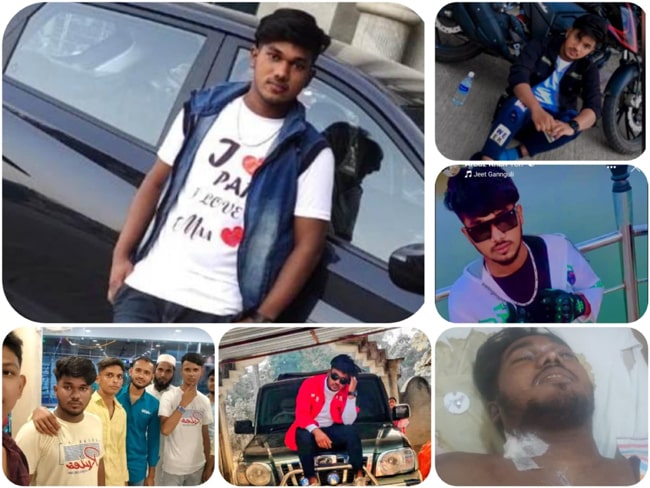
From Custody to Coffin: The Tragic Tale of Newly Wed Abu Siddiq Halder

0

Kolkata: Twenty-two-year-old Abu Siddiq Halder, a resident of Ghatakkultala, South 24 Parganas, West Bengal, had travelled from Karnataka to be by his mother’s side as she underwent surgery. However, this visit to his parents became his last as Abu became a victim of his destiny.

Call it family feud or police brutality, Abu, the only son of his parents, who travelled in search of a better livelihood in Karnataka, died within days of being granted bail. His family claims that the youth succumbed to internal injuries inflicted on him by police when he was arrested as a suspect in a theft case.

Abu, a young man in his early twenties, in the pictures shared by his family looks full of life. He seemed to have a liking for bikes and cars.

“My only son was here to ensure his mother was treated well. But look, we have lost him forever for a crime that he never committed,” wailed his father, Yasin Halder.

According to Abu’s family members, on June 30, some valuable jewellery was stolen from his uncle, Mohsin Halder’s residence. Abu was arrested by the police following the FIR filed by his uncle at the Dholahat police station.

What followed was a nightmare for this young man, who had been married only seven months ago.  

Narrating the torture inflicted by the police, his uncle Sujauddin said, “Three police stood on his chest, while others bashed him up. He was even subjected to electric shock. When Abu was released on bail, we saw that his body was covered with wounds and marks that were proof of the brutality that the boy had to endure when in custody.”

The family claimed that the youth, since his ‘release on bail’ was ailing and had to be rushed to a hospital in Mathurapur, where his condition deteriorated. Following this, he was rushed to Kolkata’s Chittaranjan Medical College. Due to the non-availability of bed, he was taken to Swastik Seva Sadan, where Abu breathed his last.

“The boy had several internal injuries. His kidneys got damaged due to the torture that he had to endure while in police custody,” claimed Sujauddin.

However, when eNewsroom contacted Manas Chatterjee, Inspector-in-Charge of Dholahaat Police Station, where the alleged torture took place, he said, “He was in perfect health when released. We aren’t aware of any torture that he had to endure.”

This is not the only stand-alone case of deaths caused by torture inflicted on the arrestee during police custody in West Bengal.

“We live in a nation where the Prime Minister says offenders can be identified based on their looks and clothes. So, the police officers, who hail from higher castes, have a perception that Muslims commit crimes. So, when a case is filed even before the investigation is complete, they believe that the suspect has committed the crime and hence at times torture them with the sole intention of making them accept the crime that they never committed,” said Khurshid Alam, state secretary of the Association for Protection of Civil Rights (APCR).

Alam claimed that West Bengal, which is regarded as a ‘haven’ for Muslims, has many from the community languishing in jails for over a decade for petty offences that they might not have even committed. “Lack of representation adds to their agony,” he said.

Alam added, “We will be approaching the governor in this case, asking him to use his constitutional rights to ask the West Bengal government to share the action taken report just like he did in the Dinajpur flogging case.”

Sharp rise in number of lynching cases and custodial deaths has made activists spring into action.
“Number of crimes against Muslims is on the rise in Bengal but the people in power are maintaining silence, so we will meet the governor as well as hold a protest or press conference with the grieving family members soon in Kolkata,” Umar Awais, an activist, told eNewsroom.

He further informed that a delegation will be going to meet the victim’s family.. 

Mob Lynching Shadows Hemant Soren’s Confidence Win in Ranchi

0

Ranchi: Jharkhand Chief Minister Hemant Soren won a vote of confidence today. Later, his cabinet ministers took the oath of secrecy in the presence of the Governor of Jharkhand. However, when Soren was about to prove his majority inside the assembly in Ranchi, another incident of mob lynching was reported in the state capital.

Thirty-year-old Akhtar Ansari, a father of four children, was accused of goat theft and beaten to death in Tatisilve, Ranchi. Akhtar’s nephew Irshad, who received a call on Sunday night, said, “When I got the call, I could only hear ‘Maaro, Maaro (beat him)’. There was so much noise. He was not a thief.”

When family members reached the spot, they found Akhtar’s unconscious body with several severe injury marks on his legs and head. “But when we went to the police station, we were told that he was a thief, which is not true,” added Irshad.

Jharkhand is one of the few states in India that has passed an anti-mob lynching law. However, the bill has been returned by the government with some objections.

Significantly, in the last two years, Jharkhand police have not accepted that any mob lynching took place and have either claimed that the person killed was by only two people or that it was an accident. This occurred in the case of Irshad Ansari on August 22, 2023, in Ramgarh and the recent case of an Imam in Hazaribagh.

While this is the second alleged mob lynching case in Jharkhand, at least ten Muslims have reportedly been killed across the country since June 4, when the counting for the new government at the center took place. This includes three Muslims allegedly lynched in Bengal.

A concerned citizen of Ranchi, Tanweer Ahmad, has written an open letter to Leader of the Opposition Rahul Gandhi, TMC chief Mamata Banerjee, Samajwadi Party supremo Akhilesh Yadav, and several other INDIA bloc leaders and chief ministers, including Hemant Soren, urging them to take immediate strict action on the issue. Not only should they raise the issue inside and outside the parliament but also work to stop mob lynching in their respective states.

It will be important to see how Hemant Soren deals with this most inhuman crime as there is resentment among the Muslim community on the issue. Champai Soren, the former chief minister in the new cabinet, also took oath as a minister in the Hemant Soren government. He was a minister in the earlier government. Along with him, three new faces—Baidyanath Ram, Irfan Ansari, and Dipika Pandey—have joined the government. The old faces, Banna Gupta, Mithilesh Thakur, Bebi Devi, Hafizul Hasan, Rameshwar Uraon, and Satyanand Bhokta, remain part of the new cabinet too. Hemant Soren’s younger brother Basant could not find a place in the cabinet.

A commission for displacement issues in Jharkhand was also announced by Hemant Soren while talking to reporters. “We will draft a plan soon. We will also survey the socio-economic situation of displaced people, assess what they received and did not receive when they were displaced. A policy will be formulated accordingly,” said Soren.

A New Dawn for Labour: Understanding the UK’s Electoral Shift

0

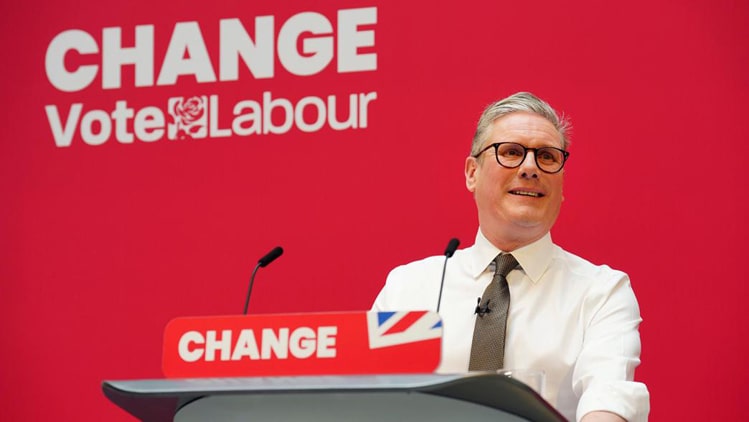
[dropcap]T[/dropcap]he smooth and quick transfer of power in the United Kingdom speaks volumes about the great democratic tradition in that country. The UK election results came out during the day and by the afternoon outgoing Prime Minister Rishi Sunak went to Buckingham Palace to tender his resignation. By the time he stepped out, Labour leader Keir Starmer was appointed the Prime Minister by the King and within minutes he addressed the nation at the historic entrance of No 10-downing street. The Prime minister paid tribute to his predecessor Rishi Sunak and acknowledged his contribution to Britain. Within hours, the Prime Minister announced his cabinet and the transfer of power was completed without any pomp and show. Britain, that way, is a great example, unlike the United States where the new President takes oath nearly two months after the results are out in November in great pomp and shows that both forms of government are based on majoritarianism and revolve around the white power elite of these countries.

The outcome of the result might sound music to many who might dance upon hearing the word ‘labour’ as in most of the world, the term is almost deleted in the ‘vocabulary’ of political discourse. In the United States, there is no Labour. There is a fight between two parties of white ruling elite dominated by corporate interests with little interest for the common person. Now, the Labour Party returned to power after 14 years and with a massive majority but are the Conservatives decimated in the UK? Has the Labour Party anything to do with the left politics? What brought Labour to power in the UK?

The fact is that the historical route of the Conservative Party does not indicate the growth of ‘left-wing’ political forces in Britain. The fact is this landslide to the Labour Party has more to do with the faulty electoral system that the UK has been following termed as First Past the Post System which resulted in a huge gap between the vote share and the number of seats. FPTP can be useful if there are only two to three parties as well as a high voter turnout. In the absence of it, the mandate can always be haunting though at the end of the day, it does not matter how much the vote share, it is the number of seats that matters.

The fact of the matter is that out of 650 seats, the Labour Party has won 412 seats which is almost 65% of seats though the vote share was merely 34%. Its rival Conservative Party with 24% vote share acquired 121 seats. Liberals got 71 seats with 12% votes. Another right-wing under the name Reformist Party, though, only got 4 seats but with a 14% vote share. Led by Nigel Farage, Reformists are being blamed for the rout of the Tory government. Conservatives, Liberals and Reformists mostly hail from the same variety of political ideologies of the right wing. Their combined vote share is much more powerful than that of Labour. The left-leaning groups are mostly independent and Green Party.  Interestingly, Labour could only increase its vote share by about 2% from 2019 when it fought under the leadership of Jeremy Corbyn who contested as an independent candidate and won from Islington North constituency by over 7,000 votes defeating the nearest Labour Party rival. Corbyn has been representing this constituency since 1983 and has won for a record 11 times.

Many people might be happy to see the return of a ‘Labour’ government after one and a half decades but is it so? Leave aside the ‘vote share and seat got’ issue, the fact is most of the Western electoral system particularly influenced by British and American models is already captured by the right-wing capitalist forces. The quality of the ‘Western democratic model’ is in its propaganda and comparison with the Russian and Chinese systems even though both the countries are today a powerhouse and rising high economically. Look at the rise of other powerful groups in the UK like Liberal Democrats and Reformists both ideologically close to Conservatives but is ‘Labour’ truly dedicated to the left or the working classes? The problem with the ‘liberal democracies’ in the world is their hypocrisy on human rights issues. If the Labour Party was truly dedicated to the idea as its name suggests then how come powerful leaders like Jeremy Corbyn were thrown away from the party? Is it because he was considered more radical and a threat to the Empire and its elite? How is the current leadership of Labour different from the Conservatives? The brazen shamelessness of Kier Stramer in refusing to condemn the Israeli brutalities and assault on Gaza shocked all those who filled the Streets of the United Kingdom demanding a complete ceasefire in Gaza. It was Kier responsible for humiliating and ousting Jeremy Corbyn and other left-leaning leaders from the Labour Party. Most of these leaders fought independently won with a handsome margin and defeated their nearest Labour rivals. The poll results suggest that the British electorate is swinging between different conservative forces and Labour got acceptability because it threw away radical left forces led by Jeremy Corbyn. So essentially, the British political system is highly dominated and controlled by the Conservatives who may not be the Conservative Party but also Labour, Liberal and Reformists.

The Crisis of the Electoral System

The British model of the electoral system or simply FPTP is not reflective of the real verdict of the people. It is manipulative of the power elite and therefore most of the time legitimizes a ‘minority’ government as ‘majority. All the colonies of the ‘Empire’ have this system which is used by the power elite of those countries using or misusing the contradiction among different groups. The difference between vote share and seat won is too high. The Labour got nearly 34% of the total votes polled out of 60% votes that were polled during these elections. Which simply means 40% of people did not vote during the election. Now, in terms of seats, the party got 412 seats out of 650 which is nearly 64%. Under the Proportional Electorate System, Labour with a 34% vote share would have just got 221 seats much below the majority mark. Conservatives with a 21% vote share would have got 156 instead of 121 which they have at the moment. Liberals with a 12% vote share got 71 seats while Reformists with a 14% vote share got just 4 seats. Under the Proportionate system, Liberals could have got 78 and Reformists 91. Even a 4-seat Green Party with a 7% vote would have got nearly 46 seats.

How credible is the electoral system where the party gets 34% of votes which also means 66% of votes that were polled did vote against you? Interestingly, a party with a 14% vote share get just 4 seats while that with a 12% vote share 71 seats. Now, how can such a system be justified as ‘democratic’? We all have the same crisis and the result is that the ruling parties and government rarely listen to people’s voices. The amount of massive street protests that London witnessed in support of Palestine was always looked down upon by the power elite and the media. The governments these days speak through the power elite and the opposition leader spoke the language of the prime minister when he openly supported the previous government’s stand on Palestine.

No change in Foreign Policy

Western democracies are liberal to a large extent related to individual freedom, right to faith, criticism of the government and allowing protests in the streets but at the same point in time we need to understand why a leader like Jeremy Corbyn was ousted from Labour. Why he has been a persona non grata for the ‘liberal’ circles? A similar thing happened in the United States where Bernie Sanders is despised by the ruling elite. The liberal democracies couldn’t accept Julian Assange and felt him the biggest threat. It needs to be understood why these democracies do not listen to the voices of protests in the streets.

Broadly, Western democracy will remain pro-capitalist and market-driven and nothing much is expected to change on foreign policy matters though the new Prime Minister has already rescinded the Rwanda policy for refugees which is a great step in the right direction. The Tory government wanted to privatise the prestigious National Health Services but could not do so. The railway network is already in distress. Will the new government take initiatives to strengthen these services or will it be the same government that was headed by Tony Blair?

The issue of minorities and immigrants is extremely important and resulted in the victory of four independent candidates who defeated Labour candidates. The party has to see whether it will follow the ‘right tilt of Tony Blair or work differently, particularly on the issue of Palestine. It needs to be understood that the combined vote share of the right-wing parties is much higher than it and if it ignores wider concern of minorities and immigrants then it might lose the support of progressive forces as well as ethnic minorities then Britain might see the rise of radical left forces in the coming years. Unlike the United States, Britain still has space for minorities and immigrants in the political structure. Will Jeremy Corbyn and other leaders emerge more powerful in the coming years or the pressure of capitalism?

Lesson for India

A democracy is successful when its institutions are robust. Britain has a powerful legacy in that regard. The election process is extremely simple and voting opens at 7 am and continues till 10 pm. The parliament still is responsible and debates there are worth watching. Prime Minister’s Question hour with the leader of the opposition is extremely fascinating but then we can’t have that in India.

The New Parliament has 23 Muslim members (a big country like India has just 24) and over 60% of the members belong to ethnic minorities reflecting Britain’s diversity. One thing needs to be clarified. A criticism of the British system does not mean we are better than them. They have a robust system and more over basic curtsies among the political class they remain far superior to us. The swiftness with which the new government took charge within a day remains remarkable. Everything was done without any chest thumping or ‘victory’ speeches. It is also important to understand the difference between ‘right-wing’ or Conservatives in Britain, Europe and India. The Conservatives or right wing there are mostly against immigration policies of the government but none of them have ventured inside the personal lives of people. Right-wing in India and its neighbours are religious fanatics who have issues with your personal choices whether food, faith or marriage. There are no hate speeches and diversity of representation is always a plus point for political parties.

Britain’s elections have big lessons for us and our political class. That elections in vibrant democracies today are on the ballot paper and not through EVMs is a reality. Secondly, we did not hear any complaints of electoral malfunctioning or fraud. The counting and declaration process was simple and Prepoll surveys or Exit polls were not hyped. The prime minister did not take time to vacate his official bungalow and went to submit his resignation to the King when results were just coming in and he conceded his defeat gracefully. The transfer of power was so swift and meticulous that there was no time for any confusion and uncertainty.  Yes, the electoral system has issues of representation\ and vibrant democracies find their solution. Britain will certainly have to look into it as this might become a major issue in the coming days.

Let us hope the new government will fulfil the aspirations of the people but expecting a different perspective on Ukraine and Israel will be next to impossible as foreign policy matters in these countries are mostly static and fixed with the United States. A change in its Ukraine or Palestine policy will need Jeremy Corbyn at the helm of the affair which does not seem a possibility, in near future.

Historical Reckoning: The Emergency, the RSS, and the BJP’s Political Narrative

0

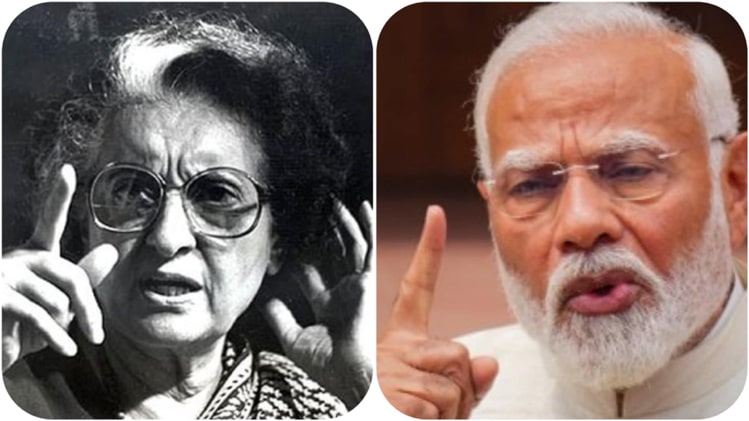
[dropcap]T[/dropcap]he speaker of Lok Sabha, Om Birla is mired in many controversies. When he started his 2nd term as Lok Sabha (Parliament) Speaker he read out a resolution against the Emergency imposed in 1975 by Indira Gandhi. The background of that emergency was the rising Sampoorna Kranti (Total Revolution) Movement, led by Jaya Prakash Narayan (JP). The movement of students of Gujarat which began to protest against the rise in the bill, was soon joined by the students of Bihar. This spiralled into students requesting JP to lead the movement at the national level. JP gave the call to gherao (encircling) the assemblies and parliament. On 15th June 1975 in a huge rally in Ramlila Maidan, Delhi, he called the military and police to defy the orders of the Government. Mrs. Gandhi’s election was challenged and on flimsy grounds, she was disqualified by the High Court. The Supreme Court gave a stay on this on 24 June.

Seeing the growing turmoil in the country, Mrs Gandhi imposed the emergency using Article 352 of the Constitution on 25th June 1975. This lasted for 21 months, and she lifted it. Mrs Gandhi regretted the excesses during this period in a speech in Yavatmal on 24th January 1978. Even Rahul Gandhi offered apologies for the excesses during the Emergency. While the opposition leaders were arrested Lalu Prasad Yadav who was in jail all through an emergency, in a recent article along with a journalist (The Sangh Silence on Emergency, (i.e. June 29, 2024) wrote that though the opposition was arrested it was treated with dignity by Indira Gandhi. For many years BJP (Bharatiya Janata Party) has been observing the 25 June as the dark period of Indian democracy.

The first major change that occurred around that time was that Jaya Prakash Narayan, who was one of the tall leaders of the freedom movement, accepted RSS to be part of the agitation launched by him. RSS’s Nanaji Deshmukh, who has recently been awarded Bharat Ratna by the BJP regime, became the central organizer of the movement. It gave respectability to the RSS as it was under eclipse due to its trained ex-Pracharak Godse having killed the Father of the Nation. As some people pointed out to JP that RSS is a fascist organization, JP in his naivety or whatever went on to say, if RSS is fascist I too am a fascist!

JP’s call to the army and police not to obey the orders was very unnerving and this precipitated the intensification of agitations, gherao of Parliament and Assemblies. RSS had played an important role in the Sampoorna Kranti movement, which gave it credibility in people’s eyes. After the imposition of the Emergency, when many of its members were arrested, it started bowing to the ruling regime. Many of its members signed Mafinamas (Mercy petitions) and were released.

BJP’s effort is to project itself as the Hero of Resistance of Emergency. Prabhash Joshi, the eminent journalist brought out the real truth in his article in Tehelka Magazine, “Balasaheb Deoras, then RSS chief, wrote a letter to Indira Gandhi pledging to help implement the notorious 20-point programme of Sanjay Gandhi. This is the real character of the RSS… You can decipher a line of action, a pattern. Even during the Emergency, many among the RSS and Jana Sangh who came out of the jails gave mafinamas. They were the first to apologize. Only their leaders remained in jail: Atal Behari Vajpayee [most of the time in hospital], LK Advani, even Arun Jaitley. However, the RSS did not fight the Emergency. So why is the BJP trying to appropriate that memory?” Deoras’s letters were also published in a book, ‘Hindu Sangthan aur Sattavadi Rajniti’, authored by him and published by Jagruti Prakashan Noida. The same was confirmed by TV Rajeshewar who was Deputy Chief of IB.

Press censorship and excesses on the issue of vasectomy and the demolition of slums were painful parts of this period. On the contrary, for the last ten years, we have been witnessing the arrest of public intellectuals, participants in peaceful struggles, arrest of journalists, the mainstream media bowing to the regime, the opponents of Government policies being called anti-Nationals, the suspension of 146 members of parliament among others. The violations which took place during this period were aided by the foot soldiers of the patriarch of the ruling party, the RSS. The situation for the last decade has been worse than the declared emergency. This is what prompted the critic of the 1975 Emergency, Nayantara Sahgal to call the last decade an undeclared emergency, “Well, we have an undeclared Emergency; there is no doubt about that. We have seen a huge, massive attack on the freedom of expression. We have seen innocent, helpless Indians killed because they did not fit into the RSS’s view of India. … So we have a horrendous situation, a nightmare which is worse than the Emergency… It is a nightmarish situation which has no equal.“

And to cap it all the leader of BJP, Lal Krishna Advani also called the last decade an undeclared Emergency, “Today there is an undeclared emergency in the country. Even senior BJP leader Lal Krishna Advani hinted the same after the government was formed but after pressure from RSS (Rashtriya Swayamsevak Sangh), he became silent…” While we look back to the period of Emergency 1975, we need to introspect and ward off the periods like undeclared Emergency which the country has been witnessing from the last decade.

Filing mercy petitions to the rulers is the norm with the Hindu right wing. Savarkar wrote five mercy petitions when he was in Andamans, Atal Bihari Vajpayee wrote on similar lines to get released during his arrest in the 1942 uprising stating that he had nothing to do with the ‘Quit India’ movement and during the emergency Balasaheb Deoras wrote to Indira Gandhi twice to patch up, and then requested Vinoba Bhave to ask Indira Gandhi to lift the ban on RSS. Also many BJP leaders like the late Arun Jaitley compared the Emergency period to Hitler’s regime. The crucial difference between the two is the encouragement of foot soldiers by the fascist regime. It was brown shirts in Germany, in India there are many vigilante groups which flourished during the last decade.

Cricket Unites, Hate Divides: India’s World Cup Win and Lynching of Salman

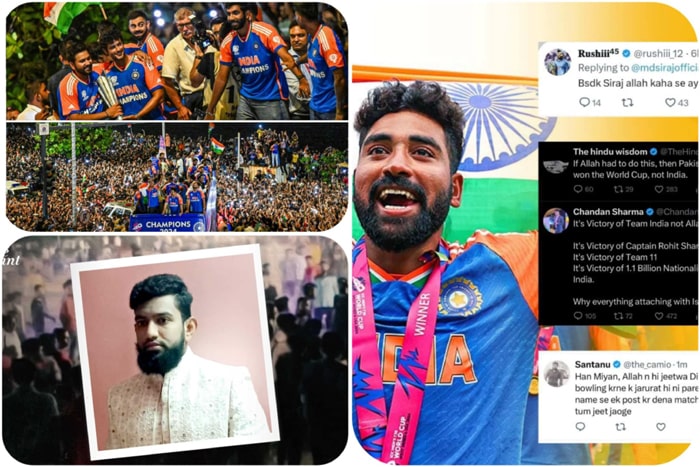
[dropcap]O[/dropcap]n June 29, the Indian Cricket Team won the T20 World Cup in Barbados after 17 years, marking their second victory in history. Fans and cricket lovers poured onto the streets across the nation to celebrate the long-awaited victory, proving that cricket is an emotion for Indians. Fans carried national flags, rallied, danced, and burst crackers of joy at midnight.

The Men in Blue, who returned to India on July 4, headed to Mumbai for BCCI’s felicitation ceremony at Wankhede Stadium after meeting the Prime Minister. They also held an open-top bus victory parade at Marine Drive, creating a packed situation. Fans in a frenzy spontaneously welcomed the team in large numbers with placards, slogans, and national flags, to which the team responded with gratitude, flaunting the trophy and Tiranga. Several fans suffered suffocation due to the dense crowd.

However, what went missing amidst those noisy celebrations of the World Cup was the mob lynching of a Muslim man in Gujarat.

Celebration and Tragedy

Twenty three-year-old Salman Vohra went to watch a local cricket match on June 22 but never returned home. A Hindutva mob, angered by the performance of Muslim players, lynched him while chanting “Jai Sri Ram.” They mercilessly attacked Vohra with a lethal weapon over a minor dispute concerning a motorcycle, which led to his death.

Ironically, a sport meant to unite individuals became a backdrop for this brutal murder. The bystanders, who should have been appalled, instead cheered—urging the attackers and supporting them with “maaro! Maaro!” (Hit him! Hit him!). Two other Muslim men were also injured in the incident. Vohra, married only a couple of months ago, is survived by a pregnant wife.

Vohra became the 6th victim of mob lynching since June 4, when the results of the 18th Lok Sabha were announced. The murder of Salman Vohra juxtaposes national celebrations, reminding Muslims of their vulnerability amid widespread joy.

Silence on Atrocities

Activist and Delhi University Professor Apoorvanand, in conversation with eNewsroom, condemned the indifference to atrocities inflicted on Muslims in India. He highlighted that lynching no longer seems to concern anyone. Since June 4, there have been at least 20 anti-Muslim incidents, including mob lynchings.

“We didn’t expect the ruling party to speak, but even the LoP (Leader of Opposition) Rahul Gandhi and Akhilesh Yadav said nothing about it. The violence against Muslims is no longer an issue that is hurting. Additionally, newspapers have not published articles on mob lynching, indicating that these incidents no longer shock the public. People, even those who are sensitive, avoid discussing it because it embarrasses them. They try to evade and ignore the issue,” he said.

People demanded that opposition parties break their silence on atrocities against Muslims, arguing that the INDIA bloc’s parliamentary numbers reflected a vote against hate. Despite speaking for over 1.5 hours, Rahul Gandhi did not address the issue of mob lynchings in Parliament. AIMIM leader Asad Uddin Owaisi targeted secular parties for their silence in his speech, remarking that they only consider Muslim existence when seeking votes.

“Every cricketer should have spoken out against the mob lynching of Salman because it happened during a cricket match. Unfortunately, our cricketers or sportsmen have become too insensitive to speak on this issue. What are they afraid of? This attitude is immoral, showing that they have lost their souls. They are sold to money and power and lack integrity. They have become money-making machines, willing to bow down to anyone powerful. Ideologically, they also support Hindutva,” said Apoorvanand.

Harassment, Punishment, and Hindu Nationalism

A video posted by Bajrang Dal Indore circulated on social media after India’s victory. The footage shows police detaining a Muslim man while others walk alongside raising slogans that are muted in the video. The caption reads, “You are betraying India after eating India’s food. Hinduists were making videos and celebrating India’s victory at Rajwada when a Muslim man used an abusive word, snatched their phone, and tried to run away. The Hinduists caught him, handed him over to the police, sent him to Sarafa police station, and gave him Prasad.”

The Ahmedabad crowd behaved with hostility, raising Islamophobic slogans against the Pakistan Cricket Team at the Narendra Modi Stadium during the Men’s One Day World Cup 2023. Police arrested seven Kashmiri students under anti-terror laws for allegedly raising pro-Pakistan slogans and celebrating the Indian cricket team’s loss to Australia in the same World Cup final.

“Nationalism only awakens fully when Pakistan is involved; otherwise, it remains dormant. Muslims in India feel pressured, especially during cricket matches, to celebrate India’s victories publicly. Their nationalism is questioned if they don’t join the celebrations. This burden is longstanding, leading many Muslims to take to the streets to prove their patriotism,” rued Apoorvanand.

In October 2023, a Madhya Pradesh court released 17 Muslim men and two minors who had been arrested in June 2017 and accused of celebrating Pakistan’s victory in a cricket match. The court found that the case was fabricated after the Hindu complainant and government said the police pushed them to make false statements.

Indian bowler Mohammad Siraj was trolled for posting “Thank you, Allah Almighty,” after Team India’s victory in the World Cup. Similarly, pacer Mohammad Shami faced online abuse after Pakistan’s victory at the T20 World Cup 2021 in Dubai. Shami was labelled a “traitor” by Indian cricket fans disappointed with the loss against Pakistan. The Australian cricket team also faced abuse and threats after defeating Team India in the World Cup 2023 final.

Notably, during the election campaign of the 18th Lok Sabha in Dhar, Madhya Pradesh, Prime Minister Narendra Modi said that the Congress Party intends to give minorities a preference in sports. It means that Congress will decide who stays in the cricket team based on religion.

“Playing cricket is just a commercial job. If an industrialist like Adani secures a contract, should people celebrate in the streets? Why should the entire nation come out to celebrate when cricketers earn money from matches? They are working like anyone else and aren’t doing anything extraordinary for the country. So, why should everyone feel joy about it?” questioned the professor.

Apoorvanand added “Cricket is no longer a sport in India but a way to ignite nationalism. It is commerce—two things run simultaneously to ignite nationalism and commerce, which is precise in cricket matches. It gives a false sense of national unity, making people believe that a trophy represents the entire nation. This sport has played a significant role in desensitizing India and has facilitated jingoism. Both cricket and its players have played a big part in this development.”

Why is a South African music company targeting Indian journalists on YouTube?

Delhi: As independent journalists decoded the general election results on YouTube last month, at least a dozen of them received copyright claims on older videos, rendering those videos ineligible for monetisation. 

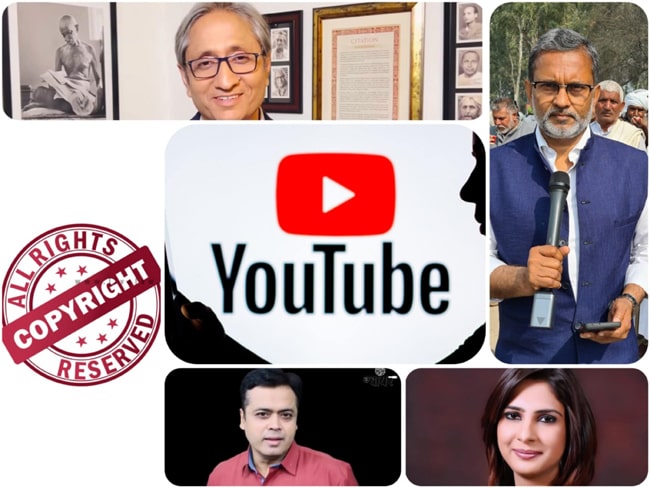
Among those who received these claims were independent journalists Ravish Kumar, Ajit Anjum, Abhisar Sharma and Sakshi Joshi, as well as outlets such as Bolta Hindustan, the Probe, Dastak Live News, and content creators like Mr Reaction Wala. 

All of these were sent to their YouTube channels by the same company, Ziiki Media Entertainment – a South African music aggregator, distributor, and production house. Headquartered in Johannesburg, it has a partnership with Warner Music in India, a branch in Noida, and Arun Nagar, Abhinandan Bhardwaj, and Nisha Nagar as directors. Ziiki’s clientele in India includes artistes such as Daler Mehndi, Jasmine Sandlas and J Star. 

All the claims were on videos published a few years ago – most of them for clips sourced from the public domain, such as press conferences. 

Journalists said that the claims were shocking as they “had not used music or any private videos” in their content. 

They received emails from YouTube which said copyrighted claims had been detected and while it would not impact their visibility, they would no longer be able to monetise their channel. However, most journalists who disputed the claims were able to get the copyrights withdrawn. 

‘Harassment’ 

Sakshi Joshi, an independent journalist who has close to two million subscribers on YouTube, said she received at least three such claims from Ziiki Media, which meant that she could not monetise those videos anymore. 

On disputing them, the copyright claim was “released”, and YouTube informed her that it was identified as “bad claim”. “The fact that so many of us were receiving so many invalid claims is harassment,” said Joshi.

Abhisar Sharma, an independent journalist with 3.5 million subscribers on YouTube, received four such claims and was able to successfully get all four reversed. 

However, not everyone was able to successfully revert the claim. Bolta Hindustan, which was suspended by the Information and Broadcasting ministry earlier this year, received close to a dozen such copyright claims from Ziiki Media. About four of their claims were resolved, while the rest are pending. 

Mr Reaction Wala, who has 1.29 million YouTube subscribers, told that after receiving the claims, he immediately deleted the videos, to prevent further issues. 

A representative from Ziiki Media told Newslaundry that the claims had gone to thousands of channels, including mainstream media houses and political leaders. 

‘Automatic content ID claims’ 

Representatives from Ziiki Media told Newslaundry that the company also provides CMS systems for content creators on YouTube, including news channels. And a “bug” in one of the CMS systems had generated automatic Content ID claims. These claims are different from copyright strikes, which are defined by law and generated manually. 

Some copyright owners on YouTube use Content ID, a tool to scan the streaming platform and automatically generate claims against matching copyright-protected content. YouTube videos are scanned against a database of files submitted by copyright owners, and in case of a match, the said video may be blocked. 

YouTube specifies in its rules that copyright owners who make “erroneous Content ID claims” can have their Content ID access disabled, and their partnership with YouTube terminated. 

“We have raised the issue with YouTube, which is helping us resolve it at the earliest,” said a senior employee of Ziiki Media. “We have been whitelisting some channels to prevent this from happening to them. Because it is such a large number, it is taking time to manually prevent this, but our team has been working day and night to resolve this.” 

YouTube told Newslaundry that they are “currently investigating the matter” and working closely with their partners to resolve it. It said it works towards balancing the rights of copyright holders with the creative pursuits of the YouTube community, and it was not up to them to decide who “owns the rights” to content.

YouTube also said that they would remove access to certain copyright tools if a partner “repeatedly abuses the system”.


This story was first published by Newslaundry.

क्यूँ आगे किए गए हेमंत सोरेन?

रांची: तो आखिरकार चंपई सोरेन ने झारखंड के मुख्यमंत्री पद से इस्तीफा दे दिया। और अब हेमंत सोरेन का मुख्यमंत्री बनना तय माना जा रहा। पर क्यों गठबंधन को ये जरूरी लगा कि हेमंत सोरेन को अब ही पद संभाल लेना चाहिए, और चंपई सोरेन की लीडरशिप में चुनाव में जाने से बेहतर है पूर्व मुख्यमंत्री को लीड करने देना।

कल शाम चंपई सोरेन ने गठबंधन नेताओं के साथ राज्यपाल सीपी राधाकृष्णन को अपना इस्तीफा सौंपा तो हेमंत सोरेन भी मौजूद थे राजभवन में। और साथ ही साथ झारखंड मुक्ति मोर्चा के कार्यकारी अध्यक्ष ने अपनी सरकार का दावा भी कर दिया।

मतलब साफ है, हेमंत सोरेन अब फ्रंटफुट पर खेलेंगे और झारखंड की जनता को बार-बार बताएँगे, कोर्ट की टिप्पणी के साथ कि एक आदिवासी नेता को झूठे मुकदमे में फंसा कर 5 महीने जेल की सलाखों के पीछे रखा।

इस साल की शुरुआत में हेमंत सोरेन को इस्तीफा देना पड़ा था क्योंकि प्रवर्तन निदेशालय ने आरोप लगाया था कि वह भूमि घोटाला मामले में शामिल थे।

गठबंधन  भी उनके पीछे पूरी तरह खड़ा है। कल यह निर्णय रांची में हुआ कि कमान हेमंत सोरेन के हाथों में होगी। और गठबंधन बैठक से पहले मंगलवार को झारखंड मुक्ति मोर्चा (जेएमएम) विधायकों की बैठक हुई, जिसमें सत्ता पक्ष के विधायकों ने सीएम के रूप में हेमंत सोरेन की वापसी पर सहमति जताई थी।

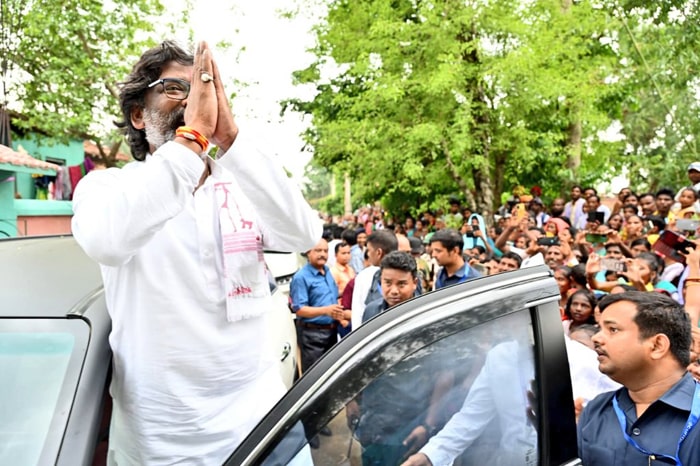
मुख्यमंत्री हेमंत सोरेन
एक्स पर हेमंत सोरेन की पिन की गई पोस्ट, जहां तीन बार उलगुलान लिखा गया है

गठबंधन को क्यों लगता है कि हेमंत सोरेन को सीएम बनना चाहिए?

एक वरिष्ठ विधायक ने कहा, “अगर गठबंधन चंपई सोरेन के नेतृत्व में चुनाव लड़ता, और सत्ता में लौटता है, तो हेमंत सोरेन के लिए मुख्यमंत्री बनना मुश्किल होता, क्योंकि जनादेश चंपई सोरेन के लिए होता।”

“अगर चंपई सोरेन मुख्यमंत्री रहते तो यह विधानसभा चुनावों के दौरान मंत्रियों, विधायकों और कार्यकर्ताओं के लिए भी भ्रम पैदा करता, क्योंकि दो शक्ति के केंद्र होते। इसके अलावा, चूंकि हेमंत सोरेन को फर्जी मामले में फंसाया गया है, इसलिए वह भाजपा के नेतृत्व वाले एनडीए का मुकाबला कर सकते हैं और इस संदेश को लोगों तक पहुँचा सकते हैं,” उन्होंने कहा।

लेकिन सबसे महत्वपूर्ण बात सीपीआईएमएल विधायक विनोद सिंह, जिनकी पार्टी का गठबंधन सरकार को बाहर से समर्थन है, ने कहा, “लड़ाई का एक सेनापति (एक नेता) होना चाहिए। इसलिए आगामी चुनाव में हेमंत सोरेन को आगे बढ़कर नेतृत्व करना सही फैसला है”।

राजनीतिक विश्लेषक विष्णु राजगड़िया भी इस बात से सहमति रखते हुए आगे कहते हैं “भाजपा तो हर हाल में गठबंधन सरकार में कमी निकालेगी। पर हेमंत सोरेन का सामने से लड़ने का मतलब है, भाजपा के भ्रष्टाचार के मुद्दे पर पलट कर सीधा जवाब। भले भाजपा परिवारवाद का राग अलापे पर अब भ्रष्टाचारी-भ्रष्टाचारी नहीं चिल्ला सकते। आगे हेमंत सोरेन का आक्रमक रुख भी रहेगा उनके खिलाफ।”

झारखंड विधानसभा चुनाव दिसंबर में होने हैं। हालांकि, जेल से रिहा होने के बाद हेमंत सोरेन ने दावा किया कि बीजेपी चाहती है कि झारखंड में विधानसभा चुनाव जल्दी हो, इसलिए हरियाणा और महाराष्ट्र राज्य के चुनावों के साथ सितंबर-अक्टूबर में कराया जा सकता है।

गौरतलब है कि जब सोरेन जेल में थे तो उनकी पत्नी कल्पना मुर्मू सोरेन ने उपचुनाव लड़ा और जीत हासिल की।

81 सीटों वाली झारखंड विधानसभा में, गठबंधन को 48 विधायकों का समर्थन प्राप्त है, जिसमें झामुमो के 29, कांग्रेस के 17 और राजद और सीपीआईएमएल के एक-एक विधायक शामिल हैं।

Hemant Soren’s Resurgence: Champai Soren resigns as Chief Minister of Jharkhand

0

Ranchi: Fresh political developments hint at a change of guard in Jharkhand. Former Chief Minister Hemant Soren may get reinstated as Champai Soren resigned from chief ministership of Jharkhand.

Today evening, Champai Soren, along with gathbandhan leaders and Hemant Soren submitted his resignation to the Governor CP Radhakrishnan.  

This decision that Hemant Soren will be at the helm of affairs in Jharkhand was made after an important meeting of Gathbandhan parties took place in the state capital today.

Hemant Soren had to resign earlier this year as the Enforcement Directorate alleged that he was involved in a land scam case.

Before the Gathbandhan meet, on Tuesday, a meeting of Jharkhand Mukti Morcha (JMM) legislators took place, during which the MLAs of the ruling party gave their nod to the return of Hemant Soren as the CM.

Sources said that Champai Soren, who became Chief Minister after Hemant Soren’s resignation five months ago, has also agreed to it.

Why does Gathbandhan think Hemant Soren should be the CM?

“If the alliance fights elections under Champai Soren, and if Gathbandhan returns to power, it will be difficult for Hemant Soren to become Chief Minister, as the mandate will be for Champai Soren,” said a senior MLA.

“If Champai Soren continues, it will also create confusion for the ministers, MLAs, as well as cadres during the assembly polls, as there will be two power centers. Also, since Hemant Soren has been implicated in a fake case, he can take on the BJP-led NDA and reach out to people with this message,” he added.

But the most important thing is, said CPIML MLA Vinod Singh, whose party has outside support to the Gathbandhan government, “There should be a senapati (a leader) of the fight. So Hemant Soren must lead from the front in the upcoming election.”

Jharkhand assembly elections are scheduled for December. However, Hemant Soren, after being released from jail, claimed that BJP wants assembly polls in Jharkhand to be held early, so they may be conducted in September-October along with Haryana and Maharashtra state elections.

Significantly, when Soren was in jail, his wife Kalpana Murmu Soren fought a by-election and won it.

In the 81-seat Jharkhand assembly, Gathbandhan has the support of 48 MLAs, including 29 from JMM, 17 from Congress, and one each from RJD and CPIML.

Babas and Politicians: The Unholy Nexus Threatening Democracy

0

[dropcap]T[/dropcap]he death of over 130 devotees in a stampede at a congregation at Hathras in Uttar Pradesh has shocked the nation but why does it surprise us? In the last three decades, this country has seen an enormous growth of Babas as devotees throng to them in search of miraculous powers. The codification of religion and development of organised cadres in these congregations is the biggest threat to us as a society and democracy but then these religious gurus now have been legitimised by the party in power and vice versa. They have enormous power and action is only taken on their misdeeds when states feel they have become a political liability or when the courts are determined to act against them.

The sad part today is the glorification of these babas through Darbari media and social media which has helped create a ‘bright halo’ around to ensure that they run their fiefdom uninterruptedly. Today, they define your personality. When everything is reduced to the number of your followers and likes then don’t expect any rational debate on why such congregations are allowed when they can’t be managed properly.

The government has initiated an inquiry but we all know what is the outcome of this. Find a few scapegoats while nothing happens to the main culprit. The reason is a close nexus between media politicians and these Babas who are not spiritual but only work as political agents. The administration knows these things hence in any event the issue of permission and required paperwork is merely a formality.

The shameful part is that the so-called Baba just disappeared from the scene and so far not a single statement has been heard but then as a society we never learn any lesson and have easily forgotten how, a decade back,  a billionaire baba wore a woman’s kurta with dupatta and ran away from Ramleela Maidan in Delhi.

The growth of organised religious congregations and using them for political purposes are not merely law and order problems but also a big threat to democracy. Don’t we know how the number of deras has grown in Punjab and how difficult it is for the administration to act when they have political patronage? The case of Gurmeet Ram Rahim of Dera Sacha Sauda is an example of powerful patronage.

It is now clearly visible that an individual is reduced to no value if he or she has no followers whether in real life or reel life which is the web world. Your rights and wrongs are determined by your power on the ‘ground’ or the ‘web’.

It is clear as a society, we will continue to look forward to the messiah and each one inside us suffers from a megalomania of being so. The result is we don’t have time to interact and debate decently so that we gain wisdom and knowledge.

Why should we complain when such a situation has been normalised and most of us are writing in the abstract in our world looking for ‘Bhakts’ and not for a fellow partner with whom we can discuss and debate politely and with respect?

The thing is nobody will learn anything because after a few noises here and there, things will move on and Babas will give us gyan about our life and future what to eat, how to live and what our future is. The problem is that despite knowing they don’t know anything, we continue to follow them in search of a miracle.

Meanwhile, we can only mourn the death of innocent people in the hope that people will realise that they are just cannon fodder and there is no miracle or power in these babas or priests otherwise we would not have any accidents and deaths in and around religious places or these congregation. The fact is that neither the babas nor gods can save us when in crisis. For that, we need responsible institutions including hospitals, and schools and a better lifestyle.  In the absence of our basic needs, we can’t do anything. Babas only help you to blame yourself and not ask any questions from the political establishment. Look at the organised madness. Now gods do have fever and doctors are called out. They eat and rest. Who has reduced us to this level where our children are weeping to see God’s suffering. The children should have enjoyed critical thinking, exploring nature, enjoying science and reading powerful literature. We are heading towards a huge cultural crisis.

We need an enlightened India and that is possible through following and understanding the path shown by Buddha, Nanaka, Kabir, Raidas, Tukaram, Chokhamela and not by the luxurious Babas. The sooner we get out of this the better for society.

झारखंड में इमाम की मॉब लिंचिंग! एक महीने में देश भर में 7वीं घटना

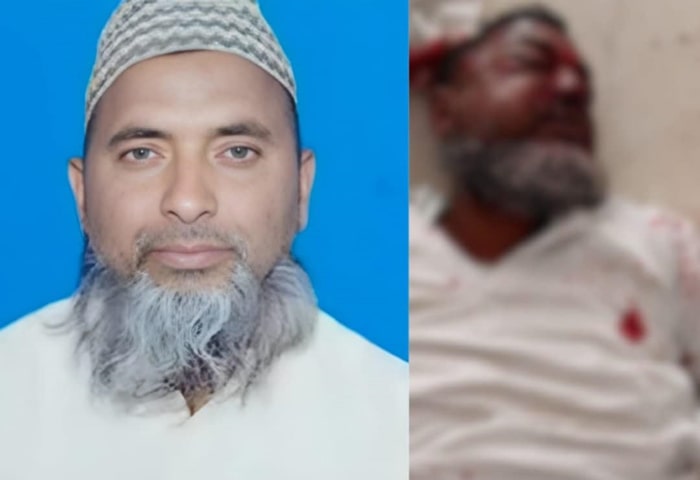
रांची: देश में और ख़ासकर झारखंड में, मॉब लिंचिंग की घटना रुक ही नहीं रही है, ख़ासकर मुसलमानों के खिलाफ। इतवार को कोडरमा के मोहम्मद शहाबुद्दीन, जो बरकट्ठा, हजारीबाग में इमाम थे और अपने घर को लौट रहे थे, के एक एक्सिडेंट के बाद दाढ़ी-टोपी देख कर इतना मारा गया कि हॉस्पिटल पहुँचने से पहले उनकी मौत हो गईं।

शहाबुद्दीन (52 वर्ष) की पत्नी, असगरी खातून (रघुनियोंडीह की निवासी) ने बरकट्ठा थाना में आवेदन देकर घटना के बारे में लिखा: मेरे पति, 30 जून को सुबह आठ बजे मोटरबाइक से अपने मस्जिद (बसरामों, बरकट्ठा) से घर को आ रहे थे। कटिया के पास एक औरत अनीता देवी को उनके बाइक से टक्कर लग गयी, जिससे उसके हाथ और नाक में चोट आई। अनीता पास की ही रहने वाली थी और उसने चिल्ला-चिल्ला कर अपने परिजनों और कुछ लोगों को बुला लिया। जिसमें उसके पति महेंद्र यादव, भैसुर रामदेव यादव और पास के मैदान में क्रिकेट खेल रहे लड़के भी थे, ने लाठी-डंडों से मार कर हत्या कर दिया।

असगरी खातून ने अपने एफ़आईआर में 10 सेकंड के एक विडियो क्लिप को भी संलग्न किया है जिसमें, थाना प्रभारी राजेश भोक्ता और एसआई रमेश हजाम बोल रहें हैं कि यही तो मारबे किया है, इसे पकड़ो।

घटना का एफ़आईआर आज जुलाई 2 को बरकट्ठा थाना में दिया गया।

“उनके सर पे बहुत गहरी चोट थी, आँख एकदम काला हो गया था और बहुत ज्यादा फुला हुआ था आँख के पास। उनके नाक से खून बह रहा था। लेकिन जिस्म के दूसरे हिस्से में कोई चोट नहीं दिखा। उन्हें शायद बैट और विकेट से सर पर ज़ोर से मारा गया था,” शहाबुद्दीन के बड़े बेटे मोहम्मद परवेज़ ने ईन्यूज़रूम को बताया।

परवेज़ ने आगे बताया, “एक जो सबसे अहम बात घटना के बारे में पता चला वो ये है कि, उनकी दाढ़ी-टोपी को देख कर उन्हें बुरी तरह मारा गया, उम्र का भी लिहाज़ नहीं किया गया। जबकि हमें ये भी सूचना मिली कि औरत को बहुत ज्यादा चोटें नहीं आई थी।”

सीपीआईएमएल के विधायक विनोद सिंह ने ईन्यूज़रूम को बताया कि, “जो भी घटना हुई है, कम से कम वह महिला प्रत्यक्ष दर्शी है इसलिए, पुलिस को सबसे पहले उनसे पूछताछ करना चाहिए। और अब चूंकि मामले में प्राथमिकी भी दर्ज हो चुकी है इसलिए, जो नाम दिये गए हैं उनकी भी पूछताछ होनी चाहिए।”

वहीं पुलिस इसे एक्सिडेंट की घटना मान रही है।

सब डिवीज़नल पुलिस अधिकारी सुरजीत कुमार ने ईन्यूज़रूम को बताया, “मैं और पुलिस अधीक्षक खुद घटना स्थल पर गए थे और महिला से भी बात की। ये एक रोड एक्सिडेंट था और शहाबुद्दीन हेलमेट नहीं पहने हुए थे, जिससे उनके बाइक तीखे मोड़ से फिसला और औरत को भी लगा, साथ ही उनके सर पर चोट लगी थी। पास के बच्चों ने बताया कि वो फोन पर बात कर रहे थे, जिस वक़्त घटना हुई। पुलिस भी घटना स्थल के पास थी, इसलिए वो तुरंत वहाँ पहुँच गई। अगर ये मॉब लिंचिंग की घटना होती तो पुलिस को वहां भीड़ मिलती। विडियो में मारने वाले की जो बात हो रही है वो, ऑटो वाले के बारे में हो रही है कि शायद उसने ही एक्सिडेंट किया था।”

इधर सामाजिक संस्था झारखंड जनाधिकार महासभा ने भी ट्वीट कर मांग की है कि पुलिस मामले को एक्सीडेंट दिखा रही है, पर ये मामला धार्मिक आधार पर मॉब लिंचिंग का है। और मुख्यमंत्री चंपई सोरेन, हेमंत सोरेन को टैग कर न्यायसंगत कार्रवाई करने की मांग की है।

देश में बीजेपी शासित एनडीए के तीसरे कार्यकाल शुरू हुए प्रथम माह में ये 7वीं मॉब लिंचिंग की घटना है। इससे पहले छत्तीसगढ़, गुजरात, उत्तर प्रदेश और बंगाल में घटनाएँ हुई हैं।