Kolkata: We all know that no other state in India has as many types of minerals, as that we get in Jharkhand. But do you know that the governments of mineral rich state could not run free ambulance service—108, which is operational in 19 states of India, even after 17 years of its inception?
Also, you must be aware that the fact that Chief Minister of Madhya Pradesh, Shivraj Singh Chouhan is the son of a farmer. But you may not have an idea about the fact that in the native place of CM, several farmers are committing suicides and those alive, are leading a horrible life. Some farmers have to use humans in place of animals for farming.
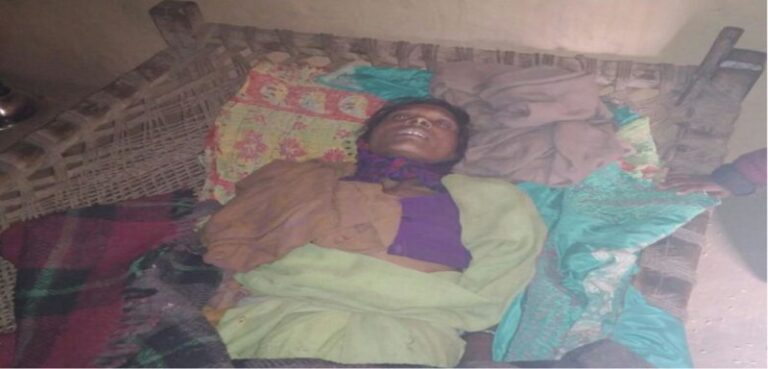
On Sunday morning, one Rajendra Uraon, a resident of Sidpa village in Tandwa block of Chatra district, was bit by a snake on Saturday night, reached Sadar Hospital, only to be declared dead in the afternoon, after getting some initial treatment.
Rajendra was accompanied by his wife Sunita Devi, brother Laxman Uraon and sister in law (Bhabhi) Sita Devi. Sita was carrying a small kid also on her back.
After the death of Rajendra, the family requested the hospital authorities for an ambulance. However, they demanded Rs 4000 to drop off Rajendra’s body at his village. The family, unable to pay and decided to take the body on their own.
Using a towel to cover the face of the corpse, his brother Laxman held the corpse by its head, while Sita Devi held it by its legs, despite carrying an infant on her back. Rajendra’s widow Sunita walked behind him, crying.
They had walked almost 200 meters, when some people stopped them to know what the issue was. Following which, they called the local media and also informed, Sub-Divisional Magistrate Nandkishore Lal. SDM contacted Sadar Hospital authorities and reprimanded them for their inhuman behavior. Later, ambulance was arranged and the corpse was sent to Sidpa village.
In most of the districts of Jharkhand, healthcare facilities are in shambles and ambulance play a major role in shifting critical patients, but as government has no such free service, private operators are running a business out of it.
Ten months back, image of Dana Manjhi, a tribal carrying his wife’s corpse on his shoulder in Orissa had moved the world, but it seems, many has to undergo the ordeal because of the pathetic health service in Jharkhand too.
But, for Sardar Barela, a farmer of Basantpur Pangri village, in Sehore district, Madhya Pradesh, his difficulty did not come for one time. The father, because of lack of money has been using two of his minor daughters to plough corps for the past three years. He simply cannot afford to buy a pair of oxen.
Sunday also, he was using his 14-year-old daughter Radha and 11-year-old Kunti in place of ox, when a few journalists spotted them. Both used to study in school but had to drop, because of lack of money and since then have been helping their father to plough the field.
When matter come to fore, District Collector Tarun Kumar sent a team to the village and assured for all kind of help to family, so the girls should not leave discontinue her education and work in the field in such a manner.
But, the two incidents, from Jharkhand to Madhya Pradesh, highlight a stark reality, that the poor in India are still being ignored by the policy makers.
Kolkata: When Souvik Sarkar, a teenager from West Bengal’s Rudrapur village, was posting a “religiously insensitive” morphed image or meme on his timeline in Facebook, he perhaps failed to understand the futility of his action. No sooner than his post was made public, that the image made its way to most preferred way of spreading news or information these days – WhatsApp. It’s free, it’s cheap and it results are effective for those wanting spread hatred through fake news and information across India, like a wild fire.
The circulation of fake news, it seems is directly proportional to the building up of communal tension in Bengal. A day after Eid, Shankhayug, a Bengali newspaper in Bashirhat carried a fake news, labelling an Islamic flag as Pakistani flag being flown in the area to commemorate Eid celebration. Adding fuel to the fire was Sarkar’s post, which made some fundamentalist Muslim leaders to go on a rampage.
What followed was a large scale violence in Baduria, as a section of Muslim fanatics, incited by the derogatory meme took law and order in their hands. The violence, so far has had a single casualty – a 65-year-old man whom BJP is claiming to be their party worker. He was stabbed to death by a mob, which most are presuming were Muslim fanatics.
Fake Alert
The circulation of fake news, it seems is directly proportional to the building up of communal tension in Bengal. A day after Eid, Shankhayug, a Bengali newspaper in Bashirhat carried a fake news, labelling an Islamic flag as Pakistani flag being flown in the area to commemorate Eid celebration. Adding fuel to the fire was Sarkar’s post, which made some fundamentalist Muslim leaders to go on a rampage.
However, the agenda of the perpetrators of fake news didn’t end with the violence. Adding to the tension were other fake news of riots doing the rounds. Soon, after the news of the Baduria violence went viral, social media got flooded with more fake news. First news was circulated that Muslims were demanding that Souvik be stoned to death, and an image was also circulated purportedly of his family members including his mother and it was said that they got attacked. The truth was that not only Souvik but his family was saved by his Muslims neighbours.
Later, a BJP member Vijeta Malik shared a picture of Bhojpuri film, claiming it to be evidence of how women in Baduria were being raped by Jihadis or Islamist. So, much so, BJP spokesperson Nupur Sharma, got a flak for passing off Photoshopped images of the 2002 Gujarat riots as that if Baduria’s images.
When there are no fake news and images circulating with the Bengal agenda, then instigating hashtags are run by certain news channels. Is it just a coincidence that almost all the fake news, images, or instigating hashtags are being circulated either by BJP leaders, supporters or BJP backed channels?
Bengal Takes on Cyber hate mongers
The silver lining, in the Baduria incident, was the Bengal police coming into action to take on those spreading communalism on social media. Speaking to eNewsroom, ADG CID, Rajesh Kumar, said, “We have already arrested two people with regards to sharing fake news on Social Media. We blocked several YouTube channels, pulled off inflammatory videos that had been posted to create a communal backlash in Bengal.” On being asked about political leaders or famous personalities sharing such contents, he said, “We will definitely investigate their posts and if found guilty, action will taken.”
A tweet from Kolkata Police
He also, had a warning for those who just keep pressing the share button, “You will be responsible for what you share. Please don’t share content that can instigate communal tension. If found guilty, we will take stern action against such people.”
Kolkata and Bengal Police, have since then been issuing images, messages and video warning people to use social media for social networking and not to spread hate.
Eyes on Bengal
A lesson needs to be learnt from the incident. With instances of communalism on the rise, morphed images, memes and photoshopped content will be shared more regularly on social media. Many believe that the trend will continue till 2019 Elections. Author Devdan Chauhari, in one of his article, pointed out that RSS’s dream of creating a Hindu Rashtra will only materialise when Bengal gets saffronised. He categorically stated, “The chances of communal tension in Bengal will be on the rise, till 2019 General Elections.”
Ringing the alarm bell at the Parliament
TMC leader Derek O Brian, on being contacted said, “We will be raising the issue with all other parties at the Parliament, the day after. Fake news, is dangerous and we need to weed it out. I have always alerted people about fake news, will be doing it once again.” Other political parties, in Bengal, seem to have the same say on this issue.
A way out
So, what’s the best way to deal with this web of lies and fake news? Answering that, fake news encounter specialist and Alt News founder, Pratik Sinha says, “Well, there is no fixed guideline that I can share to make people understand the difference between fake and real. But, yes, we need to be alert. We should be cautious of sharing religiously sensitive news or posts without cross checking facts. If you have doubts then don’t share.”
He further added, “To check authenticity of picture, opt for Google Reverse Image search. It helps in most cases to identify the original image. It in a way can help you decided on the fate of the post that you want to share.”
What makes Bengal, a difficult turf?
Fake news and Sarkar’s morphed image might have triggered violence for a brief span of time. But residents, both Hindu and Muslims, realising their folly, took on the task of reuniting. A day after the riots, broke out, news of both the community members are working hard to restore back the peace. So, if Amirul Haque did his best to save Sarkar’s family, then there were news of Hindu youths guarding mosques alongside Muslims. News of Muslims pooling in money to restore shops and homes of those affected during the riots is also making the rounds.
“It will not be easy for BJP to take over Bengal that easily. Here people are more united than other parts of India. Had Bashirhat incident happened in another state, I am sure there wold have been more deaths. Here it was a riot and there was only one casualty. People are more secular here and they realise their folly. Look how the Muslim community is coming forward to help their brethren on realising their mistake. Such a thing only Bengalis can do. For, us our Bengali identity comes first and then our religious identity,” summed up Supratim Sengupta, one of the #Notinmyname participant from Kolkata.
The message to Mamata Banerjee is that deal sternly with anti-social elements but deal more strongly with anti-nationals who circulate fake images and videos to instigate riots and help anti-social elements.
Ranchi: Jharkhand is the numero uno Indian state when it comes to people being lynched to death by a random mob. In the last year or so, it has witnessed an abysmal rise in cases of mob lynching. While Muslims have been the major victim of lynchings, other community people like Dalits, Tribals and in some cases Hindus too become a victim of it.
The most recent was Giridih’s dairy farmer Usman Ansari and Ramgarh’s Alimuddin Ansari being lynched. The former was lucky enough to survive the attack, but Alimuddin succumbed to his injuries.
Just before these incidents, 16-year-old Junaid was stabbed to death in a Ballabhgarh-bound train’s compartment. And for many others, including the Jamshedpur lynching of Gauta and Ganesh, Kashmir’s Ayyub’s incidents brought people on the roads of Ranchi and Giridih yesterday and today, respectively. At both places, Sajha Manch played an important role and brought several other organizations under one umbrella, to protest.
However, the way of protesting was different in both the cities. At the state capital, they organized the Not In My Name campaign, while in Giridih, they formed a human chain. Ranchi’s protest had one of the protestors dressed as the father of the nation, Mahatma Gandhi, who with his folded hands was requesting people to maintain peace.
Protest at Giridih was attended by former MLA Vinod Singh, Rajesh Yadav and Rajesh Sinha whose party, CPI-ML had organised a protest march across the state on July 3, for the same.
Along with the two cities of Jharkhand, Madhya Pradesh’s state capital, Bhopal too had citizen protest against mob lynching on Friday. Here, girls had participated in large numbers. All pictures have been arranged.
Ranchi: Jharkhand is the numero uno Indian state, when it comes to people being lynched to death by random mob. In the last one year or so, it has witnessed an abysmal rise in cases of mob lynching.
The most recent was Giridih’s dairy farmer Usman Ansari and Ramgarh’s Alimuddin Ansari being lynched. The former was lucky enough to survive the attack, but Alimuddin succumbed to his injuries. Just before these incidents, 16-year-old Junaid, was stabbed to death in a Ballabhgarh-bound train’s compartment.
And for many others, including Jamshedpur lynching of Gauta and Ganesh, Kashmir’s Ayyub’s incidents brought people on the roads of Ranchi and Giridih yesterday and today, respectively. At both the places, Sajha Manch, played an important role and brought several other organizations under one umbrella, to protest.
However, the way of protesting was different in both the city. At state capital, they organized Not In My Name campaign, while in Giridih, they formed a human chain. Ranchi’s protest had one of the protestors dressed as the father of nation, Mahatma Gandhi, who with his folded hands was requesting people to maintain peace.
Giridih protest was attended by former MLA Vinod Singh, whose party had organised a protest march across the state on July 3, for the same. Along with the two cities of Jharkhand, Madhya Pradesh’s state capital, Bhopal too had citizen protest against mob lynching on Friday. Here, girls had participated in large numbers. All pictures have been arranged.
Baduria/Kolkata: As news of a person succumbing to his injuries is coming in, because of Baduria violence, we all sitting miles away, are believing that there exist a high communal tension out there. But then, there seem to be a couple of silver linings too. The people of Baduria and nearby areas are showing solidarity and are attempting to restore communal harmony in the affected areas.
Take this example, when the family of the teenager Souvik Sarkar, who had posted the morphed image on Facebook, triggering a communal unrest, was saved from wrath of the mob on the rampage, by his Muslim neighbour, Amirul Haque. Amirul not only insured safety of family but Souvik also.
An officer of Bashirhat fire service station who mentioned Haque’s name, on condition of anonymity further informed that he comes from that area only and that he understands the people of Baduria very well. “During the agitation, local people of both the communities who have lived together for long came to rescue each other,” he told eNewsroom.
The officer added, “The communal tension was caused by outsiders. Local people were not involved in it. These people most of whom belong to lower middle class are not interested in violence.”
The same message was echoed by Seba Das and Fahmida Begum, both residents of Baduria. “We have more important works to do in life. We are neither interested nor do we believe in communal violence,” said Das, a mother of a three-year-old child.
“Such incidents never happened here. We have lived peacefully side by side, have celebrated EID and Durga Puja together. Why will we listen to outsiders who have vested interests?” questioned Rahim Seikh, a rickshaw puller in Baduria.
[/media-credit] A Bengali youth promoting peace during the processionAlso, in Barasat, a congregation of 250 people from both the community assembled at the Barasat railway station to protest against the violence that broke out in Baduria.
“We had planned to organise a road show to condemn the incident and to show solidarity in hour of tension. We shared our plan on social media asking people who believe in peace to participate in this communal harmony march. We were overwhelmed with the response,” Rabin Das, one of the conveners of the peace march and a resident of Barasat told eNewsroom.
Another resident of Barasat, Masud Khan pointed out that efforts are being made by certain people to malign the identity of Bengal. “They want to make us fragile by dividing us. We are not going to fall in to their trap. Certain people are their best to polarise the Bengali society, just like the British did so many years back. Money is being spent by these miscreants to create communal unrest. We need to be tolerant and not get instigated by Facebook and WhatsApp messages,” said Khan who is an owner of a grocery shop.
In another incident at Berachapa, Deganga area, youths from the local Muslim community compelled certain people, who were identified as outsiders trying to create communal tension, to leave the area to restore peace.
Police said that, at least forty people have been arrested so far for the violence and the number can increase in days to come.
Bhopal: It seems farmer committing suicide in Madhya Pradesh do not move Shivraj Singh Chouhan government at all, as it is continues like never before. In a single day, on Tuesday, three more farmers had committed suicide, the lives of fifty farmer ended, since the Mandsaur firing took place. And among them, ten belong to chief minister’s hometown.
A month ago, right after the police fired on protesting farmers in Mandsaur which had killed five farmers, Shivraj had observed an extravagant fast to send across a message of peace to the agitating ones, and that he is always there for them.
Madhya Pradesh Farmers
The farmer, who hanged himself from a tree, was identified as Suraj Singh Gurjar, a resident of Pathoria village, Sehore. The town is only 50 kilometers away from state capital Bhopal. The 50-year-old farmer had reportedly had a 2.5 lakhs loan on him, which he was being unable to repay.
Besides Gurjar, 65-year-old Parsaram Sahu, a resident of Sagar district had consumed poison to bring an end to his misery. He wasn’t being able to take on the pressure of being unable to repay his loan. Sahu, at present is in a critical condition.
The third incident took place at Shivpuri. Both Sagar and Shivpuri are hometowns of Shivraj’s cabinet ministers.
Official figure tabled in the State Assembly, itself says that between July 1 to December 15, 2016, 531 farmers have committed suicide in Madhya Pradesh.
It means, more than three farmers commit suicide in the heartland of India everyday. While Shivraj not only claims himself of being son of a farmer, but he is the longest serving chief minister of Madhya Pradesh too.
And the state also boats of having India’s first Happiness Department. Ironically, all these distinctions could not change the fate of farmers in state.
But where is the opposition parties, does it only follows Shivraj’s action and statements or doing something concrete? Leader of Opposition Ajay Singh Rahul claims to eNewsroom that they are, pushing hard to make government accountable, “All these suicide, dents the claim of chief minister (Shivraj Singh Chouhan) of being the son of a farmer. In fact, it also proves that his government’s policies are not right for the farmers.”
After Shivraj Singh Chouhan’s fast, another Congress leader Jyotiraditya Scindia had sat on 3-day long Satyagraha in support of farmers.
On being asked about the policies of Shivraj’s government that according to him are not farmer friendly, he said, “Private companies charge very high interest to farmers but government has no monitoring system for it.”
“There is a bill already drafted for many years to rein control on the money lenders, but it is yet to be passed. Also, earlier corporate companies used to help farmers, but now there is no such activity by the government to use corporate sector for the benefit of the farmers. And it’s an open secret, as to how demonetization has broken the rib of the farmers. We all know that farmers are not getting fair price for their crops,” he added.
The senior Congress leader also mentioned that in the coming Monsoon session, the party will make farmer suicide a major issue inside the assembly.
Jaipur: Ever since the implementation of the Goods and Services Tax (GST) was announced, protests have broken out across India. From textile traders to theatre owners, several groups have taken to the streets in cities like Surat, Jaipur, and Kolkata, while in states such as Tamil Nadu and Rajasthan, entire industries have demanded a complete or partial rollback of the new tax regime. But in Jaipur, a rather unique protest has emerged — led by sculptors.
On July 5, hundreds of sculptors under the banner of Moortikala Sangharsh Samiti marched through the streets, protesting against idols made by them being brought under GST. Protesters dressed as gods, goddesses, and priests carried striking slogans such as “Kasam Ram Ki Khatey Hain, Milkar GST Hatayenge” (We swear in the name of Ram, together we will force GST to be rolled back). They argued that taxing idols of gods amounted to an attack on Hinduism.
Adding to their frustration was confusion over the tax slab. Initially, sculptors were told that their products would attract a 28% GST, but later this was revised to 12%. “Irrespective of the slab, we want a complete rollback,” said Satya Prakash Natha, spokesperson of the Samiti. The rally concluded at the Jaipur collectorate, where a memorandum demanding rollback of GST on idols was submitted.
This was the second such protest by sculptors in Jaipur, following a chetawani (warning) rally on July 3.
Sculptors dressed as gods and goddesses stage a protest march on the streets of Jaipur
Not only did they dress in an innovative way, but also demonstrated uniquely
When Gods say no to GST
With interesting slogans they came out in full force
The sculptors marching on to the Jaipur collectorate
Kolkata: An objectionable post on Facebook by a standard 11 student not only gave the mob a chance to go on rampage, in Bengal’s Baduria district, but has also led to a face-off between Chief Minister Mamata Banerjee and Governor KN Tripathi.
Baduria, a small town in Bengal’s North 24 Pargana, is just 50 kilometers away from its state capital, Kolkata.
The accused, who posted an objectionable picture, got arrested on Sunday night itself, but the administration could not quell the anger of those offended by the post. The angry mob burnt down several shops, vehicles including police vans on Monday and Tuesday.
However, communal tension building up in Baduria, got more attention when the Didi called journalists, claiming that the governor of Bengal had called her. She claimed that he, during the telephonic conversation had threatened and insulted her. She even mentioned that BJP was instigating communal violence in Bengal.
“He telephoned and threatened me. The governor can not threaten me. I told him, ‘You cannot threaten me like this,’” an angry Mamata told the reporters present during the conference.
Hinting to the people of Bengal and specially Muslims, the chief minister added, “BJP may provoke you, but why are you getting trapped. The ones who destroyed government properties will have to pay. We will be taking action against them.”
She also warned leaders of both the communities, “I will not spare anyone who is fuelling communal violence.”
After few hours of Mamata’s statement, Governor Tripathi too issued a communiqué stating that he cannot remain mute spectator.
The communiqué mentioned that Honorable governor and chief minister talks were confidential in nature and none is expected to disclose it. However, there was nothing that he said, which could make the CM feel insulted, threatened and humiliated.
Meanwhile, local MLA Quazi Abdul Rahim blamed that the police did not inform the localites about the accused having been arrested.
Significantly, there has been a surge in the number of communal clashes in Bengal, during the second stint of Mamata Banerjee’s government. Since October, last year, at least 10 districts of Bengal have witnessed such communal clashes.
Kolkata Police, seeing the situation, in its Facebook page has requested people to report rumour mongers. And stressed that peace and communal harmony remains their first priority.
Ranchi/Kolkata: The ongoing protest against mob lynching, which has mostly remained apolitical, in nature, on July 3, witnessed a political party protesting against the most inhuman acts. The CPI-ML take on to the streets of various Indian cities, to condemn mob lynching in Jharkhand and other Indian states like Rajasthan and Haryana.
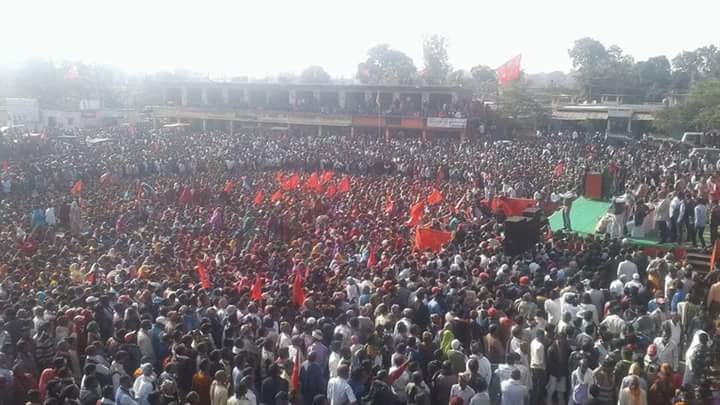
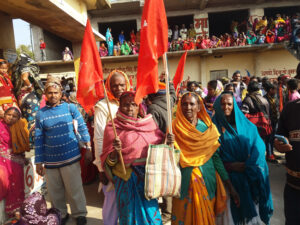
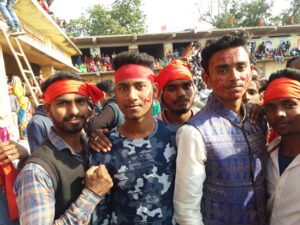
Several CPI-ML leaders and members were seen thronging the streets of various cities, while in Giridih, where the party has a strong presence called on for a bandh. In recent times, Giridih has witnessed a sudden rise in lynching cases. Recently, a dairy farmer Alimuddin Ansari, survived after being lynched by a mob and a tribal, Motilal Baske had been killed in an alleged fake encounter. The bandh called by CPI-ML was to condemn both cases. About eight rallies were led by former MLA Vinod Singh, Rajesh Yadav and Rajesh Sinha. CPI-ML had also organised protest marches in the state capital Ranchi and Garhwa district.
A similar protest march in Pratapgarh, CPI-ML backed the people’s protest, where one of its party members and social activist Zafar Khan, was allegedly lynched by Pratapgarh’s Municipal officials. The massive protest which had a large number of women demonstrated before Pratapgarh Municipal office also. Khan was killed when he had tried to stop municipal officials from clicking pictures to shame the women who were defecating in open.
While the citizen-driven protests condemning these hate crimes also continued in cities like Mumbai and Delhi. Both the cities witnessed massive turnouts during the events.
CPI-ML protest march in Bagoder, led by former MLA Vinod Singh
Party also hold protest march in Garhwa district
CPI-ML’s protest march against the killing of Alimuddin Ansari in Ramgarh
CPI-ML backed people’s protest in demand of justice for Zafar Khan’s killing
In Mumbai, the call was for Nafrat Ke Khilaf, Insaniyat Ki Awaaz