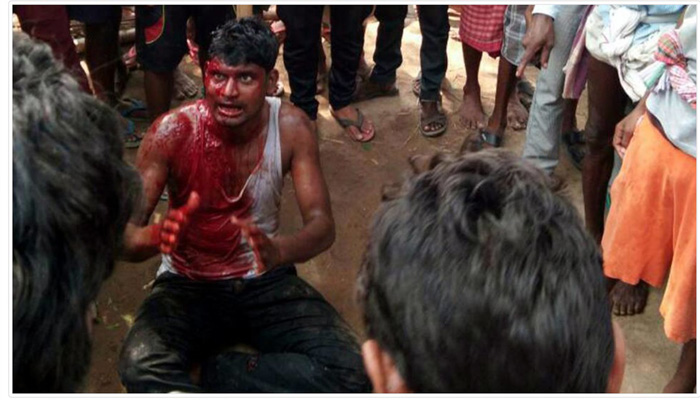
Jharkhand lynching: 75-year-old lady succumbs to injuries

0

Ranchi: Child trafficking and Jharkhand are no strangers. According to available date, Jharkhand is infamous for human trafficking cases in India. It ranks second in the country, while its neighbouring state West Bengal ranks first for trafficking. In fact most of the missing children are tribals . Jharkhand has been plagued with this problem since long. Even after gaining a separate identity, the state’s political leaders or administration has failed to address it as a serious issue. However, till date, lynching of human on mere suspicion of being human traffickers had not been reported.

Jharkhand not new to trafficking

In fact, according to a 2015 news report published by NDTV in 2015, mentioned that for at least 4000 children went missing from Jharkhand in the last decade. Of which, 1000 have never been traced out.

And despite all this, never till May 18, this year, have people been lynched to death by a mob, just on the basis of a rumour doing the rounds, alerting people about traffickers on the prowl. The two recent incidents, where seven people were lynched to death near Jamshedpur, definitely has more to it than a simple, child trafficking angle, many believe.

Now the death toll of those killed in the two cases of Jharkhand lynching has gone up to eight, with a 75-year-old woman succumbing to her injuries, which were inflicted on her as she tried saving her grandchildren from the mob, who was mercilessly lynching them. The mob on a rampage did not spare her despite her age. In fact she was beaten up so badly that she went into coma and was admitted at Jamshedpur’s Tata Memorial Hospital, where she breathed her last on Sunday evening.

Beware of rumours on social media

The message being circulated through WhatsApp around Jamshedpur area since a fortnight. Hansda Sowvendra Shekhar, author of Adivasi Will Not Dance has raised the concern in an article which was published by the Scroll. In it he states, “Nearly every day, I see Santhal men, women, and children migrating from Pakur. So many minors must being kidnapped, forced to do things that no human being aspiring to live a life of dignity should ever do. Why is there no outrage? Why does a stray rumour of a kidnapping makes a mob in a mofussil town lynch some men ruthlessly while the entire nation is quite blind to the reality of Adivasi women and children being trafficked day in and day out?”

Cow vigilantism on the rise

Lynching suspects began in the name of cow vigilantism in India, when a mob lynched Akhlaque Ahmed, father of an army man in Dadri in 2014, and has only been spreading off to other states like an unstoppable wave, cause deaths of many, without any proof, just on the ground of suspicion.

“In some cases, tribal people who are really poor, often themselves send their child or daughters to work outside the state in lieu of some money. Despite being aware of the risks involved, the still play a vital role in getting their own kids trafficked, as they have no other option,” told Amit Raja, a senior journalist and the author of Jharkhand Ki Betiya, a book published in 2001, to eNewsroom.

In a major claim made by activist Mustqim Siddiqui, of Insaaf India (an NGO), one person called Sunil, a resident of Govindpur village, police station Rajgunj was present in both the lynching cases. “We have visited both the places and have met and interacted with some of the family members of the deceased. The most astonishing revelation was the fact that Sunil, an auto-rickshaw driver, a member of Bajrang Dal, was present at both the spots where lynching took place,” Siddiqui told eNewsroom.

He also claimed that these are not just two stand alone cases that Jharkhand has witnessed. He maintained, “Prior to these two cases, there have been a few more incidents of people having been killed around Jamshedpur on the basis of rumours spread like in this case. However, no FIR has been registered by the police in any such case.”

Police, a mere spectator?

The role of police in this case has been highly disappointing, as at both the places, police had reached on time and could helped those being lynched to death. According to Uttam, one of the two survivours from Jharkhand’s lynching episode, “In presence of the police, the assailants kept beating my brother mercilessly. They just did nothing. They were like spectators. In fact, my grandmother, who had come to save us, got beaten and later saw her grandchild being lynched to death in the presence of police. And now, she too has succumbed to her injuries,” he said.

Significantly, DIG, Kolhan Prabhat Kumar, has accepted that till date no child lifting incident has been reported, but, he blamed social media and whatsapp for spreading such rumours.

However, Hansda has a message for the people of Jharkhand, “I hope people do not pay attention to rumours and do not react impulsively. Any rash action might be harmful for everyone.”
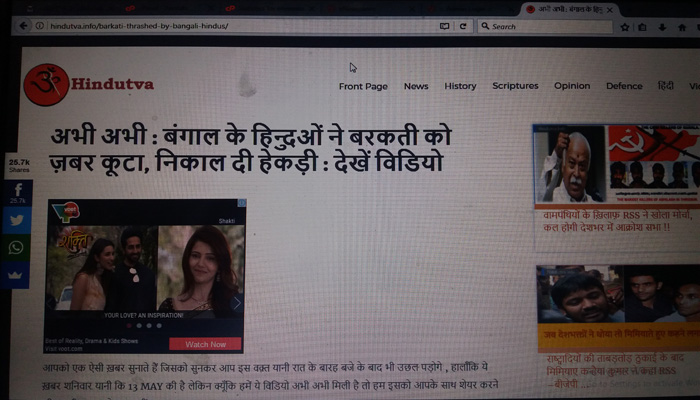
Hindutva.info runs fake news of Hindus thrashing Barkati

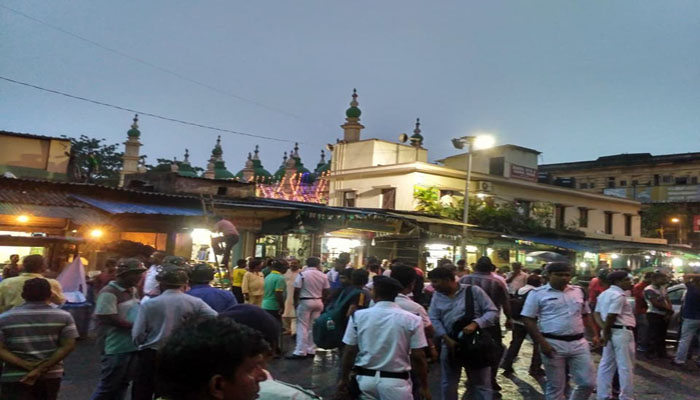
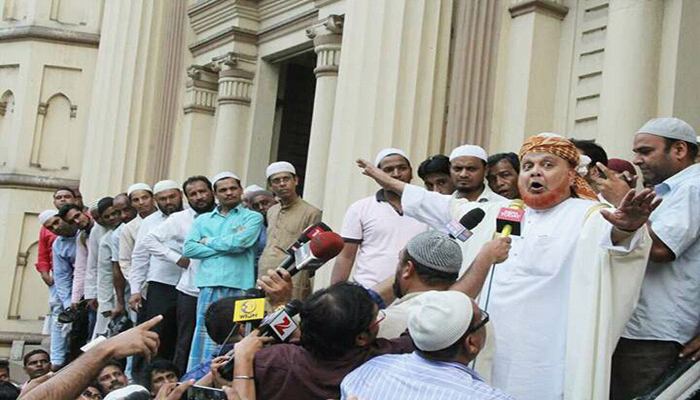
Kolkata: On May 13, minutes after TMC leader and Jamat-e-Ullema-e Hind, had staged a protest outside the Tipu Sultan Masjid, in a move to force the recently terminated imam of the masjid – Nurur Rehaman Barkati, a mob tried to lynch the cleric. With the mob getting out of control, the police deployed along with some of Barkati’s supporter, managed to make a safe passage for him to escape into his house within the mosque premise. This news was published by eNewsroom, after a Muslim activist Md Zim Nawaz had posted about it on his Facebook post, taking the credit of mobilizing a bunch of aggravated Muslims of the area, as the religious leader was causing communal unrest with his fatwas and irrelevant political comments. But, Hindutva.info had carried a news report, with no credibility, stating that Hindus and Rastravadi Muslims had thrashed the Barkati of Kolkata.

This is not the first time that local Muslim had posted against ‘fatwa cleric’. Earlier in February, the traders in and around the mosque area had gone on a strike, when Barkati and his henchmen has attacked the mutawalli and few others.

The Hindutva.info, plays a 41 seconds video clip of ETv, to validate its point. Sadly enough, neither the headline nor the content claiming that Barkari was bashed by Hindus is supported by the clip.

On contacting Salman Shahji, one of the few who had posted on Facebook about a mob trying to bash Barkati, he said, “No Hindus had attacked Barkati. It was Muslims only.”

The news also has another video linked to it. The second video is of the protest organised by Saddiqullah Choudhary, who is a TMC leader. Interestingly, it’s not just Choudhary or the Waqf board members or TMC leaders who have opposed and protested against the imam for his anti-national comments but also Bengal’s most circulated Urdu daily Akhbar-e-Mashriq, had been carrying so many stories on Barkati. On May 15, supporters of Barkati had even attacked the newspaper office. And next day, the Garden Reach Peace Movement Society, whose most members are Muslims burnt effigy of Barkati at Metiabruz.

This entire episode in a way is a fine example where Indian citizens have risen above religion to take up on a religious leader straight on, challenging his hegemony. However, instead of appreciating the nationalist sentiment of the community, certain news portals and communal leaders are planting fake news of Hindus beating up a religious leader of another community.

Enewsroom only took interest in the site, on being alerted how news was being twisted to cause communal unrest. And when we crosschecked, we found the website dishing out half-baked news, which were distorted to meet its agenda of creating a communal divide.

Alt News, a site, which exposes fake news sites, had done an investigative story on hindutva.info, and searched out who runs it. The site found, there’s a Rajesh Jindal who claims himself to be the founder of Hindutva.info on Quora and LinkedIn. Rajesh is cleverly using religion to forward one’s blogging career based on fake news.

Alt News had also found that Rajesh Jindal uses his Facebook account to cross post across multiple Facebook groups that have huge membership. He himself is the founder of a group called “Rohit Sardana and Sudhir Chaudhary Fan Club” which has close to 600k Members.

Barkati gets sacked as Imam of Tipu Sultan Mosque, but refuses to move out

Kolkata: Now, it’s official! Maulana Nurur Rehman Barkati, is no longer the imam of the iconic Tipu Sutlan Masjid. The trustees of the mosque, in the wake of his back to back controversial fatwas and anti-national statements, resorted to terminating his tenure as serving imam of the mosque.

The two-paged termination letter states, “You were requested twice to provide an explanation of your recent conduct and you chose not to respond to the same, indicating your acceptance that the allegations made are true.” After putting a few more points, the letter goes on to state that on the recommendation of the mutawalli (caretaker of waqf property) of the mosque, he was being removed from position of Imam and that he was to vacate the premise as soon as possible. The pink slip handed out to the imam via a press conference, brings an end to his 29 years tenure with the iconic mosque.

eNewsroom first broke the story of the protest against Imam Barkati and that even shopkeepers have put up hoardings and shut their shops to remove the controversial preacher from Tipu Sultan Mosque. The story got national attention and many media organizations followed it up.

As the news of his termination spread, many from the community began to rejoice. Kashif Zafar, a school teacher from Metiabruz area, ecstatically updated his Facebook status, “Feeling happy that Barkati has been officially terminated from his position.” Many like him were rejoicing his removal, but then they forgot that a person as controversial as Barkati, is not to be terminated by a mere letter.

Soon after the termination made public, Barkati called for a yet another press conference, during which he declared, “I am the Imam of the masjid and I can’t be removed just like that. It’s a conspiracy against me.” He also hinted that Akhbar Mashriq’s executive editor and a Muslim Trinamool Congress leader, were responsible for his termination. He added, “I am waiting for the chief minister to return.”

However, the mutawalli, Anwar Ali on being inquired about this statement of Barkati, he said, “A decision has been taken. He has been terminated, so he will have to leave the premise, if he doesn’t do it in a respectable manner, then we will seek the help of police.”

On the other hand, Zafar, who had organised a protest march against Barkati, said, “We knew that he won’t leave his position so easily. So, we have planned of other ways. Now he will be disgraced publicly so that he is forced to evict. We wont pray behind a imam like him.”

Islam too indicates, that an imam who is disliked by his followers should either mend his ways to gain public affection or leave his position. Elaborating on this Mufti Manzar Hasan Khan Ashrafi Misbahi, the chief Mufti of Madrasa Darul Uloom Ali Hasan Ahle Sunnat, Mumbai said, “Of what I have been hearing by him, he should vacate the position, he has no right to do the imamat (lead the prayer), as neither the public nor the waqf board members wants him to do so.”

Barkati’s henchmen attack media, community say “enough”

Kolkata: Armed with ammunitions, a group of over 20 men stormed into the premise of Akhbar-e-Mashriq, one of the most read Urdu daily in Bengal, around 9:45 pm on Monday, shouting and abusing the editor for carrying stories has put the controversial imam of Tipu Sultan Mosque, Nurur Rehman Barkati in a tight spot.

The First Information Report (FIR) (case no. 219) filed at Beniapukur police station by Farah Khan, wife of executive editor, Md Nadimul Haque, named some accused, including Khalid Barkati, son of Barkati. The FIR states that the office premise also houses their residence was under siege when these attackers stormed in, threatening them with dire consequences like burning down the office, if the newspaper didn’t stop reporting about Barkati.

Action against attackers

Talking to eNewsroom, Haque said, “This attack is a blatant attack on freedom of press. We have lodged an FIR and identified the assailants. Chief Minister of West Bengal, Mamata Banerjee has assured of a speedy action to be taken against the attackers.” He added, “I was not present in the office when the attack took place. Just my office staff and family members were there. Needless to say, they were immensely traumatised during the attack. But then people should know that such attacks on media will definitely not be able to silence us. We can’t be witch hunted for reporting facts.”

No more political shielding

The attack on Mashriq’s office has made many openly criticise Barkarti. “This is not just about Mashriq, but on Indian media by a scrupulous religious cleric like Barkati. And it’s unfortunate that it has happened in our state. I have faith on the law of our country and the perpetrators will definitely be punished for their act,” reacted Sultan Ahmed, a prominent Muslim face in Mamta government and an MP. On being asked if the Mamata Banerjee will be taking some action against Barkati, Sultan said, “She has nothing to do with him. He just keeps name dropping to show that he has an amazing term with the CM.” After a pause he added, “He has become a problem for the Muslim community. After all this, he should resign from post of being the imam of Tipu Sultan Masjid.”

Burning of Barkati’s effigy

With back to back controversies, fatwa and the latest attack, seems to have made the people of Muslim community to stand up against their own religious head. Ironically, the man, who made it to the headlines, for burning effigies and giving fatwas, witnessed his own being burnt in Metiabruz area of Kolkata.

“We are tired of this person. Let me be very clear, any person who causes communal disharmony disrespects the law of the country, is definitely not our Imam. We are tired of his antics. His anti-national comment and recent attack on Akhbar-e-Mashriq office made us come on the streets of Kolkata to make this declaration. We do not support the rantings of this imam,” said Kashif Zafar, the general secretary of Garden Reach Peace Movement Society. He also added, “We will also be signing a petition from Muslims across the city and presenting it to the Mutawalli of the Tipu Sultan Masjid, stating that we refuse to accept him as the Imam. And this will eventually lead to his ouster as Islam does have this clause – the common man has the right to refuse to offer their prayers under the immamat or leadership of an imam, if they feel he is not fit for the position.”

In the meanwhile, the trustee members of the masjid have called for a press meet tomorrow. Observers say that with all that has been happening of late, they may take their final call on Barkati.

However, Kolkata Commissioner of Police, Rajiv Sharma, disconnected the call, when he was inquired about, what action they took so far in the case?

Raghubar adamant, not to review CNT/SPT amendments

Giridih: Last year, Raghubar Das, the first non-tribal Chief Minister of Jharkhand, made a historical amendment to the Chota Nagpur Tenancy and Santhal Pargana Tenancy (CNT/SPT) Act, which now empowers the government to procure agricultural land owned by tribals for non-agricultural purposes. This has now become a bone of contention for various parties in the state, as these two special laws, under Article 31 (B) of the Indian Constitution, had been granted constitutional protection.

Thus under the original CNT Act (1908) and SPT Act (1949), land of tribals cannot be procured by the government or be transferred to non-tribals in the Chota Nagpur, Santhal Pargana and Palamu region of the state. However, post amendment, it is now possible to do so.

The amendment, right from the time that it was proposed till it was implemented, drew sharp criticism and protest not just from the opposition but also from the tribals. Interestingly, tribal leaders of Bharatiya Janata Party (BJP), the ruling party of Jharkhand, including former chief minister Arjun Munda had publically demanded a review of CM’s decision.

On Sunday, when both leaders – Raghubar and Munda, were in Giridih to attend a three day state level cadre training programme for party full-timers, just a few hours before the CM’s arrival, Munda explained why is he still keen on having a review.

He said, “The change in CNT and SPT Act is unlike amendments made to other laws in India. It’s neither a scheme nor a simple policy matter. We need to understand that this law is linked to the future of indigenous people of Jharkhand. So for the greater good and future of the party, I have raised this issue of having the amendment reviewed.”

Munda, who had met Prime Minister Narendra Modi last month, around same time, when chief minister had met party national president Amit Shah, left the training center before the arrival of chief minister.

And when Raghubar was told about Munda’s review demand, the CM responded, “Raghukul Reet Sada Chali Aayi, Pran Jaaye Per Wachan Na Jayee (rough translating to when you commit something, keep your word).”

But, political observers believe that, it will not be easy for Das, as in the recent bye poll elections in Littipara assembly constituency, ruling BJP have lost. Political analysts are of the opinion that their defeat was primarily because of the tribal community’s anger over CNT/SPT Act amendments. It was the third loss for the party in the last four assembly polls, held since Raghubar has formed the government.

The tribals of the state are so infuriated with the CM for bringing about this amendment that recently, he was not only shown black flags but was not allowed to hold a rally in Saraikela-Kharsawa district.

On Saturday, state president Laxman Gilua had mentioned that that the party cadres are not happy with the functioning of the CM. Sources inside the training hall, where the three-day event was being hosted, said that during the session, some cadres pointed out that CM does not meet party cadres.

When asked about it, Raghubar maintained, “Cadres and party workers are having very high expectations.” And then after a small pause he added, “But, it is natural, as they put in so much hard work to bring party to power. So we have decided that ministers will sit in state party office from May 20, while MP as well as MLAs will sit at district party office on Fridays.”

However, Raghubar conveniently diverted the answer on other party colleagues, whereas the party president had raised questions on his functioning. CM also ruled out speculations doing the rounds – Jharkhand Vikash Morcha superemo Babulal Marandi returning to the saffron folds. He said, “There is no need to talk about the leader who have no existence now.”

Muslims of Kolkata, done with ‘fatwa cleric’ Barkati

Kolkata: It seems, the days of Nurur Rehman Barkati, the Shahi Imam of iconic Tipu Sultan Masjid is numbered, as the waqf estate trustee members have initiated the process for the removal of Barkati, the ‘fatwa cleric’ after he made the controversial anti-national comments. The trustees, who had earlier requested him to amend his ways, have had their fill, of the cleric, his political involvement, controversial statements and fatwas.

While the Islamic scholars have also raised a serious question on him being a Mufti and the sanctity of his fatwas.

Significantly, Barkati, the Imam of iconic Tipu Sultan Masjid, had not anticipated this uproar when he called a press conference to declare that Bengal as a state had laws different from other Indian cities. And that he wouldn’t be removing the red beacon, which according to him, had been granted to him by the “British”.

ABC of Barkati

Barkati, was recruited as Qari of Tipu Sultan Masjid, way back in 1989 on recommendation of Shahzada Anwar Ali, a descent of Tipu Sultan, who is also the mutawalli or caretaker of the Masjid, which happens to be a waqf property. Barkati’s father, who was a mufti, had been associated with the famed masjid, as its Imam.

Speaking to eNewsroom, Ali said, “He is a very shrewd person. He knows how to play his cards. Of what I know he isn’t a mufti nor is he the qazi for Tipu Sultan Masjid. He is the qazi of Manicktalla. He calls himself the chief Mufti of Bengal government. Now, tell me, is it possible in a democracy that any government would have such religious position?”

A closer look at the nameplate flaunted by Barkati reveals that in the first line he introduces himself as the chief Qazi and Mufti of WB government, but at the end merely calls himself Mufti Nurur Rehman Barkati, which is quite contradicting. Barkati, had earlier manhandled Ali on being refrained from using the masjid premise for press conferences. Following which the cleric has been giving his fatwas and views from the Kolkata Press Club.

It’s not just Ali who is at loggerheads with Barkati. The common Muslim public of Bengal, also lost its cool again. This time, a huge number of people gathered outside the masjid, hours after TMC leader coaxed the maverick religious leader to remove his beacon, only to rough handle him. However, the public assault didn’t seem to have shaken up the Imam of Tipu Sultan Masjid. Hours after the public assault, during a telephonic conversation with eNewsroom, when asked if he is actually a Mufti (according to Islamic law, only a Mufti can give fatwas) he declares, “Yes, I am a mufti.” On being asked, does he has any evidence? He snarled, “Are you the Kolkata High Court? Who are you to ask for evidence?” However, on being pursued, said the cleric that he did have the mark sheet.

Mufti Manzar Hasan Khan Ashrafi Misbahi, the chief Mufti of Madrasa Darul Uloom Ali Hasan Ahle Sunnat, Mumbai, claimed that Barkati is not a mufti. “I had issued a fatwa against him as this man only creates bad blood. A mufti, according to Islam, is entrusted with maintaining peace and decorum in the society. We were friends initially, and so far I know, he did not such study. Now he might have got a certificate from somewhere, as he is claiming to have, but that doesn’t make him one in the true spirit of the religion.”

Misbahi also elaborate on Barkati’s Chief Mufti claims, “To be a chief Mufti, you need to have a board, where you will have several other Muftis working under you, which definitely isn’t the case in Bengal. Strict action needs to be taken against him.”

Mufti Misbahi, is the same cleric, who had issued a fatwa against ISIS.

Rise of Kolkata Muslims against Barkati, the fatwa cleric

It’s been quite a while, since the Muslims have been groaning at the fatwas issued by Barkati. This time, the murmurs on social media were quite loud. The discontent was evident, but Barkati hadnt anticipated, that all this would take the shape of a mob fury. On Saturday, people outside the masjid gathered to teach the “Fatwa Cleric” of Kolkata a lesson. “We, the Muslims of Bengal, have shown India how Indians should treat any religous cleric who misuing his position for personal gain or to spread hatred,” posted Md Zim Nawaz. In another post, Salman Shahji posted pictures of the gathering outside Barkati’s residence. Seeing people’s anger, Barkati and his supporterslocked themselves inside his residence within the masjid.

Also members of the West Bengal chapter of Jammat-E-Ullema-e-Hind, the most influential body of Islamic scholars in India, were seen staging a protest against Barkati outside the masjid, on Saturday.

This is not the first time that Muslims have spoken against him, earlier this year, eNewsroom had exclusively reported about traders of Lenin Sarani going on a strike to protest against him.

Running out of steam

Barkati, the Imam of Tipu Sultan Masjid, is on the pay roll of the waqf property for years now. But during tenure as with the iconic masjid, he began strengthening his political clout, by issuing fatwas after fatwas and grew too big for his shoes. His journey as a fatwa cleric began under the CPI-M and gained momentum under the current government. Dropping in names, claiming to close to Chief Minister Mamata Banerjee are some of the cheap stunts that Barkati has always been good at.

However, Barkati, who takes his status, as the shahi imam seriously, seems to be running out of steam. Those allegedly endorsing his antics too seem to be distancing themselves from him.

“We are just fed up of him and his antics. He doesn’t seem to understand the fact that he is doing great damage to fabric of communal harmony of not just the state but the country also. His comments are being blown out of proportion to suit the agent of parties like Bharatiya Janata Party and the RSS,” said West Bengal Minister Siddiqullah Choudhary, who is also the head secretary of the Jammat.

On being asked why is CM not taking action against Barkati, he said, “Wait and watch. Law will take its course.”

Eviction from the status of Shahi Imam

The board of trustees of the Tipu Sultan masjid, which was built, by the grandson of the freedom fighter, during his exile in Bengal, too seem to be in a mood of terminating the ‘fatwa cleric’. “I had recommended him for this position and look how he is misusing his status. He even uses the Ashoka stamp, when he is not entitled to. He used to hold press conferences here in the masjid. We have reprimanded him many a time to not make such comments and even if he does, then he should not so it as the Imam of this masjid. But he has turned a deaf ear to our pleas. Hence I have recommended to the committee to have him removed,” said Ali.

On being asked, about the media being rife about Barkati already being terminated, he said, “Ours is a waqf property. He can’t be removed just like that. I think there has been some miscommunication. Our board is reviewing my recommendations and we are waiting for a legal opinion, before taking the plunge.”

LEENA KEJRIWAL: VOICE OF THE MISSING GIRL

0

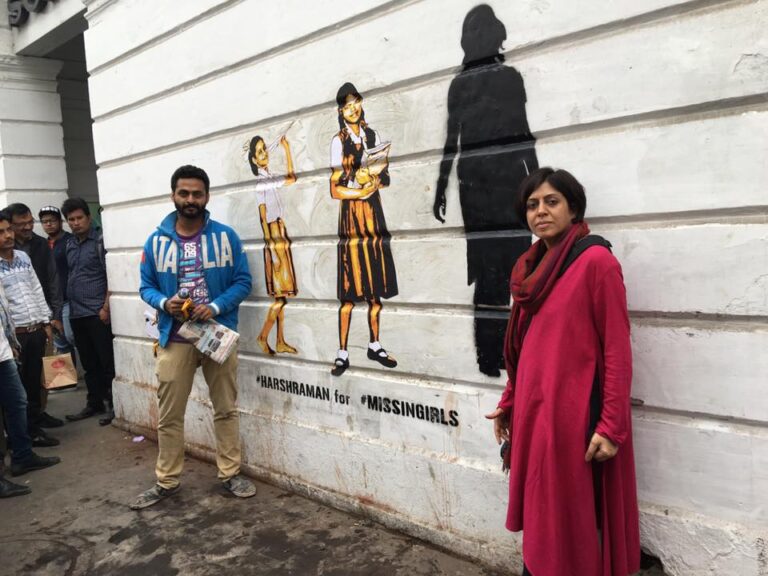
Kolkata: Have you heard of the “Missing” game app? Also, have you spotted a life-sized black coloured silhouette of a girl,  on the street walls of Kolkata? Off late, Kolkata has been witnessing this wall graffiti gaining popularity in the city. These silhouettes are no ordinary wall graffiti, but part of MISSING, an ongoing public art project, by a Kolkata-based photographer and installation artist. Thanks to her endeavours, the MISSING project has become a global movement.

Meet Leena Kejriwal, an artist with a difference. For not every day does an artist marry off art with activism nor advocacy. But Kejriwal has done that and more. Through her installations, artworks and the much recent addition – online gaming app,  Kejriwal, advocates for a greater cause – stop Human Trafficking.

Kejriwal insists that she is no activist but an artist. She says, “I was married off into a typical Marwari family, where patriarchy rules. So, I kept being the stereotypical good wife and a doting mother of two kids, till I realised that photography, was all that I wanted to do.”

Leena Kejriwal and missing art
Leena Kejriwal with her art installation
Leena realises her dream

Kejriwal, who in her fifties, unlike other artists, began quite late. “I had always pursued photography as a hobby. I often used to sneak out early in the morning, to capture the beauty of Kolkata. During one such shoot, during the early wee hours, I realised that I needed to take photography more seriously. A compilation of my Kolkata-centric photograph (most of them in black and white) made me come up with Calcutta: Repossessing the City, a book, which was more like insider’s manual of the city. It became a bestseller. And then came my photographic installations, which went on to become my signature,” she says.

Kejriwal shot to the limelight, with her photographic installations at the Delhi Art Fair, 2014. The work got her international recognition. She feels that as an artist, she had a smaller reach, limited to art galleries. And to expand her reach, she needed to let her artwork into wall graffitis.

Missing Girl Campaign

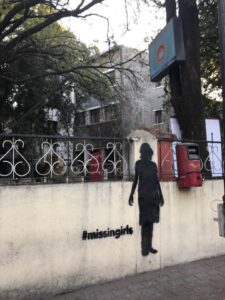
“The art installation was getting all the recognition. But its message was definitely not reaching those, who needed to get it. Thus, I came up with this idea of having black silhouettes of a girl with #missing written, splashed across city walls. We tied up with NGOs, teachers, and schools, made students a part of this. For its girls of this age that are trafficked and boys of the same age end up being the buyers,” she adds. Explaining the silhouettes, she says, “These are like the black holes, where the trafficked girls go missing. And I am happy that I have been able to build some awareness with this campaign of mine.”

Leena Kejriwal's silhouette aims at raising the issue of human trafficking
The ‘Missing Girls’ silhouette

Elaborating on her transition from being a photographer to an artist advocating a cause, she says, “I needed to visit the red light areas of Kalighat for one of my project. The empty, expressions of the sex workers I encountered, lingered on to mind, long after, I was done with it. Their eyes seemed to be shrieking for help. This was something that my mind refused to erase. I think this experience of mine, in some way, made me broaden my vision.” This experience along with the fact that West Bengal records the maximum number of human trafficking cases in India, played a vital role in giving a direction to her work.

Art with a cause

Kejriwal, mentions, “Ruchira Gupta and her NGO Apne Aap Worldwide, gave a specific direction to my artwork, which is to work for gender equality. There is so much of violence happening against women, across the world. It’s not just India. We need to analyse or do some research on why women are being violated, across the world. You see the Bangalore mass molestation case; it needs a certain kind of a mindset for such a thing to happen.”

She feels, “Common man needs to understand the horrors of human trafficking. This will stop them from creating a demand for flesh trade.” She then goes on to add, “My gaming app – Missing,  makes a player step into the shoes of a trafficked girl. The challenge of the player to make the girl escape, unharmed. However, if the player misses his hints then he has to go through the agony that a trafficked girl undergoes. It’s disturbing, but it gives a bigger message to men – don’t create a demand for flesh trade.”

The game has been so much appreciated that Kejriwal has been shortlisted as a speaker at Games For Change conference. The event will be hosted in New York, towards the end of July. Wonder, if the game will bring about a change in the social fabric? Time will tell.

Dhanori: A village of war widows, and warriors in Rajasthan

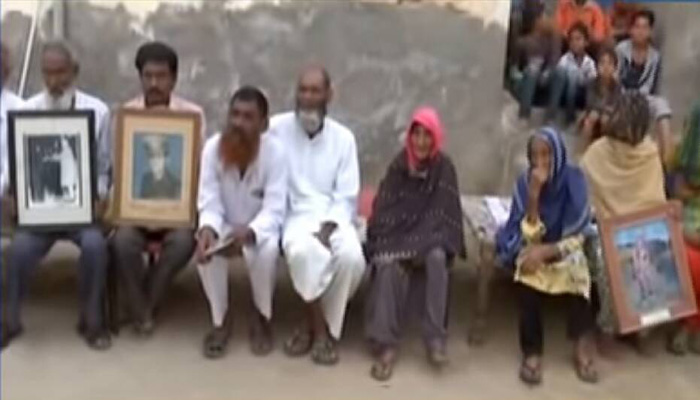
Jhunjhunu: A common thread binds Sayera Bano, Hasan Bano, Anwar Bano, Mumtaj Bano and Alhamdo Bano, of Jhunjhunu’s Dhanori village. They are all war widows. This village in Rajasthan, has given Indian army, soldiers who have given their lives to serve the interest of the nation right from the First and Second World Wars to Sino-India war to  Indo-Pak war and the Kargil war. Name a war, and the village will have a martyr for it, and the war widows.

Sayera’s husband, Azimuddin Khan had been martyred in World War II, Hasan and Anwar had lost their husband Saifi Muhammad and Nizamuddin Khan in 1962, Indo-China war. Mumtaz’s husband Zafar Ali Khan had martyred in 1971 and Alhamdo’s husband Ramzan Khan gave his life, while protecting the Indian soil during the Kargil war. However, the widows of World War I from the village are no longer alive, but there were six army men from Dhanori had attained martyrdom, in the war.

A total seventeen soldiers hailing from Dhanori, have attained martyrdom for the country. At present, more than 550 from the village are serving the Indian Army, while many are enjoying their post retirement life back in their hamlet. There is not a single house in the village, from where a family member has not served the army.

“I have fought against Pakistan during the Indp-Pak war of 1971,” said retired Captain, Ali Hassan to eNewsroom. The war was not easy for our village, as we lost three of our sons, during this war. The village has also a Veer Chakra recipient. “Major MH Khan was from our village, I was under him. He was martyred in the war, later awarded the Veer Chakra,” recalled the retired captain.

MH Khan, whose father was an IAS officer, is the only army man from the village, to have made it to the rank of a Major in the Indian army. He, back then had pursued his education in Hyderabad.

Ali Hassan’s family has been protecting the Indian borders, fighting wars for safety of the nation for four generations now. Hassan takes immense pride in this and said with an air, “My grandfather and father were in the Indian army, so, I too joined it and now my son is serving our nation.”

Dhanori, is only 15 kilometers away from Jhunjhunu, and has a population of over 10000, of which a little over 70 percent comprises Muslims. They are mostly, Kayamkhani Muslims and have played a vital role in motivating people from every community to send at least one of their sons to serve the nation.

“We guided our friends from other community to join the Indian army,” Perwez Khan, who just retired after serving 17 years. He was youngest to be recruited from the village to Indian Army. He started serving the nation at a tender age of 16 only.

Despite, Dhanori sending so many men to fight for the nation, the government seems to be a little hesitant in acknowledging its contribution towards safeguarding India. “Dhanori has no senior secondary school. The Primary Health Center (PHC) shuts down soon after 4pm; there is no full-fledged hospital here. The roads are also not good. We also need a bank and an ATM,” rued Perwez.

“We also do not understand, why our village has not been adopted by any MP, since there will be no such place in India from where so many people have attained martyrdom,” said Alhamdo, the widow of Kargil war.

Production of Mica: 12 thousand tones, Export: 14 lakhs

0

Ranchi: Mica, the crumbly shiny white mass, comprising silicates of several elements, is a natural insulator and is thus used in electrical appliances and even in computer chips. It is also, used in paints and cosmetic products. And hence, its always, very much in demand, globally.

However, in early eighties, government of India had notified to ban mining in forest area. Of all the industry affected, Mica excavation was hit the most. This blanket ban immediately led to the closure of all Mica mines in Giridih and Koderma district of the mineral rich state. Interestingly, these two districts, together produced over 70 per cent of India’s Mica. However, till date, there remain only two license holders, in each areas.

Two decades down the line, Indian Mines Bureau (IMB) which brings out an annual book on Indian Minerals, in its latest edition has officially maintained that Jharkhand has ceased producing Mica since 2013. The book also maintains that there has been a huge decline in its production across the country.

According to The Indian Mineral Year Book 2015, which was released in December, 2016, there are only 31 mines that are operational in India. And that in 2013-14, India produced only 21,412 tones. But, when it came to export, the figure is as high as– 1,27,882 tonnes.

Interestingly, in the year 2014-15, the industry, as per official figure, had witnessed a 40 per cent decline in production. Legally, only 12,488 tones Mica were produced. But, despite all, India exported 1,40,960 tones. Thereby, clearly ringing the alarm bells, as to how India was exporting more Mica than it was actually producing?

However, the President of Mica Exporters Association, Jharkhand, Rajendra Bagaria claims, “IMB only assesses production of Mica. They don’t report on the waste lying around even after 100 years of mining.” Hence, accounting these waste Mica to be the source for Mica exports.

But, IMB’s table says the production include crude, and waste as well as scrap. When interrupted, the association president stands on his statement that dump (waste and scrap, known as Dhibra) do not get assessed by IMB.

“And after using that dhibra, which were there on raiyati (not forest) lands of some person, we were giving three and half percent cess to central government, while exporting. We were also telling successive state governments since long to survey such dumps and take a royalty,” adds Bagaria.

According to him, one such dump has been assessed containing Mica worth Rs 218 crores.

If you browse through some websites that has data related to Mica export, then it reveal that from Jharkhand only, through Kolkata sea route, companies export more Mica than what has been officially quoted as total production.

And China alone, according to IMB records, imported 88,146 tones of Mica in 2014-15. It is easily understandable that since long there has been large scale Mica excavation going from the ‘ghost’ mines of Jharkhand. And because of this the government is loosing out on royalties worth billions of rupees annually.

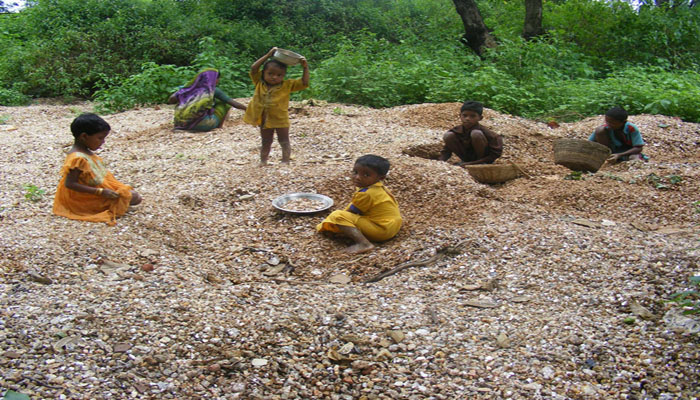
However, this is not the sole problem. Using children to gather the scraps from areas surrounding the deserted mines, is a bigger concern, as it is hazardous to health and has even caused the death of a few children.

In 2016 only, six children had died within a period of three months. Thereby, not only alerting the central and state governments, but also make car companies like Audi, Volkswagen and BMW to investigate the sources of their car paint. All this forced the Jharkhand government to finally take some initiatives.

“We are surveying the areas where mica scraps or mines are functioning. Geologists have also been put on job. So far we have identified 10 such spots where dhibras are dumped in huge scale. We have started the process to legalize these spots. In fact we have even put up an advertisement to announce the auction of these sites,” says Commissioner of Mines, Aboobacker Siddiqui to eNewsroom.

A day after the advertisement was published, Giridih police registered FIRs against eight people who had stored scraps without any license.

However, the commissioner, along with others, is also clueless about the huge gap in production and export quantity of Mica, “We had no idea about it, but as we have started the legalization process, we will try to bring every scrap spot and mines under the government,” adds Siddiqui.

Surprisingly, the British Geological Survey in 2005, had found that Koderma has largest deposit of Mica in the world (Wikipedia information). However, government of India has recently denotified it from the ‘major’ mineral category.

Wanted: A suitable ‘communist’ groom

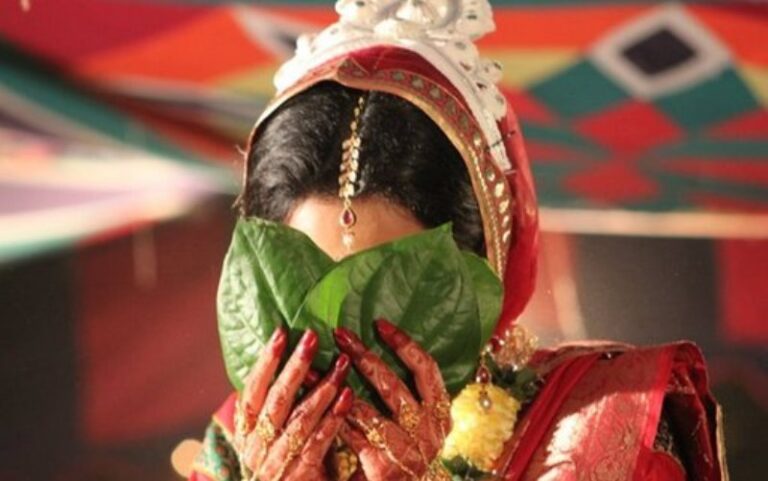
Kolkata: Twenty-five-years old Manisha Prasad (name changed on request) has a different demand from her prospective husband. Unlike other girls, she does not care for money or looks of the groom. All that she is bothered about is – his political ideology.

The otherwise calm and docile girl, from Bandel, a sub-urban area in Bengal, is very clear about the fact that the boy that her family chooses for her should have Left ideology. Talking to eNewsroom over the phone, she firmly says, “I am a proud communist and I want to marry a man of the same ideology. I am not ready to compromise on this demand of mine.”

On being asked why make such a demand, she reveals, “I have grown up with this ideology. I feel communists are liberal and open minded. They treat women well and are better husbands. Also, the fact that I wouldn’t have to compromise on my political ideology, if I marry a person of communist background, made me and my family to place such an advertisement in a Bengali daily’s matrimonial section.”

Interestingly, Prasad, is neither from a Bengali family, which in most cases foster this ideology in their kids, nor her parents are supporters of this ideology. On the contrary, she is a girl of Bihari origin, who grew up in a Bengali household, thereby, imbibing on to their culture and ideologies, in an organic manner.

“She is as good as my own sister. Despite our biological parents being different, we share a strong bond. She in fact lives with us and we in consultation with her real parents placed this advertisement,” says Dipatanj Dasgupta, foster brother of Prasad. It is Dasgupta, who had placed the advertisement.

He further reveals, “The fact that she is originally from Bihar, also made us add this particular demand for the groom to be a communist in our ‘must have’ list. One can’t deny the fact that most people with a Left ideology are liberal and well mannered, who treat their women well. Manisha has been living with us since she was in standard VI and has a liberal outlook towards the world. It was but obvious to single out a man, who would not crush her ideology and beliefs.”

Was it only this or some other reasons too? Reacting to that, Dasgupta adds, “Well, yes, you can say so. Recently, we have witnessed many Bengalis turning pro-BJP. It’s their choice. But we are communist and we want to remain so, always. Getting our girl married into a family with a different political ideology, would mean that at some point of time our girl would have to compromise. And we didn’t want this, hence this collective decision to place this very specific advertisement.”

For many, this specification did come as a surprise. “Well, I did see this advertisement on Ganashakti. I was pleasantly surprised, about how a family was trying to keep its political ideology intact. It was a bit funny too,” said Soumyajit Rajak, an active SFI activist from Jadavpur University.

On the other hand many were upset with the family’s demand. “We are no longer taking calls on that number, as people are calling and abusing us for our choice of political ideology. Some of the WhatsApp messages are so offensive. I guess, the advertisement’s snap shot, has gone viral and we are being abused for no rhyme or reason. But yes, we have also received a lot of appreciations too,” Dasgupta added.