Married at 11, widowed at 15, an HIV positive survivour now saves lives

0

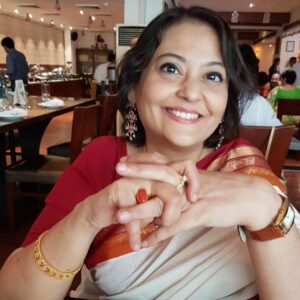
Ajmer: After losing her father at the age of nine, Asha Jat of Deranthu, Nasirabad (Rajasthan), had no option but to work as a daily wage child labour at a construction site. Two years later she was married off to a labour at the age of 11, only to be widowed at the age of 15. Making things more traumatic for her were back to back events like – losing her first born just after 13 days of delivery and then discovering that both she and her husband were HIV positive.

“It was the most difficult phase of my life. I lost my child and then discovered that we both were HIV positive. I saw my husband lose his life to AIDS. I was clueless about what this disease was. After my husband’s death, my in-laws sent me back to my mother’s place. The social seclusion and fear made me believe that I too would meet the same faith within a year or two. But then, life had different plans for me,” Asha told eNewsroom.

Once back at her home, Asha, who was already an HIV patient, came in touch with Positive Women Network (PWN), a non-governmental organization working towards creating AIDS awareness. “They first offered me a job as an HIV educator. The pay was too little. But I needed a job and no one was willing to hire me because of me being HIV positive. PWN, seeing my dedication, offered me the post of a counsellor in a hospital, the pay this time was higher. Since then, I have associated with this NGO and have even set up the Ajmer Chapter, Saksham, of PWN,” she informs.

Saksham, helps people living with HIV to access government health services and welfare schemes. Asha along with her co-workers from Saksham has been actively working in Ajmer to offer de-stigmatisation counselling, free treatment and providing nutrients or supplements that can boost the health of those affected by AIDS.

“Staying healthy is the best way to deal with HIV. Hence having a healthy balanced diet is a must. Saksham provides nutritional supplements to about 6011 women, children and men living with HIV. We also have provided livelihood opportunities to 50 women survivors of HIV,” says Asha.

However, this journey has definitely not been a cakewalk for her. “Things were difficult for me. People taunted me, didn’t want to talk to me. But life moves on. You can’t just keep thinking about what people say. I am a victim of HIV, as I wasn’t equipped with the knowledge of how it could have been prevented. Hence, my main agenda is to make the women aware of how they can protect themselves,” she mentions.

Asha’s work is not just limited to Ajmer city but to the adjoining areas too. According to statistics, Rajasthan happens to be the eight states in India, which still has a high prevalence of HIV. “Nasirabad also known as a trucker’s belt is the most affected area. Most of these drivers are illiterate and are not aware of the precautions they need to take when one is promiscuous. My agenda is that through Saksham we are able to educate the younger generation about safe sex so that they don’t get infected with this virus,” she points out.

With a team of three full-timer and 30 volunteers, she has been conducting community awareness sessions and door-to-door counselling in ‘at risk’ villages along with government officials. Talking about the rigid mindset that she often has to face Asha adds, “It’s difficult to talk about this issue, people are very conservative here. But we have strategically got into an association with anganwadis across Ajmer to conduct sex education meets with women there. We try counselling both affected and healthy women.”

Asha, who had once been ostracized by the society, has not just been accepted but is also being acknowledged for her extra-ordinary life and work. Vice President of India, M Venkaiah Naidu, presented her with the Confederation of Indian Industry (CII) Foundation, Woman Exemplar Award, for the social transformation triggered by her at the grassroots level on April 8. At a function in Delhi, Asha got 3 lakhs cash and a momento by the vice-president.

Rajasthan Royals’ fortress SMS stadium gears up for IPL matches

Jaipur: After two years of suspension, Rajasthan Royals, the winner of the inaugural Indian Premier League (IPL) will start a fresh journey for IPL 11 and play at the SMS Stadium, Jaipur on April 11. The beautiful stadium has been a fortress for the team. Rajasthan Royals does not loose any match at SMS Stadium. It will be taking on Sunrisers Hyderabad in their first match today at Hyderabad.

Significantly, captains of both the teams (both from Australia) — Steve Smith and David Warner had to step down from Rajasthan Royals and Sunrisers Hyderabad’s captaincy because of the recent ball tampering controversy. Watch the amazing pictures of SMS Stadium captured by Chandra Mohan Aloria.

Why BJP is afraid of linking Aadhaar with voter ID?

0

Union Minister of Law and Information Technology Ravi Shankar Prasad does not favour linking Aadhaar with voter ID card. He said so in Bengaluru on April 1. He, though, added that it was his personal view.

Personal or official, this view makes little sense to the people at a time when the government is going all out to link Aadhaar with everything conceivable by projecting it as the panacea for all evils afflicting the society. In fact, the voter ID should have been the first to be linked with Aadhaar in order to eliminate the scourge of fake voters which have been vitiating electoral process.

The problem of fake voters has been there from the beginning but not on the large scale witnessed in the recent years. The BJP appears to be the biggest beneficiary of the fake voters. Could the fear of checking fake voters through Aadhaar linkage have made Prasad say that linking Aadhaar with voter ID is not necessary?

Narendra Modi had won from Varanasi Lok Sabha constituency with a margin of over 3.7 lakh votes in 2014. During the revision of electoral rolls towards the end of the year, over six lakh fake voters were discovered in the Varanasi Lok Sabha constituency. It did not help Aam Aadmi Party’s Arvind Kejriwal who was a runner-up in Varanasi Lok Sabha constituency. But it made him wiser for the forthcoming Delhi Assembly elections.

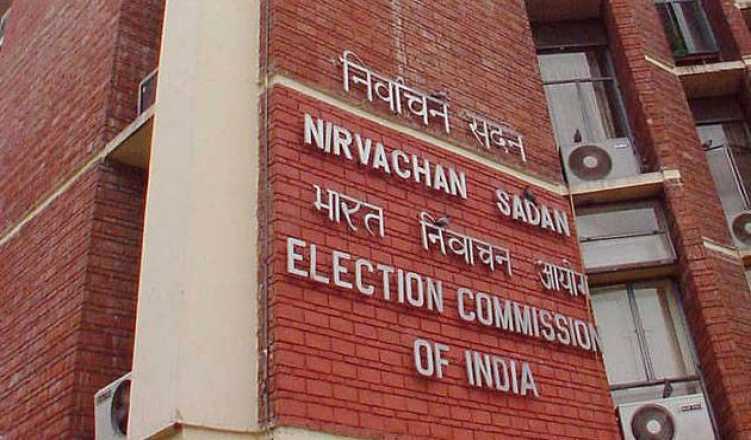
Both AAP and Congress had detected bogus entries in voters’ lists for the Delhi Assembly elections. Leaders of the two parties approached the Election Commission but the Election Commission behaved shabbily and refused to take notice of their complaints. The matter was then taken to Delhi High Court which pulled up the Election Commission and asked it what action it had taken on the allegation about the presence of a large number of bogus voters in various Assembly constituencies of the national capital. ‘What is the cause of it? Obviously someone is not doing their job properly’, Justice Vibhu Bakhru said while directing the Chief Election Commissioner  and the Chief Electoral Officer of Delhi to file an affidavit ‘indicating the cause of error.’ The court said that there were ‘discrepancies’ in the electoral rolls as shown by the petitioner, Naresh Kumar. The court also said that the allegation that there were many persons in the city who had numerous voter cards in their names but with different addresses needed to be rectified if they were still existing.

In response to the complaints of Aam Aadmi Party and Congress that Delhi’s electoral rolls carried names of a large number of bogus voters, Election Commission wrote to the two parties on January 11, 2015 that 1,20,605 ‘duplications’ had been noticed in the electoral rolls (which have been deleted). Election Commission’s response came two days before it was scheduled to file an affidavit in the High Court. That AAP got 67 seats and BJP only three in the 70-seat Delhi assembly is history.

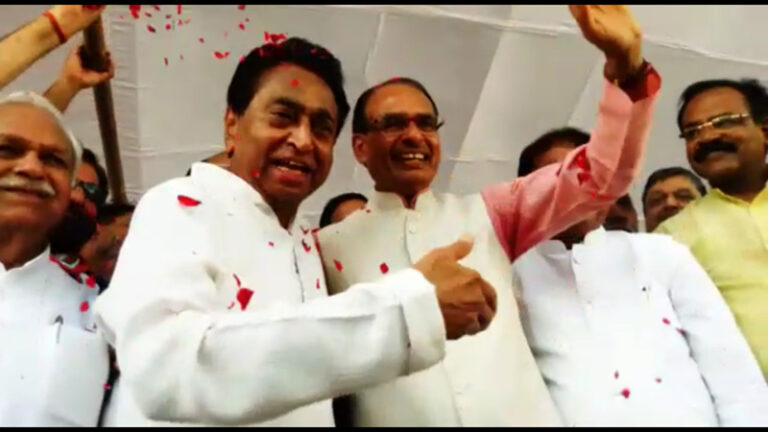
Madhya Pradesh had two Assembly by-elections in February this year. During the campaign, Congress activists detected discrepancies in voters’ lists. Photocopies showing the same voter registered in more than one locality started appearing in social media. As the complaints at local level did not have the desired effect, the party led by Lok Sabha member from Shivpuri Jyotiraditya Scindia approached the Election Commission. A summary re-check of voters’ lists was ordered. A week before the day of polling, the Ashoknagar district Collector’s office sent its report to the Chief Electoral Officer in Bhopal saying that 1800 fake voters had been detected in Mungaoli Assembly constituency (which falls in Ashoknagar district). Of these 1800, as many as 834 were dead, 312 were listed at more than one place, 245 voters were not traceable and 435 had been transferred to different places but had not got their names in Mungaoli constituency deleted. Similar was the case for Kolaras Assembly constituency (in Shivpuri district).

The BJP candidates were defeated in both the constituencies though Chief Minister Shivraj Singh Chouhan had made it appear like a life and death question for himself by deputing all the party leaders including his cabinet colleagues to campaign there. The BJP campaign did not recognise the words like ethics and morality.

The Election Commission has ordered a full revision of voters’ lists in Madhya Pradesh in view of the Assembly elections due later this year. So far the Collectors have detected nearly seven lakh fake voters – three lakh of them dead and four lakh untraceable. Scrutiny is on.

Kolkatans march with the message of peace and communal harmony

0

Kolkata: Seventy-five-year-old Chandramohan Chatterjee, a retired school teacher was among the thousands who assembled at Kolkata’s iconic Lenin Statue in Dharmatalla area, with a simple agenda – send out a message of peace and brotherhood. As he trudged along with other participants, which included the likes of former justice Ashok Kumar Ganguly, actor Debdut Ghosh, veteran politician from the Left Front Bikash Ranjan Bhattacharya, Sankha Ghosh, and many others, slogans like Amader lodai shompradaiktaar biruddhey cholchey cholbey (Our fight against communalism is on and shall continue) and Shanti michil ki hoye shob aajkey dekhey nei (Let everyone witness what a peace rally is like) kept the momentum going.

In a not-so-hot April Sunday afternoon, the participants were seen singing, beating drums and talking with the common man, spreading the message of love. A college educator, in her mid-forties, after singing songs of unity near the Lenin statue was seen holding on to a passerby’s hand. She said, “Bhai, bhoyer kono dorkar nei. Amader Ved aar Puraan sompreetir kotha koi. Amader Islam o shompreeti palon kortey boley. Amra ek gacher dui phool (Brother, there is no need to fear each other. Our Ved and Puran talks of universal brotherhood and so does Islam).” However, the lady was reluctant to reveal her identity, said, “We, the common people of Bengal are here to give a simple message – the people of Bengal will not be divided on the lines of religion. We were united and we stand united. I would also like to state that the commoners that you are seeing here don’t belong to a single political ideology, we are here as we want peace.”

However, just a few steps away from her, eNewsroom spotted, veteran left front politician Shyamal Chakraborty, who said, “But the present situation is such that both – BJP led Central government and TMC led state government is trying to cash on polarization of the society. Never in Bengal had we witnessed a Ram Navami procession. But this time both BJP and TMC were trying to weigh each other down and exhibit power of weapon. Ultimately, we know what happened – communal riots broke out in Bengal. Hence, we are here to make a statement – We Bengalis want peace.”

Watch former Justice Ashok Ganguly and actor Debdut Ghosh’s statements after the march:


As the participants marched toward Rabindra Sadan, from Dharamtalla—a three kilometers stretch, singing peace songs, reciting poems while beating drums, the indomitable spirit of Bengal was very much evident. Stopping at selected stops, the participants were seen taking a small break, at the same time giving the media persons to interact with them.

Leading the procession were former Justice Ashok Kumar Ganguly and actor Debdut Ghosh. Speaking to eNewsroom, Ganguly said, “I am here to protest against communalism. The idea is to give out a simple message that we want peace and jobs and not communal unrest.”

Adding to that, Ghosh pointed out, “Bengal is a symbol of culture and unity in diversity. We Bengalis have grown up in a cross-cultural environment and have learned to be tolerant towards various communities. We are peace loving community, but off-late the political conditioning of Bengal is changing. Hence, we are seeing some triggered political violence. But we won’t allow communal hatred to become a norm here. Hence, we are here to give out a simple message – Bengal was united and is united. We want peace and prosperity; we won’t tolerate communalism in our state.” On being asked if they would so something beyond the Peace March, he said, “We are soon to have a second meeting, where will decide on what needs to be done next, to bridge the difference created between the communities.”

Around 5000 strong crowd had participated in the march, and no politician or leader was seen giving a speech. “We are here to protest against the increasing communal violence in Bengal and not to gain political mileage, hence none of us will be giving a speech,” said former mayor of Kolkata Bikas Ranjan Bhattacharya, while concluding the march.

Judge hearing Salman Khan’s bail plea transferred along with 86 others by Rajasthan High Court

Jodhpur: An major development took place on late Friday evening. The name of the judge, hearing Bollywood superstar Salman Khan’s bail plea in connection with Black Buck poaching case name cropped up in the list of 87 judges, who have been transferred by the Jodhpur (Rajasthan) High Court.

Salman Khan has been lodged in Jodhpur Central Jail since April 5, following the verdict was pronounced with regards to the Black Buck poaching case. The actor has been awarded five years of rigorous imprisonment by the court of Dev Kumar Khatri for killing two Black Bucks, a species on the verge of extinction. Significantly, Saif Ali Khan, Neelam Kothari, Sonali Bendra and Tabu, have been acquitted by the court. These four had also been co-accused in this case.

On Thursday itself, Salman’s counsels put forward the bail plea at the court of District & Sessions Judge, Ravindra Kumar Joshi. However, after Friday’s hearing, Joshi had reserved the order for Saturday. Surprisingly, on Friday evening itself the Rajasthan High Court issued a list of 87 judges to be transferred. Ravindra Joshi’s name includes the list. The transfer include ‑ some on request too. The judge hearing Salman Khan’s bail plea had not asked for a transfer.

However, since this move involves mass transfer and posting, it is being considered a routine one.

Law experts are of the opinion that now it depends on the present judge, if he would want to pronounce the judgment or leave it for his successor.

“Each time, I used air-conditioner or had homemade food I felt guilty,” stated Salim Khan on Salman’s last stay in Jodhpur jail

0

Kolkata/Mumbai: It was exactly three years after Salman Khan had been sentenced for a five-year rigorous imprisonment by the Rajasthan High Court when I met Salim Khan, father of Salman Khan at 3 Galaxy Apartment. Chivalrous to the core, the famed scriptwriter of the Salim-Javed duo spoke to me for hours right from the films that he scripted with Javed Akhtar to his relationship with Helen and of course Salman Khan, his first born.

During the trial of Black Buck poaching case, Salman, had been jailed for a week at the Jodhpur Central Jail in 2007 also.

Along with him, co-actors of Hum Saath Saath Hai movie, Saif Ali Khan, Tabu, Sonali Bendre and Neelam were also made accused for hunting two Black Bucks in Kankani village of Rajasthan while shooting for the movie, in 1998.

On Thursday, after almost 20 years, while Saif, Neelam, Tabu and Sonali got acquitted, Salman has been awarded 5 years of imprisonment by a Jodhpur court.

“Nothing can be more painful than seeing your child suffer. I was shocked and in immense pain after visiting Salman at Jodhpur’s Central Jail for the Black Buck case.” During the two-and-a-half hour long conversation, Khan senior had said. He then paused and said, “As we were about to return from his prison cell, Salman, asked his mother, Salma, to not bring me along for the next prison visit. He understood that I was in pain and would continue being in that state, till he returned back home.”

Recalling those moments, Salim’s eyes had turned moist and his voice seemed to be filled with pain. He then took out a scrap book, where he had pasted the clippings of his write-ups that he wrote for various publications in Bhopal and Indore, where he had bared his heart and shared his agony with the readers of some of the leading Hindi publications. Turning through the pages, he said, “When I saw Salman in the prison cell, my heart wept. And when I came back from Jodhpur, each time that I used the air-conditioner or had homemade food I felt very guilty.”

On being asked if Salman had actually committed the crime or was guilty, he had said, “I can’t say much about that the case is still on. My comments might get twisted. All that I can say is that in such cases parents have to suffer a lot. However, I must also state that Salman, is having to pay the price of being a superstar, be it the hit-and-run case, or this case or matters related to his personal life.”

This comment of his rings a similar tone, as that of a recent comment made by actor Sameer Soni, whose wife, Neelam Kothari, was a co-accused in the case and has been acquitted by the court along with Saif Ali Khan and Tabu. He said, “I welcome the verdict as Neelam has been acquitted. But I presume that the Salman Khan verdict is a bit harsh. I guess he is paying for his stardom.”

Meanwhile, repeated calls made to Salim, seeking his comment on this judgment (Salman being sentenced for five years of rigorous imprisonment) remained unanswered.

CPI-ML suspends lone legislator for not being able to make his vote count in Rajya Sabha polls

0

Ranchi: Communist Party of India-Marxist Leninst (CPI-ML) has suspended its lone legislator in Jharkhand Assembly, Rajkumar Yadav, from all party posts. Yadav had to tick NOTA along with Congress candidate during the Rajya Sabha polls on March 23. But, his NOTA vote got cancelled, by observers.

The party had decided to vote for Congress candidate Dhiraj Sahu in the prestigious contest. Yadav’s first vote went to Sahu, but his second vote, where he had to choose NOTA, got cancelled. However, Sahu won by single vote, from BJP’s Pradeep Santhalia.

Yadav’s action of cancellation of his NOTA vote had put him in a spot, as it was being seen as a bigger agenda, of allegedly helping the NDA candidate in the Rajya Sabha polls.

Even at party’s stronghold Bagoder, the assembly constituency, from where CPI-ML has won for five consecutive terms, Yadav’s act during the Rajya Sabha poll is being vehemently criticized.

On April 3, party has issued a press communiqué stating that it had decided to take disciplinary action against Yadav during the 10th National Convention, which concluded last week. However, the party chose to inform the media now, as the time is more apt.

On the other hand, Yadav has been claiming that it happened because of technical error. He argued that his first preference was the Congress candidate only.

The party in its press release mentioned that it regretted the legislator’s action and has set up two-member central committee team to investigate the matter. “Till the inquiry will be completed, Rajkumar Yadav will not be on any party post. Both the members of the investigating team will be from outside Jharkhand,” informed Jharkhand state secretary Janardan Prasad.

Interestingly, Yadav had participated in Rajya Sabha polls, twice hence nobody was expecting him to commit such a mistake while casting his vote in a highly important Rajya Sabha election.

But, a section of CPI-ML supporters also believes that the confusion has been created by Congress party leaders, as Dhanwar MLA was only following their instructions.

Significantly, this is the second time when a party is being compelled to take action after the Rajya Sabha polls, in  Jharkhand. Earlier, Jharkhand Vikash Morcha (Prajatantrik) had suspended its MLA Prakash Ram for cross voting, after the Raj Sabha polls.

Whatsapp messages mocking dalits and sc/st act fuel protest in Rajasthan

Jaipur: All India bandh called by the Scheduled Caste and Scheduled Tribe (SC/ST) organizations across India was an unprecedented protest against the Supreme Court’s recent ruling which according to dalit outfits dilutes the SC/ST Act.  The new ruling makes the filing of an investigation report mandatory for any arresting to be made in cases related to atrocities inflicted on people belonging to this category. Nine protestors died across India on Monday. Rajasthan has been the epicenter for these protests, only behind by Madhya Pradesh and Uttar Pradesh.

The initial bandh called was normal in Rajasthan, but once WhatsApp messages mocking the scheduled castes and scheduled tribe communities began to be circulated in large numbers, a large number of protestors started to gather. They soon blocked railway tracks and started to forcibly shut down the shutters of shops. Later, protestors even clashed with the police. Watch pictures clicked by Chandra Mohan Aloria from ground zero, to witness the agitation.

In Defence of Nitish Kumar

0

“The ABVP-RSS activists gave me literatures on Deen Dayal Upadhyay to read and think of joining their ideology. But the more I read those literatures, the more I got disconnected to that ideology”, Nitish Kumar had told me while rehearsing to part ways with his old political friend, Lalu Prasad in 1994.

His “admirers” then, Abdul Ghafoor and Shivanand Tiwary too were present when Nitish ji was talking informally on why he was leaving Lalu Prasad and the Janata Dal—the party of his ideological moorings.

Nitish ji—as we refer him ever since we know him—was quite young; probably in his early 40’s then and was the first time M.P from the Barh Lok Sabha constituency. But he had surely emerged as a promising leader on the socialist firmament then dominated by his seniors—Chandra Shekhar, Devi Lal, George Fernandes, Madhu Dandavate, Madhu Limaye, Mulayam Singh Yadav and Sharad Yadav.

I too was a cub reporter with The Hindustan Times, learning the skill in political reporting. I felt that I too had some worth as a political reporter when the leaders like Nitish ji, Lalu Prasad, Shivanand Tiwary and Sharad Yadav talked informally or in confidence to me.

Covering Nitish as a union minister holding key portfolios on different stages of Indian history and as Bihar chief minister and having several rounds of formal and informal interactions with him, I have discovered his four distinct traits that I am sharing with my readers here.

1—Nitish Kumar is a pragmatic power politician but very non-compromising on his positions.

2—Rooted to the philosophy of Ram Manohar Lohia, Nitish literally abhors communalism and corruption in public life.

3—He means what he says and can’t work under pressure for long whatever is the situation.

4—He thinks a lot before speaking but means what he says.

On the basis of my own assessment about him, I can say with all the responsibility that Nitish must be very disturbed on the recent communal flare-up in Bihar. If he has said, “People know my background. I am as non-compromising on communalism as on corruption”, it does not augur well for JDU-BJP alliance in Bihar. If he has said it, I am sure he means it for he seldom says what he doesn’t mean.

Senior sources in Bihar police confided to me that the administration received the application for as many as 29000 Ramnavami processions this year—an unprecedented number in Bihar. The policemen also confided that the RSS—through its different wings—was using the religious events in an organised manner to communalise and polarise the society. A senior RSS-BJP leader, Ashwini Choubey has let loose his son to fish in Bihar’s troubled waters. The RSS’s merchants of hate are round the clock at work to demolish Nitish’s “image” and fuel division in society. Eight of Bihar’s districts are in the grip of tension engineered primarily by the RSS foot-soldiers.

Though I am away in Punjab and disconnected to Bihar for the last nine months, I have heard from some of my senior IPS friends that the chief minister was round the clock monitoring the situation and was trying to control it but not getting any cooperation from his BJP colleagues.

In a way, it is again one of the most trying times for Nitish. In the past too, he has faced the trying times but has got away with them with panache. For example, he parted ways with Lalu but went on to replace the Lalu-Rabri regime in 2005. He hated Narendra Modi and dumped the BJP in 2013. He suffered initial defeat at 2014 Lok Sabha polls but got back into company of his old friend, Lalu Prasad and roundly defeated the BJP in 2015 elections in Bihar.

Again sensing that with the BJP government in power at the Centre, he might ensure a faster development of Bihar, he switched back to the NDA in July 2017. He had kept the RSS related extremist elements in check from 2005 to 2013 and might have calculated that he would be able to crack his whip again on them while ensuring development of Bihar.

But his last move of going back to the BJP has been backfiring. My own understanding of Nitish suggests that he must be undergoing a very disturbed phase and must be finding the ways to “punish” the elements trying to break amity in Bihar. Nitish is hardly known for either defending the wrongdoers or pardoning them.

What has surprised me is Lalu Prasad’s recent statement, “Nitish is finished. The BJP has set Bihar ablaze”. I have no objection to Lalu’s second sentence: “The BJP has set Bihar ablaze”.

But I am asking a very simple question from Lalu ji, “Can he or his RJD afford to pull down Nitish government if the latter dumps the BJP?”

Unlike Nitish, Lalu is a loud-mouth and can speak anything and everything.

The people of the state do remember that Lalu ji had supported Nitish despite the later saying that he has not solicited the RJD’s support in 2013-14. The people of the state also know that Nitish had walked out from Mulayam Singh Yadav’s house in a huff ahead of 2015 Assembly elections in Bihar. Next morning, Lalu ji had announced, “I accept Nitish has CM candidate… I have decided to eat poison for defeating the BJP”.

Has the situation for Lalu ji changed? I don’t know how will the situation unfold in the days to follow. But what I am sure that Lalu Prasad will have to “eat poison” again and again to be in company with Nitish Kumar—whom he describes as chhota bhai and later reciprocates as bara bhai. Lalu may not like Nitish’s “arrogant” and “whimsical” ways. But he has no way out other than backing Nitish in the event of the latter pulling the rug from beneath the BJP’s feet.

Nitish might be uncompromising on certain issues. I have no qualms in saying that Nitish is obstinate too—not a very good trait for a politician. But Lalu Prasad has no way out other than acting on Nitish’s “diktat” if the latter knocks Lalu’s door.

Given his moral positioning, it is always for Nitish to decide whether he stays with the BJP or goes back to his original home—built on the bricks of socialism and secularism but corroded by corruption.

Some of my friends in Patna have confided to me that Nitish stands finished. He is simply a “toy” in the hands of the RSS-BJP. I don’t buy these claims. I have lived and travelled in Bihar. I have not found a single member of minority community doubting Nitish’s credential as a secular leader during his long association with the BJP. Some Muslims might have sided more with Lalu ji for strategic reasons but the community at large has faith in Nitish’s commitment to socialism, amity and secularism.

Sequence of Bengal riots during Ram Navami and the resilience of its people

Kolkata: When Amit Shah, President of Bharatiya Janata Party was constituting a four-member committee on Friday to visit the violence-hit areas of Asansol a group of activists and commoners of Kolkata took on to the streets of the city to spread the message of Universal Brotherhood and unity in diversity.

The four-member team, comprising BJP’s national vice-president Om Mathur, spokesperson Shahnawaz Hussain and two MPs — Roopa Ganguly and B D Ram will visit Asansol to prepare a report with regards to the communal riots that broke out during Ram Navami celebrations and submit it before Shah. On the other hand NGOs like Bangla Sanskriti Manch and Bhasha and Chetna Samiti, look all set to spread the message of unity, peace and harmony by organising a series of brotherhood campaign in various districts across West Bengal.

Speaking to eNewsroom, Samirul Islam said, “We plan to host a similar rakhsha bandhan celebration in Asansol, Raniganj, Durgapur and other towns of Bengal. The riots that broke out recently violate the spirit of Bengal and of course India. We are looking forward to restoring peace and communal harmony within the state. However, keeping into account that the State Board Examinations are on, we will hold these programmes post April 14.” He added, “Communal unrest in the land of Rabindranath Tagore and Nazrul Islam will not be tolerated.”

On March 25, Ram Navami celebration took an ugly turn when clashes broke out at various districts (Asansol, Raniganj and Durgapur) of Bengal, leaving three dead and several injured. Following the riots Section 144 was imposed in Asansol and a detailed report was sought from Chief Minister Mamata Banerjee by the Centre on March 28. Following which Mamata stated that her government would be taking stern action against the miscreants responsible for rioting. She further asserted that riots were definitely unacceptable in her state.

Ram Navami, had been a bone of contention since long, with the saffron brigade declaring that they would defy the rulings to that barred them from displaying arms during processions. The members of the Ram Navami procession also clashed with the Police in Murshidabad and Bardhaman districts of Bengal.

An injured local from Raniganj succumbed to his injuries on Wednesday triggered a fresh trouble in the area. Following which curfew was imposed to control the situation. While the Asansol-Durgapur deputy commissioner of police Arindam Dutta Chowdhury, lost one of his hands when one of the agitators hurled a bomb at him, officer-in-charge (OC) Pramit Ganguly received head injuries while trying to contain the violence.

Union minister and Asansol MP (BJP) Babul Supriyo, who was supposed to participate in one the rallies in Raniganj had backed out in the last moment, for reasons unknown. However, he has now alleged “premeditated attack, meant to hurt me”.

Reacting to violence reported during the Ram Navami rallies, Mamata Banerjee directed the director general of police (DGP) to instruct all the superintendents of police (SPs) to take strong action against those who carried arms during the rallies. “The law will take its own course. I will not tolerate this,” she said. She further added that action would be taken against the police officials who failed to take the necessary measures in this regard.

“An FIR has been lodged against Dilip Ghosh, BJP state president under several non-bailable sections,” said West Mindapore district Superintendent of Police Alok Rajoria. Ghosh had been seen participating in a Ram Navami rally with a sword and a mace at Kharagpur in West Midnapore district on Sunday.

It’s not just Ghosh, against whom an FIR has been lodged. “A case has also registered against actor-turned-politician Locket Chatterjee. She is the president of BJP West Bengal Mahila Morcha and had allegedly participated in an armed Ram Navami procession which was taken out in Birbhum district of Bengal on Sunday. She was seen sporting a trident in her hand,” said N Sudheer Kumar, Superintendent of Police.

Both Trinamul Congress and the BJP had organised several processions to celebrate Ram Navami across the state, with the saffron party dubbing the rallies as the first step towards “uniting the Hindus” of Bengal.