रांची: चुनाव आते ही तमाम राजनीतिक दल वादों का पीटारा खोल देते हैं। और संविधान की दुहाई देने लगते हैं। लेकिन चुनाव परिणाम के तुरंत बाद सारे काम अपने तरीके करना शुरू कर देते है। झारखंड में सत्तारूढ़ भारतीय जनता पार्टी ने ठीक ऐसा ही पिछले पाँच सालों के दौरान किया है।
2014 के विधान सभा चुनाव में बीजेपी को 36 सीटों पर जीत मिली थी। जो बहुमत से 5 सीटे कम। फिर जोत-तोड़ का खेल शुरू हुआ और झारखंड विकास मोर्चा के 6 विधायकों ने पाला बदल कर बीजेपी का दामन थाम लिया।
अब पार्टी पूरी बहुमत में आ गयी। पर उससे न झारखंड के लोगों का न भला हुआ, ना संविधान सम्मत कुछ हुआ। 81 सीटो वाली झारखंड विधान सभा में 12 मंत्री कैबिनेट में हो सकते हैं। अब पाँच साल पूरे हो गए रघुबर सरकार के, लेकिन बरहवा मंत्री झारखंड कैबिनेट को नहीं मिला।
“संवैधानिक प्रक्रियाओं का सम्मान अन्य दलों की तरह बीजेपी के क्लचर नहीं है,। झारखंड की रघुबर की सरकार ठीक नरेंद्र मोदी की सरकार की तरह वन मेन आर्मी है। यहाँ रघुबर दास बिना किसी कैबिनेट मंत्री के सलाह मशविरा के चलते हैं। इसलिए वो बारहवाँ मंत्री बनाने की जरूरत ही महसूस नहीं किए होंगे”, सीपीआईएमएल के नेता और पूर्व विधायक विनोद सिंह ने ईन्यूज़रूम को बताया।
ऐसा नहीं है के इसके दावेदार नहीं थे।कई प्रबल दावेदारों तो दूसरी बार चुनाव जीत कर आए, गिरिडीह के एमएलए निर्भय शाहबादी भी उनमे से एक थे। पर न उन्हे और नही किसी और को कैबिनेट मंत्री बनाया गया।
ये तो भला मानिए झारखंड के आज के विपक्ष का, नहीं तो जब बीजेपी विपक्ष में थी तो, मात्र 2 महीने के देरी में सरयू राय कई संवैधानिक संस्थाओ को लिख देते थे।
“संवैधानिक प्रक्रियाओं का सम्मान अन्य दलों की तरह बीजेपी के क्लचर नहीं है,। झारखंड की रघुबर की सरकार ठीक नरेंद्र मोदी की सरकार की तरह वन मेन आर्मी है। यहाँ रघुबर दास बिना किसी कैबिनेट मंत्री के सलाह मशविरा के चलते हैं। इसलिए वो बारहवाँ मंत्री बनाने की जरूरत ही महसूस नहीं किए होंगे”, सीपीआईएमएल के नेता और पूर्व विधायक विनोद सिंह ने ईन्यूज़रूम को बताया।
सोनू आगे कहते हैं, “असल में मुख्यमंत्री (रघुबर दास) ने इस मामले में विशुद्ध राजनीति की और लंबे समय तक अपने पार्टी के एमएलए और दुसरे दल से आए कुछ लोगों को लालच दिये रखा के आज नहीं तो कल उन्हे मंत्री बनाएँगे और इसी में 5 साल काट दिये।”
वहीं झामुमो के केन्द्रीय सदस्य सुदिव्य कुमार सोनू ने कहा, “रिप्रेजेंटेटिव ऑफ पीपल एक्ट कहता है के 15 प्रतिशत मंत्री हो सकते हैं विधान सभा या लोक सभा के सीटों के संख्या अनुसार, पर रघुबर दास की भाजपा सरकार जो अपने आपको डबल इंजन की सरकार बोलती आई उसने ये जरूरत नहीं समझा। बरहवा मंत्री नहीं बनाना झारखंड के लोगों के साथ भी धोखा है, जिनको एक और मंत्री मिलने से कुछ लाभ होता।”
सोनू आगे कहते हैं, “असल में मुख्यमंत्री (रघुबर दास) ने इस मामले में विशुद्ध राजनीति की और लंबे समय तक अपने पार्टी के एमएलए और दुसरे दल से आए कुछ लोगों को लालच दिये रखा के आज नहीं तो कल उन्हे मंत्री बनाएँगे और इसी में 5 साल काट दिये।”
मंत्री सरयू राय, जिन्होने पिछली कई सारी सरकारों में इस तरह के मुद्दो को उठाया उनसे जब ईन्यूज़रूम ने बात की तो उनका कहना था, “मैंने तो इस बार भी राज्यपाल को लिखा के झारखंड के लोगों को बरहवा मंत्री मिलना चाहिए और सरकार को इसे जल्द से जल्द बनाना चाहिए।”
आगे सरयू राय मुस्कुरा कर कहते हैं, अब तो झारखंड को बरहवा मंत्री अगली सरकार में ही मिलेगा।
राँची: झारखंड में अगर झारखंड मुक्ति मोर्चा (झामुमो) की सरकार बनती है तो, पाँच लाख युवाओं को नौकरी देगी साथ ही झारखंडवासी को प्राइवेट कंपनियो में 75 प्रतिशत का आरक्षण भी सुनिकचित करेगी। हेमंत सोरेन की घोषणा में गाँव में रहने वाले लोगों को 200 यूनिट तक मुफ्त बिजली, महिलाओ और किसानो के लिए अलग-अलग बैंक भी खोले जाएंगे शामिल हैं।
गरीबो को 3 लाख का आवास भी, जिसमे अलग-अलग कमरे के साथ किचन व शौचालय भी होगा।
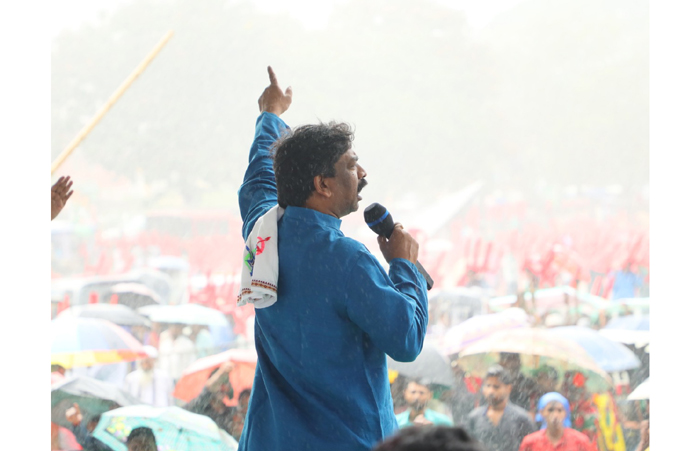
झामुमो का बदलाव यात्रा का समापन हरमू मैदान, में बदलाव महारैली नाम के साथ हुआ। झारखंड में विधान सभा चुनाव से पहले, झामुमो के नेता हेमंत सोरेन ने झमाझम बारिश के बीच अपना भाषण दिया ।
हेमंत सोरेन ने अपने भाषण के शुरुआत में कहा कि झारखंड मुक्ति मोर्चा एक ऐसी पार्टी है जो हमेशा झारखंड के मुसीबतों के वक़्त सीना ताने खड़ा रहती है। जिसकी गवाही इसकी ऐतिहासिक पृष्ठभूमि देती है। झामुमो के सिपाही झारखंड के आन-बान-शान के लिए शहीद होने से कभी पीछे नहीं हटते।
“आज एक सुनियोजित साज़िश के तौर पर तमाम सरकारी कंपनियों को बंद किया जा रहा है, ताकि दलित, आदिवासी, पिछड़ों का आरक्षण ख़त्म किया जा सके। इसलिए झामुमो की सरकार ऐसा क़ानून लाएगी जो प्राइवेट कंपनियों में भी यहाँ के लोगों को 75% आरक्षण देगा,” हेमंत सोरेन ने दावा किया।
वर्तमान में भी सीएनटी/एसपीटी व अन्य क़ानूनों को बचाने के लिए झामुमो कई विधायकों ने अपने पद की कुर्बानी दी ।
“सन 2000 में झारखंड अलग तो हुआ लेकिन हमारे महापुरुषों के सपनों, उनके अरमानों वाला झारखंड अब तक हम झारखंडियों को नहीं मिला। इसलिए यह जरूरी हो गया है कि अब प्रवासी मुख्यमंत्री (रघुबर दास) से झारखंड छीन अपने राज्य का बागडोर अपने हाथों में लेना होगा,” हेमंत सोरेन ने अपने भाषण में कहा।
झामुमो के वादे:
“आज एक सुनियोजित साज़िश के तौर पर तमाम सरकारी कंपनियों को बंद किया जा रहा है, ताकि दलित, आदिवासी, पिछड़ों का आरक्षण ख़त्म किया जा सके। इसलिए झामुमो की सरकार ऐसा क़ानून लाएगी जो प्राइवेट कंपनियों में भी यहाँ के लोगों को 75% आरक्षण देगा,” हेमंत सोरेन ने दावा किया।
झामुमो एक और कानून लाएगी जिससे झारखंड के लोग अगर अपनी ज़मीन नहीं देना चाहते तो सरकार नहीं ले सकेगी और बेघर हुये लोग उच्च न्यायालय में केस कर अपने लिए रहने लायक ज़मीन प्राप्त कर सकेंगे।
हेमंत सोरेन की सरकार ने महिलाओं के लिए भी बड़ी घोषणा की। कहा राज्य के तमाम महिलाओं को 50% आरक्षण देगी। और महिलाओं के लिए महिला बैंक राज्य भर में खोलेगी।
झामुमो की सरकार यह क़ानून पारित करेगी कि झारखण्ड से जितना खनिज दूसरे राज्य या कंपनियां लेगी, उतनी ही मात्र में बिजली व अन्य संसाधन झारखंड के विकास के लिए उन्हें देना अनिवार्य होगा ।
दिल्ली सरकार की तर्ज़ पर, झारखंड की गाँवों में 200 यूनिट तक बिजली खपत बिलकुल मुफ्त होगा।
झामुमो, राज्य के तमाम वर्गों को उनके अधिकार, एसटी को 28%, ओबीसी को 27%, एससी को 12% आरक्षण लागू करेगी।
राज्य भर में किसान बैंक खोले जाएंगे जिसमें किसान सरकारी तय दामों पर अपनी उगाई वस्तुओं को बेच सकेंगे।
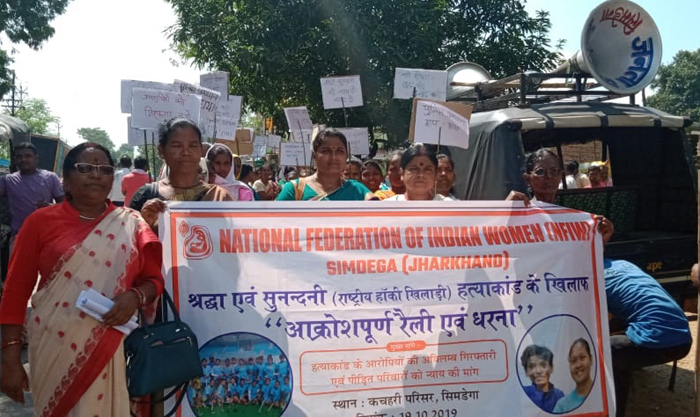
Simdega/Ranchi: Over hundreds of people hit the streets at Simdega district on Saturday, October 19, chanting slogans like – Justice has to be served to Shradhha and Sunandini, Stop atrocities against women, Arrest the criminals and wrong witness will not be allowed.
The protestors gathered at Simdega to raise voice against the lapses in police investigation in the death of two promising young hockey players of Adivasi origin.
The two young girls Shradhha Shalini Soreng (14 years) and Sunandini Bage (23 years), were found hanging dead from a tree in Arani village of Simdega district, on August 11. The deceased girls were staying with one person called Mary Purty in Rourkela, who had promised to coach them.
Shradhha’s father Rajesh Soreng addressed the gathering. He said, “Before starting the investigation, the police claimed that it was a suicide. The police kept telling us that they met the coach and had found that Shradhha was not a ‘nice’ girl. They had come to know that both the girls were in a homosexual relationship. And hence they were convinced that it was a suicide.”
Allegedly, the police investigating the case, verbally abused the family members several times regarding Shradhha’s “bad” behaviour. They kept telling him -“Aapki beti gandi-gandi kaam karti thi”, thereby hinting at the alleged same-sex relation that the deceased girls had allegedly developed.
Taramani Sahu of NFIW speaks during the protest:
Sunandini’s mother also shared similar observations. The parents of both the girls, however maintained that they were not aware of any homosexual relationship that the duo allegedly shared. They also said that they were convinced that their daughters had not committed suicide but had been murdered and that they suspected the involvement of their coach in the double death mystery of the girls.
eNewsroom had done story on the same, highlighting how the incident is similar to the story of Article 15 movie. The director of the much acclaimed movie, Anubhav Sinha had also expressed deep shock over the incident. However, all these did not make any difference to the Jharkhand police, who did not budge from their claim of the incident being a suicide.
Mukhiya of the Gram Panchayat, Martin Tete, where the girls were found hanging claimed that the police did not wait for any witness before taking the bodies down from the tree. He also said that the police did not conduct field investigation after the death. They did not even talk to people of that village.
A neighbour of Shradhha who had seen her grow up, said that the girl was a dedicated sportsman. Three days before the incident, Shradhha and her daughter had met. Shradhha was cheerful and had told that had gone to Rourkela to inquire into the case and had found that neighbours of the coach thought that she (the coach) was involved in sexual exploitation of the girls at her place.
Mukhiya of the Gram Panchayat, Martin Tete, where the girls were found hanging claimed that the police did not wait for any witness before taking the bodies down from the tree. He also said that the police did not conduct field investigation after the death. They did not even talk to people of that village.
Several other people of Shradhha’s and Sunandini’s village accused the police of threatening the victims’ family members and trying to falsely build a case of suicide.
Taramani Sahu of National Federation of Indian Women (NFIW), who was part of a civil society factfinding team that inquired into the incident, addressed the dharna. She said, “The local police had threatened the family members and instructed them to not to talk to the civil society’s inquiry teams.” She also said, “There are several loose ends in the investigation done by the police. Just on the testimony of one girl Pushpa Lohar (14 years, also stays with the coach), the police developed a story of suicide driven by a homosexual relationship. However, according to eyewitnesses, near the site of incident, claim having seen the girls being followed by a bike and a car.”
Regina Xalxo, one of members of the inquiry team, said that the coach initially refused to talk to them when they went to her place. The coach was not able to tell the team about details about her coaching engagements.
James Herenj, of NREGA Watch, mentioned that Simdega police was trying to create a false story of suicide because if they declare it to be a murder, then questions will be raised on their own functioning.
At the end of the dharna, the protesters submitted a memorandum addressed to the governor and to the local administration.
Civil Society’s Demand:
Form a Special Investigation Team to conduct fresh and through probe into the death, possibility of murder and inquire the allegations against the coach
Stop character assassination of the victims
Take action against the police officials responsible for the lapses in investigation, for building a false case of suicide and for character assassination of the victims.
The protest was organised by NFIW with several organisations such as Adivasi Women’s Network, Bagaicha, NHRO, NREGA Watch, NAPM and United Milli Forum (organisations associated with Jharkhand Janadhikar Mahasabha).
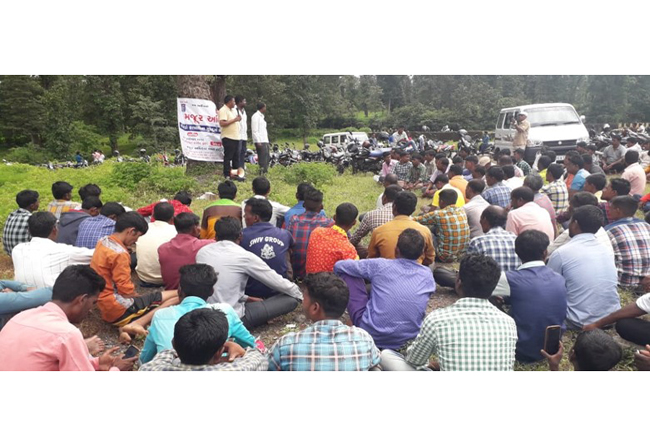
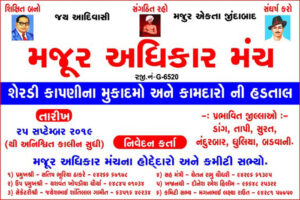
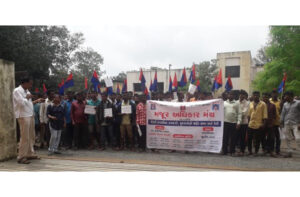
Surat/Kolkata: The 14-day-long strike called by the tribal workers who annually assemble in and around Surat to harvest sugarcane formally ended without much being promised to the protesting workers.
Traditionally, over 200000 tribal workers from Daang and Tapi district of Gujarat and Maharashtra’s Dhule and Nandurbar area migrate to Surat to harvest sugarcane.
But, these workers this year refused to migrate leaving their contractor and sugar factory owners in a fix.
Explaining the reason for the protest, Sudhir Katiyar, an Udaipur-based social activist working for the cause of migratory workers while speaking to eNewsroom said, “The workers work under conditions that are frequently referred to as modern-day slavery. A pair of worker toil for up to 12 hours a day to harvest and load on to trucks one metric tonne of sugarcane for which they are paid Rs. 255. Thus average daily wage works out to Rs. 127.50 that is significantly less than Rs. 178 per day for agriculture workers in Gujarat.”
Strike Banner and Charter of Demands
However, what makes their condition worse is the fact that these workers take advance from the contractors, which they repay on being paid. “At times these workers have to repay almost one-and-a-half times more than the money that their contractor had given,” said Katiyar.
On being asked the need for this, he explained, “The advance is necessitated by the fact that the factories do not pay the workers regular wages as defined under the Payment of Wages Act. Instead, they provide bare minimum food ration and pay wages at the end of the season in gross violation of the law. The workers live for six months literally on the road in tents of polythene sheets without any basic facilities like drinking water, electricity, and sanitation. Children migrate with their parents and join them at work as there are no educational facilities at the campsites.”
However, the strike also is historical in another sense. “The workers are employed by cooperative sugar factories of South Gujarat led by the Bardoli sugar factory that is the largest and oldest sugar factory. Bardoli is the site where Sardar Vallabh Bhai Patel undertook the famous struggle for farmers against British colonial rulers. While he won a famous victory and got established as a premier leader in national politics, according to one set of historians, in the process he also betrayed the interests of the tribal farm workers on Patel farms. It has taken almost a century for tribal workers to organize for their dues,” explained Katiyar.
Sugar factory workers protest with their banners
However, the revolt didn’t seem to rattle the sugar factory owners, who on the other hand managed to manipulate or arm-twist the labours, who had already taken advance from their contractors.
Macwan added, “We want the daily wage to be fixed following the minimum wage draft notification which was passed on January 21, 2019. We have reached a compromise this year, but next year we will be better prepared to fight for the rights of the workers employed in the sugarcane farms.”
“On October 9, there was an informal meeting between the factory owners, contractors and the representatives of the Majdur Adhikar Manch, where they come to an informal agreement where the workers have been verbally promised to be paid a higher daily wage than what they have been getting till date,” informed Denis Macwan of Surat Committee.
He further said, “There was immense pressure from Ishwarsinh Patel, Chairman, Gujarat State Federation of co-op. Sugar Factories Ltd to end the strike. Also, the workers were supposed to return their advance, which could be cleared only after they harvested the sugarcane crop. So, the contractors compromised for a raised daily wage of Rs 300 per day.”
Macwan added, “We want the daily wage to be fixed following the minimum wage draft notification which was passed on January 21, 2019. We have reached a compromise this year, but next year we will be better prepared to fight for the rights of the workers employed in the sugarcane farms.”
Shillong: On November 8, 2018, two women firebrand activists, Agnes Kharshiing and Amita Sangma, were brutally attacked by the henchmen of the coal mafia operating at Tuber Shohshrieh in Meghalaya’s East Jaintia Hills district, when the duo were trying to investigate illegal coal transportation.
The National Green Tribunal had banned rat-hole mining in the area but allowed transportation of the already mined stock. However, local miners were continuing mining.
The horrendous attack on the female activists by a strong mob of 40 men, allegedly led by local coal mafia Nidamon Chullet, then working president of the ruling National People’s Party (NPP)’s East Jaintia Hills unit, will complete a year next month. But the two activists, who the mafia had desperately tried to silence, are yet to get justice.
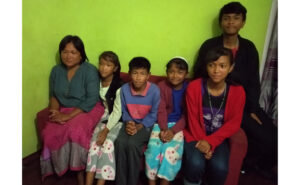
Speaking to eNewsroom, Sangma recounted the incident, where both the activists after being attacked with wooden planks and bamboo poles were left in the jungle to die. She narrated, “I had pretended to be unconscious and once the mob left, I crawled out of the forest, towards the main road. I stopped a vehicle, which happened to be a police van, and informed them that Agnes was lying unconscious with a severe head injury.” Sangma is a single mother of seven children.
Amita Sangma with her children at her Shillong home
Sitting in her small rented house in Madanrting in Shillong, Sangma rues the apathy of the government to ensure justice to them.
With reports of illegal mining coming in and the proposal for mining near the Lukha river (which was severely polluted due to mining and was restored by locals) in the district, the state government seems too lackadaisical in “handling a sensitive case such as coal and limestone extraction by local miners who have no wherewithal or expertise to practise scientific method.”
Immediately after the attack last year, Home Minister James Sangma had announced that an independent inquiry committee would be set up to probe the case. The announcement had come when the activists were demanding for a CBI investigation and the minister had assured an unbiased inquiry by state authorities.
It is a known fact that Conrad Sangma and his party came to power in Meghalaya in 2018 through his rhetoric on starting coal mining that was banned in the state in 2014 after reports of rat-hole mining and the serious damage it had caused to the environment surfaced. During his election campaign, Conrad, who is also the NPP national head, had vehemently blamed the ban for the state’s financial crisis.
At least three elected members in the current ruling coalition in Meghalaya are mine owners. One of them, Kyrmen Shylla, is from Jaintia Hills.
Immediately after the attack last year, Home Minister James Sangma had announced that an independent inquiry committee would be set up to probe the case. The announcement came when the activists were demanding a CBI investigation and the minister had assured an unbiased inquiry by state authorities.
It has been 11 months now and the government seems to have forgotten about its promise. When asked about the independent body, James said, “I don’t remember… I will check and get back to you.” The call made to him at the given time next day remained unanswered.
The minister’s selective amnesia is proof enough that the government never took the incident seriously or was confident of handling the matter in its own way.
Conrad Sangma with Nidamon Chullet (left)
The police arrested 11 persons, including Chullet, in connection with the case early this year but all of them managed to wriggle out on a bail.
“The police have filed the charge-sheet in this case. But not a single accused is behind the bars and no inquiry committee has been set up,” said Kharshiing, who is recuperating fast.
The attack has changed many things for the activists. Kharshiing, for instance, has lost her fiery persona and the conviction with which she spoke before the incident. Now, she talks softly and sometimes as she said, “a word or two slips out of her mind”.
Many of her friends and well-wishers believe she is a fighter. The president of Shillong-based CSWO is still fighting for the cause of helpless women despite the physical weakness. But when asked about how strongly she is pursuing her case, she sounded reluctant. “There is a procedure and it (my case) has to follow that too.”
“I still want CBI to take over the case. The independent probe has not started. It was a miracle that Agnes and I survived. But the government is not taking our case seriously. Instead, it is trying to protect the perpetrators,” said Sangma
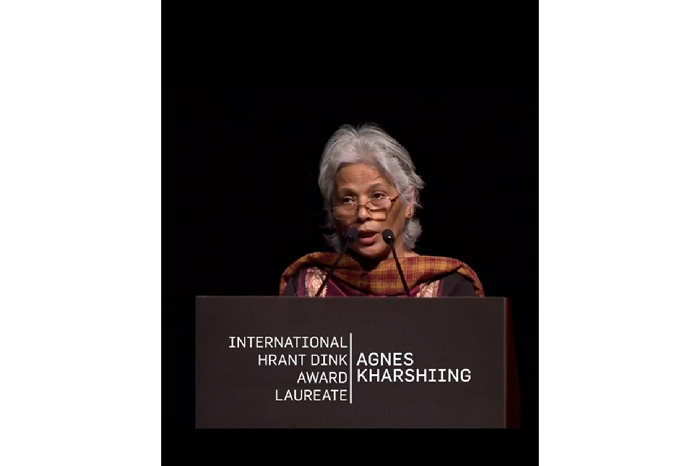
“Moreover, there are other pending cases which I have to take care of. Others need my help. How can I just focus on my case,” said Kharshiing, who recently won an international award– 11th International Hrant Dink Award for her social works.
Sangma, however, feels that the current state of the things is nothing but injustice and the government is shielding the culprits.
“I still want CBI to take over the case. The independent probe has not started. It was a miracle that Agnes and I survived. But the government is not taking our case seriously. Instead, it is trying to protect the perpetrators,” claimed Sangma.
The injuries have made Sangma’s hands permanently weak. She said, “I am unable to get work now”. Her only source of income is the widow pension that helps her run the family and support her children’s education. Help has trickled from a few well-wishers but that is not enough for the family to survive in the long run.
Sangma mentioned that the government is yet to reimburse the medical expenses and provide full compensation for the attack. “It is not possible to survive like this. There must be some reason why God saved the two of us. He wants us to fight for justice. I still have the energy to fight and I want to see till the end,” she said.
The case is pending in the Khliehriat district sessions court and there are talks to shift it to the Shillong court.
The state recently had its Assembly session and none of the opposition members questioned the government about the reasons for dithering. It goes without mention that many on the opposition bench are also proud and opulent owners of coal mines.
“There is a nexus between the coal mafia and political leaders and precisely that is the reason why no one is acting on our case,” alleged Sangma, the crusader.
Such allegations had earlier come from the opposition. It is now to be seen whether the government does enough to counter the allegations.
Kolkata: West Bengal can’t keep its calm with another Bengali Economist, Abhijit Vinayak Banerjee clinching a Nobel Prize. Neither can the educators and Alumni association of the now Presidency University can hide their enthusiasm with yet another, alumni of their bagging the Nobel. The first being Nobel Laureate Amartya Sen. Incidentally, both the economists are former students of Presidency College’s Economic department.
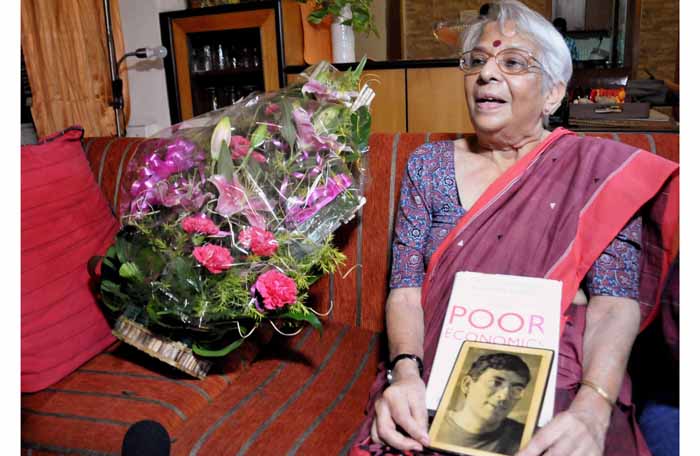
Minutes after the names of the Nobel Prize winners for the year 2019 was made public, talking to eNewsroom, mother of the Nobel Laureate, Professor Nirmal Banerjee said, “I happy about both my son and daughter in law winning the Nobel Prize. I feel immensely proud of them.” On being asked, what perhaps made Banerjee interested in devising economic policies designed to alleviate poverty, she said, “Now that’s a vast subject to explores. But I guess the fact that both his parents were professors of Economics, made him develop an interest in the subject. That apart, Abhijit was always interested in people, so working on public-oriented policies appealed to him.”
Meanwhile, his senior from Presidency University, Abhirup Sarkar, an economist with Economic Research Unit of Indian Statistical Institute, Kolkata said, “I am really happy about Abhijit winning the Nobel Prize. Given the good work he and his team comprising his wife Esther Duflo and Michael Kremer, it was expected that the trio would be winning the Nobel sometime soon. So, the announcement doesn’t come as a surprise.”
He then added, “He and his team have been working with a new approach to address the economic crisis. Their approach is simple – provide a simple solution to simple problems.” Elaborating on the Banerjee’s work model, he said, “When his team was trying to address the issue of a high percentage of school dropouts in one of the African countries, they divided the students into two groups – one group was provided with shoes, the other wasn’t. It was seen that the students who got the shoes went to school, while those who didn’t preferred to miss classes, as walking barefooted to school would expose them to the risk of contracting Whooping Cough.”
Commenting on their book Poor Economics, Sarkar said, “Their book is pragmatic.”
On being asked if he knows his junior from Presidency personally, he said, “Well he was five years my junior and he also happened to be the son of two of my professors. My interaction with him had been cordial, until I heard him explain his line of work during a conference on Economic policies, in the year 2004. It was here that I got to listen to him as he explained his empirical approach to alleviate poverty from the world. His approach is unique and is being implemented globally to tackle poverty.”
Meanwhile, Bivas Chaudhuri, Secretary, Presidency Alumni Association said, “Presidency Alumni Association Calcutta, takes enormous pride in the selection of Abhijit Banerjee as one of the recipients of Nobel Prize for Economics 2019. An alumnus of 1978-81, Abhijit is the second Indian recipient of the Nobel Prize in Economics, after Amartya Sen, both students of Presidency College, now a University. We congratulate both him and his wife.”
The 55-year-old economist and now nobel laureate is also an alumnus of prestigious Jawahar Lal Nehru (JNU) and Harvard University. Abhijit has also been main architect of Congress’ NYAY scheme, announced by grand old party, if comes to power during the Lok Sabha Polls 2019.
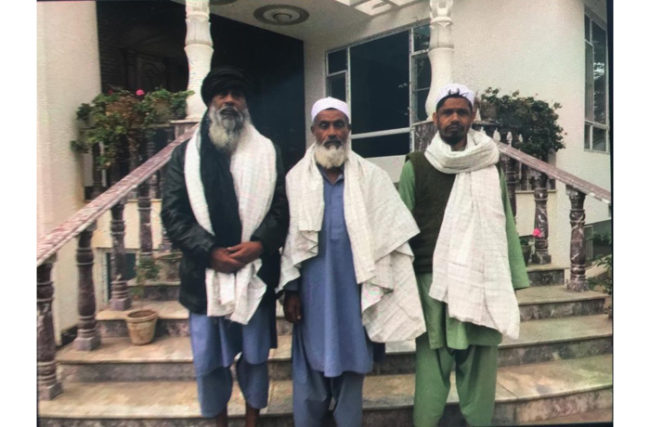
Ranchi/Giridih: It has been a week since three Indians have been released by Afghan Taliban, but their names are yet to be revealed by the Indian government. The Afghanistan government too did not speak anything about the prisoner swap between the Taliban and the US due to which three Indians have been freed. This had led to a prolonged confusion among the family members of the victims.
According to sources, there had been some negotiations or talks between the Afghan Taliban and the United States’ Special Representative for Reconciliation – Zalmay Khalilzad in Islamabad. During which a prisoner swap deal was finalized between the two on Sunday, October 6, 2019.
Following which US forces released around 11 Afghan Taliban members including some prominent Afghan Taliban leaders like Sheikh Abdul Rahim and Maulvi Abdur Rashid.
Interestingly, both the Taliban leaders had served as governors of Kunar and Nimroz provinces during the Taliban regime, prior to US-led intervention in 2001. In exchange, the Taliban had to release five prisoners, which included a US citizen, an Australian national and three Indians.
Following the release of the three Indians, the militant organization’s spokesperson told about the same to Pakistani media organizations but there was no clarity on the US and Australian national’s release, also the names of the Indian nationals had not been revealed.
The Indians who have been released supposedly belong to the group of six Indians who had been abducted by unidentified gunmen from KEC International’s power plant site at Baghlan Province on May 6, 2018. All the abducted victims were employees of KEC.
Among the seven Indians—five were from Jharkhand—Prakash, Hulas and Prasadi Mahto (all Giridih), Kali Mahto (Hazaribagh) and one each from Bihar and Kerala.
After 9 months of the abduction, in March this year, one Prakash Mahto, a resident of Bagoder, Giridih was released by the abductors, but his release was also not officially announced.
In the case of Prakash, only his family members had been informed. His family, all residents of Bagoder is yet to return from Delhi, where they had gone to meet Prakash.
This time too there has been no official statement by the Indian government on October 6 release.
However, Sikander Ali, who is the admin of several social media groups of migrant workers, and has been in constant touch with the families. He informed that the family members of Kali Mahto have been called in Delhi by KEC officials to meet him.
Former MLA of Bagodar, and CPI-ML leader Vinod Singh, who had staged a protest after the abduction, demanding their release, from Giridih to Delhi told eNewsroom, “This news is all over International media that three Indians have been released by Taliban in a prisoner swap deal between Afghanistan Taliban and the US. But the Indian government has not made any statement in this regard.”
Now, with the release of four, two Indians still remain in the captive of abductors, both are from Bagodar Giridih.
“There is also fear that, like Prakash Mahto’s case, again family members of these three individuals who have been released would also be kept in captivity, this time by the company. The government which has shown less or no interest in this case, should now act and make things clear and easy for ones who has been released and for two others too who are still in captive by militant organizations in Afghanistan,” added Singh.
Political observers believe that Kali Mahto and his family may also not be allowed to return back to their homes or interact with the media as the Jharkhand election is just round the corner.
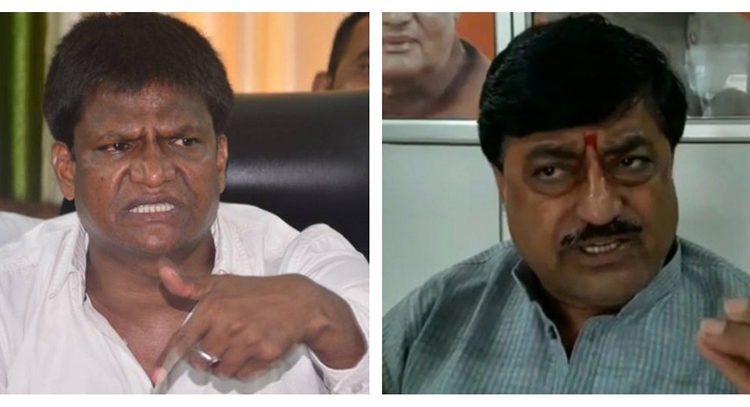
Ranchi: Two Bharatiya Janata Party (BJP) leaders have been booked over rape allegations made by own party women. However, it took 11 months for the Jharkhand police to act and register the First Information Report (FIR).
The two accused – one a two-time MLA from Baghmara – Dhullu Mahto and the other, a former Giridih MP Ravindra Pandey. He has been a five-time MP from Giridih itself. Both Mahto and Pandey are considered to be arch-rivals.
FIR against BJP leaders
In November 2018, a female cadre of BJP had alleged that she had been molested by Baghmara MLA Dhullu Mahto. She even alleged that the MLA had tried to rape her. And when she had resisted and didn’t give in to his sexual advance, she had also been threatened. Somehow she had managed to escape.
Following which the woman had gone to Katras Police station to lodge an FIR against Mahto for the November 15 incident. However, the police did not act on her complaint.
Later, she lodged an online FIR. However, no action was taken on the online complaint, following which she moved to Jharkhand High Court, which on August 28, 2019, ordered Jharkhand police to register FIR against the MLA.
Significantly, another female BJP cadre also in November complained in Katras police station that on the pretext of a job, Pandey had called her at the house of the BJP block president and tried to rape her. However, she managed to escape. In her case too, the police didn’t act on her complaint.
It was only after the High Court order in Mahto’s that the FIR got registered, not only on Mahto but also for Pandey.
Watch the video of the woman, who had made sexual harassment allegations in November, 2018
The FIR against Mahto has been lodged under sections 376 (rape), 354 (assault to outrage a woman’s modesty) and 511 (attempt to commit offense) of the IPC, complaint dated November 23.
The FIR against Pandey has been lodged under sections 376 and 511 of IPC, on the date November 24, 2018.
Senior Superintendent of Police (SSP) Kishor Kaushal said, “Action will be taken against the accused as per evidence that we shall gather after carrying out a detailed investigation.”
The #MeToo allegations on both the BJP leaders may or may not be true, but Jharkhand police are certainly acting ‘carefully’ in accordance with the situation.
Earlier, during the Lok Sabha polls, when the matter against Mahto and Pandey had been in discussion, BJP had given Giridih Lok Sabha seat ticket to its alliance partner AJSU, leaving the five-time Giridi MP Pandey as a mere spectator.
Political observers believe that with the FIR being filed just ahead of assembly polls may cost Mahto dearly.
Former Chief Minister and JMM’s working president Hemant Soren tweeted that BJP is the safest place for people like Senger and Chinmayanand and that the party acted only after being reprimanded by the High Court.
CPIML leader Vinod Singh has also expressed suspicion over the ‘true’ conclusion in both cases. He told eNewsroom, “The same agency which registered FIR so late will investigate the case, so one can easily understand that what will be the outcome.”
In another development on Wednesday , Dhullu Mahto has been sentenced for one and half year imprisonment in a six year old case.
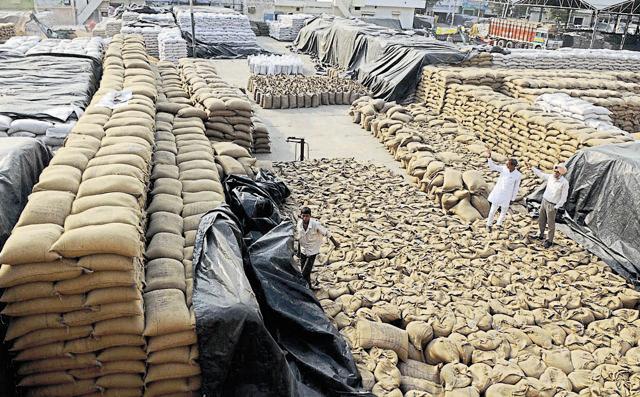
भारतीय खाद्य निगम के चरमराने की ख़बरें आने लगी हैं। इसी के ज़रिए भारत सरकार किसानों से अनाज ख़रीदती है। सरकार उसके बदले में निगम को पैसे देती है जिसे हम सब्सिडी बिल के रूप में जानते हैं। 2016 तक तो भारतीय खाद्य निगम को सब्सिडी सरप्लस में मिलती थी। जितना चाहिए होता था उससे अधिक। लेकिन 2016-17 में जब उसे चाहिए था 1 लाख 10 हज़ार करोड़ तो मिला 78000 करोड़। बाकी का 32,000 करोड़ नेशनल स्मॉल सेविंग्स फंड(NSSF) से कर्ज़ लिया। जिस तरह से भारत सरकार रिज़र्व बैंक की बचत से पैसे लेने लगी है उसी तरह से निगम यह काम पहले से कर रहा था। जैसे जैसे ज़रुरत पड़ी NSSF कर्ज़ लेने लगा। नतीजा 2016-17 का वित्त वर्ष समाप्त होते ही NSSF से लिया गया कर्ज़ा 70,000 करोड़ का हो गया।
2017-18 में भी यही हुआ। निगम को चाहिए था 1 लाख 17 हज़ार करोड़ तो सरकार ने दिया 62,000 करोड़। फिर NSSF से 55000 करोड़ लोन लिया गया। इस तरह 2017-18 के अंत तक लोन हो गया 1 लाख 21 हज़ार करोड़। 2018-19 के अंत तक यह बढ़ कर 1 लाख 91 हजार करोड़ हो गया। भारत सरकार की एक यूनिट पर करीब दो लाख करोड़ का कर्ज़ है। इसके अलावा भी निगम ने कई जगहों से लोन लिए हैं। कुल मिलाकर 2 लाख 40 हज़ार करोड़ लोन हो जाता है। 2019-20 से निगम को मूल राशि देनी होगी। इसका मतलब यह हुआ कि 46000 करोड़ लोन चुकाने होंगे। इस कारण NSSF का क्या हाल होगा, क्योंकि वहां भी तो जनता का ही पैसा है, इसका विश्लेषण अभी पढ़ने को नहीं मिला है।
बड़ा कारण यह बताया गया कि सरकार सब्सिडी के तहत चावल और गेहूं के दाम नहीं बढ़ाती है। चावल 3 रुपया प्रति किलो और गेहूं 2 रुपया प्रति किलो देती है। अगर 1 रुपया प्रति किलो भी बढ़ा दिया जाए तो साल में 5000 करोड़ की आय हो सकती है। लेकिन जिस स्केल का लोन है उसके सामने यह 5000 करोड़ तो कुछ भी नहीं है। सरकार एक किलो चावल पर 30 रुपये और गेहूं पर 22.45 रुपये की सब्सिडी देती है।
2016 से 2018 के दौरान सरकार बजट में खाद्य सब्सिडी के लिए जो पैसा घोषित करती थी उसका आधा से अधिक ही दे पाती थी। जाहिर है नोटबंदी के बार सरकार की आर्थिक स्थिति चरमराने लगी थी। इसे छिपाने के लिए बजट में घोषित पैसा नहीं दिया गया और निगम से कहा गया होगा कि NSSF या कहीं से लोन लेकर भरपाई करें। अब निगम पर 3 लाख करोड़ से अधिक का बकाया हो गया है। जिसमें 2 लाख 40 हज़ार करोड़ का सिर्फ लोन है। क्या इसका असर किसानों पर पड़ेगा? जो सरकार अपने परफार्मेंस का दावा करती है उसकी एक बड़ी संस्था का यह हाल है। जल्दी ही विपक्ष पर सारा दोष मढ़ दिया जाएगा।
कोरपोरेट टैक्स घटा तो अख़बारों और चैनलों में गुणगान खूब छपा। उसके कुछ दिनों बाद एक एक कर इसके बेअसर होने की ख़बरें आने लगीं। बताया जाने लगा कि इससे निवेश में कोई वृद्धि नहीं होगी। उन खबरों पर ज़ोरदार चर्चा नहीं हुई और न ही मंत्री या सरकार उसका ज़िक्र करते हैं। सेंसेक्स में जो उछाल आया था उसका नया विश्लेषण बिजनेस स्टैंडर्ड में आया है कि बांबे स्टाक एक्सचेंज की 501 कंपनियों में से 254 कंपनियों के शेयरों को नुकसान हुआ है। 19 सितंबर को कोरपोरेट टैक्स हुआ था। उसके बाद शेयरों के उछाल का अध्ययन बताता है कि सिर्फ दो कंपनियों के कारण बाज़ार में उछाल आया। एच डी एफ सी बैंक और रिलायंस। सबसे अधिक रिलायंस को 20.6 प्रतिशत का फायदा हुआ। उसके बाद एच डी एफ सी बैंक को 11.8 प्रतिशत। बाकी भारतीय स्टेट बैंक, पीरामल, ज़ी एंटरटेनमेंट, टाटा कंसल्टेंसी, इंडिया बुल्स, एन टी पी सी और कोल इंडिया को झटका लगा। यह विश्लेषण बताना चाहता है कि भारत के निवेशकों के पास पैसे नहीं हैं जो बाज़ार में निवेश कर सकें।
मैंने सारी जानकारी संजीब मुखर्जी की रिपोर्ट से ली है। बिजनेस स्टैंडर्ड में छपी है। इतनी मेहनत से आपको कोई हिन्दी का अखबार नहीं बताएगा। न्यूज़ चैनल तो भूल ही जाएं। उम्मीद है आपने न्यूज़ चैनल देखना बंद कर दिया होगा।
कोरपोरेट टैक्स घटा तो अख़बारों और चैनलों में गुणगान खूब छपा। उसके कुछ दिनों बाद एक एक कर इसके बेअसर होने की ख़बरें आने लगीं। बताया जाने लगा कि इससे निवेश में कोई वृद्धि नहीं होगी। उन खबरों पर ज़ोरदार चर्चा नहीं हुई और न ही मंत्री या सरकार उसका ज़िक्र करते हैं। सेंसेक्स में जो उछाल आया था उसका नया विश्लेषण बिजनेस स्टैंडर्ड में आया है कि बांबे स्टाक एक्सचेंज की 501 कंपनियों में से 254 कंपनियों के शेयरों को नुकसान हुआ है। 19 सितंबर को कोरपोरेट टैक्स हुआ था। उसके बाद शेयरों के उछाल का अध्ययन बताता है कि सिर्फ दो कंपनियों के कारण बाज़ार में उछाल आया। एच डी एफ सी बैंक और रिलायंस। सबसे अधिक रिलायंस को 20.6 प्रतिशत का फायदा हुआ। उसके बाद एच डी एफ सी बैंक को 11.8 प्रतिशत। बाकी भारतीय स्टेट बैंक, पीरामल, ज़ी एंटरटेनमेंट, टाटा कंसल्टेंसी, इंडिया बुल्स, एन टी पी सी और कोल इंडिया को झटका लगा। यह विश्लेषण बताना चाहता है कि भारत के निवेशकों के पास पैसे नहीं हैं जो बाज़ार में निवेश कर सकें।
बिजनेस स्टैंडर्ड में एक और रिपोर्ट छपी है कि मैन्यूफैक्चरिंग सेक्टर की 90 प्रतिशत कंपनियों को कोरपोरेट टैक्स में कटौती से कोई लाभ नहीं होगा। यह सेक्टर नहीं सुधरेगा तो रोज़गार में वृद्धि नहीं होगी। आम तौर पर लोग छोटे से शुरू करते हैं, जिसके मालिक खुद होते हैं। बाद में उसे कंपनी में बदलते हैं जब बिजनेस बड़ा होता है। इस सेक्टर के ऐसे मालिकों को टैक्स कटौती से कोई लाभ नहीं। उन्हें अभी भी 42.74 प्रतिशत टैक्स देने होंगे। सिर्फ जो नई कंपनी बना रहा है उसे 17.16 प्रतिशत टैक्स देने होंगे। ज़्यादातर को 29.12 प्रतिशत से लेकर 42.74 प्रतिशत टैक्स देने होंगे।
जिन निर्मला सीतारमण का स्वागत लक्ष्मी के तौर पर हुआ था वो अभी तक फेल रही हैं। उन्होंने बजट के दौरान ब्रीफकेस हटा कर लाल कपड़े में बजट को लपेट कर संदेश तो दे दिया मगर निकला कुछ नहीं। यही हो रहा है, हिन्दू प्रतीकों से हिन्दुओं को भरमाया जा रहा है। बेहतर होता कि वह ब्रीफकेस ही होता लेकिन उसमें बजट होता जिससे देश के नौजवानों को कुछ लाभ होता। निर्मला सीतारमण को लक्ष्मी न बनाकर मीडिया उन्हें वित्त मंत्री की तरह पेश करता। अरुण जेटली को तो किसी ने कुबेर की तरह पेश नहीं किया। हालत यह हो गई है कि वे लाल कपड़े में सादा कागज़ लपेट लाएं तो भी देश कहने लगेगा कि वाह वाह क्या बजट बनाया है।
7 अक्तूबर को इंडियन एक्सप्रेस की ख़बर देखते हुए लगा कि हालात अभी और बुरे होंगे। दीवाली की बिक्री को दिखाकर हल्ला हंगामा होगा लेकिन वापस उसी तरह ढलान पर आना है। जॉर्ज मैथ्यू की यह ख़बर बताती है कि कमर्शियल सेक्टर में पैसे का प्रवाह 88 प्रतिशत घट गया है। सोचिए जब पैसा ही नहीं होगा जो निवेश का चक्र कैसे घूमेगा। रोज़गार कैसे मिलेगा। यह आंकड़ा भारतीय रिज़र्व बैंक का है। इस साल अप्रैल से सितंबर के मद्य तक बैंकों और गैर बैंकों से कमर्शियल सेक्टर में लोन का प्रवाह 90,995 करोड़ ही रहा है। पिछले साल इसी दौरान 7,36,087 करोड़ था। सोचिए कितना कम हो गया। तो इसका असर निवेश पर पड़ेगा ही।
कई लोग चुपके से मैसेज करते हैं कि उनकी कंपनी तीन या चार महीने से सैलरी नहीं दे रही है। लोगों की सैलरी नहीं बढ़ रही है वो अलग। वैसे सब खुश हैं। यह भी सही है। मीडिया में बड़ी कंपनियों में धीरे धीरे कर लोग निकाले जा रहे हैं ताकि हंगामा न हों। गोदी मीडिया बनने के बाद उम्मीद है कि उनके यहां सैलरी बढ़ी होगी। यह बात तो उन चैनलों में काम करने वाले लोग ही बता सकते हैं। बाकी तो आप खुश हैं ही। ये सबसे पोज़िटिव बात है।
जिन निर्मला सीतारमण का स्वागत लक्ष्मी के तौर पर हुआ था वो अभी तक फेल रही हैं। उन्होंने बजट के दौरान ब्रीफकेस हटा कर लाल कपड़े में बजट को लपेट कर संदेश तो दे दिया मगर निकला कुछ नहीं। यही हो रहा है, हिन्दू प्रतीकों से हिन्दुओं को भरमाया जा रहा है। बेहतर होता कि वह ब्रीफकेस ही होता लेकिन उसमें बजट होता जिससे देश के नौजवानों को कुछ लाभ होता। निर्मला सीतारमण को लक्ष्मी न बनाकर मीडिया उन्हें वित्त मंत्री की तरह पेश करता। अरुण जेटली को तो किसी ने कुबेर की तरह पेश नहीं किया। हालत यह हो गई है कि वे लाल कपड़े में सादा कागज़ लपेट लाएं तो भी देश कहने लगेगा कि वाह वाह क्या बजट बनाया है।
नरेंद्र मोदी सरकार राजनीतिक रुप से सर्वाधिक सफल सरकार है। अभी होने वाले चुनावों में जीत के बाद वह अपने गुणगान में मस्त हो जाएगी। लेकिन आर्थिक मोर्चे पर उसकी भारी असफलता उनके समर्थकों को भी रुला रही है। साढ़े पांच साल की कवायद के स्केल पर देखें तो आर्थिक मोर्चे पर यह सरकार बुरी तरह फेल रही है। यही कारण है कि रोज़गार की बुरी स्थिति है। लेकिन नरेंद्र मोदी की लोकप्रियता का यह चरम पैमाना कहा जाएगा कि जो बेरोज़गार है और जिनके बिजनेस डूब गए या आधे से भी कम हो गए वो अभी भी उनके भक्त हैं। ऐसा समर्थन किसी नेता को भारत के इतिहास में नहीं मिला है। सरकार के पास कोई आइडिया नहीं है। वह हर आर्थिक फैसले को एक ईवेंट के रूप में लांच करती है। तमाशा होता है। उम्मीदें बंटती हैं और नतीजा ज़ीरो होता है। साढ़े पांच साल की घोर आर्थिक सफलता के बाद भी राजनीतिक सफलता शानदार है।
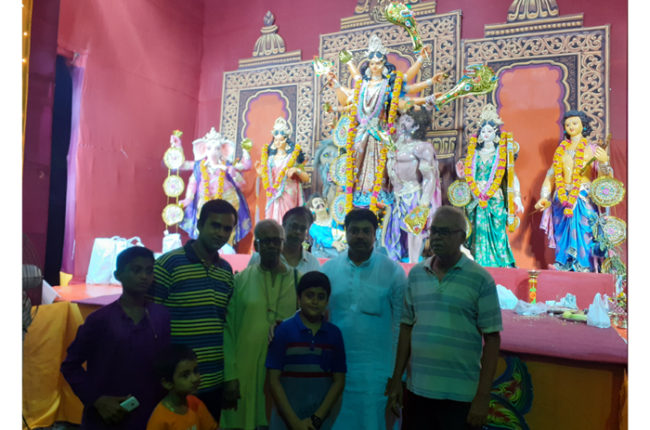
Kolkata: What is common between the Puja pandal in Kolkata’s Benia Para Lane, Park Circus Maidan, and Dilkusha Street, besides being beautiful like thousands of others designed to celebrate Durga Puja?
The three above mentioned pandals have been set up areas adjacent to either mosques or Eidgah!
They have been so closely designed that part of the pandal is hooked on to one of the mosque’s walls at Benia Para Lane, while in Park Circus Maidan, the beautifully designed puja pandal is separated from the masjid present within the maidan by an internal pathway. And as you walk down from Park Circus Maidan to Dilkusha Street, the Puja pandal put up by Friends Club, can be seen adjacent to the Eidgah, a place where Eid prayers take place.
The history of the Park Circus Puja Pandal can be traced back to the 1950s and so is the history of the mosque situated inside the park. But the story of age-old communal harmony among Hindu and Muslim communities co-existing peacefully does not end here.
The Puja at Dilkusha Street is being organized under the presidentship of a Muslim, for years now.
Watch our video story on it:
“This Puja is being organized here for the past 54 years. However, between 2014 and 2015, puja pandals were not set up here. It was primarily because of many people from the organizing committee had shifted to other parts of the city. Take the onus on to ourselves to keep up the tradition, we decided to organize it annually,” said Ishtiaque Ahmed, President of Friends Club Puja Committee to eNewsroom.
Ishtiaque is also secretary of local Masjid committee, local club – Friends Club and famous Football club, Mohammedan Sporting.
Puja pandal in Kolkata
“The Puja committee has members from several other different communities. We even Chinese members too in our puja committee,” informed Raja Banerjee, the secretary of the committee.
“This puja is special as all the communities, apart from cast and creed organize and celebrate together. You know India’s diversity and culture and we celebrate it here,” Chandan Dutta, one of the locals present at the Pandal, told eNewsroom.
At a time, when religion is being used to discriminate among people, Bengal’s biggest carnival – Durga Puja, with such Puja Pandals gives out the message of not just peace but also of unity in diversity.