Restrict sources instead of just launching protests against rape

The heinous rape and murder of a veterinarian down south has sparked protests all over the country. And it is quite justifiably so – such acts of lust should be nipped in the bud and the accused if convicted should be given the stringent of punishments. The brutality inflicted on the young doctor only expands the list of sexual assaults in the country but unfortunately, our job seems to be confined only to sharing condolences and anger on the social media.

Be it Delhi (Nirbhaya), Kathua or now the Telangana mayhem – these violent acts have raised condemnation all over but have we ever sat back and tried to decipher the reasons behind the growing incidence of perversion in the country? There could be many reasons attributed to the rising percentage of sexual assaults on women, but one of the key factors that have accentuated the number of such incidents is the easy accessibility of technology.  According to a report in Times of India, in 2016, out of the 3.38 lakh crimes against women, cases of rape formed 11.5 % of them which is startling.

Gone are those days when teenagers clandestinely watched porn videos available on cassettes – it’s 2019 now and technological innovation has porn clippings right on our mobiles. Forwards of sexual sessions of various types are rampant not only in India, but all over the world. Do we realise that this revolution in technology is actually having an adverse effect?

For a fourteen or fifteen something – Whatsapp has become part of his day-to-day life – and much before they attain adulthood – they are far more mature than their counterparts back in the ’80s or ‘90s. Their quest for knowledge is solved by the stroke of a finger and parents cannot exonerate themselves if young boys get ‘influenced’ by the advancement of technology and commit crimes.

But how does growth in technology cause such savagery? You don’t need to be a rocket scientist to answer the question. Rampant availability of XXX videos has a negative effect on the society – it is these videos that are adding to the woes and people with a concocted mindset are getting the kick and are desperate to satiate their sexual pleasure by hook or crook.

For a fourteen or fifteen something – Whatsapp has become part of his day-to-day life – and much before they attain adulthood – they are far more mature than their counterparts back in the ’80s or ‘90s. Their quest for knowledge is solved by the stroke of a finger and parents cannot exonerate themselves if young boys get ‘influenced’ by the advancement of technology and commit crimes.

If we look at the number of rape cases in India over the last two-three years – it is not restricted to the hinterland a majority of which is still devoid of internet facilities – there has been a growing incidence of rape in urban areas too. Doesn’t it answer the question? And talking about smaller cities and towns where the ‘benefits’ of technology have reached, rape seems to be omnipresent.

Having said that, it is the mindset that matters – a person with an innate proclivity towards uncanny sexual desires would be part of such odious crimes. With the alarming increase of sexual crimes women are subjected to, it is time to act and act with sincerity – many cases of rape are reported but there are several more which go unnoticed. Live Mint quotes a National Family Health Survey (NFHS) report that says 99% of rape cases in the country are not lodged. This has got a lot   to do with the fear of facing ostracisation.

Leaving the onus merely on technology for rape and murder would definitely incur retaliation, but if we look within, deep down we know how sex has become an easy commodity now. So reprehensible has been the impact of technology that even toddlers are not spared – incestuous assaults are also a common phenomenon.

Having said that, it is the mindset that matters – a person with an innate proclivity towards uncanny sexual desires would be part of such odious crimes. With the alarming increase of sexual crimes women are subjected to, it is time to act and act with sincerity – many cases of rape are reported but there are several more which go unnoticed. Live Mint quotes a National Family Health Survey (NFHS) report that says 99% of rape cases in the country are not lodged. This has got a lot   to do with the fear of facing ostracisation.

So, how do we deal with this malice? It’s simple, create awareness and amend laws to make capital punishment a must for convicts of rape and murder cases. Co-incidentally, the Delhi government has recommended rejection of the mercy plea of one of the persons sentenced to death in the Nirbhaya case. Face the gallows for your sins.

Similarly, parents do have the responsibility of ensuring that their wards reap the benefits of technology and do not go haywire. It cannot be as simple as that and reforming people with a tendency towards crime is no easy a task – but in our own way we can do our bit to bring justice to the victims and survivors and also stride towards curbing such a menace. Members of Parliament have asked for stringent punishments for rape convicts, it’s time to implement what is preached.  Blame it on anything – ultimately, it boils down to a concerted effort to tackle such crimes but identifying the sources is also imperative.

Amit Shah is now on Uddhav Thackeray’s hit list

0

In his first major statement after taking charge as Chief Minister of Maharashtra, Shiv Sena’s Uddhav Thackeray demanded an inquiry into the death of Judge Brijgopal Harkishan Loya. That was to hit at BJP president and Home Minister Amit Shah. At the same time, Thackeray kept his line of friendly relations with Prime Minister Narendra Modi open. An editorial in Shiv Sena’s mouthpiece “Saamna” described Narendra Modi as Uddhav Thackeray’s elder brother. Portents indicate a realignment of power structure within the BJP.

Brijgopal Harkishan Loya was a special CBI Judge in Mumbai where the Sohrabuddin Sheikh case was transferred on orders of the Supreme Court. Sohrabuddin was killed in an alleged fake encounter in 2005. The accused in the case included Amit Shah, then Minister of State for Home in Gujarat, and some senior police officers of Gujarat and Rajasthan. Judge Loya died on December 1, 2014 allegedly following a heart attack in Nagpur where he had gone to attend the marriage ceremony of the daughter of one of his colleagues. Four other judges, who had also attended the ceremony, said Loya died of heart attack.

Special CBI judge J T Utpat, was hearing the high profile case. The BJP formed the government at the Centre and Narendra Modi took oath as Prime Minister on May 26. Judge Utpat was abruptly transferred on June 25 — a day before he was to pronounce the order on a petition seeking the discharge of Amit Shah from the Sohrabuddin fake encounter case. His transfer was in flagrant violation of the Supreme Court directive that the presiding judge in the case should not be replaced. Judge Utpat had expressed in strong words his displeasure at Amit Shah’s continued absence from the court during the trial. Then H B Loya was assigned to the case.

There were several discrepancies in the circumstances of Judge Loya’s death allegedly of heart attack. In a well-researched article, Caravan magazine had published documents to point out these discrepancies. PILs seeking an inquiry into Loya’s death were rejected both by the Bombay High Court and the Supreme Court. The public, however, was not satisfied. Now by demanding an inquiry into Judge Loya’s death, Uddhav Thackeray has touched Shah’s raw nerve.

Judge Loya had also expressed his displeasure at Amit Shah’s absence during the hearing. On the last hearing in the Sohrabuddin fake encounter case, judge Loya had directed Amit Shah’s lawyer to ensure that he (Shah) was present on the next hearing slated for December 15. Loya, however, died on December 1. Judge M B Gosavi   who was appointed in Loya’s place, heard Amit Shah’s discharge petition from December 15 to 17 (2014) and dropped all charges against him on December 30. Predictably, the CBI did not challenge the judgement. It was followed by the discharge of the other accused persons.

There were several discrepancies in the circumstances of Judge Loya’s death allegedly of heart attack. In a well-researched article, Caravan magazine had published documents to point out these discrepancies. PILs seeking an inquiry into Loya’s death were rejected both by the Bombay High Court and the Supreme Court. The public, however, was not satisfied. Now by demanding an inquiry into Judge Loya’s death, Uddhav Thackeray has touched Shah’s raw nerve.

It was only after the Maharashtra Assembly election results were announced that Thackeray and Shah started moving away from each other. Before the elections, the alliance between the BJP and the Shiv Sena was finalised by Amit Shah and Uddhav Thackeray. The terms and conditions were not made public then. After the two parties jointly bagged a majority of the seats in the Assembly, Thackeray claimed that he and Shah had agreed on Chief Minister of each party for two and a half years. While other BJP leaders denied it, Shah kept quiet for nearly a fortnight. When he did speak, he did not categorically deny Thackeray’s claim but spoke only vaguely and refused to agree to any such power sharing, forcing the Shiv Sena leader to forge an alliance with NCP and Congress. In an adroit move, Thackeray had stated that Shah had apparently not briefed Modi about the agreement, thus keeping his line to the Prime Minister intact.

Besides, there were reports that Amit Shah was not in favour of repeating Devendra Fadnavis as Chief Minister and was not happy when Modi had named Fadnavis as the chief ministerial candidate during the campaign. Shah was reported to be in favour of elevating State BJP president Chandrakant Patil as the chief ministerial candidate. Now Thackeray has demanded an inquiry into Judge Loya’s death by declaring Modi as the elder brother. It should be interesting to watch what turn the BJP politics takes.


Views expressed here, are  author’s personal opinion.

एक नेता जिनके बारे में मतदाता जानते हैं वो उनके वोटों का सौदा नहीं करेंगे

राँची: झारखंड की राजनीति की सबसे खास बात ये है कि यहाँ का शायद ही कोई विधायक और पूर्व विधायक ऐसा हो जिसने पार्टी नहीं बदली हो, चाहे चुनाव लड़ने के समय टिकट लेने के लिए या चुनाव जीतने के बाद सरकार बनाने के सवाल पर।
पर एक नेता ऐसा है, जिसे वोट देने वाले मतदाता और दूसरी तमाम पार्टियों के लोग जानते हैं कि वे कहीं नहीं जाएंगे। चाहे सरकार बनाने के मामला हो या राज्य सभा में वोटिंग का सवाल, वो न कभी पार्टी लाइन से अलग जाएंगे, न जनता के मतों का सौदा करेंगे।

यह नाम हैं—विनोद कुमार सिंह। बागोदर विधान सभा के सीपीआईएमएल के उम्मीदवार।

पर, 43 साल के विनोद सिंह की इतनी पहचान नहीं है। वो दो बार विधायक रह चूके हैं और उनको विरासत मिली है महेंद्र सिंह की। आज झारखंड के बाहर के लोग महेंद्र सिंह के नाम आते ही भारतीय क्रिकेट टीम के पूर्व कप्तान महेंद्र सिंह की तस्वीर जेहन में ले आते हैं। पर, 2005 से पहले जब महेंद्र सिंह ज़िंदा थे तो झारखंड के लोगों के दिमाग में महेंद्र सिंह का नाम आते ही एक राजनेता का चेहरा उभरता था, वो थे बागोदर से 3 बार विधायक महेंद्र सिंह। वो एक मजबूत विपक्ष नेता के तौर पे जाने जाते थे।

16 जनवरी, 2005 को ठीक झारखंड के पहले विधान सभा चुनाव के दौरान, महेंद्र सिंह की हत्या हो जाती है, और फिर विनोद सिंह जो अपनी स्नाकोत्तर की पढ़ाई बनारस हिन्दू विश्वीद्यालय (बीएचयू) से पूरी किए थे उन्हे लौट कर नोमिनेश्न करना पड़ता है। और उनके राजनीतिक जीवन की शुरुआत होती है।

संदीप ने कुछ मामलों को विस्तार से बताया, “जीटी रोड के 6 लेन होने के काम में भी जब कंपनी ने सिर्फ घर के सामने के हिस्से के लिए मुआवजे की बात की तो विनोद जी मुख्यमंत्री रघुबर दास तक चले गए और फिर कानून के प्रावधानों के हिसाब से फैसला आया कि कंपनी को घर के पूरे हिस्सा की कीमत का मुआवजा देना होगा। GAIL पाइप लाइन के काम में भी जो रोड किनारे पड़ती जमीन आ रही है उसका मुआवजा पहले कोंपनी कुछ नहीं दे रही थी, अब विनोद जी के दखल के बाद 40 परसेंट देने को तैयार हुई है। NHAI के काम के दौरान ही बागोदर टाउन हाल का छज्जा टूटने पे कंपनी मात्र 85 हजार दे रही थी, जो विनोद जी ने 95 लाख दिलवाया और इलाके को अब एक नया टाउन हाल मिलेगा दूसरी जगह पर।”

विनोद सिंह, पहली बार 2005 में फिर दोबारा 2009 में विधायक चुने गए। 2014 नगेंद्र महतो से मात्र 3000 और कुछ वोटों से हार गए थे। उस वक्त भी उन्हे 70,000 मत मिले थे।

उस वक्त जीतने वाले विधायक का यह ब्यान कि अगर हमे वोट नहीं दोगे तो इस बार हमें कफन दे दो की खूब चर्चा हुई थी।
बागोदर के पूर्व विधायक को इस बात का भी श्रेय जाता है कि उन्होंने अपने 2009-14 के कार्यकाल में सबसे ज्यादा काम किया।

“वैसे तो भारत में ज्यादातर वोटर ये कहते हैं कि उनके एमएलए और एमपी जीतने के बाद काम ही नहीं करते, पर विनोद ने 2014 के चुनाव में हार के बाद भी सैकड़ों काम करवाए। पिछले 5 सालो में विनोद ने जैसे विधायक रहते प्रवासी भारतीयों के लिए काम किया, वैसा अभी भी करते आ रहे हैं। उन्होंने कई कंपनियो से मजदूरों के मौत और दुर्घटना के बाद मुआवजा दिलवाए” सीपीआईएमएल के युवा नेता संदीप  बताते हैं।

संदीप ने कुछ मामलों को विस्तार से बताया, “जीटी रोड के 6 लेन होने के काम में भी जब कंपनी ने सिर्फ घर के सामने के हिस्से के लिए मुआवजे की बात की तो विनोद जी मुख्यमंत्री रघुबर दास तक चले गए और फिर कानून के प्रावधानों के हिसाब से फैसला आया कि कंपनी को घर के पूरे हिस्सा की कीमत का मुआवजा देना होगा। GAIL पाइप लाइन के काम में भी जो रोड किनारे पड़ती जमीन आ रही है उसका मुआवजा पहले कोंपनी कुछ नहीं दे रही थी, अब विनोद जी के दखल के बाद 40 परसेंट देने को तैयार हुई है। NHAI के काम के दौरान ही बागोदर टाउन हाल का छज्जा टूटने पे कंपनी मात्र 85 हजार दे रही थी, जो विनोद जी ने 95 लाख दिलवाया और इलाके को अब एक नया टाउन हाल मिलेगा दूसरी जगह पर।”

“सादगी पसंद विनोद सिंह जनता के बीच भरोसेमंद नेता हैं, सुख-दुख में निस्वार्थ खड़े रहते हैं। विनोद सिंह अपनी बात को पूरी तार्किक तरीके और दृढ़ता से रखते हैं। इस कारण जब उनका कोई मामला किसी अधिकारी के पास आता है तो वो उनको सुनने और ज्यादातर मामलों को उन अधिकारियों को मानने पर मजबूर कर देते हैं। आम आदमी एक नेता से यही चाहता है के उनका काम हो और विनोद सिंह की पहचान अब तक ये रही है कि उनका कोई काम रुकता नहीं। किसी नेता से आम आदमी को और क्या चाहिए!” राजनीतिक विश्लेषक कमल नयन ने ईन्यूज़रूम को बताया।

“झारखंड में अल्पसंख्यक वोटरों की समस्या ये भी होती है के वो जिनको नेता के तौर पर स्थापित करते हैं, वो देर-सबेर दूसरी विचार धारा वाली पार्टियों में चले जाते हैं। पर, हम जानते हैं कि विनोद सिंह ऐसा कभी नहीं करेंगे,” बागोदर के मोहम्मद शमीम कहते हैं।

माले नेता के मुरीद झारखंड के दुसरे पार्टी के लोग भी हैं, “इतना तो झारखंड के सियासत में लोग मानते हैं कि विनोद सिंह कभी पाला नहीं बदलेंगे, जो झारखंड में कम देखने को मिलता है,” काँग्रेस के नेता सतीश केडीया ने कहा।

“सादगी पसंद विनोद सिंह जनता के बीच भरोसेमंद नेता हैं, सुख-दुख में निस्वार्थ खड़े रहते हैं। विनोद सिंह अपनी बात को पूरी तार्किक तरीके और दृढ़ता से रखते हैं। इस कारण जब उनका कोई मामला किसी अधिकारी के पास आता है तो वो उनको सुनने और ज्यादातर मामलों को उन अधिकारियों को मानने पर मजबूर कर देते हैं। आम आदमी एक नेता से यही चाहता है के उनका काम हो और विनोद सिंह की पहचान अब तक ये रही है कि उनका कोई काम रुकता नहीं। किसी नेता से आम आदमी को और क्या चाहिए!” राजनीतिक विश्लेषक कमल नयन ने ईन्यूज़रूम को बताया।

विनोद सिंह के लिए ourdemocracy.in पे एक क्राउड़फंडिंग (जनता का वित्तीय सहयोग) कैम्पेन भी चल रहा है।

Time to Break Myths, Stereotypes to Know the ‘Other’

Kolkata: On a busy Friday morning, when the men in every Muslim locality prefer to get ready for the Jumma prayer, things were a little different in ‘Calcutta 23′. Things were happening a faster rate than usual, and why not, after all, they had a fixed date with visitors who had travelled from different part of the city to spend a day with them, to meet them, to know them and above all build bridges that perhaps can last for a lifetime.

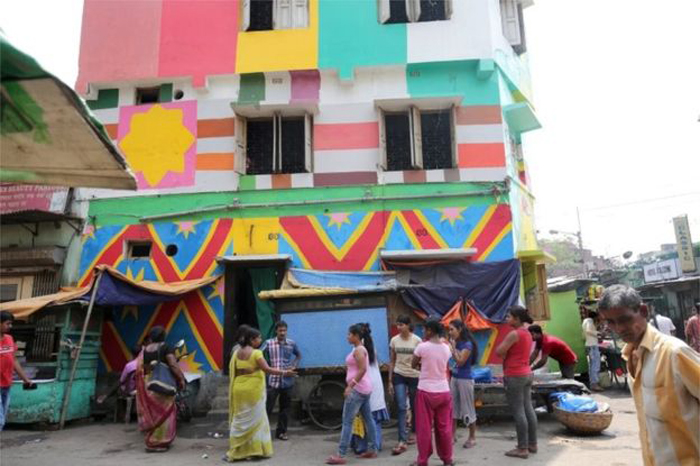
Pincode 700023 area comprising Khidirpur, Mominpur and Ekbalpur, commonly perceived as the city’s biggest Muslim ghetto, is not one, claims the residents of the area, who predominantly are Hindi-speaking Muslims. In an attempt to do away with such myths, prejudices and stereotypes, a unique two-day cultural festival – Calcutta 23 – Celebrating Diversity was organised at Government Girls’ General Degree College (GGGDC), Ekbalpur, in association with Know Your Neighbour initiative of association SNAP, on November 29 and 30.

Stressing upon the need of such events, author Joya Mitra, said, “At a time when diversity is being used as a tool by politicians to create divisions within the society, such initiatives are a must. This is the perfect way to break the misconceptions that we harbour in mind, which leads to the creation of the ‘other’ who cant be your friend or be trusted.”

When asked about the reason for the two-day cultural event being called Calcutta 23, Dr Syeda Shariqatul Moula Alquadri, officer-in-charge of GGGDC, said, “Khidirpur, has a rich cultural and religious diversity. To reach this college, you first have to cross a temple, then a church, then an Imam Bara. Doesn’t this indicate the cosmopolitan nature of this area? But how many will call it so? Most know it as one of the biggest Muslim ghettoes in Kolkata. We have organised this cultural festival, with the sole intention of breaking myths and building bridges.”

Stressing upon the need of such events, author Joya Mitra, said, “At a time when diversity is being used as a tool by politicians to create divisions within the society, such initiatives are a must. This is the perfect way to break the misconceptions that we harbour in mind, which leads to the creation of the ‘other’ who cant be your friend or be trusted.”

Mitra maintained that discussion like the one she had on Kabir, would ease the growing communal tension between different communities. Stressing upon the need of such events being hosted in colleges more frequently, singer Moushumi Bhowmik, said, “There is a tremendous need for the youth hailing from different communities to know each other, to be friends with each other. Such events will iron out prejudices.”

If Sufiya’s work spoke of peace, then mixed media artist, Soumyodeep Roy’s art installation – Fish that travels through time, philosophically tried bringing the two community (Hindu-Muslim) together by using fish. “Whether it is Jhulelal or Al Khidr (From whom many believe the name of Khidderpore has been derived from) both seem to float on a fish. The fish also takes a socio-political character across regions and time,” said Roy.

The event was flagged off early in the morning with a neighbourhood walk, saw the participants from at least 60 colleges meet the community people, visit the churches, imam baras and temples of Calcutta 23 area. Following which the event was formally inaugurated by the Mayor of Kolkata, Firhad Hakim.

The cultural programme, which was hosted within the college premise, had several food kiosks and art installations with unique messages. Peace poetry flag installation put up by poet-artist Sufia Khatoon, had a unique concept – unite diverse voices through poetry. “We need to learn to live peacefully with each other, without prejudice or stereotype. This precisely made me become part of Calcutta 23 event,” said Sufia.

kolkata myth stereotype diversity communities Khidirpur Muslims
The fish installation at the site

If Sufiya’s work spoke of peace, then mixed media artist, Soumyodeep Roy’s art installation – Fish that travels through time, philosophically tried bringing the two community (Hindu-Muslim) together by using fish. “Whether it is Jhulelal or Al Khidr (From whom many believe the name of Khidderpore has been derived from) both seem to float on a fish. The fish also takes a socio-political character across regions and time,” said Roy.

Another unique aspect of this programme was the Dastangoi performance by Delhi-based professor Nadeem Shah Suhrawardy. He gave two power-packed performances in Urdu. However, the key highlight of his performance was the Hindustani adaptation of Sarat Chandra Chattopadhyay’s Mahesh. Interestingly, Calcutta Karavan is all set to give a new twist to this traditional way of storytelling, with Suparna Deb narrating a love story in Bengali. Dastangoi is traditionally performed in Hindustani or Urdu language, globally.

Temporary breather for Imran Khan as of now, but what next?

0

[dropcap]P[/dropcap]akistani Prime Minister Imran Khan must be a relieved man. And the sudden breathlessness has been cured by the Supreme Court of Pakistan which has granted a six-month extension to the Army Chief Qamar Javed Bajwa while ordering the government to bring in legislation to determine the extension of tenure of the head of the Army. As of now, the World Cup-winning captain-turned-lawmaker stays safe under the ‘protection’ of an all-powerful Bajwa.

And an ecstatic Khan’s tweet says it all, “Today must be a great disappointment to those who expected the country to be destabilised by a clash of institutions. That this did not happen must be of special disappointment to our external enemies & mafias within.”

Do not blame the resident of Bani Gala for this elation. After all, at a time, when his country is suffocating under uncertainties from all quarters, he desperately needs the support of the Chief of Army Staff (COAS), especially someone who faces ‘allegations’ of surreptitiously clearing all stumbling blocks to elevate Khan as the Premier.

Khan who earned respect with his staid personality as the captain of Pakistan, is nowhere close to his persona as a PM whose survival strategy is heavily dependent upon keeping Bajwa and team in good humour.

Khan as the Prime Minister has been embroiled in one discrepancy after the other that has incurred the tirade of the Opposition parties which launched the much-hyped Azadi march under the leadership of   Jamiat Ulema Islam – Fazl (JUI-F) leader Maulana Fazal-ur-Rehman seeking dismissal of Khan’s government.

Khan has his own reasons to ride on Bajwa’s shoulders – his utter failure in internationalizing the Jammu and Kashmir issue coupled with attack on minorities in his country and a receding economy– all these do not stand the Prime Minister in good stead. The ant-India sabre-rattling hasn’t won him the global backing he would have hoped for and amid this turmoil, a malevolent Army would only exacerbate his position which could only be resurrected by a friendly Army chief in Bajwa.

According to reports in the Pakistani media, the PM’s benevolence towards Bajwa hasn’t gone down well with some senior Army men who nourish dreams of holding perhaps the most coveted post in the country. And the Maulana’s march had the tacit support of these sulking men. Though, the recalcitrant Maulana’s mission hasn’t met with the success he envisaged, the Army stood solidly behind Khan to allay any threat to the government much to the relief of the Prime Minister.

Charges of mass-scale rigging that catapulted Khan to the PM’s chair were one of the key issues that triggered the march which however was afflicted by lack of explicit support from two of the main Opposition parties – PPP and PML-N. PML-N supremo and former Prime Minister Nawaz Sharif declared unequivocal support to Maulana, but hardly was it encouraging enough to bolster the tempo of the protest.

The role of the Army that stood solidly behind Khan during the Azadi rally only substantiated the meekness of the democratic tenets of the country where the government is always kept on tenterhooks in anticipation of a coup.

The hastiness at which the PTI administration approved the three-year extension to Bajwa a few months back without amending the Army Act was a blunder on the part of the government which has been reprimanded by the Apex court. As Imad Zafar writes in The Express Tribune, “The comedy of errors unleashed by the Pakistan Tehreek-e-Insaf (PTI) legal team meant that the government almost shot itself in the foot, insisting on committing blunder after blunder. From the simple clerical mistakes in the drafts presented in court to not being able to convince the court as to why Bajwa’s extension was essential, the antics which ensued have surely left PTI red-faced.”

In this context, the Prime Minister’s rejoice at the brief prolonging of Bajwa’s stint only exposes how pusillanimous, he is before the armed forces. Travesty of democracy and the electorate system – whichever way, it is Khan who stands on a sticky wicket.

The Supreme Court in some way has come to Khan’s rescue, but with a condition or warning – Bajwa’s extension would be declared null and void if proper legislations are not introduced. Now, it is left to Khan and his government to act upon the SC orders without any bias though. However, the man whose adeptness with the cricket ball was a nightmare for many a top batsman, is proving to be a weak-kneed Premier at the disposal of the military.

Khan has his own reasons to ride on Bajwa’s shoulders – his utter failure in internationalizing the Jammu and Kashmir issue coupled with attack on minorities in his country and a receding economy– all these do not stand the Prime Minister in good stead. The ant-India sabre-rattling hasn’t won him the global backing he would have hoped for and amid this turmoil, a malevolent Army would only exacerbate his position which could only be resurrected by a friendly Army chief in Bajwa.

Add to these muddy waters, the PTI government’s dilly-dallying in allowing Sharif to seek treatment outside the country. It is also time for the PTI government to pacify Bajwa who took the initiative of confabulating with business leaders in search of solutions to revive the dilapidated economy which impacts defence spending as well.

A country which has been under Martial rule for more than half the period since its birth, the fundamentals of democratic principles eat a humble pie and PMs like Khan are ‘custodians’ of a weak system where the threat of dictatorship always looms large. Though the Prime Minister is open to consulting with the Opposition on the legislation, it remains to be seen if it is just an eyewash or not. Maulana has taken exception to the fact that a ‘fake’ parliament will decide on such a serious issue like the Army chief’s extension and has asked for elections and subsequently a new parliament to execute the SC order.

The Supreme Court in some way has come to Khan’s rescue, but with a condition or warning – Bajwa’s extension would be declared null and void if proper legislations are not introduced. Now, it is left to Khan and his government to act upon the SC orders without any bias though. However, the man whose adeptness with the cricket ball was a nightmare for many a top batsman, is proving to be a weak-kneed Premier at the disposal of the military.

Tribal Law student gangraped by 12 in poll-bound Jharkhand

0

Ranchi: The rape and murder of a veterinary doctor in Hyderabad has already shock the nation, now a news of a gangrape in Ranchi has shocked everyone. A 25-year-old tribal Law student gang-raped by 12 people in poll-bound Jharkhand has reported, that too in state capital, Ranchi.

A friend of the victim was also taken hostage by the rapists. Kanke police, under which area the incident took, has arrested all the twelve accused. But during elections, when police remain proactive and such incident taking place at state capital, make a big question mark on the law and order of the state.

Gangrape in Ranchi

On Tuesday evening, a student of National Law University was returning to her university with a male friend, a student of BIT, Meshra. The duo stopped at a bus stand near Sangrampur area and were talking to each other when a car and a pulsar bike stopped in front of the duo. There were nine people, who insisted the duo to drop them to the university. They forcefully made them sit in the car, when the boy opposed to it, one among them took out a county-made revolver and placed it on his head.

Following which, they took  the girl to a brick kiln making site and invited three more men and took turns to rape her. After the gang-rape, they dropped her at the Sangrampur bridge around 10pm.

The police was able to trace the accused due to the help of the victim’s friend. When boy was being overpowered by accused, and threatened, he somehow took note of the phone number of one of the accused. It was this number that  helped the police to trace the accused.

Rural Superintendent of Police Rishav Kumar informed that the all accused are residents of Sangrampur itself. The police  recovered a pistol, a local made revolver and two magazines from them.

The name of accused are —Sunil Munda, Kuldeep Urao, Sunil Urao, Sandeep Tirkey, Ajay Munda, Rajan Urao, Navin Urao, Aman Urao, Basant Kachyap, Ravi Urao, Rohit Urao and Rishi Urao. The age group of accused are between 18 to 30.

Police said that medical examination of girl has been conducted. No injury has been noted on the body of the victim. They also claimed that they will recommend the case to a fast track court for a speedy punishment.

However, there the police, has been accused of not having revealed the incident till media got to know about it on Thursday.

Significantly, the news came to fore on the eve of first phase of voting in Jharkhand.

Congress has put the Raghubar Das government in dock for the deteriorating law and order in the state. Congress leaders Subodh Kant Sahay held a press conference and claimed that more than 5000 rape cases took place during Raghubar Das government.

“Jharkhand has a tribal culture which makes our state a female oriented society. But because of misrule women here are getting attacked in the name of witchcraft. And everyday 6 rapes are taking place, but the deaf and dumb Raghubar government is indifferent. There is no sensitivity left in this government. While Sonia Gandhi had brought a new law after Nirbhaya rape case,” the former minister argued.

Northeast dilemma: Is fresh NRC a solution to citizenship imbroglio?

0

Shillong: As the political game over NRC (National Register for Citizens) and CAB (Citizenship Amendment Bill) hots up, apprehensions about the exercises are growing among people. While the indigenous groups in the Northeast are crying for NRC in their respective states, most of the other communities are asking for a “genuine” and “transparent” process. Some are rejecting NRC altogether.

The non-tribal population in the Northeast constitutes a substantial number of Bengalis, especially in Assam, Meghalaya and Tripura, the last consisting of a major chunk of Bengali Hindus that is 60 per cent of the population.

Citizenship issue in Northeast

The final NRC list in Assam that was published in August this year left out around 12 lakh Hindus and Bengali Hindus, which formed a major vote bank for the BJP. The repercussions were felt not only in Assam but also in West Bengal.

Now that the Centre has announced a nationwide NRC, which will include Assam, the Bengali population has welcomed the move.

“The names of many Bengali Hindus have been left out in the final NRC list. We do not consider the NRC process as valid as genuine citizens have been ignored. So we welcome the decision for a fresh NRC procedure,” said Sukumar Biswas, the chief of Assam Bengali Juva Chhatra Federation.

Naba Bhattacharya, a prominent resident of Shillong, feels NRC is good if done with proper intervention. Criticising the exercise in Assam for its “loopholes”, Bhattacharya said over 19 lakh people have been left out and there is “a complete policy paralysis (in tackling the situation) and everyone is silent”.

According to Biswas, 99 per cent Bengali’s living in the Northeast came before 1971, the cutoff year for NRC in Assam. “So if the NRC is carried out afresh and genuinely, then they (the Bengali’s in Northeast) will not be affected. In Tripura too, there should not be any problem. However, if the intention is to exclude Bengalis in the list, then that is a different matter. But in places in Meghalaya and Arunachal Pradesh, there can be some problems because locals there are staunch,” he added.

A Bengali resident of Shillong spoke to eNewsroom on condition of anonymity said that the community faced much hatred in the hill city in the past and with NRC, it may again escalate. He shared Biswas’s apprehension that though genuine Bengali settlers have documents, “It all depends on how the process will be carried out”.

Naba Bhattacharya, a prominent resident of Shillong, feels NRC is good if done with proper intervention. Criticising the exercise in Assam for its “loopholes”, Bhattacharya said over 19 lakh people have been left out and there is “a complete policy paralysis (in tackling the situation) and everyone is silent”.

“The indigenous groups in the neighbouring northeastern states have valid reason to be apprehensive because there is a possibility of these people (left out of the NRC list) moving into the NE states than going to the mainland. But the government is silent about the issue. Unless this is sorted out the apprehensions will continue to grow,” he said and called for transparency in the fresh NRC process.

The non-tribal population in the region also consists of over 20 lakh Nepalese as per the 2011 census. In Meghalaya, the number is around 60,000. The community had, in the past, faced the wrath of local tribals. So will the community be targeted again if NRC is implemented in the state?

BB Chhetri, the president of Gorkha Public Panchayat Khasi Hills, rejected the possibility saying, “There is no problem for the Nepalese… They are not infiltrators. They have been staying here for over a century. Also, the India-Nepal Treaty of 1950 allows them to come to the country without passport. We (those who are staying here for long) are the citizens of India.”

“If you do the exercise on the basis of 1948 or 1951, then how can people produce documents? At that time, people did not preserve land documents. Now, 75 years down the line, how can those who could not or did not possess documents but who are descendants of the settlers before the cutoff year, prove they are citizens,” Chakma asked.

The Gorkhas in Nagaland recently raised their voices against the state government’s decision to implement Register of Indigenous Inhabitants of Nagaland (RIIN) with cutoff year as 1963. The Nagaland Gorkha Association requested the government to not verify permanent status of a person based on the 1963 voters’ list as it would completely omit the community. The association explained that though the community came before 1963, the first election in the areas of their settlement was held only in 1974.

When asked whether the Gorkha population would be affected by either NRC or RIIN in Nagaland, Chhetri said, “The Gorkhas there are staying from before 1940, they are equivalent to Nagas. They have been allowed to settle there.”

For Suhas Chakma, director of Rights and Risks Analysis Group (RRAG), a New Delhi-based independent think tank, the NRC exercise is banal because “it is crazy to ask people to prove their citizenship after so many decades”.

The BJP has claimed that the Citizenship Amendment Bill will help those left out of the final NRC list. A report by RRAG, has countered it saying “CAB will provide citizenship by naturalisation to people belonging to minority communities from Afghanistan, Bangladesh and Pakistan but the Gorkhas, Scheduled Tribes, Bhojpuri, Koch Rajbongshi, Tea Tribes cannot claim to have migrated from these countries and therefore, they are not covered under the CAB”.

“If you do the exercise on the basis of 1948 or 1951, then how can people produce documents? At that time, people did not preserve land documents. Now, 75 years down the line, how can those who could not or did not possess documents but who are descendants of the settlers before the cutoff year, prove they are citizens,” Chakma asked.

Under Article 6 of the Constitution, the cut-off date for migration to India from Pakistan is July 19, 1948.

The 19 lakh & CAB

The BJP has claimed that the Citizenship Amendment Bill will help those left out of the final NRC list. A report by RRAG, has countered it saying “CAB will provide citizenship by naturalisation to people belonging to minority communities from Afghanistan, Bangladesh and Pakistan but the Gorkhas, Scheduled Tribes, Bhojpuri, Koch Rajbongshi, Tea Tribes cannot claim to have migrated from these countries and therefore, they are not covered under the CAB”.

The only hope for those stuck in the citizenship imbroglio is the fresh exercise that will be implemented nationally.

When asked whether the CAB will benefit the Chakmas, most of whom are Buddhists, Chakma said the members of the community migrated to India in 1964 and they are already citizens.

“But due to act of discrimination etc, the Government of India does not process the citizenship applications of the Chakmas… in the last four years, none of the citizenship applications from the community has been processed despite a Supreme Court order. Nobody opposes the applications of Pakistani Hindus, who came to India from 1965. So what is BJP talking about protecting or respecting law or the Constitution. They did not even respect the Supreme Court order,” he added.

The dichotomy between NRC, which is to identify foreigners and deport them, and CAB, which promises citizenship to Hindus from certain countries, is making the situation even more complex. “Why do (you have to do) NRC at all when you have to bring CAB,” wondered Bhattacharya.

Union minister Kiren Rijiju said in 2017 the Centre could not grant citizenship to Chakma-Hajongs in Arunachal Pradesh as per the Supreme Court order of 2015 because that would reduce the indigenous community to a minority. The Centre had sought modification in the apex court order.

There are 2.25 lakh Chakmas in the Northeast with Mizoram and Arunachal Pradesh having the maximum number. Talking about the apprehensions in Arunachal Pradesh, Chakma said the population of his community in the state is only 50,000 and the state government’s claim that there were a lakh of Chakmas is nonsense.

When asked about the “alarming growth of Chakmas in Arunachal Pradesh” as pointed out by indigenous groups, he said according to a study, the population growth of Chakmas since 1964 is 217 per cent while that of the tribals was 218 per cent.

The dichotomy between NRC, which is to identify foreigners and deport them, and CAB, which promises citizenship to Hindus from certain countries, is making the situation even more complex. “Why do (you have to do) NRC at all when you have to bring CAB,” wondered Bhattacharya.

Chakma gave a picture of the chaos that the country is awaiting. “When you ask millions of people to apply for citizenship, then it is only hogwash. Can you imagine millions of people submitting the forms with documents?”

Big jolt to BJP in Bengal bypolls

0

Kolkata: The turf looks uneven as the extra bounce out of the blue is turning out to be an uphill task to handle – yes, the indomitable tag that Prime Minister Narendra Modi sketched for the Bharatiya Janata Party (BJP) is running into rough weather.

First, it was the fiasco in Maharashtra followed by the defeat to the Trinamool Congress in the Assembly bypolls in three seats in West Bengal – BJP’s woes seem to have been compounded and the invincibility factor has got a sever jolt.

Rewind to a few months back, when the Modi wave once again saw the party through with an absolute majority in the Parliamentary polls. What looked ominous for the opposition then, has now given the beleaguered rivals of the saffron wing, tremendous impetus.

In Maharashtra, if the miscalculation complemented by complacency did the BJP in, TMC supremo Mamata Banerjee has once again proved that she still holds clout and it’s still early days for the saffron flag to flutter in the eastern state.

Kharagpur Sadar, Kaliaganj and Karimpur all have gone the TMC way much to the dismay of state BJP president Dilip Ghosh. Elections to Kharagpur Sadar were necessary after Ghosh made it to the Lok Sabha. Similarly, TMC’s Mohua Moitra vacated the Karimpur assembly seat after triumphing in the Lok Sabha elections. Incidentally, as the Banerjee pointed out, it’s the first time in 21 years of the TMC’s inception that the party emerged victorious in Kaliaganj and Kharagpur Sadar.

Buoyed by the 18 seats it won in the Lok Sabha elections in the state, the state wing of the BJP perhaps didn’t get the writings on the wall right. The aftermath of some juvenile steps and statements has put the party on the backfoot and it is time for some serious introspection.

Though, results of bypolls do not reflect on the larger picture, but it’s been a turnaround for TMC which was sulking after ceding so much of ground to rival BJP.

Kharagpur Sadar, Kaliaganj and Karimpur all have gone the TMC way much to the dismay of state BJP president Dilip Ghosh. Elections to Kharagpur Sadar were necessary after Ghosh made it to the Lok Sabha. Similarly, TMC’s Mohua Moitra vacated the Karimpur assembly seat after triumphing in the Lok Sabha elections. Incidentally, as the Banerjee pointed out, it’s the first time in 21 years of the TMC’s inception that the party emerged victorious in Kaliaganj and Kharagpur Sadar.

Pradip Sarkar of TMC defeated BJP’s Prem Chandra Jha by  20,811 votes in Kharagpur Sadar which was a matter of prestige for both the parties. In Kaliaganj the BJP’s lead of 57,000 votes in the Lok Sabha elections didn’t reap dividends with Tapan Deb Singha of TMC scoring over BJP’s Kamal Chandra Sarkar though by a slender margin of 2,414 votes. In Karimpur, TMC’s Bimalendu Singha Roy beat BJP’s Jay Prakash Majumdar by a margin of 24,119 votes.

“In the Lok Sabha polls, EVMs were manipulated. Still we have overcome (BJP’s) huge leads in Kharagpur and Kaliaganj seats and doubled our lead in Karimpur. In the name of NRC, the BJP has created panic among the people. Workers from Bengal are killed in Rajasthan, Jammu and Kashmir and Madhya Pradesh. There are no jobs for youths in Bengal. It is a victory against BJP’s arrogance and desperation to come to power. We have received votes from Bengalis and non-Bengalis as well,” the CM was quoted in the media.

The West Bengal chief minister couldn’t have been happier as she congratulated the voters for giving the TMC such a resounding mandate. “In 21 years since the formation of our party, we never won either Kharagpur Sadar or Kaliaganj seats. I want to thank all the people for this victory. From leaders and workers, all have worked day and night to make this happen. This will only make us humble and work for the people in the days to come,” Banerjee said after the victory.

She also took swipes at the BJP for resorting to ‘manipulations’ for electoral glory and also its nefarious designs to impose National Register of Citizens (NRC) and Citizenship Amendment Bill (CAB) in the state. “In the Lok Sabha polls, EVMs were manipulated. Still we have overcome (BJP’s) huge leads in Kharagpur and Kaliaganj seats and doubled our lead in Karimpur. In the name of NRC, the BJP has created panic among the people. Workers from Bengal are killed in Rajasthan, Jammu and Kashmir and Madhya Pradesh. There are no jobs for youths in Bengal. It is a victory against BJP’s arrogance and desperation to come to power. We have received votes from Bengalis and non-Bengalis as well,” the CM was quoted in the media.

bjp tmc bypolls in west bengal mamata banerjee NRC CAB
A tweet by @MamataOfficial tweet handle after the bypolls results

The setback to the BJP doesn’t really augur well if it has to nurture ambitions of wresting the state from the TMC in the state elections slated for 2021. There is little doubt that the NRC plank hasn’t worked and it has marginalised the minorities (read Muslims) further from the BJP. Similarly, the hullabaloo around the CAB that unabashedly draws a line of demarcation between Muslims and the rest, has taken its toll on the party. The instability in Jammu and Kashmir resulting in the killings of workers from Bengal has also been a bane for BJP.

Much to BJP’s chagrin, it is safe to say that the NRC and CAB gave Banerjee the much-needed ground to woo voters and portray herself as their saviour. The main handicap of the BJP in the state is absence of a face which can impress on the electorates to support the party. Ghosh with his loud mouth and uncontrollable tongue has embarrassed the party more often than not – so has a party veteran like Rahul Sinha who linked Nobel laureate Abhijit Banerjee’s achievement to his marital life. Though, rural voters devoid of internet facilities may not have been much influenced by such quixotic views, however, the TMC cashed it to the hilt to queer the BJP’s pitch.

What is more alarming is the ‘do-not-care’ arrogance that is becoming a liability for the ruling party at the Centre. The Ayodhya verdict hasn’t gone down well with a section of the Muslims and the liberals among the non-Muslims (doubting the plausibility of the verdict). The superiority complex of the few in the higher echelons of the party and undermining its allies and opponents have been a spoilsport too. As renowned journalist Girish Kuber writes in the Indian Express, “The BJP’s behaviour over the past 5-6 years is the same as that of the Congress of the Eighties and Nineties. The saffron party’s approach in handling both parties, first the Shiv Sena and then the NCP, was like that of the Congress and its methods were not just unwise but politically incorrect too. The BJP didn’t even realise that being dismissive of these outfits has, in fact, resulted in the party blinding itself and offers limited elbow room, necessary in a tightly-strung political atmosphere.”

The debacle if we say so in Bengal bypolls cannot be brushed under the carpet – Rajasthan, Chhattisgarh, Madhya Pradesh, Haryana (where it was forced to seek JJP’s help to form the government), Maharashtra and now West Bengal – the message is clear – take voters for granted and it boomerangs.

JNU Alumni protest fees hike in Kolkata, gets support from several Universities

0

Kolkata: Students of Jawaharlal Nehru University (JNU) have been quite vocal and determined about the fee hike proposed by the University management. Students enrolled with the university have not just taken on the streets of Delhi or formed human chains, demanding for an immediate fee roll back, but have given out a call to all the students across India, seeking their support. In response to the call by the Jawaharlal Nehru University Student Union (JNUSU), seeking support from fellow students across India, former students of JNU organised a rally on Wednesday afternoon in Kolkata.

Much to the surprise of the organisers, a healthy number of participants hailing from different cross-section of the society made it to the protest rally, which was flagged off from Raja Subodh Mullick Square to culminate at Entally’s Ramlila Maidan.

Speaking to eNewsroom, Subhanil Chowdhury, professor of economics at Institute of Development Studies, Kolkata, said, “I am a former student of JNU and I have seen for close vicinity how the subsidised educational fee allows thousands of brilliant students hailing from the often forgotten section of the society get access to quality education. Hike in fee in public education system, will deprive 40 per cent of JNU students of their right to education. I understand the importance of the JNU movement, where the students have been creating pressure on the government to roll back the fee hike and hence, I am here to stand in solidarity with the demands being made by the students of my Alma Mater.”

“At a time when countries like Norway are making education free, our country is hell bent on increasing the cost of education. If the fees are hiked, where will the poor students go to? Is this a deliberate attempt to make quality education accessible only to the rich and elite class? Are the poor or those who have the courage to dissent to be kept deprived of education? The constant attempts being made to corner JNU students or to saffronise them, is not a healthy sign. I understand the importance of public education and subsidised fee,” said Tanweer Ahmed Khan, secretary of Maulana Azad College’s alumni association.

It was not just Chowdhury, who made sure to be present at the rally on a working day, but several other faculty members, students, student union leaders and even alumni association members of various government colleges and universities of Bengal like Presidency University, University of Calcutta, Jadavpur University, Maulana Azad College and more chose to stand in solidarity with the former students of JNU.

“At a time when countries like Norway are making education free, our country is hell bent on increasing the cost of education. If the fees are hiked, where will the poor students go to? Is this a deliberate attempt to make quality education accessible only to the rich and elite class? Are the poor or those who have the courage to dissent to be kept deprived of education? The constant attempts being made to corner JNU students or to saffronise them, is not a healthy sign. I understand the importance of public education and subsidised fee,” said Tanweer Ahmed Khan, secretary of Maulana Azad College’s alumni association.

Echoing a similar sentiment was Sudipta Bhattacharya, professor of economics at the Viswa Bharti University. He said, “The problem that the JNU students are facing is universal for all Indian students and in not just limited to JNU campus. Students across India enrolled in autonomous universities are having to face a similar issue. Almost a week back, similar protests were seen in our university campus, back then the students were demanding for the admission form price to be reduced. We as the general public need to understand that there is a constant pressure on autonomous universities and colleges to generate their own funds to keep the institutions running.  Fee hike is definitely not the best way to make institutes to arrange their own funds.”

When asked that there are many, who are not okay with tax-payers money being spent on JNU students, Chowdhury, said with a dry laugh, “I am cent percent sure that the people saying so, lack the acumen to crack the JNU entrance examination. They have an issue with the taxpayer’s money being spent on education, but are fine with it being spent of statues and foreign trips of politicians.”

“The government needs to understand that autonomy granted to universities and colleges doesn’t boil down to financial autonomy. It means that the university or college is free to take its own decision without the state interference, with respect to their curriculum. On the contrary, we have been witnessing an increasing trend where autonomous educational institutes are being forced to mobilise their own funds. University Grant Commission, has been made redundant, to create space for Higher Education Funding Authority (HEFA), which now has created provision for the universities function not on grants but on loans which it has to recover from its students, which can be done only by hiking the fees,” explained Bhattacharya.

When asked that there are many, who are not okay with tax-payers money being spent on JNU students, Chowdhury, said with a dry laugh, “I am cent percent sure that the people saying so, lack the acumen to crack the JNU entrance examination. They have an issue with the taxpayer’s money being spent on education, but are fine with it being spent of statues and foreign trips of politicians.”

Interestingly, according to a February 2019 CAG report, INR 94,036 set aside for secondary and higher education cess along with INR 7,298 crore for research and development cess have remained unused. So, where did this money go and why is it not being used to meet the expenditure of premium institutes of India like the JNU, IITs and IIMs, are questions that need to be raised not just on the streets but also at the Parliament.

Sanju Samson gets his due, accidentally though

0

Kolkata: With injury ruling left-handed opening batsman Shikhar Dhawan out of the T20 series against West Indies, Kerala wicketkeeper Sanju Samson has been drafted into the Indian side in the Delhi batsman’s place. Dhawan who has been in poor form of late, was lucky enough to get into the team at the expense of a deserving Samson when it was announced a few days back. Perhaps, the southpaw’s experience got him the nod ahead of Samson.

But Samson’s initial exclusion from the teams for the ODI and T20 series had drawn flak from experts and former cricketers and as luck would have it, the talented wicketkeeper-batsman who has been among runs at the domestic level, has got a chance to prove his worth.

In fact, Samson missed out on a place in the playing XI in the three-match T20 outing against Bangladesh that raised eyebrows. Out-of-form Rishabh Pant continued to don the gloves despite a dismal show both with the bat and behind the stumps.

Samson has been a revelation since he emerged on the scene years back but the sad part is that he managed to don the India colours in only one T20 International way back in 2015. Since then, he has been ignored by the selectors as well as the team management.

Lok Sabha MP Shashi Tharoor, himself a keen observer of the game had questioned the selectors’ move to leave out Samson for the ODIs and T20s against West Indies. He tweeted, “Very disappointed to see @IamSanjuSamson dropped without a chance. He carried the drinks for three T20Is & has been promptly discarded. Are they testing his batting or his heart?”

In fact so miffed was former Indian cricketer Harbhajan Singh at the treatment meted out to Samson that he even went to the extent of urging BCCI president Sourav Ganguly to sack the current panel of selectors.

Samson has been a revelation since he emerged on the scene years back but the sad part is that he managed to don the India colours in only one T20 International way back in 2015. Since then, he has been ignored by the selectors as well as the team management.

And he has also set his eyes on the T20 World Cup in Australia. “The dream is to win the World T20 for India in Australia. I am training for that, not to be a part of the team. I want to win the World Cup for my country and that is the standard I set for myself and that is how I plan my work ethics. Definitely the dream is to win the trophy as it has been a while since we won one and I would definitely want to have some quality contributions in the process. That is the dream and I am working towards it,” he added.

Now, will this be a blessing in disguise for Samson? “I like to keep things as simple as possible and when I get the opportunity I look to score big. If I get five innings, I want to score big in one or two innings and win matches for my team. Consistency in my innings won’t win matches for my team. It is more important to play an outstanding innings to win my team games. I go behind that kind of idea,” Samson told IANS after his name was announced as Dhawan’s replacement. He added that he would like to use this opportunity to sit and talk with skipper Virat Kohli and coach Ravi Shastri on the future.

And he has also set his eyes on the T20 World Cup in Australia. “The dream is to win the World T20 for India in Australia. I am training for that, not to be a part of the team. I want to win the World Cup for my country and that is the standard I set for myself and that is how I plan my work ethics. Definitely the dream is to win the trophy as it has been a while since we won one and I would definitely want to have some quality contributions in the process. That is the dream and I am working towards it,” he added.

It will be interesting to note, if he is preferred over Pant. With the T20 World Cup in mind, Samson deserves to get a look-in against the Windies. With Pant struggling to touch form and uncertainty shrouding MS Dhoni’s comeback, a replacement in Samson would rid Kohli and Shastri of a lot of worries. Of course, Samson given an opportunity will have to justify his place in the team. But as things stand now, yeh hi hai right choice!