Corona virus fear grips Kolkatans, as government announces preventive measures

Kolkata: The novel Coronavirus pandemic, which was till now grabbing headlines in other states of India, has come closer to affect people in West Bengal, more so in its capital Kolkata.

The virus, which has already affected 1,52,000 people globally and claimed two lives in India, till Sunday evening, is now a real scare after Bengal government created isolation wards and announced closure of all educational institutions, parks, museums, swimming pools.

Grappling with the unforeseen situation, all are keeping their fingers crossed as they go about their daily work. Entrepreneurs and businessmen, uncertain of the future, are already staring at losses.

Doctors and nurses and hospital staff who are at very high risk of exposure to the COVID-19 in the course of work also share this scare as they work without enough masks and grapple with acute shortage of hand sanitisers.

Swastika Sen (name changed), MD at RG Kar Hospital in Kolkata, is one of them, who is working in trying conditions. Though the state has not reported any +ve case till now, the fear is real among doctors at government hospitals.

“Just the other day a child was referred to our hospital from sub-divisional hospital in Basirhat as a Coronavirus case. But in reality the patient was suffering from dysentery. We found out the patient from a poor family had no travel history or any outside exposure. We referred the case to Infectious Diseases & Beliaghata General Hospital,” said the doctor.

Elaborating on the perils the doctors have to go through, Sen said, “We do not have proper set-up yet to deal with novel Coronavirus patients. We have not been provided with N95 masks yet. Instead, we are using surgical masks. We are using handwash most often but there is also shortage of hand sanitisers though we are handling 400-500 patients daily in the Out-Patient Department. Medical students are also at high risk as their classes are still on.”

The doctor though, is hopeful that the virus will die on its own as the temperatures rise further as it cannot survive beyond 26-28 degrees Centigrade.

Business hit  

SMD Technologies, a partner of National Skill Development Corporation and with a little over 100 staff, working in 10 states, is affected as the virus has hit at during the financial year-end. Director of the firm, Ujjwal Chakraborty, said: “We are being hugely impacted as we work closely with the government, which has announced that there will be no further training of teachers. This leaves our work incomplete.

“There is a procedure for batch approval from the government. We cannot get the approvals unless training of teachers is complete from our end. As a result, students are missing out on government benefits. This is a big jolt to us. This has happened at a crucial time, when the Pradhan Mantri Kaushal Vikas Yojana-2 (PMKVY) scheme is about to end on March 31 and the new PMKVY-3 is to be launched next.

“The training centres we run will incur huge losses if the batches are not being completed on time. It is a huge financial burden to keep these centres running, which includes 40-50k rent and staff salaries. If the PMKVY-3 order comes after 4 months, we have to bear the operational costs without any income or pay from the government for that duration. The loss for each month for a centre would be close to Rs 1-1.5 lakh. We can’t even shut the centres as in case we have to start again, we will have to invest fresh capital again.”

Samarjit Bose (name changed), sales in-charge for eastern India in a Japanese multinational electronics brand too is feeling the pinch. The sales manager said that his raw materials from China have stopped arriving and they have to look for alternate sources. “This will affect business. The real hit will only be visible after April,” said Bose.

Show must go on

A Go Air official, who looks after flight maintenance at the Kolkata airport spoke of precautions they are taking against the virus. “Biometric attendance has been stopped and the office is planning to issue masks. Soap solutions have been provided. We know we are at risk, but it can’t be helped. We have asked our management to postpone a scheduled training in New Delhi,” the official said.

Mainak Datta, director of a private firm in the composite sector said that his business hasn’t been affected yet but feels the fear gripping his staff. “We are travelling only in absolute necessity. We are providing masks and sanitisers to them. The only issue is that masks, which used to sell for Rs 28 are now selling for Rs 150 or more,” said Datta.

“Don’t panic, be practical”

Sheena Misra Ghosh, psychologist, AMRI hospital, Salt Lake, felt there is unnecessary panic among people. Someone, who just returned from Bhubaneswar by air said there had been no compulsory screening at Kolkata airport for passengers.

“Passengers are wearing masks but there is no compulsory check-up. There was just an announcement before disembarking that if anyone has been to any of the countries where the travel ban is on or have come in contact with an affected person, they should inform the health staff on the ground. Last week too, when I travelled to Israel, there had been no screening,” said the psychologist.

She debunks the fear among people. “If you follow the protocols there is no need to worry. What the government is doing is precautionary measures. But people are assuming a lot more. We need realistically understand the nature of the virus and its spread. Do not panic. Be patient,” advises Misra Ghosh.

Retail chain sends SMS

Future Group, CEO Kishore Biyani sent SMSes to its customers explaining steps the company is taking to keep nCov away. “We have increased focus on cleaning high-touch, high traffic areas. We have temporarily stopped food sampling in our stores.” Spencer’s has kept hand sanitisers ready for customers at its stores and is also taking precautionary measures.

Amid these, only CAA-NRC protesters are not fearful about the virus, they believe that the citizenship issue is more life threatening for the country than the Covid-19 virus.

Citizenship issue is more life threatening than coronavirus, Kolkata protesters to continue fight against CAA

Kolkata: The number of women participants at the Park Circus Maidan on Sunday was much stronger than what it had witnessed during the weekdays. A similar turnover was witnessed at Shireen Bagh (Raja Bazar Tram Depot), Nawab Ali Park and other sit-in protest sites in Kolkata, amid the Coronavirus (COVID-19) scare.

The protesters, present at the dharna sites, at a time when the number of people infected by the deadly coronavirus (COVID-19) rose to 107 in India, following which the schools have issued notices to parents announcing that the schools will remain closed till March 31, feel that the scare of being affected by the pandemic is not going to stop them from assembling at the protest sites.

PROTEST AGAINST DISCRIMINATORY LAW

India is witnessing a pre-independence era with protests erupting across the country, since the Government of India (GoI) announced its intention of conducting a National Register of Citizens (NRC) across India, immediately after NRC exercise was conducted in the northeastern state of Assam. Around 19 lakh individuals in Assam could not make it to the final list of NRC and are facing threat of becoming stateless, if they cannot prove their citizenship before the Foreign Tribunal. However, activists working at the ground level claim that most of these people are poor migrant labourers from other parts of the country and not Bangladeshis.

The NRC exercise in Assam has cost INR 1600 crores, but that has not stopped India’s Home Minister Amit Shah from announcing that NRIC would be conducted across India, including Assam. GoI, in a bid to appease a huge number of Hindus left out during the NRC exercise in Assam, has amended India’s Citizenship Act, which openly discriminates applicants on the basis of religion while giving citizenship. CAA clearly states that Hindus, Christians, Jains, Parsis from Afghanistan, Pakistan and Bangladesh will be given citizenship, thereby providing people belonging to the mentioned religion an entry point if they get excluded during NRC exercise. The GoI also plans to conduct National Population Register (NPR) from April 1, which in one of the government gazette clearly mentions that NPR is the first step of NRC. Despite Amit Shah mentioning in the Rajya Sabha that no doubtful voter will be marked during NPR exercise, not many are buying his explanation.

CORONAVIRUS NOT SCARY FOR PROTESTERS

To oppose these proposed exercise, across several Indian cities including the national capital, sit-in protests spearheaded by women are being staged. Delhi’s Shaheen Bagh, has been well emulated by Kolkata’s Park Circus, Ranchi’s Kadro and Lukhnow’s Ghanta Ghar and many more Shaheen Baghs have been staging Gandhian-style protests against CAA-NRC-NPR for over three months now. Delhi’s Shaheen Bagh, did not end the protest during the Assembly polls and Delhi pogrom. And are continuing even now amid the fear of Coronavirus.

“Governments- both centre and state, have issued advisories that refrain people from going to crowded places like malls, cinema halls among others. But that is not going to make us run back to the safety of our home,” declared Asmat Jamil, the lady who played a pivotal role in starting the sit-in at Park Circus Maidan.

Jamil had undergone a kidney transplant but did not hesitate to lead the sit-in at Park Circus Maidan which went on to become a movement like Delhi’s Shaheen Bagh. It has complete 70 days so far.

PROTEST CONTINUES BUT WITH PRECAUTION 

She claims that nothing is going to stop people from dropping in at the protest site. However, Jamil maintained that she has advised the participants to keep themselves well equipped with masks, sanitizers and hand wash to fight the deadly virus.

“We have asked each participant to be careful and to follow the dos and don’ts for their better health. As we all know that this is a public movement and that we don’t take funds from anyone, so we are asking the well off participants to bring in their masks and sanitizers. However, for those who can’t afford these things, we will be making some arrangements for them,” said Jamil.

CORONA SCARE TO DISMANTLE PROTEST?

Meanwhile, Manzar Jameel, a Kolkata-based member of Joint Forum Against NRC felt that the common man in no way is willing to listen to the government advisories. Speaking to eNewsroom, he told, “ I am at Shaheen Bagh today, and let me share the mood of the people here – they are in no mood to rush back to their homes. They are concerned about this pandemic and are taking the necessary precautions, but they don’t want to go back to their homes.”

When asked about the health advisories issued by the state and central government, asking people to avoid crowded places and how it would impact this movement he replied, “The government seems to be keen on using the COVID-19 scare to dismantle this movement. But we will not yield to the pressure. NPR, NRC and CAA are much more dangerous than COVID-19, so we are going to keep protesting until the government pays heed to our demands.”

“If the government is so bothered about our health and lives then why have they not approached the protester and arrive at a solution?”, he added.

DETENTION CENTRE MORE SCARY THAN CORONA

Echoing a similar sentiment was Shafqat Rahim, a final year law student, and a regular at several anti-(CAA-NRC-NPR) protests. She said, “Protesters are well aware of the perils of these laws. They also realise that these laws are more harmful than COVID-19, as a person infected with this virus, can expect to bounce back if he is provided with the right treatment at the right time. But those marked D during NPR exercise will eventually land at the detention centre. Dying of COVID-19 seems like a better choice than dying as a stateless person at the detention centre.”

Adding to that Ehtesham Ahmed, one of the organisers of the Nawab Ali Park sit-in mentioned, “This is a people’s movement. We can’t call this off, as people are coming in to mark their resistance to these proposed laws, which are discriminatory. However, we are asking people to follow the precautions listed by the government.”

While Md Javed Alam of Shireen Bagh, said, “We are not against our government. We are on the streets as these proposed laws are discriminatory. We understand the health risk involved but then is the government willing to have a discussion with us and oblige us by revoking or amending them to be more inclusive?” On being asked if they would call off the sit-in, following the COVID-19 scare, he said, “We haven’t discussed the same.”

As the implementation of NPR is approaching, Shireen Bagh (Raja Bazar) protesters have even started a relay hunger strike to stop it. Protesters across Kolkata and Bengal are in no mood to go back to their houses, despite understanding the health risks involved.

Love In the Time of Corona and Hate Virus

[dropcap]W[/dropcap]ill coronavirus be able to contain the more deadly hate-virus that has killed more people down the centuries across the globe than all microbes combined and is still widespread in our beloved motherland?

It is not exactly a great relief to see men-women and children with medical masks scurrying around to avoid infections. But it may be a welcome respite from the masked or hooded men baying for blood of their Other across the lane or road, shooting, stabbing or torching homes and shops in the name of Ram or Rahim. It is better than air and minds as well as cyber waves being perpetually poisoned with the war-cries of the ‘Goli-Maro’ gangs and their rivals.

At least, for a brief period, the global pandemic would force them to believe that ‘we the people’ breathe the same air irrespective of our mortal identity markers and will die the same death if the viruses, ‘natural’ and man-made are allowed to be spread more.

Certainly, it is a welcome reprieve from being forced to listen to nauseating speeches of the politicians who pretend to be statesmen above the communities but unmistakably reveal their shrewd self as they churn out their communal narratives buttressed by selective amnesia and sheer lies.

The Conspiracy theorists

It is yet to be ascertained whether the COVID-19 is a result of a conspiracy against Chinese economy or its government’s callousness, rather a disastrous combine of both, or a more far-reaching warning from the mother earth to us for our collective sins against her.

If we are to believe our home minister’s words on the floor of parliament, the proliferation of hate-virus and its resultant dance of death in our national capital last month was a conspiracy against India by our enemies and their fifth column.

The conspirators at courts down the history have always served megalomaniac and paranoid rulers who have been both vulnerable to and vectors of the contagions like hatred and mistrust. The formers have continued to play on the latter’s phobias in the modern age.

The communal contagions

For Amit Shah, it was certainly not an outcome of a sinister design of the Sangh Parivar. Although, many believe that it had unleashed the super-patriotic saffron folks who were out to punish the perceived enemies of Indian Reich, Muslims (who have replaced the Jews, the enemy of Aryan Volk in the original master’s scheme). Predictably, Shah also ruled out police complicity as the Opposition had stopped short of complaining about.

It was another matter, his ministry had called Delhi riot ‘spontaneous’ on the basis of ‘professional assessment’ a day after the outbreak. Probably, that was thought to be the safe alibi for the ‘outburst of pent-up public anger’ over traffic snarls following the proliferation of Shaheen Bagh- type dharnas against the regime’s newly passed CAA and its corollary projects of NRC-NPR in north-east Delhi. The spontaneity theory was meant to justify the triggers from by pro-regime ‘Goli Maro gangs’ led by BJP leaders and ministers since the Delhi poll campaigns.

But now the spin has changed to conspiracy theory, apparently because of American and international bad press and condemnnation from the UN-US bodies, despite Donald Trump’s generous support to his ‘buddy’ Modi during his recent trip when a part of Delhi was aflame.

The virus war

Shah shied from naming the foreign conspirators who allegedly had funded agent provocuteurs to defame India during Trump’s visit. But he claimed to have identified their key collaborators in India including their social media echo-chambers and thundered to bring them to justice from the ‘nether world’.

Apparently sharing a secret, Shah claimed that he had early intelligence of such scheme. But he did not bother to explain the government’s failure to nip it in the bud before the POTUS-FLOTUS flew in. Neither did he care to mention his own hate-speeches against Shaheen Bagh protests during Delhi polls and those of his party lieutenants even during Trump’s visit that had evidently added to the communal build up and the conflagration.

Further, he claimed that the violence had ended within 36 hours contrary to the reports from the ground that pointed to its continuity for double the period and refused to accept the charges of police failure, let alone his own ineptitude and callousness. Instead, he put all the blames on Congress president, Sonia Gandhi albeit without naming her, for engineering Shaheen Bagh sit-in. For him, the riot was the consequences of the street protests against the religiously divisive citizenship matrix.

The breeders and pathologists

What Shah did not say explicitly, was made so by his party MPs who named cut all Muslims, Opposition politicians from AAP to AIMIM paste here, as instigators while defending the foulmouthed men from saffron brotherhood or ducking the similar charges against them. This is what the BJP spokespersons had been doing on the TV shows for last two weeks.

The party MPs did not spare the former Delhi High Court judge S Murlidhar for daring to ask Delhi police to file FIR against four BJP leaders for their hate-speeches. One of them claimed that an intelligence report was behind the judge’s midnight transfer, albeit without naming him.

Clearly, the MP was not supposed to be privy to the IB report. Same was the fate of the Supreme Court –appointed interlocutors to Shaheen Bagh as one of them was described as close to Kasmiri militants.

Why the courts are allowing the anti-CAA-NRC street protests to continue, was the cumulative grudge of the ruling side. The message is simple: anybody inside or outside the system who differs with us or crosses our path is our enemy or its agent. Either you enjoy a ride on our steamroller or you will be crushed under it. Particularly, at the time of virus wars, the pathologists who dare to examine the breeders of malignancy too much closely will die.

The benign subterfuge

Shah described 52 (so far recorded) victims of the riot as ‘Indians’ while declining to divide them by their religions and showed sympathy to their bereaved families. But his inclusive pretensions, with pauses to create the poignancy inside the parliament sounded more chilling than his exclusionary epithets against Muslims outside since Muzaffarnagar.

After all, like almost all viruses, hate-virus too can take a benign form in certain situation, only to strike back in its full strength at opportune moments.

All malignancies must be fought together

Being in a plagued land, no one can play an outsider. But the ongoing pandemic of hate-crimes can’t be allowed to change our social DNA, however fragile. If the Opposition parties are infected with same kind of microbes but of opportunist hues, the fight will be worthless.

It is regrettable that most of them failed to reach out to affected people and unite them against all forms of hate-virus. The fact remains that both Hindus and Muslims have died horribly, no matter whose number is higher or who attacked first. One malignancy can’t be fought with another, whether foreign-inspired or local, bred by frustration or revenge.

One need not be politically correct in this trying time. But we the people of world and India can afford the derailment of the popular resistance against both the pandemics only at our common peril. Civil society groups in Delhi and elsewhere should unite among themselves to be each other’s force multiplier in spreading public awareness and effective resistance rather than to become petty competitors before it is too late. Meanwhile, all of us should join our hands to save the flickers of hope for humanity who stood by their neighbors of other denominations risking their own lives in Delhi to Shillong.

Euphoria turns into confusion among Scindia supporters

0

Bhopal: The euphoria generated by Jyotiraditya Scindia’s resignation from the Congress among his loyal ministers and MLAs, ensconced in a Bengaluru hotel, turned into confusion bordering on panic when the former Guna MP announced his decision to join the BJP. Apparently, they were not told that joining BJP was also an option. They were reportedly under the impression that the exercise was merely to put pressure on the Congress leadership to suitably ‘accommodate’ Scindia and give him a greater say in the working of the Madhya Pradesh government. As an extreme step, Scindia would float a party of his followers or revive Madhya Pradesh Vikas Congress, which his father, Madhavrao Scindia, had formed in 1996 and later merged in the Congress.

There were reports from Bengaluru that most of his 18-odd supporters were against joining the BJP. That could have been the reason that Scindia postponed his formal joining the BJP by a day as he probably wanted to convince his followers. If Scindia could not bring down the Kamal Nath government, the BJP had little use for him. It was not yet clear what Scindia had conveyed to them. An idea was given by a staunch Scindia supporter in Bhopal who said in hushed tones that his leader would after some time quit his Rajya Sabha seat and take over as Chief Minister of Madhya Pradesh. That, though, does not seem feasible under the circumstances. The BJP in Madhya Pradesh has several contenders for the post, the most ardent of them being Shivraj Singh Chouhan who has not yet been able to adjust to his position in the opposition after being the Chief Minister for 13 years.

If Scindia takes with him sufficient number of MLAs to BJP and the Congress government falls, things may not be that smooth either for BJP or Scindia supporters, even without Scindia’s being made the Chief Minister. The MLAs defecting to BJP may face disqualification and will have to get re-elected which may not be easy in view of the animosity of the local party rank and file in each constituency. Already there are reports of rumblings in the BJP in Gwalior-Chambal region. There were reports soon after Scindia had joined BJP that BJP’s national vice-president and Rajya Sabha member prabhat Jha had announced his decision to resign from all party posts in protest. Jha later refuted such reports but it goes without saying that Jha is among those who are most hurt by Scindia’s joining the BJP as he has been a bitter critic of Scindia and was said to have been nurturing Guna constituency for his son.

Similarly, former member of the Shivraj Singh Chouhan cabinet Jaibhan Singh Pawaiya (of Gwalior) has been a virulent critic of Scindia and was defeated in 2018 by a Scindia supporter (now a minister in the Kamal Nath government). It will be too much to expect Pawaiya, a former militant Bajrang Dal leader, to bow out and leave the field for the Scindia man who had vanquished him 14 months ago. Almost the same is the situation in other constituencies. Union Minister Narendra Singh Tomar has been shaping himself as the leader of the Gwalior-Chambal region with the blessing of Prime Minister Narendra Modi. Suddenly he will be expected to vacate his space for Jyotiraditya Scindia.

Fall of the Kamal Nath government with the help of the Scindia supporters may get Scindia a respectable position in the BJP hierarchy (probably in the cabinet also) but only at the cost of tension between old timers and new comers in the BJP. If Scindia fails to take with him sufficient number of MLAs and the Congress government survives, which does not appear impossible today, Scindia’s position will be that of proverbial washer man’s dog.

Bengal activists begin hunger strike, don’t buy Shah’s claim made in the parliament

Kolkata: At the time when Home Minister Amit Shah, was giving a speech on the doubts raised by fellow Parliamentarians at the Rajya Sabha, the anti-Nation Register for Citizenship (NRC), National Population Register (NPR) and Citizenship Amendment Act (CAA) protesters on road was not buying his claims and infact in Kolkata, the agitation has intensified.

As April is approaching, so no citizen was ready to believe home minister’s words, and Joint Forum Against NRC along with United Forum For National Integrity have started relay hunger strike against NPR exercise at Raja Bazar (Shiren Bagh) protest site, from March 12.

Despite Mamata Banerjee, declaring that NPR would not be implemented in Bengal, the protesters demanding more than a mere stay order from their Didi.

Speaking to eNewsroom, Prasenjit Bose, convenor of Joint Forum Against NRC said, “We (Joint Forum Against NRC and United Forum for National Integrity) have initiated a relay hunger strike from today, at Raja Bazar Dharna site. We will continue this hunger strike till NPR updation from April 1, 2020, is stopped. We also want NPR to be de-linked from Census 2021.”

Speaking about the relay hunger strike, Manzar Jameel, an active participant of the anti-NRC Movement and member of the forum said, “We are doing this to stir the administration out of their indifference and intensify our protests by using Gandhian principle. From Raja Bazar’s Shireen Bagh we want to draw the attention of the central and state government to stop NPR, which is the first step for NRC, which is both a discriminatory and arbitrary law, which divides the nation on the religious line. We want the Bengal government to reject NPR and not just continue with the temporary stay put on NPR by the CM.”

The protesters have even submitted a memorandum to Mamata Banerjee and Prime Minister Narendra Modi, explaining their grounds for opposing NPR.

On being asked about Shah’s statement in the Parliament, about no one being marked doubtful, Bose said, “As per the Citizenship Rules 2003, identification of doubtful citizens and asking for their documents are subsequent steps, which will happen only after the implementation of NPR, which is the first step of NRC. Amit Shah is trying to fool the people by confusing them.”

Adding to that Jameel said, “Both the Home Minister and the Prime Minister are on a deceiving spree. There has been overwhelming opposition to NPR, NRC and CAA across India, hence Shah has stated today that no documents need to submit during NPR implementation. He even added that there would be no doubtful citizens. We need to be careful as these statements are deceitful. We need to believe the government documents which are in the public domain, declaring that NPR is the first step to NRC.” He then added, “If he genuinely means what he said today, then his government should amend CAA to include all religious denominations and neighbouring countries without classifications.”

Mamata uses police and party to deny space to anti-CAA rivals and civil society

0

[dropcap]B[/dropcap]engal’s big sis (Didi) Mamata Banerjee was at the receiving end of police brutalities as I had witnessed it closely as a journalist covering her at many places during her Opposition years. I still recall her writhing in pain at a private hospital with bandaged head and limbs or the pandemonium when she was being dragged out of the then state government headquarters, Writers Building where she tried to hold dharnas in front of Jyoti Basu’s chamber. Umpteen times she was thrashed or forcibly removed when she had laid siege to police and administrative offices to protest against CPM-police combine.

That’s why her blatant misuse of police and party minions today to muzzle and maim the opposition including the independent civil society protesters who are not her electoral rivals is more appalling. In her first term since 2011, she had no qualm in using the dreaded central anti-terror law UAPA and colonial sedition charges as well as recent cyber-crime law against her friends-turned foes, Maoists as well as CPM and Congress leaders and supporters respectively. Now, her administration and police is systematically denying permission for holding their public rallies on one pretext or another while all prime protest spaces in Kolkata are generally reserved for her party, Trinamool Congress. Police excesses on non-ruling party forces at slightest provocations, particularly on rival non-BJP forces have become a new normal.

A secular Yogi-raj for non-TMC forces?

Examples are galore and the message is unmistakable. Bengal police refused permission to the CPM rallies in which Aishe Ghosh, the JNU student leader from SFI who had been bloodied by the Sanghi goons at her campus in Delhi participated. Several Left student and youth marches, organized mainly against Modi-Shah regime’s pro-corporate and communal policies met the same refusal or police crackdown at slightest provocations. TMC gunmen killed two supporters of a local protest group supported by Left-Congress in Muslim-majority Murshidabad district in January this year.

TMC-Police combine has continued to obstruct the rallies by Joint Forum against NRC, a non-party activist group led by CPM rebel Prasenjit Bose. The Forum’s Hindu-Muslim youth together had initiated a statewide rural campaign in November-December last year that ended in Kolkata involving former JNU student leader Kanhiya Kumar, dissident IAS officer Kannan Gopinathan among others even before the CAA was passed.

Mamata Banerjee is also suspicious and vindictive to activists of other anti-CAA groups including NO NRC Movement and Bengal against NRC. They have hit the streets in thousands in last three months underlining the rainbow color of multi-faith citizens’ protest across the age and gender lines as well as social-political dividers. Similar was the defiant mood of all non-party forums during Modi’s visit to Kolkata in January. Neither Mamata-led TMC rallies nor the Left Front and Congress mobilizations could match the sheer variety and spontaneity of the participants in these rallies and their creative impulses in coining slogans and graffiti, songs and poetries.

Waving national flag, these rallies have celebrated the spirit of diversity in our freedom struggle while connecting today’s generation to the icons of tribal and Dalit as well as students-youth and peasants- workers movements of that era. A large number of Muslim men and women in their traditional dresses joined in highlighting the constitutional principles.

It was these groups who had upped their ante against the integral link between the NRC and NPR much before all the anti-BJP parties including TMC. Mamata had initially opposed CAA-NRC but notified her administrative support to the NPR considering it a part of innocuous Census operation. She has changed her mind later under pressure from the streets. But the activists are still worried since she is yet to withdraw the state government’s notification for implementation of NPR in Bengal. Herself a street-fighter, Mamata does not like to be amended by or being perceived as vulnerable to pressures from rival or disloyal forces.

Mamata Banerjee’s ego trips

Further, a section of Naxalite students from Jadavpur University tried to force a breach in the security cordon in the vicinity of Raj Bhavan where TMC supporters had also been protesting during Modi’s visit. They triggered a public spat with the chief minister as they accused her of having a ‘setting’ with the Prime Minister since she had met him before attending to her party’s protest. She defended the meeting rightly by calling it a constitutional and protocol obligation. But never known for her tolerance to public criticism, she took the censure from far left students as a personal affront. Who says Modi alone suffers from Megalomania and malevolence?

So activists of these groups have been picked up by the police under one pretext or another since then and stopped from holding their independent campaigns. Latest being the arrest of a young cine and street drama actor, ostensibly for failing to appear before court in connection to a protest against Kamduni rape and murder that had rocked her first term.  

Our violence Vs their violence   

Another example is the disproportionate police brutalities against the anti-CAA/NRC students and youth groups after they had demonstrated against the arrests at the Kolkata book fair and Bidhannagar north police station in early February. Police offensive did not spare girls as well as elderly men and women who had intervened. The arrested persons including a young law professor and a singer were assaulted and abused mercilessly even inside the police custody.

Ironically enough, the activists’ clash did not begin with police but with BJP and other Sangh supporters who had assembled at their book stalls evidently to show their muscle power. But no saffron men were arrested. Media reported that some activists had assaulted a police woman during their demonstration against arrests earlier in the day.

I do not support either violence. If the activists had broken the law and norms of democratic protests, they could have been treated differently under the law. But as a journalist I was witness to far more serious violence and vandalism by Mamata and her minions at police stations, government offices and inside the state assembly only a decade ago. There are few takers for her new-found love for responsible, non-violent and lawful protests given her track record. Incidents of TMC men ransacking police stations or attacking police elsewhere have been happening even after Mamata has assumed office. 

Woolly-headed Radicals and their tunnel vision

I strongly feel that the anti-CAA activists should have avoided the clashes at the Book Fair. It was more important for them to go for a diligent campaign among people who had thronged the fair on the Sangh’s sinister design to impose religion-based citizenship than to waste their energy for a brawl with the saffron diehards. Secondly, it’s gravely wrong to assume that all BJP supporters are converts to Sangh ideology as many of Left and Congress men and women too have taken the saffron shelter to save their skin against TMC intimidation. This change of political allegiance under duress has been a perpetual feature of Bengal politics, particularly in rural areas.

Also I know that the radical Left boys and girls often tend to conflate between their desired situation and given social-political reality. They also dogmatically stick to their hair-splitting differences even among themselves which is one of the reasons of their marginalization and fragmentation. The problem is more with their grey-haired leaders who still see revolution round the corner. They offer nuances over WWII-era call to united front against Fascism but refuse to acknowledge the roles of non-BJP parties against homegrown fascists today. Notwithstanding the legitimate criticism of the opposition’s half-hearted and opportunist roles in the parliament, the radicals of all hues are far away from being determining factors for greater mobilizations against the Modi-Shah regime.

Nevertheless, they refuse to appreciate Mamata’s pioneering role as a non-BJP chief minister in opposing the new citizenship matrix and belittle her efforts to build public opinion by her party mobilizations. This only underlines the pathetic lack of their understanding of the challenges ahead and overestimation of their own strength. Similarly wrong is their disdain to CPM despite bitter memories of its coercive rule till a decade ago.

None of Congress, CPM or TMC misdeeds would surpass what we are experiencing in terms of total subversion of all constitutional institutions of democratic and secular India and rapid destructions of their guiding principles under BJP. True, there are many colonial hangovers and contradictory guidelines in our constitution and the structures of our body polity. But the immediate task is to save what generations of Indians have achieved after hard battles.   

After Modi-Shah duo’s refusal to rollback their RSS-ordained steps towards Hindu Rastra, Delhi riots has revealed the ominous sign of a design to foment communal frenzy in order to derail the multi-faith public protests across the country. India is really at a historic crossroad. But the mutual bickering and ego trips by the non-BJP forces; by the political parties or civil society groups, are only making the challenges ahead more difficult for ‘we the people’. Will they listen to us before it is too late?

Scindia quits Congress, may get cabinet post at Centre; future of his followers uncertain

0

[dropcap]J[/dropcap]yotiraditya Scindia’s resignation from the Congress did not come as a surprise. The surprise is that it came so late. What happens next is not clear yet. All that one can say is that Scindia has, after meeting Prime Minister Narendra Modi on Tuesday morning, received an assurance for Rajya Sabha nomination (election process for which is on) and a berth in the Union cabinet (with Commerce portfolio, according to political circles in Bhopal). What happens to his loyal ministers and MLAs is not known. Apparently, Scindia has not yet been able to get a firm assurance from the BJP leadership for appropriate rehabilitation of his followers. Had it been so, his loyal 19 MLAs (including six ministers) would have sent their resignation letters to the Speaker of the Assembly who only is authorised to accept them. Instead, they chose to send these resignation letters to the Governor, apparently to buy time for an acceptable bargain.

Scindia’s resignation letter sent to Congress President Sonia Gandhi is dated March 9. That suggests that his bargain with the BJP was finalised on Monday itself. He sent the letter to the Congress President on Tuesday after his talks with Home Minister Amit Shah and Prime Minister Narendra Modi. That his loyal MLAs and (ministers) did not meet the Speaker to submit their resignations but were, instead, whisked off to Bengaluru must have given a ray of hope to Chief Minister Kamal Nath that all was not yet lost. That may explain his statement on Tuesday afternoon that he still enjoyed a majority in the Assembly.

When Kamal Nath was appointed PCC chief in the run up to the 2018 Assembly elections, Scindia, who had his own ambitions, was made chairman of the Campaign Committee. Scindia is comparably young, glamorous and a good speaker, with a substantial following, mainly in the Gwalior-Chambal region. His laudable contribution to the Congress victory in the elections cannot be denied. Scindia expected to be made the Chief Minister. Kamal Nath, on the other hand, had never been involved in State politics except in his pocket borough of Chhindwara. He was depending, practically for everything, on his old friend and former Chief Minister Digvijaya Singh. Digvijaya Singh (who was once described by Arjun Singh “a supreme artist”) helped Kamal Nath become the Chief Minister.

Kamal Nath was so much under the influence of Digvijaya Singh that he could neither pick up the members for his Council of Ministers nor could he distribute the portfolios on his own. Digvijaya Singh’s insistence on Cabinet rank for his son Jaivardhan Singh, who is a second time MLA, prompted Jyotiraditya Scindia to demand Cabinet rank for some of his own supporters, not so senior in the party hierarchy. After a week-long exercise, Kamal Nath gave up and accepted all the names suggested by the two rivals and made all of them — 28 in all – Cabinet Ministers. As many as 22 of them had been inducted into the cabinet for the first time.

Scindia’s supporters demanded the post of PCC chief for their leader but it was denied him mainly because Digvijaya Singh has an inveterate aversion for him. Transfers and postings were reportedly made on Digvijaya Singh’s advice. Ministers loyal to Scindia started complaining that the officers did not listen to them. At the cabinet meeting a day after the celebrations of completion of six months of the Kamal Nath government in June last year, a minister owing allegiance to Scindia was said to have told Chief Minister Kamal Nath that they were not happy with his working. Kamal Nath stopped one of his followers from retaliating and avoided the situation getting ugly. He, however, could not restrain himself from telling the Scindia followers that he knew on whose behalf they were speaking. Later on, a couple of Scindia camp ministers claimed before a section of media that the Chief Minister was not listening to them but he would have to.

As Scindia continued to be “ignored’, some of his supporters in the Gwalior-Chambal region took to the streets, demanding their leader be appointed the MPCC chief failing which they threatened to quit the party. One of them, Anand Agrawal, even tried to immolate himself, near Gwalior Railway station. His supporters installed hoardings, demanding that the former Guna MP be made the chief of the Madhya Pradesh unit of the party. Such hoardings were installed at several places across Gwalior. The poster campaign triggered a political row in the State on the hoardings, the supporters asking Congress interim President Sonia Gandhi to appoint Scindia as party’s State unit chief without succumbing to any pressure.

Flashpoint was reached recently when it was made clear to Scindia that he would not be nominated for Rajya Sabha. At some stage it was whispered in political circles that a compromise had been reached, according to which Digvijaya Singh would be renominated for Rajya Sabha while second seat (which the Congress could have got) would be given to Deepak Saxena who had vacated the Assembly seat for Kamal Nath, while Scindia would be accommodated as PCC chief. Somewhere somehow this plan went awry – and “forced” Scindia to take the ultimate step of quitting the Congress.

The Swap is racy and makes you turn the pages to know what happens next

0

The Swap is a bold story that grabbed the bull by the horn. The author chose to make a subject like spouse swapping central to the plot. Even though the subject might shock some and titillate others, the harsh reality of relationships and its complexities has been around for a while. And if some top honchos, cops, army men and celebrities are to be believed, the swap parties have been going on for a while now albeit within the safe confines of palatial homes, farmhouses and high security areas. Tight lipped Indian morality made it a taboo subject even for discussion. Well, it’s out in the open now.

But let’s not gasp over it or pass moral judgment because the author, like a deft neurologist or psychoanalyst, has dealt with the subject in the most humane way possible. Even when she describes the sex scenes they are erotic in the most surprising way rather than getting too descriptive or vulgar. That, for me, is the highlight of this work of fiction. Authors often fail miserably when describing scenes of passion. No wonder there’s an annual Bad Sex in Fiction Award.

Coming back to the novel, it is interesting to note that the subject which could have lend itself well to pulp fiction has bypassed such a huge market and instead tread on the path of what academics would call Modern Indian Writing in English Literature.

The comparison to literature as opposed to pulp fiction might seem too early but the writing has pathos as well as tragic flaw which the protagonist, much like in all work of great writing, either overcomes or falls victim to. There are flaws in the protagonist of The Swap as much as in the other characters, and she rises above them like a true hero. Or should we say shero.

The introduction of the little boy Suraj helps not just in keeping the narrative going by bringing in the element of innocence but in also showing the other, almost hidden, side of the lead protagonist. Suraj becomes her saviour as much as she becomes his.

Name of the book: The Swap

Author: Shuma Raha

Genre: Contemporary Romance

Publisher: Harper Collins Publishers

India Price: ₹299

Number of pages: 284

The novel is racy and makes you turn the pages to know what happens next. Divided into three segments: Dirty Air, Spring Fever, and  Heat And Dust, each segment of the novel delves deeper to justify the categorisation. The author captures every minute detail and nuance of the characters to give you an inside view of the plot as it unravels itself and sucks you in, making you an invisible witness to the going ons. It is a page turner that will keep you glued till the last page.

For a debut novel the author could not have chosen a better subject given the fragile nature of modern day relationships. The youth as well as their parents will equally enjoy this tale of love, lust, betrayal, revenge and loss. The author puts the cherry on top by sending a social message at the end without diluting from her plot even by a fraction. No wonder then that the novel has already been picked up for a web series and has also sold its audio rights even before most of us could lay our hands on a copy.

Coming from a former journalist the eye for detail and language skills are a given. But Shuma Raha spills it out like a boss. Her flow of words, vocabulary and language, grammar and syntax are far superior to many popular ‘authors’ and going by her work one can safely predict that it’s just a matter of time before the author becomes an international bestseller.

This is the author’s second book. Her first, The Love Song Of Maya K and other stories, was a collection of short stories that were equally memorable for her writing skills as well as choice of subject. The Swap manages to walk the tightrope without getting lurid or moralistic. Shuma delves into the mind of the characters and comes out without being preachy or, apologies in advance for using the expression, bitchy. She simply presents before us a reality that is known to some and unknown to many and she does not try to titillate nor prejudice the readers.

There are multiple layers within the main plot as well as the sub plots even though the author does not claim to have intentionally put them there. This makes the novel open to interpretation by the readers. So don’t let the name of the novel or the cover picture mislead you. There’s much more to it than meets the eye. Like they say, never judge a book by its covers. So grab a copy and find out for yourself what spouse swapping is all about and what surprises are in store for you.

NIFT design students to be given business orientation

Kolkata: India’s only government fashion institute National Institute of Fashion Technology (NIFT) has reworked its curriculum to produce not only designers, but also those with marketing and managerial skills and the spirit of enterprise.

Professor Raghuraman Jayaraman who is in charge of industry and alumni affairs disclosed this at Industry Connect 2020 which was held recently for industry representatives to interact with Nift teachers and administrators.

The meeting at the Salt Lake campus was told the first batch of post graduate students who were given business orientation as a value-addition to their talent for designing, will be ready for the job market this year.

NIFT Dean, Dr Vandana Narang, who was chief guest, NIFT Kolkata director Col Subroto Biswas and Dr Jayaraman were among those who led the discussions.

Dr Jayaraman said the NIFT in response to industry feedback about its students had discussed extensively with alumni representatives across the globe before making changes to the course plan.

With design incubators also in place, teachers and students are feeling excited that upcoming batches will have better opportunities and cope better in the changing dynamics of the industry.

Dr Saugata Banerjee who heads the Masters in Fashion Management department explained that although one expected graduates to come straight into the two-year course, most came with work experience in fashion or in another industry. These students are very clear about their aims and targets.

He said therefore the new masters curriculum has subjects of specialisation such as international business, marketing and retailing and entrepreneurship to choose from. Another feature is an inter-disciplinary minor (IDM) programme which allows student to opt for one subject from another department.

The institute also has a training of the trainers (TOT) programme to update the knowledge and skills of teachers in line with innovations in the industry and the marketplace, he said.

The interactive session heard Indian Leather Products Association representative Mr Gulati lamenting that NIFT students were not joining the leather industry and hoped some classroom projects will help develop interest in that sector.

Dr Narang responded that the leather industry should introspect why there was a lack of interest and shared her experiments in NIFT, New Delhi, which she said paid handsome dividends.

Tarun Mallik from the jute industry wanted NIFT to focus on creating entrepreneurs and not merely employees. Dr Jayaraman pointed out that 75% of the managerial positions in design industry are held by NIFTians.

Ananya Bhattacharya of Banglanatak dot com, a social enterprise working to foster inclusive and sustainable development using culture-based approaches, shared his experience of inviting NIFT students last year to work in the heritage sector.

“We feel in today’s world of design and culture, traditional crafts has a new opportunity. It was excellent that the students were urged to come up with design innovations. We shared some of the designs with our artists and around 20-30 of them may be further developed. It was a very pleasing experience for us,” said Mr Bhattacharya.

Newsletter from Northeast: Curfew withdrawn in Shillong, tension lingers

0

Shillong: Communal clashes are not unknown to Shillong, the state capital of Meghalaya and the political hub of the north-east India  during the Raj. Recent clashes and sporadic violence is another chapter in otherwise elegant history of the Queen of the eastern hills.  For old timers here, it is reliving the horror and tension again and again.

A clash between the members of the Khasi Students’ Union (KSU) and non-tribals at Ichamati (under Shella community and rural development block in East Khasi Hills) on the Bangladesh border on February 28 this year killed a 35-year-old taxi driver, Lurshai Hynniewta. KSU was quick to claim that the deceased was a member of the organisation’s Sohra circle. Its leaders declared that they would drive away non-tribals from Ichamati if the government failed to act. It took less than 24 hours for the tension to spread to the urban pockets. The knee-jerk reaction of the government was to shut down mobile internet and impose curfew, first in the sensitive areas and subsequently extending it to other parts of Shillong. Ichamati and Sohra were also under curfew.

The first attack in the city was reported from Motphran, which is the epicentre of all unrest, on February 29. Between March 2-7, three attacks, including a fatal one, were reported in Shillong. Tight security cloaked Motphran. Bara Bazar, the wholesale market and a vital economic point, remained deserted. Fear was palpable in non-tribal localities. The law and order crisis in the city was meant to happen anytime. The embers were burning since the violence in Sikh-dominated Harijan Colony in May 2018 that had brought Shillong to a complete standstill. The city, a favorite destination of Bengalis in Kolkata and adventurers from far and wide, remained on the blacklist of tourists for months.

Different dynamic of anti-CAA protest in Northeast

The protests against Citizenship Amendment Act (CAA) since last December and the revival of the demand for inner line permit (ILP) for non-tribals helped in assembling the embers. Unlike the rest of India, anti-CAA protests have been spearheaded by the ‘son-of-the soil’ Hindus and Christian tribal communities in Assam and some other north-eastern states.  The Central government led by Hindu right BJP and most of the NE regional parties were on the same page on the National Register of Citizens (NRC) exercise in Assam that was aimed at detection, disenfranchisement and detention of purported illegal immigrants-settlers from Bangladesh.

However, the exclusion of more than 12 lakhs of Bengali-speaking Hindus and Muslim residents of the state as in addition to some local tribals as well as Nepali and Bihari  migrants from the mainland among the 19 lakhs people has opened another lid of the Pandora’s Box. A party of pan-Indian Hindu majoritarianism, BJP cannot afford to loose Bengali Hindu votes in Assam, particularly while trying to win neighboring Bengal in 2021. So, BJP has passed the CAA in parliament offering amnesty and citizenship to illegal immigrants of six faiths except Muslims from Bangladesh, Pakistan and Afghanistan to consolidate its Hindu base before launching the nationwide NRC to expand the Assam scenario to weed out  foreign ‘infiltrators’ read Muslims across the land. In contrast

But the party’s religious nationalism has inadvertently clashed with the Assamese linguistic nationalism which is aimed at mainly Bengalis irrespective of religions and other NE varieties of nativist concerns over loss tribal land and culture to outsiders. BJP has tried to assuage its NE allies by curbing the rights of would-be non-Muslim and regularized illegal immigrants to settle in notified tribal  autonomous areas in Assam and rest of the NE . Further, they won’t be allowed in tribal states like Arunachal Pradesh, Nagaland and Mizoram which are  close to China and Myanmar borders where inner-line permits are needed both for foreigners and mainland Indians.

However, the social-political alliance between the Hindu right and Christian tribals are still suffering a huge trouble in post-CAA days as NE parties and larger public opinion have refused to buy the Centre’s concessions. In Meghalaya which borders Bangladesh and was a strategic base for Bangladesh liberation war, tribal student bodies and parties now fear demographic deluge from across the border.They Assam-like NRC and extension of the ILP regime in the state. However, ethnic clashes have not been confined to Bengali Vs tribal groups.

The role of Conrad Samgma regime

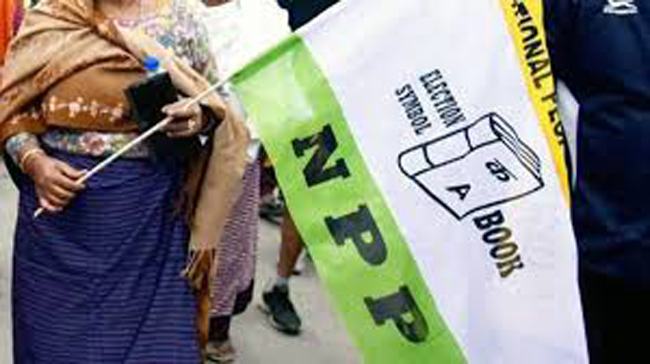
The Ichamati incident, especially the retaliation by non-tribals, stoked the fire. In all this, the one who should be blamed is the state government. The initial dithering of the Conrad Sangma government in May 2018, less than three months after his NPP toppled the Congress coalition government in Meghalaya, allowed the Harijan Colony skirmishes to flare up. The new government was late to react. For the first time since the advent of smartphones, the citizens experienced mobile data shut down. Curfews, which had become history, once again reminded the city of the past trauma.

Between the government’s indecisiveness and action, the pressure groups in Khasi Hills gained enough audacity to flex their muscles after years of lull. Their voices got louder over the months to come. The tabling of the Citizenship Amendment Bill and its enactment gave them enough reason to scream to a crescendo. The anti-CAA slogans suddenly turned into full-fledged pro-ILP slogans as the year came to an end.

The government faltered again. It yielded to the pressure too fast and decided to pass a resolution in the state Assembly supporting implementation of ILP. Only months before the CAA episode, the state had amended the Meghalaya Residents’ Safety and Security Act, making it more stringent and smart. There were elaborate plans to digitise the screening of visitors and it could have been as efficient as, if not more than, ILP. But the government, a coalition of four parties and independents, could not convince the protesting groups and instead decided on the resolution.

Opposition silent

The Opposition was the silent devil. It went with the popular sentiments and supported the resolution. Not once did it demand an all-party meet with pressure groups for a rational discussion. It must be mentioned that the preceding government, led by Mukul Sangma, had kept the pressure groups at bay and muted their demand for ILP. Then what made the now opposition leader to change his mind?

While the ILP resolution is “under the Centre’s consideration”, there are no clear indications from the coalition government on the plan to introduce the user-friendly digitized scanning system. With Assam ruling out ILP, chances that Meghalaya will get it are bleak. Moreover, the subject remains debatable in this time of economic growth. But the government did not consider debates as a measure to pacify the anxiety of the locals. It only left the embers to burn instead of dousing the fire completely.

Both the ruling and the opposition in the state knew ILP would be a tough bargain for the state and yet they went ahead with the resolution. Did Conrad Sangma want to prove that his government was truly a friend of the tribals? Did he think that by passing a piece if paper would ensure peace in the long run? Did he not explain to the pressure groups about the cumbersome procedure before ILP got Centre’s nod? Or was he buying time that he did not utilise to take a concrete decision? The case is not as curious as it is complex and there is no effort to untie the knots.

Vigilante rule spreading

In the past, the government had shown laxity in taming the pressure group members who were playing the authority and checking trade licences of non-tribals. The government’s lack of confidence, piecemeal efforts, half- hearted talks after every clash and absence of a time frame are only pushing the state towards a prolonged crisis. There are other crises too, like the Assam border tension, which the government has to sort out but instead it is indulging in festivals.

Meanwhile, the curfew is has been withdrawn completely and mobile net restored. The dizzying crowd is back in Bara Bazar. Also, the board examinations have come as a relief. But fear lingers. A sense of insecurity prevails among non-tribals. A sense of anger still burns among a section of the locals. Uncertainty looms on the near and remote future of the state. And the government remains unfazed.