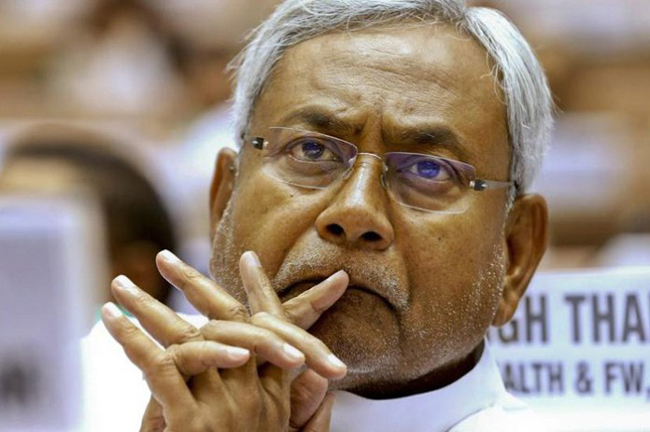
“Why has Chief Minister Nitish Kumar become inactive when he is supposed to be super active with the Covid-19 playing havoc in Bihar?”
This is the paramount question occupying the mind of those who have watched Nitish over the years. The question has gained ground because he loathed inactivity. In crisis situations, he acted with alacrity in the past.
For instance, he had resigned as the Railway Minister in the wake of a massive railway accident at Gaisal in 1999, owning the moral responsibility of the disaster that caused the death of over 300 passengers. The then Prime Minister, A B Vajpayee had asked him against putting in his papers but Nitish stuck to his decision, creating the perception that he was not a stickler to power.
Bihar has seen how effectively he dealt with the massive floods caused by the breach in the river Kosi at Kusaha in Nepal in 2008. The turbulent river had changed its course, obliterating thousands of villages and marooning lakhs of people in the Kosi-Seemanchal region. Of course the then Prime Minister, Manmohan Singh visited the flood hit region and released Rs 1000 crore for the relief. But Nitish got hyper active, setting up thousands of relief camps to shelter and feed the people. He camped in the flood hit areas for days, personally inspecting the quality of the food, medicine and clothes being given to the needy. He roped in various humanitarian bodies across the world to rescue the people. The media gave him a sobriquet of “Quntalia Baba” for giving a quintal of food grain to every family.
There is no way one can compare the 2008 floods and the Covid-19. In terms of enormity, the impact of Covid-19 is, obviously, more disastrous. To be fair to Nitish it can be easily said that Bihar didn’t expect the crisis of such a magnitude. In fact, the Corona is unprecedented and no part of the world had expected it.
What is new in Nitish’s context is his inability to respond. As the executive head of the state he knows that he rules over one of the poorest Indian states with over 12 crore people and has only 2792 allopathic doctors to cater to its dense population. He also knows that the doctor to people ratio is 1:43,778 against the national doctor-population ratio of 1:1800. The national doctor to population ratio too is short of the World Health Organisation’s (WHO’s) stipulation that is 1: 1000. What the Covid-19 has exposed thoroughly is his claim about improving the health infrastructure in Bihar. If at all his government has done something on the health front it is cosmetic in nature.
But what surprises Nitish watchers is the loss of his will to act. He has failed to utilise whatever resources he has and in the process has lost the trust of the people in distress that has caused a massive anti-incumbency against him. The first case of corona was reported in Bihar in March. A corona virus infected patient from Munger died at AIIMS in the third week of March—the time it had begun catching up with Delhi, Maharastra, Punjab and other Indian states. But the Nitish government, apparently, ignored it. The government did nothing to screen the suspected corona patients on the required scale. “Chalta hai (It’s as usual)”—this phrase aptly comprehends the psyche of the CM and his health minister from the BJP, Mangal Pandey—known more for “setting and getting” with his new bosses in his party than doing work related to public interest.
Bihar has over fifty lakh of migrant workers, working in other states. Affected by Covid-19 other states stripped these “outsiders” of their job and abandoned them. Nitish, initially, stopped them from getting back to their native places. The Prime Minister, Narendra Modi abruptly declared lockdown on March 24, compounding the distress of these workers rendered jobless and homeless. Lakhs of them travelled on foot for 1000 to 2000 miles to reach home. Thousands were packed like sardines in special trains which started in May to transport them. Hundreds died or fell ill on the way. The Nitish government set up over 15000 quarantine camps to keep them and serve them food and medicine. But it shut all these camps on June 15 when the total number of corona patients was below 5000 in Bihar. The Chief Minister is at loss when the state has got over 34000 people infected by the virus and the figure is rising with the alarming speed.
Nitish was known for guarding his image as an honest leader committed to the broader ideas of secularism and socialism and not showing undue greed for power. He resigned as the Chief Minister in 2014, getting dalit leader, Jitan Ram Manjhi in his place when his party lost massively to the BJP in 2014 Lok Sabha elections. He had publicly announced that he would leave the BJP if Narendra Modi was projected as the PM and sticking to his resolve he broke out from the BJP in 2013. Later, he joined the RJD-Congress grand alliance.
But after going back to the BJP in 2017, Nitish looks a pale shadow of what he was. The change in him gets reflected in his administrative decisions. He got K. S. Dwivedi, the controversial IPS officer indicted by the judicial commission for playing a partisan role in infamous Bhagalpur riots in 1989 as the Director General of Police (DGP) after he returned to the BJP fold. As recently as in May when the Covid-19 situation was worsening, he changed health secretary Sanjay Kumar who was believed to have better control over the department but was not in the good book of the BJP’s health minister, Mangal Pandey. Be it the appointment of Dwivedi as the DGP or removal of Sanjay Kumar as the health secretary—Nitish is believed to be taking such disastrous decisions under the pressure from the BJP.
The clouds of uncertainty loom over the elections due ahead of November in the state. It can’t be said with certainty who will win if the elections happen. But what is obvious is Nitish has lost his image as an active leader committed to the ideals of honesty, secularism and socialism.
The historic Hagia Sophia in Turkey’s Istanbul has been reconverted from a museum to mosque by the country’s Islamist-nationalist president and ruling AKP leader Recep Tiyyip Erdogan early this month. It has hit the headlines across the world including India since it has a big impact in global politics. As fanatics of all hues have found legitimacy in their mutual misdeeds across the time and space, Muslim fundamentalists have generally welcomed Erdogan’s move as he himself referred to destruction or denigration of mosques in European parts of former Turkish Ottoman Empire. Though he has promised to keep the huge complex to people of other faiths as part of Islamic tradition of openness, his political intentions are clear.
In Indian subcontinent, Erdogan’s apologists considered it a tit for tat on Hindu nationalist Modi government’s decision to build the Rama Janambhoomi temple at the very site of Babri mosque in Ayodhya, claimed as the birthplace of the Hindu god-king. But some rational-minded Muslim netizens have opposed Erdogan’s move on the ground of moral incongruity of this forced backward push to history’s wheel. They felt it would only justify RSS-BJP’s demolition of Babri mosque. The historic mosque, named after the first Mughal ruler of India was demolished 27 years back by the RSS Parivar, the ideological fountainhead of Modi’s BJP. On the other hand, the Parivar has denounced the decision but found vindication for their acts in Ayodhya as well as for their conviction that Muslims understand only language of coercion.
Interestingly, both Erdogan and Modi have used their country’s top courts to create legal trapping for social-political perfidies to the land’s secular republican constitutions. More worrisome is the deepest rots in our popular mindset across the world, from Turkey to India, Russia to America. The neo-con jingoists have succeeded to con most of us, at least for the time being in the name of Muhammad, Rama, Christ and Buddha. In this background, this two-part article is an effort to look back at the history of politics around Hagia Sophia and examine parallels in Erdogan and Modi’s moves as well as their huge implications in Turkish, Indian and global politics.
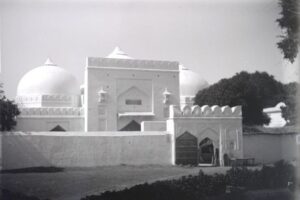
A photograph of the Babri Masjid-from the early 1900s. Courtesy: The British Library Board
Glimpses of Hagia Sophia’s History
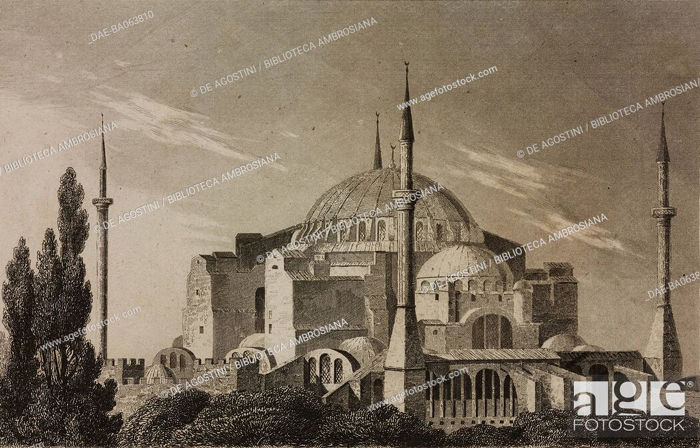
The majestic architectural marvel stands on the geographical bridge between Europe and Asia as well as cultural confluence of East and West at cosmopolitan Constantinople, first named after Roman emperor Constantine and later renamed as Istanbul after Ottoman conquest. The edifice was built by the Eastern Roman or Byzantine emperor Justinian I in 537 AD, though the constructions of its earlier edifices were credited to his predecessors. As Constantinople became the power centre of Christian Empire, more so after the fall of Rome as the cradle of Roman Civilization in the West, Hagia Sophia or Ayasofya became the grandest church of the mighty realm. It witnessed the theological-territorial schisms between the Roman Catholic Vatican and Orthodox Eastern Church based in Constantinople and changed hands between the two Christian sects.
After almost a millennium, the city fell to the siege of Ottoman armies under Sultan Mehmet II in 1453. It is pertinent today to note that it was no typical Christianity Vs Islam war, though memories of Crusades and Jihads for the control of holy land of Jerusalem ran deep. The ethno-religious tension between the ‘Latin’ Catholic and Greek-Russian orthodox churches as well as aloofness of major West European Christian powers helped the Islamic ‘Fatih’ or the conqueror to breach the fortified walls of the ancient citadel in May 1453 after a long siege. Also, there were Christians who led the Sultan’s army in his final assault. On the other hand, there were anti-Ottoman Turkish forces which perished by defending the Byzantine throne. Mehmet sacked the city, allowed his army to loot and rape for three days as it was the custom of medieval time and then pardoned the Christians.
The sultan renamed the city and converted the Hagia Sophia church into a mosque. But he neither changed its name nor destroyed the mosaics on its magnificent walls and the mighty dome which depicted Christ and his mother. But he covered them with plasters, added Islamic features around it including Minarets and inside a Mirhab, a niche in the wall of a mosque, at the point nearest to Mecca, towards which the congregation faces to pray. He even allowed Greek Orthodox Church to remain functional while allowing their rival Catholics to worship. Turkish nationalists would later laud it as a sign of his tolerant mindset. But historians pointed to his realpolitik concerns over Christian divisions as well as his further ambitions. Taking his claim to the inheritance of the fledgling Roman Empire, Mehmet II declared himself ‘Kayser-i-Rum’ or Caesar of Rome. He co-opted members of the family of the last Byzantine emperor and his nobility not only to pursue his claims to Rome but also to extend his realm in Christian southern Europe.
Although most powerful including the Pope in the Christendom were deeply wounded by the loss of Constantinople and wanted another Crusade, the balance of power was tilted towards Ottomans. Hagia Sophia remained the symbol of Islamic empire’s victory over the Christianity as the house of Usman/Uthman (hence, Ottoman in European corruption) extended their domain for another 400 years in Europe. They even laid siege on Vienna, the seat of Austro-Hungarian Habsburg Empire. The hereditary sultans became the Caliphs or temporal-religious heads of Sunni Islamic world (sans rival Shia Persia) while presiding over a vast multi-ethnic and multi-religious empire across two continents. In the meantime, they continued to add grandeur to Ayasofya and glory to their own power. They met Christian leaders from occupied Europe under the dome of Christ, albeit plastered.
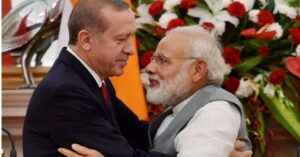
Turkey President Recep Tayyip Erdogan and Indian Prime Minister Narendra Modi (file picture) I Courtesy: daily-sun.com
For the next almost 500 years, the Ottoman religious ideology depended much on their political exigencies. The empire destroyed or denigrated some Christian monuments in ‘Rumeli’ (Roman or Rome-influenced) south Europe and built others or promoted syncretic culture as some of their contemporary Mughal monarchs did in Indian subcontinent. After all, Islamic theology not only derives its continuity from the patriarch Abraham from the Old Testament and recognizes Christ as an important one in the long line of the Biblical-Quranic prophets. But it rejects Christ’s divine birth and status as the Son of God, an essential to the Christian belief. Jews, Christians and Muslims are still called the children of Abraham.
Hagia in the era of Ataturk
The ideo-political import of Hagia Sophia changed again with the fall of Ottoman power in the wake of World War I during 1914-18. The victorious allied powers from the industrial West were keen on dividing mainland Turkey among themselves and residual Caliphate. They promoted religious nationalism in Christian Greece, Balkans and Armenia and Arab nationalism in West Asia. Turkish nationalist military officers under Mustafa Kamal Pasha, called ‘Young Turks’, fought successful wars against the Western powers but also wanted to industrialize their nation and modernize its culture a la Europe. They abolished dynastic Sultaniat and pan-Islamic Caliphate to get rid of Ottoman decadence.
His reforms included changes in Turkish language to make it Roman alphabet-based by replacing Arabic, the language of Quran enraged the Islamist traditionalists. His drives for secularization of education and culture including dress codes for men and women along with bans on public display of religiosity further distanced them. He along with his divorced wife, Latifa is credited with the creation of public space for Turkish women. Women are evidently more visible and instrumental in the social-political life of the land today than Saudi Arabia and Gulf countries.
Called the Ataturk or father of Turks, Pasha finally turned Hagia Sophia / Ayasofya into a secular museum as a reminder of multi-faith, multi-ethnic history of his land and its people by a state council order in 1934. Some historians say he intended it since the birth of the republic in 1923 but waited knowing well the storm would rage at home. This move has been the eyeball of the traditionalist-modernist or Pan-Islamist- nationalist clashes in Turkish politics and larger society till today. Islamists of all sheds inside and outside Turkey have been cursing the Pasha for this cardinal sin and sent him to hell for thousands of times.
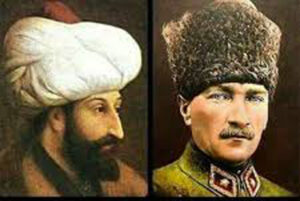
Sultan Mehmet II and Ataturk Mustafa Kemal Pasha I Courtesy: https://www.facebook.com/KARAHAYITKAPLICALARI
Some commentators pointed to Pasha’s geo-political moves on the eve of the WWII as he had converted Hagia Sophia into a museum from a mosque in 1934, reportedly to assuage the feelings of Christian Greece, Rumania and Yugoslavia. All these countries had joined him in signing the Balkan Pact of 1934, promising not to promote their mutual claims in bordering areas and keep the former Ottoman Europe out of the clutches of rising Hitler-Mussolini nexus and their clashes with the West. We must remember that both the WWI and II were triggered by the ethno-religious-linguistic violence within heterogeneous but fragile empires and countries with big minorities. Hostile powers manipulated the minorities to advance their own agenda while majoritarian home governments repressed minorities considering them the fifth columns.
This happened to Ottoman Empire too. War-time nationalist homogenization moves led to controversial ethnic cleansing of Christian Orthodox Greeks and Armenians from Anatolia and the rest of Turkish mainland. These triggered the exodus of Christian and Muslim populations, to the extent of almost formal exchange of population, between Turkey and Greece, Armenia and Balkans. Turkish nationalist Pasha was also accused of being part of it. Today Christians of all denominations together are a miniscule minority in Turkey.
However, faith was not the only determinant for nationalism of the Ataturk, the father of Turks as he was called. Kurds, though Muslim by faith, are the largest non-Turk ethnic people in modern Turkey have been insisting for a free Kurdistan along the Turku-Syrian as well Iran-Iraq borders till today. They have remained a thorn to the nationalist side since his days and part of big power ballgames.
In this context, his moves to turn Ayasofya a museum open to multi-faith people of Turkey and its neighborhood can be seen as an effort to douse the flame close to home before WWII. Though he died in November 1938, Kamalist Turkey remained neutral till the fag end of the war and joined the US-Soviet allied camp when Germany, WWI ally of Ottomans was almost defeated. Islamists resented his move for 86 years but could not turn the table on him till Erdogan; the neo-Ottoman did it on July 10, 2020.
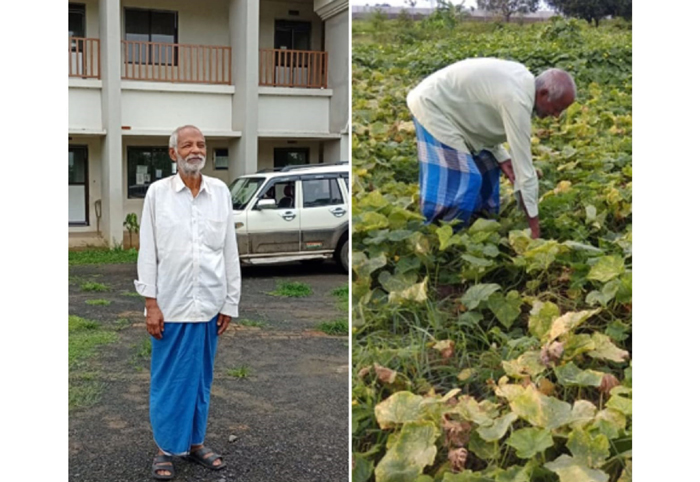
Kolkata: If you were to cross him on your way to Birbhum, famous for its terracotta work, you probably wouldn’t give him a second glance. If you saw him tilling the farm land you’ll only see a regular farmer busy at his work. A frail figure in a checked lungi (waist cloth) is a common sight in our country. What is not common though are the achievements of our students from rural India and that too as scientists of international repute.
Yes, of course we have our much admired A.P.J. Abdul Kalam, who made his way from a village to achieve great heights as a scientist and went on to become one of India’s most loved and respected Presidents.
Dr Munkir Hossain, the person described above, has been a post doctorate research scholar at various national and international institutes. After schooling from his maternal village at Bhimpur he went to Burdwan University where he did his master’s in Chemistry and followed it up with a PhD and later did post doctorate studies from the prestigious IIT (Indian Institute of Technology) Bombay.
Who is Dr Munkir?
“I was born in Khutkail village but there was no school there. Luckily my brother was born soon after my birth so my parents left me at my maternal grandparents’ house in Bhimpur which is just across the Pagla river. There was a primary school too. If that had not happened I would have remained illiterate,” chuckles the scientist as he recalls the fond memories of childhood days.
He credits his teachers at the village school for instilling in him the values he has and the thirst for knowledge that took him to far flung places and universities such as Taiwan and Japan.
Dr Munkir has over 55 research articles published in national as well as international science journals of great repute.
He is revered by all those who know him or have heard of him. The Vice Chancellor of Aliah University and former Professor, Department of Chemistry at Jadavpur University in Kolkata, Md Ali recalls the days at Burdwan University when he had enrolled for his MSc while Dr Munkir was doing his PhD there, “As an academician from such modest background Dr Munkir has definitely been an inspiration for others. I come from a village myself and seeing Dr Munkir do his PhD at that time seemed like a huge achievement in itself. I used to admire his sincerity and his simplicity. He led a simple life and used to be dressed in very simple attire, wearing the modest chappal (bathroom slippers) to class. He had no political leaning nor do I think he discussed religion. Though my interactions with him were very limited.”
After retirement in 2016 as a senior research scholar Dr Munkir opted to come back to his village.
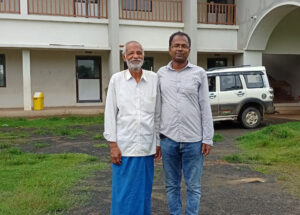
Dr Munkir Hossain with BSM’s Samirul Islam
After retirement, bought lands and providing free education for girls
At 67, he has given away all his earnings for the education of poor children on a 60 bighas (acres) plot of land that he bought in Bhimpur.
Dr Munkir had started his venture with the aim to empower the girl child. But he ran short of money. His objective is to spread secular knowledge and create scholars who will provide honest leadership.
“Out of the 26 students from our first batch which appeared for the WB Board’s Madhyamik examination this year, 25 secured first division. Five of them scored between 90 to 100 percent and six students scored between 80 to 90 percent,” shares the scientist like a father proud of his children’s achievements.
“His achievements as a scholar are unparalleled yet he lives in oblivion. He does not even own a mobile phone. He spent his money getting his brother’s daughters married and with the rest he bought a plot of land to promote education. He is a Sufi scholar, a Saadhak,” says Samirul Islam, Assistant Professor at Shyampur Siddheswari Mahavidyalaya and President of Bangla Sanskriti Mancha.
Future plan: A maternity hospital
That’s not all. Dr. Munkir also wants to set up a Maatri Sadan (Mother and Child care) hospital that will have women administrators and hopefully women doctors as well. The institute at present provides free education from school till the post graduate level besides free hostel facilities. It occupies 37 bighas. The remaining 23 bighas of the plot will be used for the Maatri Sadan.
“Let’s not forget that our mother is our first teacher. It is on her lap that we get to hear stories and tales of good and bad, right and wrong. Habits formed during childhood last long. It lays the foundation for a healthy outlook and consequently a healthy society. As of now only girls from the local village are getting education here because we don’t have hostel facility for them. I’m hopeful that soon, like the boys who come from far off places, they too will be able to get quality education and hostel facility with wholesome food free of cost,” he shares with conviction.
The scholar reminds us that society is an extension of our family. “We need to improve social values. We are losing our heritage and culture. Even the villages are not free from such degradation. My intention is not just to give my country educated individuals but youth who can rise above vices like corruption and greed for money or power,” says the man who chose to remain unmarried so that he would be free to serve society.
Epitome of simple living and high thinking
For his own sustenance he takes farmland on lease from the villagers and cultivates onion and vegetables and also grows mangoes. “I was born in a very poor family. We barely could manage one meal a day. So I’m a light eater and hunger does not bother me. But I don’t want other children to be deprived. The only way to get out of poverty is through education,” says the scientist in answer to how he manages to lead such a frugal life.
All his life he owned only two sets of pants and shirts and has toured across the globe in them.
The man himself fasts for 360 days a year, hasn’t skipped his prayers since the time his primary school teachers taught him how to pray and sleeps at the mosque. He is critical of such religious preachers who spread hate and create rift between communities. He stresses on the importance of secular knowledge combined with spiritual knowledge to tide over all the ills plaguing our society today.
“What we see around us today is a result of ignorance. I hope more people come forward and join hands with others to create a society that is not just secular but one that thrives on peace and prosperity,” says the scientist turned social activist with a conviction that’s difficult to ignore.
Taking a cue from Tagore’s Ekla Chalo Re, which Dr Munkir quoted, the indomitable spirit of the scientist is persistent in its resolve to serve the society. He has joined hands with Bangla Sanskriti Mancha that works for the welfare of downtrodden and has been closely associated with the relief work during the lockdown and cyclone Amphan, to provide the relief works to the affected people.
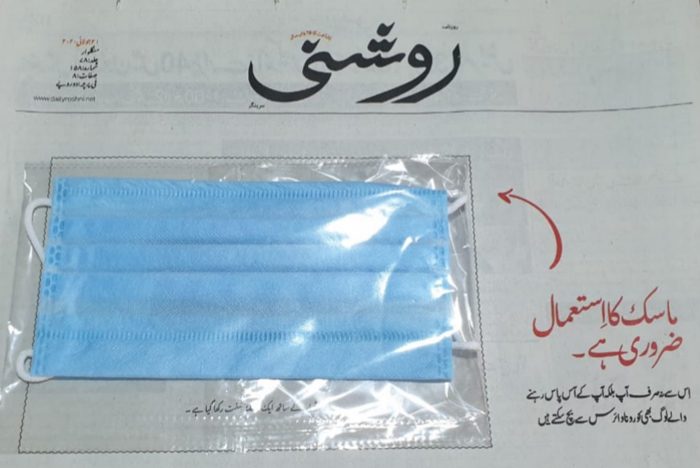
Delhi: In an attempt to create awareness about the use of masks during the Coronavirus pandemic, on Tuesday an Urdu daily published from Srinagar distributed a mask for free along with each newspaper. On the front page of Urdu daily Roshni, the caption besides the mask read, “Mask ka istemal zaroori hai” meaning “It is necessary to use (wear) a mask”.
“We decided to take this symbolic step after seeing many locals without a mask,” said Zahoor A Shora, editor of Roshni, speaking over the phone from Srinagar.
“Many people still think that Coronavirus is nothing but a hoax. What they are not realising is that by not wearing a mask, they aren’t just risking their own lives, but also those of others around” he said. “Since now even asymptotic people are testing positive, it becomes all the more important to wear a mask,” Shora warned.
When asked whether this was just for a day or the newspaper would continue to distribute more of these in future? Shora replied, “It is not financially viable for us to do it on a regular basis as even an ordinary mask costs more than the price of our newspaper.”
According to him, Roshini is priced at Rs. 2 and had to go through losses due to constant lockdowns since August (Kashmir is under lockdown since August 5, 2019 when Article 370 was abrogated) last year. “In any case, the idea was to spread awareness, not distribute masks,” he added.
He hoped that with this, people would realise the gravity of the situation and help each other to come out of it. The newspaper also published an editorial note on the front page explaining the same and the responsibility of the different stakeholders, along with data related to Coronavirus in Jammu and Kashmir.
According to Srinagar based journalist Zahoor Hussain Bhat, this is an important gesture on the part of the newspaper as people in Kashmir were taking importance of wearing masks very lightly.
On Monday, Jammu and Kashmir recorded its highest single-day spike of 751 coronavirus cases. According to a news report by India Today, ten new deaths were also registered in the last 24 hours, taking the toll to 254.
There are now 6,122 active cases in the Union Territory, while 8,274 patients have recovered. Officials said that Srinagar district recorded the highest 171 new cases on Monday.
“While the numbers surge, experts believe that wearing face masks and maintaining social distancing are the strongest tools to save one from coronavirus,” the report added.
The last post on Khalid Saifi’s timeline was – “Please contact the number mentioned below if Ambulance or Medical team is required anywhere in Delhi. Pls mention proper Name, Address and contact person.” The post dates back to the very day he was arrested by Delhi Police – 26 February 2020.
Five months down the line his family, comprising his wife and three kids, is left with no option but to make repeated attempts to get him out on bail, while Delhi Police, and the special cell set up to investigate the Delhi Riots, have successfully managed to stall his bail and also got an extension to file their chargesheet.
Who is Khalid Saifi?
Khalid, with a group of friends, had set up a civil group called United Against Hate (UAH), which has played a vital role in raising a voice against mob lynching at the national capital as well as across the country.
eNewsroom reached out to Nargis Saifi, wife of Khalid Saifi, to find out about the man accused of rioting leading to loss of lives and property. A distraught Nargis mentioned, “He is the best husband anyone could ask for. He is the best abbu (father) any child could have, but, above all this, he is a great human being. My husband, a businessman by profession, chose to become an activist at a time when India was witnessing several mob lynching cases. He used to tell me if we don’t raise our voice then who will speak for the oppressed.”
“They have even raised funds to support the families who have lost family members to cow vigilantes. UAH had even reached out to the family members of the UP police officer (Subodh Kumar Singh) who was shot dead by a mob. They even extended legal support to the family,” recounted Nargis.
But, according to police and several media reports, Khalid is the connecter between student activist Umar Khalid and former AAP leader, who is now a Delhi-riot accused, Tahir Hussain. Khalid has also been accused of having met Zakir Naik in Singapore. The police are pointing fingers at the fund received by his NGO. The donation in question was allegedly made by a Singapore-based businessman and the police believe that this fund was used to fund the Delhi-riots.
“The police have wonderful theories like the now-famous conspiracy theory where they have accused my husband of plotting the riots with Umar Khalid and Tahir Hussain. But there is no truth in these stories fed by them to the media, who are ready to scavenge on any piece of meat to build sensation,” said Nargis. She paused and continued with a laugh, “If they had the evidence then do you think they would have asked for another extension to file the chargesheet? They have kept him behind bars for months but are unable to file a chargesheet till date.”
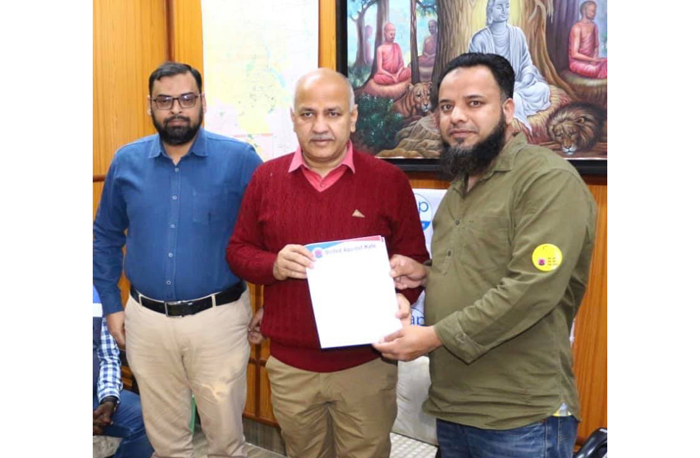
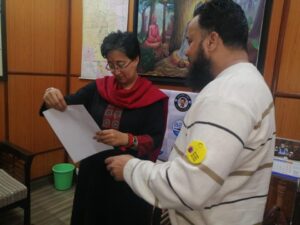
Khalid Saifi giving a memorandum to AAP leader Atishi Marlena
Tryst with NRC
When the first list of the National Register of Citizens (NRC) was published a fact-finding team, comprising members of UAH and senior journalists, had traveled to Assam. According to Nargis this was the turning point. “The helplessness of the people in Assam made him and his team pledge to create awareness regarding this anti-constitutional law. We have our documents to prove our citizenship, but what about the people who do not have such documents despite being citizens of India? And thus began UAH’s dedicated campaigning against NRC, NPR and CAA,” she shared.
After a pause she added, “We had anticipated that this kind of situation might arise, but we had never imagined that it would arise so soon. Anti-CAA-NRC-NPR movement was at its peak when the Delhi riots happened. On the day he was arrested I vividly remember that he was busy arranging for ambulances in affected areas.”
A customary glance through Khalid’s FB profile authenticates her claim. Pictures of him submitting letters to AAP leaders demanding the non-implementation of NRC-NPR and CAA. His organisation UAH, apart from dharnas during the anti-CAA-NRC-NPR movement, even organised anti-CAA-NRC-NPR workshops with former civil servants like Kanan Gopinathan to create awareness about the loopholes and dangers of the proposed controversial laws.
“He was very vocal about his reservations against these laws which are anti-poor and anti-marginalised. I have a feeling that my husband is being framed for becoming a strong opposer of these anti-constitutional laws,” she said.
Khalid is being targeted to demotivate dissenters
Speaking over the phone, Nargis didn’t mince words and declared, “My husband went walking with the police to Jagatpuri Thana when he was arrested from home on February 26, 2020. When our lawyers reached the police station they were assaulted and abused. They refused to let them meet Khalid. Very late at night we received a call from Khalid stating that he would be shifted to Mandoli jail. By then, I am assuming, they had produced him before the magistrate without giving him access to his lawyer or family. By doing so they denied my husband his right to defend himself.”
However, according to Nargis, the real shocker was yet to come. When she, along with her in-laws, reached the jail to meet Khalid, they saw across the plexiglass separation that her husband was entering the room on a wheelchair. “His legs were plastered. His hands were bandaged. His hair and beard told tales of torture. There were scratches on his face. I still can’t express how it felt when I saw him for the first time in jail. I fail to understand why Khalid is being punished like a hardcore criminal?” She asked as her voice quivered recalling the telltale signs of police torture. And then she rhetorically answered, “I guess the government feels that this is the only way they can crush the voice of dissent. Khalid was a known face, a leader of the movement. If Khalid is being subjected to this kind of torture, abuse and defaming, then it might force other dissenters to go silent.”
Pandemic an excuse to hound activists
Nargis further stated, “I refrain from talking to mainstream media. They can break and mould words to suit their agenda, which at the moment is to show dissenters as anti-national.”
The pandemic, she maintained, is being used by the central government to hound the faces that were at the forefront of the movement. “Right from Safoora Zargar to Varvara Rao to Dr Kafeel, you can see how strong voices are being targeted and harassed, so that they breakdown into submission,” she said.
Nargis maintained, “The Apex Court, due to the pandemic, had asked those in authority to release prisoners who don’t have serious charges against them. Rapists and terror accused have been let off, but political prisoners have not been released. Quite clearly the rapists and terror accused pose no threat to the present regime since they won’t question the government’s wrongdoings even though they pose a serious threat to society. But those like my husband remain implicated in false cases for which the police will take their own sweet time to file the chargesheet.”
She also added that her husband is diabetic, which is a co-morbidity factor in Covid-19 cases, and she cannot deny the health risk involved with her husband being in jail during the pandemic. “One positive case of Covid-19 was detected in the jail where he has been put up. Varvara Rao has been infected with this deadly disease. So the risk is high, especially when different police officers are interrogating him, taking him to places on the pretext of investigation. He can get infected any time.”
Faith in judiciary
On being asked if she is hopeful of Khalid getting bail soon, she said, “We have faith in the judiciary. Also, we know that Khalid is being framed. He is innocent. The police, even after five months, are seeking extension just to file a chargesheet. This shows that there is no evidence against him. I have faith in Allah and the Indian judiciary.”
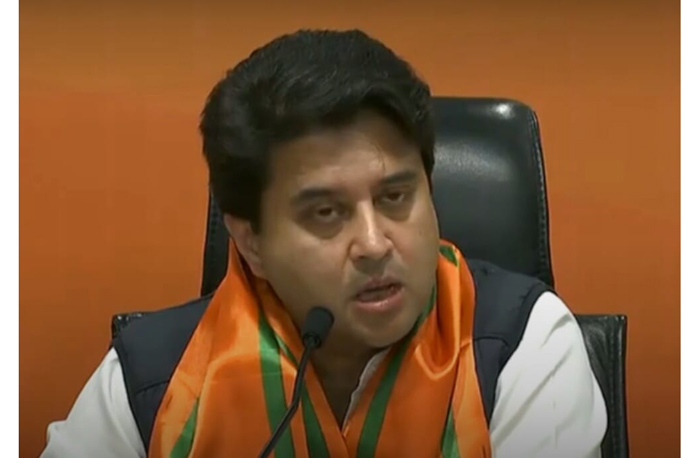
The Bharatiya Janata Party (BJP)’s central leadership gambled in Madhya Pradesh when it gave too much importance to Jyotiraditya Scindia by persuading the State unit to induct as many as 11 of his supporters (none of them a member of the Assembly) in the 34-strong Council of Ministers and allot all of them important portfolios —- in spite of strong reservations of the State leaders. The BJP leadership was apparently hoping that Scindia, who was already in touch with then Rajasthan Deputy Chief Minister Sachin Pilot, would deliver the Congress-ruled Rajasthan to the BJP. The generosity shown to Scindia’s non-MLA supporters was perhaps meant to assure the Congress MLAs of Rajasthan that they would also be looked after well once they quit the Congress, as had been Scindia supporters in Madhya Pradesh.
Rajasthan Chief Minister Ashok Gehlot, however, turned out to be smarter than his party counterparts in some other States. He acted promptly and struck before the BJP could take the initiative, with the result that the BJP leaders were trapped in a very embarrassing situation. The BJP government at the Centre controls agencies like CBI, ED, NIA, and Income-Tax Department which the party has been using against its political opponents with utmost knavery. Even if the BJP is ultimately able to dislodge the Gehlot government by hook or by crook, BJP itself would not be left without permanent scars.
By raising Scindia to an unexpected eminent position, the BJP has taken a risk in Madhya Pradesh also. When Scindia engineered downfall of the Kamal Nath government and the BJP government was installed headed by Shivraj Singh Chouhan, the middle-rung and lower-rung BJP leaders were hoping that Scindia’s role was more or less over; at most, he would be busy now mostly at the Centre, having acquired Rajya Sabha membership in exchange for bringing down the Congress government. Their hopes were dashed with the inclusion of the large number of Scindia supporters in the cabinet with high-profile departments entrusted to them, leaving some old timers in the party fuming.
There are now 26 vacancies in the Assembly – two caused by the death of members – one each of Congress and BJP, 22 Congress MLAs had resigned to support Scindia’s move to topple the Congress government and two more Congress MLAs were recently lured by BJP and made to resign from the Assembly. Even as 24 of them are claimant to the BJP ticket for the by-elections expected by September, at least 14 ministers (11 Scindia supporters and three others who had resigned along with them) are sure to be nominated. This is causing a lot of heart-burning among the BJP rank and file, particularly as they had all their lives been made by the party to shout slogans against Scindia.
Shivraj Singh Chouhan has his own reasons to be aggrieved. He had been a vitriolic critic of Scindia. That’s why the party high command had assigned Union Minister Narendra Singh Tomar the task of negotiating with Scindia the price of topping the Congress government. Chouhan’s humiliation continued when he was asked to accommodate so many of Scindia supporters in the Council of Ministers, denying chance to Chouhan’s close associates. In the allocation of portfolios to Scindia supporters also, Chouhan was overruled. Scindia is said to have assured victory of his supporters in the by-elections. If Scindia succeeds, Chouhan’s position in the BJP will be irreparably dented. The question is: will Chouhan, wily as he is, accept that demurely?
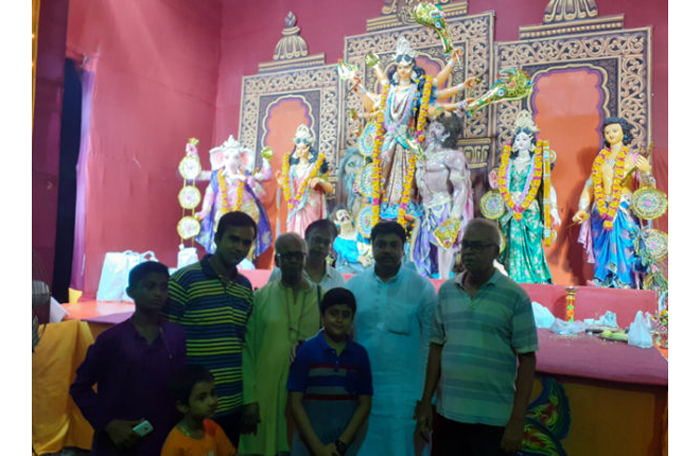
Kolkata: A forum, which represents more than 350 Durga Puja committees in Kolkata, has come up with a broad-based code for holding Pujas amidst Covid-19 pandemic, bringing cheer to the emotionally-charged Begalis and pandal hoppers.
The Forum for Durgotsav Working Committee at its meeting on July 10 accepted suggestions from Puja organisers on how to hold the event in Kolkata. The 17-point code list was released by the forum recently.
The much sought after Durga Puja this year falls between October 22 and October 26.
In this Covid era the celebrations will be muted, feel the forum members as well as the organisers of big-ticket Pujas. Among the many codes, the list mentions that the height of the idol has to be kept low which will allow municipal authorities to sanitise it better on a daily basis. Also, there are suggestions that the pandals have to be designed in a manner so that visitors can view the idol from a distance, without entering the main area. There will be barricades which will encourage social distancing. Masks, thermal screening and sanitisers are a must for all visitors.
The forum is also appealing to pandal hoppers to visit pandals throughout the day and not just in the late evening hours. Only whole fruits will be offered to the goddesses, while visitors can buy readymade food from the stalls. There will be no provision for sitting arrangements at the food stalls.
Even the Chief Minister Mamata Banerjee greenlighted holding of Durga Pujas in the state on Wednesday saying that the Pujas will be held smoothly and that it is a battle for everyone and has to be fought well.
Saswata Basu, secretary of the forum, who also holds the post of secretary for Hatibagan Sarbojanin Durgotsav Committee, said, “Our body represents all major Puja committee members and it is their collective suggestion. Though we haven’t held any meeting with the government on this, the organisers were eager to know what we felt.” On the attempt to limit overcrowding, Basu said,
“We have seen that during night, more people come out, which is not advisable now. We are asking pandal hoppers to divide their time equally between the day and night. Since there is more dazzle at night due to the lighting arrangements, people love to see that.”
But the forum secretary insists that nothing is concrete at the moment and the codes might change later as per the prevailing situation at that time. “The way positive cases are rising, we will take a fresh call after another month or so. We still have three months to go. This is the biggest festival for Bengalis. We must also not forget that it serves as a livelihood to many, which is worth Rs 50,000 cr. For us this year the celebrations will be a moral compulsion,” said Basu.
Cultural secretary of Hatibagan Nabin Pally Durgotsav Committee and a forum member, Amitabha Roy, said, “We will follow government guidelines whenever it is issued. What we have done is a broad guideline with which all organisers are moving forward. We do not know what the circumstances will be in October. Since budget is a big issue, holding cultural functions looks far fetched right now.”
The Puja organisers are also in a state of flux. Ashok Ojha of Md Ali Park Puja committee said, “We have written letters to the mayor of Kolkata and also to our local councillor, Sudip Bandopadhyay about fire permission few days back. Since last year the puja was held at a different venue, we are not yet sure about the venue. We have also mentioned in the letter that we will follow all the guidelines which will be laid out by the government.”
“We haven’t received any instruction from the mayor yet. Also, the forum has not received any instructions from the government. We are presuming nothing concrete can be known before August. For us, all our planning has gone for a toss. We are hoping to celebrate a traditional puja this year, bereft of all the ostentation. We have not yet made bookings for the idol, pandal or the lighting. We may not even get 100 days to prepare before the Pujas. If the situation turns for the worse, only our committee members will participate in the celebration,” said Ojha.
I had begun the overview of the history of Indo-China conflict with the question: Can a student of history afford a sense of sadness over the missed historical opportunities for making another world possible? I admit that my melancholia has deepened while revisiting those days of miscarriage of high hopes for a decolonized world free of orgy of subjugation and exploitation, both internal and external as well as end of wars in the name of big nation’s ‘manifest destiny’ and ‘rightful place in the world’.
I have tried to enumerate the tolls of the tectonic fractures in global Communist camp since the sixties, more influenced by nationalist and geo-interests of Soviet Union and China than their ideological rifts, as well as its deadly impacts on Left and Non-Aligned Movements. It was deeply instrumental in the Pyrrhic victory of the US-led Western colonial and neo-colonial powers in the post-WWII Cold War. Soviet Union ultimately suffered massive implosion in the early nineties due to long-drawn internal and external pressures. Its invasion in Afghanistan in 1979 not only became the final catalyst for its disintegration to the eternal glee of the US-led West but also triggered the new waves of clash of religious fundamentalists of all hues across the world, primarily thanks to CIA-Saudi-Pakistan axis.
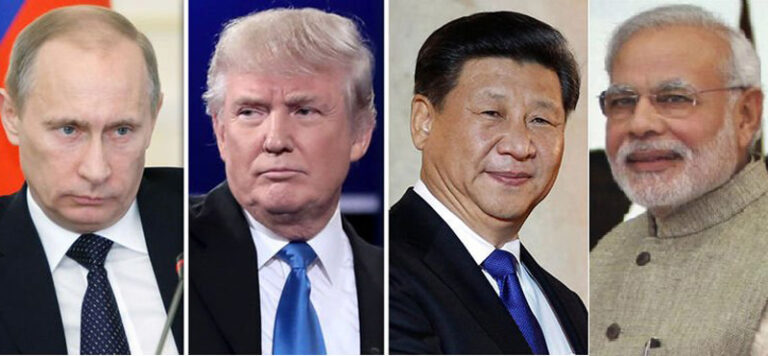
Now Russia under neo-fascist Vladimir Putin is fast resurrecting the legacy of the Tsarist Empire in active collaboration with the deeply conservative and ultra nationalist Christian Orthodox Church to get back its former superpower status, ironically of Stalin-led Soviet days. Its territorial claims in Ukraine to Georgia and proxy wars have set the tune for new Cold War with the US and its NATO allies. Officially, Lenin’s Russia is back to God now, thanks to godly Putin’s new constitution that allows him to be in the office almost for life like his buddy and China’s new strongman, ‘papa Xi’.
Putin’s soulmate Donald Trump has reasserted the reign of white supremacist, Islamophobic, conservative Christian and ‘America First’ policies of far-right Republicans which have even embarrassed George W Bush during the latest explosion of Black rage after the murder of George Floyd by White police across the land. How can we forget the junior Bush who had presided over the US during catastrophic 9/11 terror attacks on Twin Towers by the CIA-Pentagon’s Frankenstein, Osama Bin Laden and his Al Qaeda? Foxholed in a desert hideout during the attack, this collaborator cum crusader against Jihadi terror devastated Afghanistan, Iraq and Syria to create the cradle for another monster, ISIS. Across the Atlantic, Putin and Trump’s ‘family values’ are now anti-women, anti-LGBT and against ‘other queer people who are violating God-ordained natural-social order’.
Italy’s Salvini, Hungary’s Orban, Turkey’s Erdogan, Israel’s Netanyahu, Brazil’s Bolsenaro and India’s Narendra Modi– to name a few of the world’s other rulers– now confirm the rise of ultra nationalists, neo-fascists as our destiny-makers. These dictatorial males are unabashedly patriarchal, religious bigots or social conservatives and pathological liars. United in their love for corporate-led growth and market fundamentalism while being hateful and suspicious of poor and marginal communities, these demigods are also angels of death to the environment and plunder of natural resources in their role as patron saints of global resource wars.
Nelson Mandela I Courtesy: edtimes.in
In the East, ‘reawakened China’s new helmsman, Xi Jinping is said to have amassed absolute power, unprecedented after Mao. Mao’s dream for a socialist China with ‘relentless class struggle against internal capitalist-roaders’ died with him. The high priests of Post-Mao China have been chanting mantras for the market-state marriage to create a Chinese brand of socialism which has gradually won the internal discourse since the late eighties. They have gained popular legitimacy among Han majority, particularly among the neo-rich urban middle class, by cleverly manipulating Mao’s nostalgia for imperial glory to their end while discarding his egalitarian socio-economic ethos and affinity to poor peasantry. The one-party state capitalism under the red banner has reinforced ancient Confucian bureaucratic norms that harp on obeisance to social-political power hierarchy.
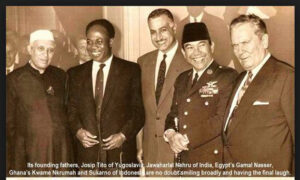
In the NAM states, ‘moderate and neutralist’ Nehru’s vision of a secular, socialistic and democratic India has gradually faded away under his successors. Today’s claimants to India’s civilizational glory dismiss his brand of composite nationalism and mixed economy. His ‘radical-turned pragmatic’ partners — Joseph Broz Tito of Yugoslavia, Fidel Castro of Cuba and Abdul Gamal Nasser of Egypt too have withered away. Their realms have either disintegrated by ethno-religious wars or mellowed down before market fundamentalists and US-led ‘free world’ after their death.
In Africa, Patrice Lumumba, the prime minister of Belgian Congo, today’s Zaire who advocated Pan-African identity over tribal differences and nationalization of diamond and other mineral mining from the centuries-long plunder by the European companies was brutally murdered by CIA- Belgians and native military in 1961. Ghana’s Kwame Nkrumah, Kenya’s Jomo Kenyatta and Tanzania’s Julius Nyerere—all the stalwarts of anti-colonial movements and first rulers of their lands after freedom too later lost their wider vision on socio-economic changes and compromised with the neo-colonial West, sometimes to save their own power only.
In the US, both Martin Luther King and Malcolm X were killed irrespective of their ideological differences on violence and Black power. The veteran of Algerian national liberation struggle and West Indian thinker Franz Fanon who had dissected minds of both white colonizers and black colonized to formulate new ideas about revolutions died of cancer. Steve Beko, younger to all of these leaders-intellectuals but in the same line of the last two through his ideas on Black Consciousness, was beaten to death by South African Apartheid regime in 1977. The most towering black leader of the land, Nelson Mandela was jailed for 27 years by the racist white power. Madiba survived to see and preside over post-apartheid SA but left a deeply divided State and society.
The last epitome Afro-Asian-Latin American unity and quintessential Internationalist Che Guevara was killed by CIA and Bolivian military Junta in 1968. Despite the success of armed liberation movements in Indo-China and Africa (Angola, Zimbabwe and Mozambique), fratricidal fights along ethno-nationalist lines gradually killed the possibilities of a global renewal of revolutionary and democratic internationalism. The giant idealists were discarded as hyperopic and replaced by myopic dwarfs across the postcolonial world.
A parting view on India-China situation
The current hide tide of Chinese nationalism is the ‘consequence of massive domestic propaganda’ since the early nineties. Will Hutton, a British China-expert who advocates co-opting of Beijing in the global capitalist system more mentioned it in his book, writing on the Wall, China and the west in the 21st century (Abacus, 2007). As the Chinese communist party top brass including military generals keep on their annual stocktaking of growth in ‘comprehensive national power’, the party asked its central propaganda department in 1994 to focus on ‘patriotic education’. Brainwashing of Chinese students begins from nursery to universities with ‘scant regard for historical truth’.
Quoting non-government Chinese sources, Hutton said: “suppression of inconvenient truths- such as the expansion of Qing dynasty… Chinese atrocities during the war against Japan- are downplayed or ignored. There is no mention of China’s recent wars. There is almost hysterical paranoia and distrust of foreign intentions.” Chinese refusal to accept the universality of Human rights and denial of the oppression on Tibetan-Uyghur-Mongolian people’s goes hand in hand with its apologists’ paeans to the almost total ‘Hanification’ of China and consequent ‘national unity’ as a crucial factor behind its ‘current colossal strides in the economic and military fronts’. These are no less sanctimonious than American-European hypocrisy on human rights violations in China.
Hutton feared that Chinese leaders, ‘having chosen to ride the nationalist tiger, could easily find that it rounds on them, forcing them or their successors into warlike actions to match their words’. It may explain the incumbent Xi Jinping regime’s behaviors as it has triggered more border clashes not only with India but also with its eastern neighbors around the South China Sea, from Japan to Philippines. As I had mentioned earlier, China is flexing its economic and military muscles, the first more for now from Gabon to Greenland. It is not aimed at creating a multi-polar world with poor and middle income nations and their peoples to get their just shares of wealth and income as Xi claimed but to make the 21st century a Chinese century.
India Today
Despite the belligerent rhetoric, India is actually imitating China today. A resurgent and hysteric Hindu nationalism of Narendra Modi and Sangh Parivar is calling for complete Hinduization in the name of ancient Hindu civilization. School textbooks are being saffronized completely to replace the ‘sicular-libtard’ history with Hindu hyper-nationalist hagiography and mythology. Any opposition to the overcentralization of Indian nation-state and demolition of democratic structure to impose a permanent one party rule under the mantra of ‘Ek Desh, ek Bidhan, ek Nishan aur ek Neta’ is being labeled as ‘anti-national’ and getting ruthlessly steamrolled. Modi’s ‘aspirational India’ wants to be the next superpower on the strength of predominantly young population available for cheap but skilled labor, the so-called ‘demographic dividend’, increasing the middle class market and service sectors. Hoping to turn Corona pandemic into an ‘opportunity’, Modi has been trying to lure global finance capital as well as multinationals who may fly out of China and chose India as its major investment beehive and new assembly lines for smart-phones to fighter planes. He has also called for building a ‘self-reliant’ and making ‘local brands global’ to boost Indian manufacturers, mainly the regime’s crony capitalists.
Chinese fleet at South China Sea I Courtesy: moderndiplomacy.eu
The Modi regime’s contests with China in economic and military fronts are deeply linked to ongoing war between US-China rivalries for global hegemony. India’s military involvement in US-led naval exercises in Indian Ocean and South China Sea is aimed at checkmating China’s mighty One Belt One Road (OBOR) project in Indian neighborhood as well as encirclement of sea lanes crucial for Beijing’s oil supplies. Donald Trump-led US establishment is more than happy that India is finally coming out of the Nehru-era non-aligned mindset and firmly joining its camp against its current main challenger.
Without naming China, Modi thundered before the Indian troops after the June 15 clash in Galwan valley that the ‘world has made up its mind for fighting the ‘expansionism’. India will continue to expand its strategic border security infrastructure for better movement of men and materials, he asserted to undo the damage to his brave nationalist image done by the killings of 20 Indian soldiers. The claims of more than double Chinese casualty was also meant for assuaging the hurt ego of his core constituency– Hindu upper caste males in the greater Hindi heartland.
The bitterness between Beijing and New Delhi notwithstanding, I would like to draw the reader’s attention to the fact that both countries are now part geo-political resource wars between groups of market and growth fundamentalists aspiring to neo-colonial powers. The votaries of top-down ‘development’ and ‘trickled down prosperity’ are ruling the roost, both in China and India. Their resource war is turning the Tibetan plateau, the third pole of the world and Water tower of Asia into a highly compromised climatic zone already vulnerable due to global warming. Lives and livelihood of Millions of poor and marginal people in south and south-east Asia depend on trans-boundary major rivers including Howang Ho, Yangtze, Mekong, Sind, Brahmaputra and Ganges. They would suffer more droughts and floods as well as air and water pollution due to mutual choking games on the roof of the world.
Another world is still Possible
Nevertheless, I share the optimism of the new generation and believe that another world is still possible beyond narrow national interests. Rays of new hopes are refusing to die, from Rosava to Seattle. But first, ‘let the dead bury their own dead’ as the Biblical saying goes. Youth today should not repeat the follies of the dead of earlier times and half-dead like us. Particularly, we must bury our blind faith in the infallibility of the prophets including their current avatars.
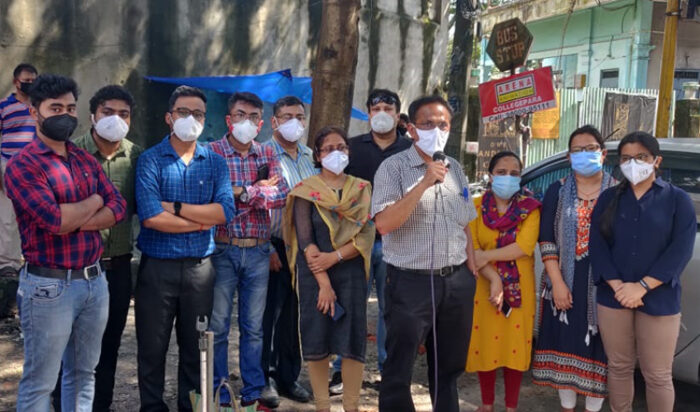
Kolkata: With India battling the ever bulging number of Covid-19 positive cases, panic and chaos amongst patients and their family members are constant. How bad is the level of infection, what does one do next, does it require hospitalization and, most importantly, how to face a hostile society, are some of the problems patients face.
A group of Covid survivors and family members of survivors have now turned into warriors with an aim to guide and counsel patients and their family about the dreaded virus.
The motley group, Covid Care Network (CCN), initially formed with seven members, including a model, a mountaineer, a musician and group of doctors, is expanding and transforming into a formidable force in its fight against the highly contagious virus.
And, ever since starting work from July 1, CCN members are facing new challenges on a daily basis as the number of cases rise.
Well known model Madhabilata Mitra, whose 74-year-old mother tested Covid-19 positive, and fortunately got cured after 22 days of hospital stay, has learned a lot about the virus during this difficult phase. “During my mother’s hospitalization, I interacted with a lot of patient parties, doctors, nurses and gained medical knowledge, which is now giving me the confidence to handle the situation better. Now that I’m working towards alleviating fears from the minds of people I’m coming across peculiar problems,” informed the model who is also a trained mountaineer.
Talking about CCN, Madhabilata says that while discussing about the problems she faced during her mother’s illness with mountaineer Satyarup Siddhanta, whose maternal uncle was also infected, they realized a need for dedicated people who can guide and counsel the patients and their families. They also discussed the matter with Dr Yogiraj Ray, an infectious disease specialist at ID hospital in Beliaghata, who too felt the need for such a force.
CCN is now bolstered with the addition of senior doctors like hepatologist Dr Abhijit Chowdhury, cardiologist Dr Arijit Ghosh, surgical oncologist Dr Diptendra Sarkar, Dr Parthasarathi Mukherjee of Liver Foundation, among others. The network also has violinist Pallab Banerjee as its core member.
Service to Society
The members realised that there is very little knowledge about the disease and what is required to be done if a patient needs home isolation/quarantine or hospitalization. “We all learned the hard way and so we decided to help people like us, who are facing the problem,” said Madhabilata.
The network gets regular updates from the state health department about new cases and the volunteers then call them up to counsel them. But CCN also wants people in distress to call them directly, for which they have started a 24×7 helpline number 18008891819.
“We recently had a case in Siliguri where a family with covid positive patients was barricaded by the local people and were not allowed to come out even after they had served the required quarantine period. Doctors from our team had to go there to make the local people understand and soothe frayed nerves,” cited Madhabilata.
Dr Jogiraj Ray has been associated with multiple such networks. One of them is Covid Survivors’ Club in Berhampur which caters to the economically backward section of society. “These survivors are allaying fears in people. I have come across corona positive patients who have been treated very badly by society. There are many taboos and ignorance surrounding coronavirus which needs to be broken. And this can happen only when more cured patients come forward to serve the society. I troubleshoot over the phone and guide network volunteers,” said Dr Ray. He believes that with more volunteers it will take the load off the doctors, who are overburdened with patients at the hospitals.
When asked about hospitals running short of beds for Covid patients Dr Ray said that most patients with even mild symptoms are getting themselves hospitalised out of fear of facing a hostile society. Such patients are draining out the government and human resources.
“For home care we need support. Doctors can guide about the basic process, and tell patients what they need to do. But during the 14-day quarantine you may have many queries. Also, if a patient develops complications, how and where can they find help, is still a gray area. This is where CCN comes in,” said the infectious disease specialist.
Problems Galore
Another core member of the network, Satyarup Siddhanta has encountered peculiar problems which they did not envisage earlier. “We came across cases where doctors are not willing to write prescriptions for a Covid test. So our network’s medical practitioners are now writing these prescriptions. We see that asymptomatic patients, who prefer to stay under home isolation, are unable to do so due to societal pressure. Another problem is with patients who have been cured and have served their 14-day isolation. Since patients no longer require tests after 14 days there is a trust deficit amongst society. We are now giving them certificates announcing that they are cured.
To get more acceptance in the society CCN has also signed an MoU with the government for such counselling and help,” said Siddhanta.
Plasma Bank
After Monami Biswas became the first cured patient in the state to donate her plasma for clinical trials, Madhabilata too is planning to donate her plasma along with her mother’s. Another CCN member Dr Arijit Ghosh has also donated his plasma for clinical trials. The group members feel very strongly for the need to develop a healthy bank of plasma in the state. “I am also going to donate my plasma along with my mother. I feel that very few eligible people are coming forward to donate their plasma. This is crucial for critical care patients,” said the model.
गुना के कलेक्टर और एस एस पी को डिसमिस कर देना चाहिए। ये बीमारी ऐसे ठीक नहीं होगी। सदियों से घुसी हुई है और आज़ादी के बाद भी बढ़ती जा रही है। ये अफ़सर कुर्सी पर जाकर करते क्या हैं? क्यों नहीं तंत्र को सत्ता के ग़ुरूर से मुक्त करते हैं, वहाँ पहुँच कर भी इसकी सेवा उठाने लगते हैं। इसलिए इन दोनों अफ़सरों को नौकरी से निकालने की माँग करनी चाहिए। कोई तबादला नहीं कोई निलंबन नहीं। सीधे बर्खास्त करना चाहिए दोनों को। वैसे भी लोगों को फ़र्ज़ी केस में फँसाने के अलावा इनका कोई काम तो होता नहीं। तबादला धोखा है। इन्हें बर्खास्त करना चाहिए। इन अफ़सरों को शर्म भी नहीं आती होगी। न आएगी।
गुना का यह वीडियो और तस्वीर देखिए। पुलिस की मार खाने और कीटनाशक दवा पी लेने के बाद अपने पिता को गोद में लेकर चीखते बच्चों से आपकी आत्मा नहीं परेशान होती है तो आप इस लोकतंत्र के मरे हुए नागरिक हैं। आप एक लाश है। वैसे मुर्दा कहने और कहलाने से भी आपको फ़र्क़ नहीं पड़ता।
राम कुमार अहिरवार और सावित्री देवी ने तीन लाख का लोन लेकर एक खेत में फसल उगाई । जब फसल बोई गई और उगाई गई तब क्या किसी ने नहीं देखा? इनके साथ किसी ने सरकारी ज़मीन बताकर धोखा किया तो कार्रवाई उस पर होनी थी या इन गरीब पर? कोई दूसरा रास्ता नहीं था हटाने का? हर काम बर्बरता से ही क्यों ?
खड़ी फसल पर जे सी बी मशीन चलाई गई। राम कुमार ने रोका तो नहीं माने। कीटनाशक पी ली। बचाने के लिए राम के भाई आगे आए तो पुलिस लाठियाँ मारने लगी। उनके बच्चे अपने पिता को गोद में लेकर बिलख रहे हैं। इन बच्चों को भी गालियाँ दी गई हैं। राम कुमार और सावित्री देवी ज़िंदा हैं। दोनों को पुलिस ने बुरी तरह मारा है। प्रियंका दुबे ने लिखा है कि पुलिस ने महिला के कपड़े फाड़ने की भी कोशिश की है।
यह भी जानकारी है कि जिस भू माफिया ने इन्हें किराये पर दी थी वो भी अनुसूचित जाति का है। तो उस पर सीधे कार्रवाई नहीं होनी थी? प्रशासन क्या कर रहा था जब वह किसी गरीब से पैसे लेकर सरकारी ज़मीन किराए पर दे रहा था?
आप कैसा सिस्टम चाहते हैं? ऐसा कि किसी को फँसा दो, किसी के साथ ये इंसाफ़ करो ? क्या भारत इस तरह का विश्व गुरु बनेगा? और ये विश्व गुरु होता क्या है? एक थाना इस देश में बेहतर तरीक़े से नहीं चलता है। शर्म आनी चाहिए कि आप ख़ुद को जनता कहते हैं। शर्म आनी चाहिए। शर्म आनी चाहिए।