Chouhan reveals central leadership wanted Kamal Nath government to go

0

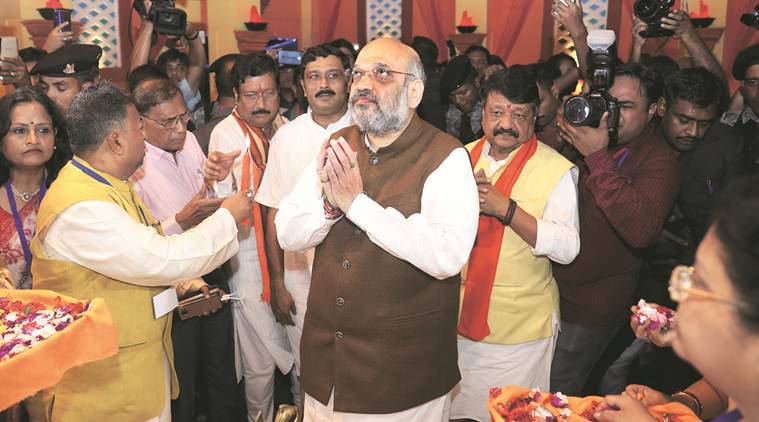
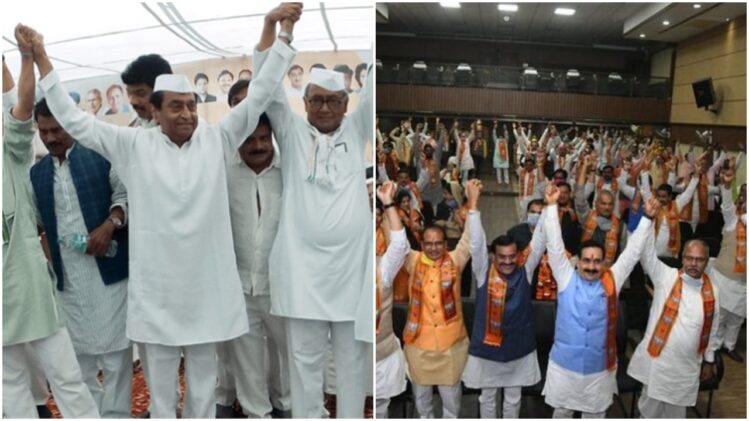
A leaked audio clip of Madhya Pradesh Chief Minister Shivraj Singh Chouhan’s speech before party workers makes it clear that Jyotiraditya Scindia’s loyalist 20-odd Congress MLAs had not voluntarily decided to bring down the Congress government of Kamal Nath but were lured, probably with money and other inducements, to act as they did by the BJP’s central leadership in March this year.

Addressing the BJP workers at Sanwer Assembly constituency, Chouhan is heard as having said: “Kendriya Netritva Nay Tai Kiya Ki Sarkar Girni Chahiye, Nahin To Ye Barbad Kar Degi, Tabah Kar Degi. Aur Aap Batao Jyotiraditya Scindia Aur Tulsi Bhai Ke Bina Sarkar Gir Sakti Thi Kya. Aur Koi Tareeka Nahin Tha. (The central leadership decided that the government should be brought down as it was ruining everything. Now you tell me, was it possible to bring down the government without Jyotiraditya Scindia and Tulsi Bhai. There was no other way)” Sanwer is the constituency of Tulsi Bhai or Tulsi Ram Silawat who was Health Minister in the Kamal Nath government and is now a member of Chouhan’s mini-cabinet with Water Resources portfolio.

The authenticity of the audio clip has not been challenged by Chouhan or any other BJP leader. BJP spokesperson Rajneesh Agrawal only tried to play it down by repeating what he, and others in the party, had been saying: “The government fell because of the disenchantment of the 22 Scindia loyalist MLAs with the Kamal Nath government and the State BJP formed the next government following the consent of the central leadership.”

Watch, Shivraj Singh Chouhan accepting that it is BJP’s central leadership which planned fall of Kamal Nath govt

Now a look back at the developments leading up to the fall of the government makes it easy to understand certain happenings. Governor Lalji Tandon, who was away in Lucknow on vacation, was alerted and asked to cut short his vacation even before the fall of the government had become certainty. Then the Governor went beyond his powers, specifically laid down in the Constitution and the Rules of the Madhya Pradesh Assembly, to fix the agenda of the House for a trust vote. That, though, was rightly ignored by Speaker N P Prajapati. The Governor, showing sickening impatience for trust vote, did not at all show any concern for 22 MLAs being held captive by the BJP in Bengaluru.

The Modi-Shah duo’s hand was more visible in taking care of the things in the Supreme Court where MP Speaker Prajapati’s decision to adjourn the Assembly was challenged. Though in a tearing hurry to get the trust vote over, the Supreme Court practically endorsed the whisking away of 22 MLAs before a trust vote by not giving its ruling on that. This sets a very, very disastrous precedent — disastrous for the democracy and free functioning of the legislatures as it virtually legitimises the muscle and money power. How Prime Minister Narendra Modi allowed coronavirus to spread across the country till the Congress government in Madhya Pradesh was removed and a BJP government was installed is so well known now.

A question that will probably remain unanswered is: why Shivraj Singh Chouhan, shrewd as he is, decided to spill the beans that it was the decision of the BJP’s central leadership to topple the Kamal Nath government?


Opinion expressed here are author’s personal one

বাসু চ্যাটার্জি: একজন মাস্টার স্টোরি-টেলার

পঙ্কজ পরাশরের জলওয়ায় প্রায় 22-বিজোড় মিনিটের মধ্যে, নাসিরুদ্দিন শাহ এবং পঙ্কজ কাপুর একটি ট্যাক্সি থেকে নামলেন জাভেদ খান যে বাসু চ্যাটার্জি-রজনী ওয়ালেকে খুঁজছেন। বোম্বে কালি-পিলিওয়ালাদের দুর্নীতি দেখানোর জন্য ট্যাক্সি ড্রাইভার “রজনী ওয়াল” বাসু চ্যাটার্জির উপর বিরক্ত। শাহ এবং কাপুর নিচে নেমে ক্যাবির সাথে চ্যাট করার পরে, চ্যাটার্জি হেঁটে যাওয়ার পরে এবং ড্রাইভারকে গভীর রাতে শুটিং স্পটে নিয়ে যেতে বলে। ড্রাইভার বিশ্বাস করতে পারছে না যে এটা সত্যিই বাসু চ্যাটার্জি। তিনি চ্যাটার্জি এবং তারপরে তার আগের দুই যাত্রীকে জিজ্ঞাসা করেন যে নতুন ভ্রমণকারী আসলেই রজনী কিনা। তাদের সবাই হ্যাঁ বলে। চ্যাটার্জি মনে হয় ট্যাক্সি ড্রাইভার তার ভক্ত। পরিবর্তে, দেখা যাচ্ছে যে চালক চ্যাটার্জির উপর “কালি-পিলিওয়ালাদের দুর্নীতি প্রকাশ করার জন্য এবং হাতে একটি চপল নিয়ে তাকে তাড়া করার জন্য বিরক্ত ছিলেন।

আমার বন্ধু ইয়াসির আব্বাসি, হিন্দি চলচ্চিত্রের অন্যতম সেরা ইতিহাসবিদ, চ্যাটার্জি সম্পর্কে কথা বলার সময় এই সিকোয়েন্সটিকে সম্ভবত চলচ্চিত্রের একমাত্র উদাহরণ হিসাবে উল্লেখ করেছিলেন যখন একজন চলচ্চিত্র নির্মাতা অপমানিত হওয়ার জন্য একটি ক্যামিও করেছিলেন (আমি একটি আইটি সম্পর্কে প্রকাশ মেহরার আরেকটি ক্যামিও মনে করি) আয়কর) অভিযান কিন্তু অন্য গল্প)।

ভাষার বাধা অতিক্রম করে, বাসু চ্যাটার্জির রজনী (প্রিয়া টেন্ডুলকার অভিনীত) একটি রবিবারের সকালে শহর ও শহর জুড়ে মধ্যবিত্তদের জন্য অবশ্যই দেখা উচিত, কেলেঙ্কারী এবং দুর্নীতির কারণে ক্লান্ত হয়ে পড়েছে যা ভারতের জনজীবনকে বিপর্যস্ত করেছে, মধ্যবিত্ত গৃহবধূকে ক্রুসেডারে পরিণত করেছে। কয়েক বছর পরে, তিনি বাংলা সাহিত্যের অন্যতম বিখ্যাত কাল্পনিক গোয়েন্দা ব্যোমকেশ বক্সীকে ছোট পর্দায় জীবিত করেন। এছাড়াও বিশ্ব সাহিত্য, দূরদর্শনের আরেকটি সিরিয়াল দর্পণে।

বাসু চ্যাটার্জী অনায়াসে—চলচ্চিত্র এবং টেলিভিশন—মাধ্যম জুড়ে বিচরণ করেছিলেন। আমি সবসময় এই দৃষ্টিভঙ্গি ধরে রেখেছি, এটি গল্প নয় বরং গল্পটি কীভাবে বলা হয় তা পার্থক্য করে। এবং, চ্যাটার্জি ছিলেন একজন মাস্টার-গল্পকার।

প্রায় পাঁচ দশক ধরে বিস্তৃত তাঁর কৃতিত্ব অপরিসীম। তিনি যে কাজগুলি রেখে গেছেন তার মধ্যে রয়েছে নাটক (একজন তরুণ ইরফান খানের সাথে কমলা কি মউত, যাকে আমরা গত মাসে হারিয়েছি), কমেডি (খাট্টা মিঠা, বাতোঁ বাতোঁ মে, লাখো কো বাত), থ্রিলার (চক্রব্যূহ, এক রুকা হুয়া ফয়সলা) ) এবং কিছু আশ্চর্যজনক প্রেমের গল্প (পিয়া কা ঘর, রজনীগন্ধা, ছোট সি বাত)।

চ্যাটার্জির চলচ্চিত্রগুলি সাধারণত নায়ক বা খলনায়কের মধ্যে পার্থক্য করে না। ছোট সি বাতে নাগেশ (আশরানি) বলুন। কেউ তাকে পছন্দ করতে সাহায্য করতে পারে না যদিও আপনি চান না যে সে শেষ পর্যন্ত মেয়েটি জিতুক। মঞ্জিল (মৃণাল সেনের আকাশ কুসুমের একটি হিন্দি রিমেক, যা সত্যজিৎ রায়ের দ্বারা বাতিল করা হয়েছিল), নায়ক অজয় চন্দ্র (অমিতাভ বচ্চন) একজন যুবকের ভূমিকায় অভিনয় করেছেন যিনি ধনসম্পদের শর্টকাট খুঁজছেন, একজন সফল ব্যবসায়ী হওয়ার ভান করে তার নারী প্রেমকে প্ররোচিত করার জন্য। যখন তার গ্যালভানোমিটারের ব্যবসা ব্যর্থ হয়, তখন আমরা চাই যে সে এটা ঠিক করুক।

চ্যাটার্জি চরিত্রগুলি তৈরি করেছিলেন এবং তিনি তাদের এমন পরিস্থিতিতে এবং জায়গায় স্থাপন করেছিলেন যা তার দর্শকদের সাথে পরিচিত ছিল। বোম্বে শহর – হিন্দি সিনেমার বাড়ি— চ্যাটার্জির চলচ্চিত্রের একটি চরিত্র ছিল, যখনই তিনি এটিকে পর্দায় আনেন তখনই এটি একটি নতুন আলোতে দেখা যায়। পিয়া কা ঘরের চাউলটি দেড় দশক পরে তৈরি কমলা কি মউতের চাউল থেকে আলাদা। শহরের মতো বদলে গেছে বাসিন্দারা। পার্সি কলোনি (খাট্টা মিঠা), বান্দ্রার গলিতে পুরানো ধাঁচের বাংলো (বাটন বাতোঁ মে), তাদের মধ্যে কিছু এখনও দাঁড়িয়ে আছে এবং মুম্বাইয়ের স্থানীয়রা ছিল বিশ্বের এমন একটি অংশ যা চ্যাটার্জি সরলতার সাথে তৈরি করেছিলেন, প্রায়শই দুর্দান্ত গানের সাথে সাহায্য করে এবং সঙ্গীত।

Basu Chatterjee: A Master Story-teller

0

About 22-odd minutes into Pankaj Parashar’s Jalwa, Naseeruddin Shah and Pankaj Kapoor get off a taxi driven by Javed Khan who is looking for one Basu Chatterjee—Rajni wale. The taxi driver is upset with “Rajni wale” Basu Chatterjee for showing corruption of the Bombay kali-peeliwallahs. And it so happens after Shah and Kapur have got down and chatting with the cabbie, in walks Chatterjee and tells the driver to take him to the shooting spot late into the night. The driver can’t believe that it really is Basu Chatterjee. He asks Chatterjee and then his two previous passengers if the new traveller indeed is the Rajni one. All of them say yes. Chatterjee is under the impression that the taxi driver is a fan of his. Instead, it turns out that the driver was upset with Chatterjee for “exposing corruption of kali-peeliwallahs and chases him with a chappal in his hand.

My friend Yasir Abbasi, one of the finest chroniclers of Hindi films, while talking about Chatterjee mentioned this sequence as possibly the only instance in film lore when a filmmaker did a cameo to be insulted (I recall another cameo of Prakash Mehra about an IT (Income Tax) raid but that’s another story).

Cutting across language barriers, Basu Chatterjee’s Rajni (played by Priya Tendulkar) was a Sunday morning must watch for the middle-class across cities and towns, tired of the scams and corruption that riled India’s public life, cheered the middle class housewife turned crusader. Some years later, he brought to life one of Bengali literature’s best known fictional detectives Byomkesh Bakshi on the small screen. And also world literature, in Darpan, another serial for Doordarshan.

Basu Chatterjee straddled across mediums—film and television—with ease. I have always held the view, it’s not the story but how the story is told that makes the difference. And, Chatterjee was a master-storyteller.

Spread over almost five decades, his oeuvre is immense. The body of work that he has left behind includes dramas (Kamla Ki Maut with a young Irrfan Khan, whom we lost last month), comedies (Khatta Meetha, Baaton Baaton Mein, Laakhon Ko Baat), thrillers (Chakravyuha, Ek Ruka Hua Faisla) and some astonishing love stories (Piya Ka Ghar, Rajnigandha, Chhoti Si Baat).

Chatterjee’s films did not usually make a distinction between a hero or villain. Say Nagesh (Asrani) in Chhoti Si Baat. One cannot help liking him though you don’t want him to win the girl in the end. Manzil (a Hindi remake of Mrinal Sen’s Akash Kusum, which was dissed by Satyajit Ray), the protagonist Ajay Chandra (Amitabh Bachchan) plays a young man looking for a shortcut to riches, pretends to be a successful businessman to woo his lady love. When his trade of galvanometer fails, we want him to get it right.

Chatterjee created characters and he placed them in situations and places that his audience were familiar with. The city of Bombay—home to Hindi cinema— was a character in Chatterjee’s films, seen in a new light every time he brought it to screen. The Chawl in Piya Ka Ghar is different from the Chawl in Kamla Ki Maut, made a decade and a half later. The inhabitants have changed like the city. The Parsi colony (Khatta Meetha), the Bandra lanes with old-style bungalows (Baaton Baaton Mein), some of them still standing and the Mumbai locals were all a part of the world that Chatterjee created with simplicity, often aided with great lyrics and music.

Abused and tortured, women send out SOS during lockdown

0

Help me please,Who Mujhe Maar Dalega (He will kill me), Can’t take this anymore.

This was a WhatsApp message which landed on my mobile from an unknown number from a lady living in a Howrah suburb near Kolkata. I have no idea how she got my number but helped her with some details regarding the National Commission for Women (NCW) who she could turn to for help.

The good news is, she was able to go ahead and file a police complaint. Her video with a deep cut in her lips and her bruised eye was shared with the cops as well and sent across to the NCW as well.

The bad news while she was happy at being able to lodge her complaint harnessing technology, there are millions of others who continue to suffer in silence: living a life of constant humiliation, servile subjugation and abuse, virtually imprisoned within the four walls of their homes with zero societal support and no information of who to turn to evading the blood shot eyes of the men of the household who see physical abuse as a mere extension of their physical prowess.

The Covid-19 prompted lockdown for sure will be remembered for more reasons than one. And one glaring aspect which cannot be overlooked or brushed under the carpet anymore is the exponential rise in cases of domestic abuse.

As per data recorded by the NCW, which incidentally introduced a WhatsApp helpline number 72177135372, domestic violence accounts for over 47 per cent of the complaints during the lockdown period. NCW chief Rekha Sharma has also constituted a Special Team to look into all complaints on a priority basis. There is simultaneously also a substantial rise in the number of complaints from women seeking their right to live with dignity.

women domestic violence during lockdown covid-19
The battered faces of Hillary Clinton and Michelle Obama created by the artist AleXsandro Palombo for his campaign, ‘Just Because I am a Woman’ I Courtesy: MIGUEL MEDINA/AFP

While this data tells us about the gravity of the situation at hand, does it really tell us how grave the situation really is? In a typical low income group household setting in rural India, a woman’s access to a smart phone still remains a distant dream in many cases. The only phone that one has in the house is primarily with the man of the house and in some cases by children.

Let’s put some facts on the table. While India may have been successful in bridging the digital gap, the gender gap continues to be a cause of concern. As per IAMAI-Nielsen joint study, only 35 per cent of digital service users at an all India level are women. If the numbers are further dissected by urban and rural areas, the inequality is even more pronounced. Only 31 per cent of rural women are believed to have access to the internet vis-a-vis 40 per cent in urban areas.

And this glaring gap possibly explains why hundreds and thousands of women who are subjected to torture and scarred by physical abuse every single day, do not even have the knowhow or the wherewithal to reach out to available helplines. “My husband beats me up every time I refuse to have sex. He says that is my primary duty besides raising children. Who do I turn to?My parents say it is okay and women need to learn to live with it,” rues Anjana (name changed).

But to think of domestic violence and wife beating only a rural India phenomenon would be incorrect. Reports come in droves of women in big cities and small towns alike of women being subjected to physical abuse. For fear of ‘bringing a bad name’ to the family, social stigma and apathetic attitude of the police many a times, women continue to spend a life of indignity and suffering with the abuser pretending to the world outside that all is well.

While non government organization (NGO)s and support organizations need to do their bit to reach out to women in distress, society as a whole also needs to wake up to this dark reality. There are global movements against domestic violence which harp on a support system for victims of abuse. In India, do we have an accommodating support system to start with? Can parents be sensitized enough to tell their daughters locked in abusive relationships to come out with head held high? Can our justice delivery system ensure that exemplary punishment is delivered to these abusers? Can our schools start early by educating young ones to grow up to be sensitive human beings and ensure that women given the dignity they deserve? Can our police force be sensitized enough to ensure they listen to women with complaints and take appropriate action rather than being outright insensitive and dismissive?

The ball is in our Court!

“Government tells us not to do politics during pandemic, but it is doing petty politics by arresting anti-CAA protesters”

Kolkata: On Wednesday afternoon, Kolkata witnessed the first public protest by students and social activists against the arrests of CAA (Citizenship Amendment Act) protesters. Sporting masks and maintaining social distance, the protesters at Jadavpur 8B bus stand, Gariahat crossing and Nagerbazar, were seen carry placards saying – Sab Yaad Rakha Jayega (Everything will be remembered).

Groups of students and social activists, who had been an active part of the anti CAA-NRC-NPR movement in Kolkata, raised slogans and carried posters condemning the government’s move of continuously arresting dissenters, especially students. Some even carried posters demanding the immediate release of political prisoners.

Speaking to eNewsroom, Navamita Chandra, a former student of Jadavpur University (JU) said, “The present central government is a coward. They are afraid of dissenters and have been arresting the faces of anti-NRC movement in Delhi, during the lockdown.” She then added, “Ironically, the same government has been telling us not to do politics during the pandemic. I would like to ask them, isn’t the arrests of protesting students, petty politics?”

Chandra, a regular at the Park Circus Dharna site, when the anti-CAA movement was at its peak, accused the government of deliberately denting the image of the activists spearheading the movement. “Notice the style and strategy. Why only students and activists associated with the anti-CAA movement are being arrested for allegedly orchestrating Delhi riots. We all know that it was a well-planned genocide of Muslims at the call of BJP leaders like Anurag Thakur and Kapil Mishra.”

caa nrc npr protest students kolkata
A woman protester hold placard to protest the arrest of pregnant Safoora Zargar by Delhi police

Continuing from Chandra’s allegations, Jhelum Roy, a member of Feminists in Resistance added: “The arrests of the anti-CAA activists are a deliberate attempt by both the central and Delhi governments to change the narrative of the Delhi pogrom and delegitimize the anti-CAA activists. It’s sad to see the government hounding activists when they were doing relief work during the ongoing pandemic.”

She paused and said: “The pandemic, unlike in other countries, is being used to witch hunt dissenters in India. Especially at a time when globally political and under trial prisoners are being released on parole, here we are seeing activists being rounded up and being slapped with draconian Unlawful Activities (Prevention) Act (UAPA), even when the Apex court has asked for the decongestion of prisons due to Covid-19 pandemic.”

Explaining the reasons to hit the streets during the pandemic, Sampriti Mukherjee, a research scholar and member of AIPWA said: “We all had been raising our voice, digitally, when our fellow activists were being rounded up in Delhi. Now, that the lockdown is a bit relaxed, we decided to hit the streets, as public protest is the best way to get heard.”

Mukherjee maintained: “We need to remember that the Delhi pogrom was instigated at a time when the anti-CAA movement was a full-grown movement with Muslim women leading us. The pogrom was a well-planned one to move the attention away from the movement and make the activists leading the movement look like conspirators of the pogrom.”

caa nrc npr protest students kolkata
A student shows the placard which mentioned Sab Yaad Rakha Jayega

She accused the government of using the pandemic as a cover to hound activists, especially Muslims. “We can’t wait anymore. Nothing is being done about Safoora and Gulfisha,” she added. “What more can we expect from this government, which during the lockdown has done no work. It has left the migrant workers to march on their own and has not fed the hungry and poor. The only work that they seem to be interested in doing is hounding activists and crush every voice of dissent.”

In the past three months, a number of arrests have been made by the Delhi Police. A huge chunk of those arrested are social activists and students of Jamia Millia Islamia and Aligarh Muslim University. Most of the arrested students have been held responsible for the Delhi riots.

The Kolkata protest was part of a nationwide protest called by a large number of social activists and political outfits to condemn the arrests of activists during a pandemic and also to demand the release of all political prisoners. Activists who couldn’t make it to the streets registered their protests digitally. The theme of the protest was coined from Amir Aziz’s poem ‘Sab Yaad Rakha Jayega’.

United to help cyclone Amphan victims

Kolkata: Cyclone Nisarga has made its landfall in Maharashtra, exactly a fortnight after super cyclone Amphan wreaked havoc in West Bengal. Amphan, had made its landfall on May 20 and left behind a trail of devastation for the people of Bengal. Wrecked homes with displaced families crying for water, food and electricity and other basic amenities have become a common sight now; even when the state government is doing its best make the state limp back to normalcy.

Two weeks down the line, it’s not just the devastation that will be remain etched on the minds of millions of inhabitants of Bengal, but also the efforts being made by several people from all walks of life to restore normalcy in lives of those whose life has been thrown out of gear due to Amphan.

Talking to eNewsroom, Dr. Arjun Dasgupta, president of West Bengal Doctors Forum (WBDF) said that WBDF along with Shramajibi Swasthya Udyog (SSU) is has been trying to reach out to the affected people with relief materials and medical assistance to the best of their abilities.

“We urge all members of the medical fraternity to come forward and extend co-operation in these hours of need. On one hand the pandemic Covid-19 is taking away so many lives and on the other hand this cyclone has also killed so many people and has made many vulnerable and homeless. We are trying to stand by these people and do as much as we can,” said Dasgupta.

The president of WBDF also added that as far as Corona is concerned they have made a meeting with Chief Minister Mamata Banerjee to discuss over remedies in curbing the menace. During the meet CM had even agreed upon all the suggestions given by the Doctor’s forum.

(Those interested in extending help are requested to contact: Dr Punyabrata Goon:  +919830922194/Dr Arjun Dasgupta:  +919748765779/ Dr Rajiv Pandey:  +917980683401/ Dr Sanjoy Holme Choudhury: +919830279384/ Dr Sourav Talukdar: +919038704202 or write to wbdoctorsforum@gmail.com, shramajibiswasthyo@gmail.com)

cyclone amphan victims relief work donate West bengal
Relief workers representing Prantojonner Pokho providing relief at Shitulia Golbadi Area

People across the country, especially those with roots in Bengal, have been appealing others to contribute in whatever way they can. There were so many distressing messages and visuals on social media that a journalist, Debjani Choubey has appealed for help and many students mostly from first and second year have even joined hands with her to reach out to the affected people.

“A friend of mine and I wanted to stand by the affected people. We campaigned on Facebook and within a week we got an overwhelming response. The students crowdfunded, while their parents helped them in packing the raw food items so that it could reach the destination on time. Deepshubhro, a painter sold his paintings contribute for the relief fund. So far we had supported 220 families in Gosaba of Rangaberiya and 450 from Pathorprotima of Bororakhoshkali area in Sunderban area,” said Choubey.

Choubey also added that they are doing FB live as people from across the country are still trying to stand by the destitute.

“People complain about today’s generation not being helpful. But in this hour of need I have learnt that teenagers of today have a heart of gold and are willing to help the poor and needy,” she claimed.

cyclone amphan victims relief work donate West bengal
Volunteers of Mukti-Kakdwip doing relief work

Apart from them, Swarnabha Dey, has also urged for donation for restoring the beloved Sundarban, which is one of the most badly hit places.

“We have decided to help them with some necessary amenities, medicines, temporary tents among others. Owing to the Covid lockdown, we’ll be going in small teams to the remote villages of Choto Mollakhali, Atapur, Tushkhali and Durgamondop. We will try to reach out to almost 150 families in those villages,” mentioned Dey.

(Those interested in extending help can pay on Gpay: 9038399847 / Phone Pe:8420288453/ Paytm: 9830667009, Bank A/C Details A/C Number: 915010025691456IFSC: UTIB0000113, Payee Name: Swarnabha Dey)

Pulak Roy Chowdhury, Headmaster Kanaknagar S.D. Institution whose experiences regarding Hingalganj appeared in several newspapers also appeals for funds to stand by the people of Sunderbans.

Besides, UNICEF India is working with the government as part of the West Bengal Inter Agency Group to support the millions of children and their families affected by the cyclone in West Bengal.

The Sundarban Foundation works with the most disadvantaged people in the region to provide them better healthcare and education opportunities, among other benefits.

Kolkata-based nonprofit Mukti is seeking funds for its relief and rehabilitation efforts to help those affected by Amphan in the Sunderbans.

Alo Foundation has tried to reach drinks Ng water to the 1000 families of Ptla Panpukur village under Hasnabad police station as it has been learned that more than food people of this area is unable to get drinking water and also that more of the male members of all the families are migrant workers and are stuck in different states.

(Interested readers can contribute for relief work #STANDBYSUNDERBAN by donating to Shimanta Guha Thakurta, Account number: 912010015075041, Bank name: Axis Bank, Branch: Barrackpore, IFCS Code: UTIB0000436 | For any query, please contact Simanto Guhathakurta  9836394321. Contribution can also be made to SSU Relief Fund, Shramajibi Swasthya Udyog, A/C no 0100000128050492, Punjab National Bank, Brabourne Road Branch, Kolkata-700001, IFS code PUNB0010000, Gpay : 8981649766, upi id: mrinmoy140@oksbi)

Contribute for those devastated during Amphan, come, let’s get united to rebuild Bengal.

Time for Digital OPDs in India

With Covid-19 cases increasing exponentially in India and virtual shut down of daily Out Patient Department (OPD)s in almost all major hospitals across the country including AIIMS Delhi, PGI Chandigarh, KGMU, the cry to adopt and normalize digital OPDs in the country is getting louder. The daily burden of patients visiting hospitals for treatment of non-communicable diseases like diabetes, hypertension, obesity disorders and others is high. But the treatment of these ailments have come to a halt since the lockdown 1 was imposed in India. The Union Health Ministry itself in the month of March has advised to defer all elective surgeries and restrict normal functioning of daily OPDs due to fear of Coronavirus transmission and increase exposure to suspected patients of Covid-19. Under all these circumstances, remote consultations via phone calls, WhatsApp, SMS, video-calling is proving to be a big relief for healthcare service providers, as it limits the physician’s exposure to the disease. The situation has deteriorated due to shutdown of regular OPDs and extension of countrywide lockdown. Patients suffering from different ailments are feeling scared and helpless. Patients suffering from tuberculosis, cancer, HIV and regular dialysis are the worst affected. Routine patients are bearing the brunt of Covid-19 lockdown across India. The same is the case for patients suffering from psychiatric ailments like anxiety, depression, schizophrenia. Institute of Human Behavioural and Allied sciences (IHBAS) in Delhi, which is one of the largest psychiatric hospital in the country has a daily intake of around 1200-1400 patients. The number now has fallen to zero. Same is the case for every public hospital and private OPDs. With numbers of patients experiencing mental stigma during corona crisis is increasing regularly, the access to psychiatric help is very much limited due to closure of OPD services. One of the main reasons for it being the scare of probable disease transmission and lack of adequate personal protective gears for the doctors. India reports around 25 lakh plus active tuberculosis patients yearly and more than 4 lakh deaths- the highest in the world. Same is the case with cancer and kidney patients as regular chemotherapy and dialysis services are not accessible easily, especially in public hospitals which caters a big chunk of these patients and has presently shifted their focus towards Covid management. A better picture of it, will emerge only when we have a combined data from all the major public sector and private sector hospitals about the condition of patients who used to visit their OPDs during normal days. Where they have gone for treatment, how they responded, and who took care of them can only be commented if we have transparent post lockdown report from all individual hospitals. This will not only help in assessing the impact of closure of OPDs but also to devise future strategies in managing pandemic which poses high risk of contagious infection. Nevertheless it will help public health experts to address issues of managing large chunk of population suffering from different illnesses.

In the meantime, Medical Council of India (MCI) along with NITI Ayog also came up with detailed guidelines on different aspects of safe telemedicine practices in the country, thus legalising the telehealth services in the country. These guidelines would prove to be a morale booster for doctors aspiring to shift partially to telemedicine not only during Corona Age but also in post- Corona World. The guidelines published defines Telemedicine as “The delivery of healthcare services where distance is a critical factor, by all healthcare professionals using information & communication technologies for the exchange of valid information for diagnosis, treatment and prevention of diseases and injuries, research and evaluation, and the continuing education of healthcare providers, all the interests of advancing the health of individuals and their communities.’’ The telemedicine space in the country has seen rapid growth in recent times. Digital platforms like Cytopot, Practo, DocsApp, Lyberate among others. occupy good share in India’s telehealth space. Dr. Abhijeet Upadhyay, Founder of Cytopot said “Our aim is to provide faster and accessible quality health facility to all especially in remote areas by use of artificial intelligence and real time technologies with cost considerations.” Cytopot caters to the need of patients in state of Odisha and surrounding areas.

Providing in-person healthcare is a challenging and huge task both for medical fraternity as well as governments, particularly the large geographical distances and limited resources we have. One of the major benefits of digital OPDs will be saving of cost and effort especially of rural patients, as the need for travel to long distances for treatment will be minimized. Telemedicine in this scenario can provide an optimal solution for providing timely and faster access, reducing the costs related to distant travel. At the same time, it also reduces the inconvenience to family and caregivers and social factors associated. For regular, routine monitoring of cases and follow-up cases, digital consultation will definitely be a boon. The same will also reduce the burden on secondary hospitals, PHCs and Mohalla Clinic type models running in the country where minor ailments are managed. With telemedicine, there is higher probability of proper maintenance of records and documentation hence minimizes the likelihood of missing out advice from the doctor and healthcare worker. Digital consultation practices provides patient’s safety as well as health workers safety especially during risk of contagious infections such as Covid-19.

Disasters and pandemics pose unique challenges in providing healthcare both for the government and medical staff. But with adversities, also comes the opportunities to convert weaknesses into strengths and serve the mankind. Though telemedicine will not solve all problems but it is well suited for scenarios in which teleconsultation can easily evaluate patients and provide them effective management plan without exposing the health staff to risk of virus transmission. Broad speciality medical subjects such as Dermatology, Psychiatry, Radiology, minor ailments in Pediatrics, Medicine and ENT. were already focusing on telemedicine practices much before the emergence of Covid-19 pandemic. Teledermatology and telepsychiatry were the two main domains which had good number of consumer base before Corona. A good share of it was managed by Digital health Providing companies such as Remedico for skin problems based out in Bangalore and MentDoc in Psychiatry.. The Covid-19 pandemic is nowhere to go in near future before proper treatment protocol and vaccine comes out. Nevertheless its time for healthcare providers and government agencies to devise different ways in tackling the inflow of patients who are suffering from different non-communicable diseases as ignoring them for long and shutting of regular OPDs is not a viable sustainable option. Therefore Its highly important to build up an effective system of telemedicine health services and digital solutions to counter the emerging problem. Eminent medical practitioner and former National President of Indian Medical Association (IMA) DR KK Agarwal is of the view that covid-19 is somehow behaving like Spanish Flu and it might take around 2 years time to normalize the things and therefore we must be ready for adaptations to Corona Age for quite some time.

The telemedicine practice guidelines published by the Board Of Governors in Suppression Of Medical Council OF India lays emphasis on following aspects:

  • According to the mode of Communication, the telemedicine applications are classified into Video (Apps, Video-on chat platforms, Skype, Face-Time among others) Audio (Phone, VOIP, Apps, etc) Text based (including general messaging via SMS, Messenger, Google Hangouts).
  • Guidelines states, “The professional judgement of a registered medical practitioner should be the guiding principle for all telemedicine consultations. Seven elements mentioned under it to be considered before any telemedicine consultation includes context, identification of RMP and patient, mode of communication, consent, type of consultation, patient evaluation and patient management.
  • Prescribing medications via telemedicine consultations is at the professional discretion of the RMP. It entails the same professional accountability as in the traditional in-person consult. Only those medicines categorized under list O, A and B falling under different criterias can be prescribed via telemedicine consultation. Drugs included under Prohibited list could not be prescribed anyhow and may amount to legal proceedings.
  • One of the most important aspect of guidelines include the implementation of principles of medical ethics, including professional norms for protecting patient privacy and confidentiality as per IMC Act shall be binding and must be upheld and practiced.
  • The guidelines separately address tech platforms that enable telemedicine services. Such platforms can list a doctor only after due diligence verifying the doctor’s credentials. The guidelines also allow the use of Artificial Intelligence (AI) and Machine learning tools to assist a medical practitioner in counselling a patient. However, AI cannot be used directly to counsel the patients.

Nevertheless, telemedicine has its own advantages and is the need of hour but at the same time negative aspects associated with it cannot be ignored blindly and therefore they also requires critical analysis. As a doctor myself just like the seniors from our community we believe that the first drawback of telemedicine is its inability to address the issue of Clinical examination of the patient in person. No technology could replace the examination skills and diagnosis made thereafter by an expert physician which gets limited while providing teleconsultation facility. Many patients prefer a more personal or face-to-face relationship for better understanding and treatment. This has limited scope with telemedicine.

Another point of concern is the availability and cost considerations of IT-based telehealth services. There are chances that for a provider it can be expensive to set up these systems and maintain them annually especially for small healthcare facilities.

The accessibility to these services is also a major concern before turning towards it, especially in rural India. Still today, there is huge number of people who don’t have access to smartphones and are unable to utilize mobile apps services effectively. Digital India is a distant dream not because of lack of mobile internet facilities but due to improper usage, and drawbacks associated with it which needs to be fixed. It is possible for a broadband connections to malfunction, video chatting gadgets start functioning improperly among others.

The issues of slow speed networks, mobile data theft, hacking, misuse of patient’s medical records and ethical considerations associated with it are some of the problems which could not be ignored at all before switching in large towards telemedicine apps. It requires a robust system and guidelines being provided by the government to both public and private telehealth providers so that trust building is developed and more patients get benefitted by it. Health facilities providing these services also need to spend additional time as well as money for training the experts in order to enrich them with much needed technical knowledge. It will make healthcare recruitment a challenging task.

Despite all odds, telemedicine is here to stay and Corona crisis has given it a required push with more companies joining the ivy-league. Many of the stop-gap models for the next few months could become our new normal. This current push for telemedicine could lead to wide adoption of digital health services in the long run. It will not only help in popularizing remote consultations but also develop integrated network of digital health solutions that connect patients, doctors, diagnostic labs and e-pharmacies. Mobile pharmacies will boom and so the biomedical health companies generating more revenue as well as employment. Their success will largely depend on how cost-effective they will prove and on the scale of services being provides to address public health problems which the country is facing. Success will definitely be more if these solutions bring smiles on marginalised sections of country and not only end up becoming a capitalist profit generating module. 1 mg, NeTMeds, PharmEasy will have a bigger role to play in coming future.

The technological innovations in digital health domain and their immense potential for shaping clinical practices cannot be ignored.  But without serious modifications to our healthcare delivery system and telehealth policy, its fair to ask how far mobile apps, artificial intelligence, big data and algorithms will take Indian health services forward. The Country already had a National Digital Health Blueprint which was released last year by Health Minister Dr. Harsh Vardhan. This in itself is an achievement as we are among the very few countries to have a detailed published Digital Health Plan. Time is now to act upon it to address different issues crippling the public health system in country and how by the means of digital health tools we can fix them all. Question is are our institutions and policy makers up to the task of striking the right balance between sharing of data and protecting patient’s privacy or will the breakneck speed of digital technology overwhelm them? Will automation and real time solutions help patients attain positive and long term changes in their health domain, or will quick gains ultimately succumb to and be reversed by the same old obstacles of inadequate resources inside and outside our hospitals and clinics?  Answers need to be searched for a better, healthier India!!


Views expressed here are author’s personal opinion

Jharkhand does a hattrick: After Mumbai and Ladakh, migrant workers airlifted from Andaman

Ranchi: Jitendra Malto, 32 is a relaxed man as he boards a Pakur bound bus arranged by the Jharkhand government. Malto a construction worker has just returned from Port Blair to Ranchi by a flight arranged by Hemant Soren government.

“We had gone to Andaman to work on a road construction project. Our work was to end by April. But by then the lockdown had been imposed across India. However, our company not only paid us for the remaining period but also helped us to contact the officials of Jharkhand,” said Malto, over the phone while travelling towards his home. 

A father of four, Malto also claims that they did not face much hardship during the lockdown. They had been put up at a school and the company had made arrangements for their food and other basic necessities. Malto was all praises for his company and Hemant Soren government for airlifting them.   

His colleague Baijnath Pahadia, another resident of Pakur, was also praising the government. They are travelling with 37 others by a bus to Pakur, after reaching Jharkhand.

The announcement for airlifting these workers was made yesterday itself by CM Soren, at the Ranchi airport when the workers airlifted from Leh reached Jharkhand. Today, the government has brought back 180 workers stranded in several areas of Andaman and Nicobar Islands. A chartered Indigo flight ferried the workers back to Ranchi from Port Blair.

The operation to bring back migrant workers from Andaman was personally supervised by CM Soren. Jharkhand urban development, transport and labour department, as well as Covid Control Room played a key role in coordinating with the local district administration and police in Port Blair to make this mission a success. 

The expense (Rs 21 lakh) of airlifting the workers has been borne by the state government. Yesterday, Jharkhand had brought back 60 workers from one of the remotest parts of India, Ladakh.

While on Thursday, the first batch of migrant workers of Jharkhand origin were airlifted from Mumbai. The homecoming of these 180 migrants from Mumbai was done by the Jharkhand government in coordination with the alumni of National Law School, Banglore. They had also crowdfunded for the airfare.

Since lockdown began in India, migrant workers have been on the receiving end. The depressing news is coming from several parts of India, about migrant workers having to walk thousands of kilometres or jumping on to good trucks and getting killed on the way while attempting to reach their homes. Officially it has been accepted that over 80 persons have died while travelling in Sharamik Special trains. 

During such times the news related to Jharkhand migrant workers reaching by air is heartening. Jharkhand incidentally was the first state to receive the first Sharamik Special train run in India on May 2.

Video Story: Jharkhand sets example by evacuating its migrant workers from Ladakh

Ranchi: Since the lockdown began in India to break the Covid-19 chain, migrant workers have been at the receiving end. Hundreds of migrants died while walking or travelling on buses and trains to their homes.

Witnessing the chaos, Jharkhand government led by Chief Minister Hemant Soren who had been alerted by Jharkhand Janadhikar Mahasabha (JJM) about 150 migrant workers from Jharkhand, being stranded at Ladakh, decided to airlift them. They wrote a letter  to the Union Home Minister Amit Shah, sharing the same proposal. However, when Jharkhand government did not get any response from the Union Home Ministry, then with the help of Ladakh administration and locals they airlift sixty migrants in private planes on Friday.

CM Soren was present at the Ranchi Airport to receive the returning migrants. In the airport, Soren declared that soon migrants of Jharkhand origin will also be airlifted from Andaman.

Meanwhile, prior to migrant evacuation from Ladakh, 180 Jharkhand migrants had been airlifted from Mumbai. In this process, alumni of National Law School Bangalore played a pivotal role in getting them back by crowdfunding the airfare of migrants.

Jharkhand CM has been at the forefront raising the issue of safe return of migrant workers to the state. Around 3.5-4 lakh of approximate 7.5 lakh registered workers, have returned back to the state. The government has assured that the migrant workers will be brought back by trains, buses and if necessary then by flights.

With successful evacuation, Jharkhand, possibly the first state in the country to fly out migrants from inaccessible place. State has borne all the costs.

“CM is personally perturbed with the deaths of migrant workers in the UP incident and later in sporadic incidents, had thus been exploring all opportunities and support from all quarters to get back other workers from Andaman, NorthEast among others,” said an aide to CM.

He added, “Two flights are being arranged to get back around 320 workers from Andaman very soon.”

Watch the entire process of migrants being airlifted from Leh Airport to Ranchi, via Delhi airport in this eNewsroom‘s video report.

Jharkhand professor becomes India’s 2nd woman tribal Vice-Chancellor

Ranchi: On Thursday when 180 migrant workers reached Ranchi from Mumbai, their first reaction was that they had never thought of flying on a plane, especially when migrant workers across the country are dying while making an attempt to reach home. Here, they not just reached their native state safely but also got a chance to travel by air. This moment of dream turning into reality was not just for these migrant workers from Jharkhand, but of each resident of the state, when the mineral rich state gave India its 2nd woman tribal Vice-Chancellor.

On Thursday itself, Governor Draupadi Murmu appointed Vice-Chancellors for three universities in Jharkhand. One of the newly appointed Vice-Chancellors is Professor Sonajharia Minz. She has been made the Vice-Chancellor of Sido Kanho Murmu University. While Mukul Narayan Deo and Professor Ram Lakhan Singh have been appointed as the VC for Binova Bhave University and Nilambar Pitambar University, respectively.

The appointment of Minz, a Jawaharlal Nehru University (JNU) alumni has become historic, as Minz is only the 2nd woman tribal VC in the history of India.

Minz, the daughter of Nimal Minz, the famous freedom fighter of Jharkhand, is at present, Professor at the School of Computer and System Sciences in JNU. She has been President of JNU’s Teacher Association (JNUTA) also.

Sido Kanho Murmu University was formed in 1992 by Lalu Prasad Yadav government during united Bihar. 

Professor Minz has studied Post Graduation in Mathematics from Christian College, Tambaram, Tamil Nadu. 

And later did Master in Philosophy (MPhil) and doctorate (PhD) from JNU. Before working as a Professor at JNU, she has worked as an Assistant Professor at the Barkatulla University, Bhopal (Madhya Pradesh) and the Madurai Kamraj University, Madurai (Tamil Nadu). 

For the last 28 years, she has been teaching in JNU. 

The appointment, which is being considered a milestone by many, has the Hemant Soren government playing an instrumental in it. The appointment is getting a grand welcome on social media. Netizens believe that as Professor Minz hails from an underprivileged background, it will help in inspiring the students coming from poor backward community.