Letter to PM, seeking an inquiry in the fresh killing of three Kashmiri youth

0

Kolkata: Track II diplomat and Chairman of centre for Peace & Progress O P Shah had written a letter to Prime Minister Narendra Modi expressing concern over the killing of three youth in Kashmir on December 30, 2020 and urged for an independent inquiry into the alleged fake encounter.

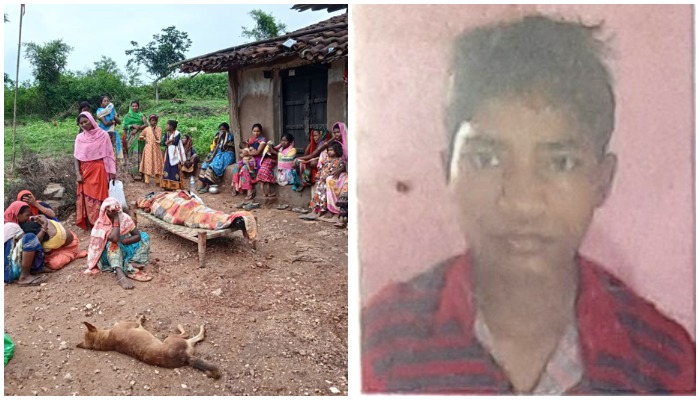
On December 30, the three young men – namely, Ajaz Maqbool Ganie, Athar Mushtaq Wani and Zubair Ahmad Lone – were shot at and killed by the Indian Army’s 2 Rashtriya Rifles unit in the Lawaypora area of Srinagar.

Parents of three youth claimed that the three were students and hours before encounters they were with them at their respective houses.

In August, 2020 itself three labourers were killed in Shopian which later turned out to be fake. The three labourers were killed in an encounter in stage managed murder and even arms were planted on his bodies.

“I would urge the Government of India and the administration of the Union Territory of Jammu & Kashmir to conduct an independent, impartial and thorough investigation of this encounter, which the families of the dead young men allege was a ‘fake encounter’,” Shah mentioned in the letter and also raised major points.

“This allegation by the families of the deceased is further bolstered by the following information from recent media reports:

“That none of the deceased had any police record or other record of being politically active.

And none of the deceased was listed in the police’s database of active militants.

While security personnel failed to make any effort to involve the families of the deceased to appeal to the alleged militants to surrender.

Also frequently, dying militants tend to call their family members in their final hours – it is quite extraordinary that none of the deceased attempted to contact their family members.”

He also said that after every encounter, neighbours account matters, but in this case, the residents of the relevant neighborhood contest the military’s assertion that the deceased were given several opportunities to surrender.

And Shah also stressed that the Government should also sympathetically consider the demand of the family members to be handed over the bodies of deceased persons.

The Kolkata based diplomat added, “If we are to win back the hearts and minds of Kashmiris , “fake encounters” have to be completely eliminated and, therefore, it is incumbent upon the Government of India and its security forces to thoroughly investigate any suspicious encounter and to ensure that in cases where the security forces have perpetrated illegal killings, justice is done in a timely manner.”

Pro-farmer indefinite sit-in begins simultaneously across West Bengal, artists and women bodies to join

Kolkata: Vladimir Ilyich Lenin saw peasants in dhotis and lungis laying siege on Kolkata decades back when the city was a radical red citadel without a Left Front in power in Bengal. Standing at Dharmatala in granite, an iconic landmark at the heart of the city, the leader of the Russian revolution also witnessed the fall of the LF government after three decades in 2011.

Now, he is observing another kind of siege to the city of rallies as the state has been under increasing threats from the surging Sangh Parivar, the most reactionary right wing forces led by BJP-RSS. The central ruling party with its entwined corporate-communal agendas has emerged as the main challenger to the incumbent Trinamool Congress government, a regional party of middle-pathers and former ally of the Hindutva party while the LF-Congress combine has turned into a distant third force.

Nevertheless, a potential turnaround for the anti-BJP politics seems to have begun in Bengal with the Left-liberal efforts to organise public support to the agitating farmers from Punjab-Haryana. The latter have virtually laid a siege on Delhi Darbar of the Narendra Modi regime demanding the rollback of pro-corporate farm laws. Speakers at different protest sites in Bengal said that the task to turn the farmers’ movement into a nationwide people’s movement has become a key imperative not only for Punjab-Haryana but also for the people of the states who are still resisting the hegemony of the Hindutva party. Prime minister Modi has been openly espousing ‘one country-one election-one party-one leader’ rule.

Responding to the call of All India Kisan Sangharsh Coordination Committee, the umbrella body of the peasant bodies now spearheading the farmers’ agitation, its state chapter has launched an indefinite Dharna or sit-in demonstration a stone’s throw away from Lenin’s statue on Saturday to spread the solidarity protests across Bengal.

Hakikat Bir Singh, a son of dalit landless family in Punjab, now in Kolkata I Video by: Suman Sengupta

The pro-farmer campaigns have been gaining traction in Bengal as Left parties and many independent Left groups have joined it. The footfall at the dharna is likely to increase in the coming days as students, youth, minorities and intellectual groups have already started holding such solidarity programmes in Kolkata and districts. Anti-BJP Civil society groups, some of whom have already hit the streets with an appeal to the popular mind not to vote for the BJP as the state assembly election is round the corner.

Similar indefinite sit-in and rallies are being continued in Howrah, Birbhum, Bankura and Nadia districts by a forum called Bengal against Fascist BJP-RSS and members of CPI ML liberation respectively. The Forum will stage a sit-in protest at Moulali More on 13 January.

Artists and intellectuals are also joining

Mukto- Bangla, a group for cultural activists will chalk out its campaign programme on January 10. Netaji-Bhagat Singh United Forum will bring out a torch ra!Ly from Sarat Bose Road on Sunday evening to pay homage to the martyrs of the farmer’s movement, most of whom succumbed to the biting north Indian cold after being forced by the Modi regime to stay under the open sky for more than a month.

The spirit of solidarity is evident both offline and online. Some young artists and their friends have joined hands in selling the paintings that reflect the rainbow colors of the ongoing peasant mobilization at five borders around Delhi. These paintings have captured the defiant mood of daily life in the makeshift city of caravans on the national highways which have been blocked by the kilometres-long lines of tractors, trolley vans and trucks brought by the farmers and their families. An exhibition of three young activists– Laboni, Subheccha and Baishali will be held at Niranjan Sadan in Kolkata on January 24 and the proceeds would be donated to the pro-farmer campaign.

January 18: Mahila Kisan Divas

Meanwhile six national women’s organisations have called for solidarity programmes on January 18. Samyukt KisanMorcha (SKM) has already asked to observe the day as Mahila Kisan Divas.

National Federation of Indian Women(NFIW), All India Democratic Women’s Association(AIDWA), All India Progressive Women’s Association(AIPWA), PragatisheelMahilaSangathan(PMS), All India AgragamiMahilaSamiti(AIAMS) and All India MahilaSanskritikSangathan(AIMSS) will hold protests all over the country on January 18 demanding repeal of the three farm laws, food, work, health services, waiver of the loans of SHGs, action against harassment by MFIs and express solidarity with the farmers’ struggle.

Farmers protest: Growing solidarity in Kolkata and districts before parallel Republic Day Parade

Kolkata: The day Indian farmers at Singhu, Tikri, Gazipur borders and in Rewasan district held tractor rallies as a rehearsal to their proposed parallel Republic Day parade on January 26, activist groups in Kolkata and some other districts today held sit-in demonstrations, street corner meetings and marches in support of the ongoing farmers’ movement to repeal three farm laws.

In Bengal, the protest was against Narendra Modi government’s three anti-Farmer, anti-People black laws as well as burning issues of Farmers of West Bengal.

All India Kisan Sangharsh Coordination Committee (AIKSCC), the umbrella organisation of the peasant bodies which is now spearheading the 43 day-long farmers’ siege on the central government has called for solidarity campaigns across the country as the regime is still refusing to repeal the pro-corporate laws.

The nationwide campaign will culminate in the people’s celebrations of the Republic Day on January 26, commemorating the nation’s formal acceptance of its secular democratic constitution in 1950. These celebrations will be organised in parallel to the government’s Republic Day parade in Delhi which has been traditionally marked by the gala show of the country’s military might in addition to cultural tableaux from states, increasingly being forced to be in tune to the central ruling party’s dictates.

Watch a protest rally by BSM in Birbhum district


The Bengal chapter of AIKSCC will launch a continuous dharna or sit-in protest, named Annadatader Sanghotite Bangla (In support to the foodgivers) at downtown Kolkata from January 9. All trade unions, mass & cultural organisations have been requested to join. The all India coordination body of central trade unions has already expressed its solidarity to the AIKSCC programme and its state units to join.

Meanwhile, Bangla Sanskriti Mancha, a cross-faith youth forum active in multiple districts took out a public march against the farm bills at Rampurhat town in Birbhum district. The Manch has begun an indefinite sit-in support of the farmers. Its cultural teams have been visiting villages with Baul singers and street darma performers to spread awareness about the reasons behind farmer s’ opposition to the farm laws.

west bengal activists farmers delhi boarders tractor rally
A meeting at Kolkata to express solidarity with farmers

In Kolkata, members of No NRC Movement, Mukto Bangla, APDR and other civil society forums held similar dharnas at Moulali crossing.

Speakers counted the series of sweeping constitutional and legal amendments by the BJP-RSS regime in pursuance of its fascist agendas to impose majoritarian bigotry and monopoly of crony capitalists.

They recalled how the hard-earned rights of farmers, workers and other toiling people have been snatched away by the regime using its brute majority in the parliament or the executive fiats during Covid lockdown months. Instead of giving respite to the poor and middle class from the soaring price-rises in food and other essential items, it’s farm laws are meant to allow crony corporates like Ambani and Adani groups to hoard food grains and vegetables and jack up market prices, they pointed out.

Another rally was held by the minority groups and others commemorating the anniversary of the women’s-led protest in Park Circus maidan against the communal Citizenship Amendment Act (CAA) and National Register of Citizens. The protest site had become known as Kolkata’s Shaheen Bagh before the prolonged lockdown forced the growing opposition to the countrywide to lose momentum.

Attack on tribal Chief Minister by Manuwadi forces is highly condemnable — Jharkhand Janadhikar Mahasabha

Ranchi: Even after change of guard in Jharkhand violence against women continues unabated in the state, as in against of 4 rape cases per day in 2019, 5 rapes taken place in the year 2020, expressing concerned on it and the violence in the name of protest, Jharkhand Janadhikar Mahasabha, an umbrella body of civil society issued an statement on the rise of sexual violence in Jharkhand. The Mahasabha also condemned violence on Chief Minister Hemant Soren by Manuwadi forces and the failure of police administration.

The Mahasabha statement mentioned, “Violence against women continues unabated in Jharkhand. The recent incident of rape and beheading of a woman in Ormajhi has exposed this again. Even after 3 days of finding the victim’s body, neither she nor her culprits have been identified. Along with the continuing violence against women, this incident also raises serious questions on the law and order situation in the state. It is worrying that despite formation of a Jharkhandi government, violence against women has not reduced. 5 rape cases per day (average) have been reported in 2020 as compared to an average of 4 cases per day in 2019.”

The union of civil society while welcoming the democratic protest by any political party and civil society groups, regretted on BJP senior leader’s behaviour who justified violence, “The BJP Yuva Morcha protested across the state on 4th January against the Ormanjhi case. In the evening of the same day, the Chief Minister’s convoy in Ranchi was stopped, stoned and vandalized by a mob at Kishoreganj chowk. Many senior BJP leaders justified this attack as “violence by an angry public”. In a democracy, political opposition and protests demanding action from the state have their own importance. But, the mob attack on the CM’s convoy in Ranchi and consequent justification by BJP leaders raises many serious questions,” it said.

And further claimed that the attack on CM Jharkhand was Manuwadi behaviour. “Slogans of Jai Shri Ram were chanted in the crowd. The attack on the tribal CM with such slogans and the support extended by the BJP to the event is an example of the growing anti-Jharkhand Manuwadi violence in the state over the years. This incident is highly condemnable. It must be mentioned that Manuwadi ideology is against women’s rights. It is not surprising that right-wing forces which believe in Manuwad are raising the issue of violence on women in a violent, masculine and patriarchal manner.”

And reminded that mob lynching was rampant, “Such violence increased widely in Jharkhand during the BJP’s “double engine” government at the Center and the state. Lynching of Adivasis, Dalits and Muslims by mobs while chanting religious slogan of ‘Jai Shri Ram’ is a glaring example of this. Today the same mob opposed a tribal CM with religious slogans and hooliganism. The attack on the CM’s convoy indicates the dissatisfaction of right wing forces against a Jharkhandi government based on the principles of Adivasi identity.”

Jharkhand Janadhikar Mahasabha demanded from the state government to take prompt action in the rape and murder case in Ormajhi. And to curb sexual violence in the state, the government should prepare a comprehensive strategy after public discussion to curb sexual violence in the state.

The strategy can include improvements in law and order situation, training on gender equality and justice in educational institutions and government agencies and so on.

Mahasabha also pointed out the failure of police, “Such a violent attack on the CM’s convoy also shows the failure of the police administration. The government should take appropriate action on this issue. We also hope that the state government, in spite of such an incident, will not try to intervene on the democratic right to protest peacefully.”

The civil group also made an appeal, “Mahasabha appeals to the Hemant Soren government and all gathbandhan parties to launch a mass campaign to promote and strengthen constitutional values and Jharkhandi philosophy and identity against the growing anti-Jharkhand Manuwadi ideology and violence in the state. All the organizations associated with Mahasabha will support such a campaign.”

Covaxin controversy – is it safe?

0

As we entered into the new year with continuing coronavirus threat there is good news as on 3rd January 2021 Drug Controller General of India (DGCI ) approved two vaccines for restrictive emergency usage in INDIA, spells hope in these dire times.

The first one is Oxford-AstraZeneca’s Covishield which is produced in India by Serum Institute of India (SII) and the 2nd one by Bharat Biotech in collaboration with the National Institute of Virology (NIV) and Indian Council of Medical Research (ICMR) Covaxin. 

This comes after an expert panel of the drug regulator, the Subject Expert Committee (SEC) gave its recommendation on 1st January 2021 for the emergency use authorization (EUA).

While Covishield developed in India with a master seed from Oxford-AstraZeneca’s, Covaxin derived from a strain of SARS-CoV-2 virus, isolated at NIV, Pune, India. Both vaccines will be administered in two doses 3-12 weeks apart and can be transported and stored at normal refrigeration temperatures.

Approval of the Bharat Biotech Covid-19 vaccine Covaxin, which is still undergoing phase-3 clinical trials, has raised serious questions. The DCGI said Covaxin was approved in the public interest as an abundant precaution, in “clinical trial mode”, to have more options for vaccinations, especially in cases of infection by mutant strains. The clinical trial ongoing within the country by the firm will continue.

Honorable Prime Minister Narendra Modi touted the approval as a “game-changer”.

Dr. Harsh Vardhan, Minister of Health and Family Welfare, said the Covaxin approval is a “Monitored Approval” and that the “clinical trial mode” would mean that all vaccine recipients will be tracked as if they are in a trial.

When asked what the “clinical trial mode” means, Gagandeep Kang, a microbiology professor at Christian Medical College, Vellore reacted, “I have no clue. I have never seen anything like this before. I’m completely unaware of any data that suggests that Covaxin has any efficacy against any strain of Covid-19, let alone special efficacy against the variant (UK) strain”

Health watchdog –All India Drug Action Network said it was “shocked”

Opposition parties are also questioning the speed and the manner approval was given.

The decision to approve an incompletely studied vaccine, even under an accelerated process, raises more questions than answers.

coronavirus covid-19 vaccine covaxin covishield india
India has the second highest number of infections in the world I Courtesy: Reuters

To answer this let us first understand what is Vaccine?

The vaccine uses your body’s natural defenses to build resistance to specific infections by training your immune system to create antibodies, just as it does when it’s exposed to a disease. However, because vaccines contain only killed or weakened forms of germs they do not cause the disease or put you at risk of its complications. The immune system remembers the disease and if you are then exposed to the germ in the future, your immune system can quickly destroy it before you become unwell.

While Covishield is based on the virus’s genetic instructions for building the spike protein using double-stranded DNA added to another virus (adenovirus), Covaxin is an inactivated vaccine (a vaccine that uses the dead virus).

Vaccine development has to go through different phases which usually takes years but due to Covid-19 enormous effects on health and social -regulatory framework have been relaxed –

1-Preclinical 4-Phase-3(efficiency trials)
2-Phase-1(safety trials) 5-Regulatory Review
3-Phase-2 (expanded trials) 6-Approved and distributed


Now let’s try to answer – For me ‘Clinical trial mode’ is similar to Phase III trial where the efficacy of the vaccine is tested on consented volunteers. If an experimental vaccine is given to people, there should be informed consent explaining the potential risks and benefits of the vaccine and post-vaccination follow-up. In case there is any serious adverse reaction, the recipient may also be eligible for compensation. Critics and Government are on the same page that Covaxin is still on Phase III trial but the question is why so hurry?

Since the beginning, Covaxin speed has raised so many unanswered questions.

ICMR transferred the strain NIV had isolated to Biotech Bharat on 9th May 2020. It takes at least three months to do animal trials to establish safety. The company published its results on June 29, 2020. So there were only 50 days in between, during which time the company should have developed the inactivated vaccine, conducted preclinical animal trials (with mice and hamsters), and sent its reports to be evaluated and approved by DCGI.

A related issue is that animal trials for Covid-19 can only be conducted with hACE2 transgenic mice, as ‘normal’ mice can’t get infected with the novel coronavirus. These mice need to be shipped from the US, Europe, or China.

These issues, therefore, raised initial concerns about whether Bharat Biotech could have proceeded to the human-trials phase of vaccine development within only 50 days of receiving the inactivated virus from NIV??

ICMR’s Dr. Balram Bhargava has earlier created a similar uproar when he wrote a letter to Bharat Biotech in early August 2020 writing, “It is envisaged to launch the vaccine for public health use latest by 15th August 2020 after completion of all clinical trials.”

Covaxin Phase III efficacy trial was initiated in India on 25,800 volunteers on November 6, 2020. In a December 22 statement, Covaxin said it had recruited 13,000, or half of its target for these trials. Now the regulator says that to date, 22,500 participants have been vaccinated across the country and the vaccine is safe but didn’t provide further details. It can’t happen so fast as the vaccine needs two shots 3-12 weeks apart, the volunteers need to be tracked and tested until enough of them have contracted Covid-19 to allow the vaccine’s efficacy to be analyzed. To be sure, there is no clarity on whether there is data from phase-3 to meet the criteria for an interim analysis on the vaccine’s efficacy.

The Indian Council of Medical Research (ICMR), said Covaxin has the potential to mount a resistance against new mutants of SARS-CoV-2. No data has been shared by the regulator or the company to support this claim.

Words like -” Likely “, Restricted use ” “Backup Plan” has created more confusion.

In my view, DGCI should have given more time to BharatBiotech to complete its Phase III trial. It should not be seen as an unsurprising push in the wake of 26th January, Republic Day announcements at the cost of common citizens. Approving the vaccine before trials were complete was a matter of concern irrespective of how safe or effective the vaccine eventually turned out to be. The government’s decision not to release data on the vaccine’s efficacy for peer review is something I am concerned about. The government needs to be more transparent about the authorization process because the success of the Covid-19 vaccine program depends on public trust. It should not lead to vaccine-hesitant as already India is struggling with anti-vaccine,anti-scientific views.

Bharat Biotech is a reputed drug manufacturer that delivers four billion doses around the world for infections like rotavirus, hepatitis, Zika, Japanese encephalitis, and others. The method they have chosen is a very old and tested method of using an inactivated virus and have high hopes because of its proposed mechanism of action. Let us start with Covishield which has already started in the UK and let Bharat Biotech finish its Phase III trial.

Clinical trial or Safety and additional efficacy data continue to be collectedparticipants will continue to be monitored for long-term protection and safety.

Do remember ” A vaccine will complement the other tools we have, not replace them ” Contact tracing, testing more and more people, isolation, the quarantine will need to continue. We had to continue to follow social distancing norms, mask-wearing and hand hygiene practices.

No Vote to BJP: Activists launch campaign in Kolkata before Assembly Polls

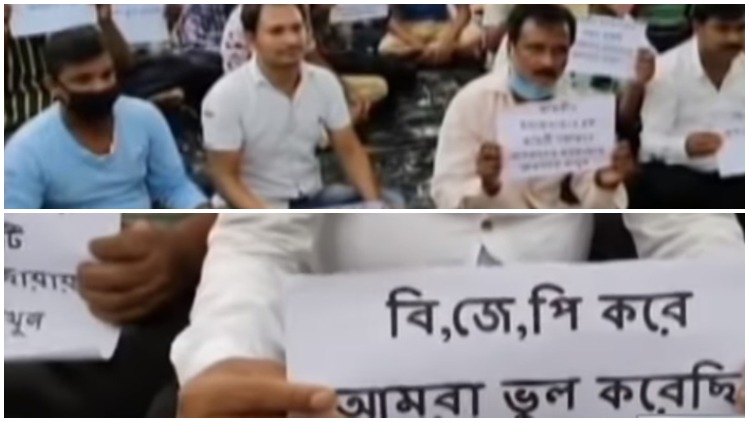
Kolkata: A section of Anti-Bharatiya Janata Party Left groups and individuals together have launched a campaign– No Vote To BJP in Kolkata on Monday under a forum named ‘Bengal against Fascist RSS-BJP’ urging people of the state not to vote for the BJP in the coming assembly poll.

Most of the activists, both of Naxalite and non-Naxalite origins who joined the citizens convention recalled the pre-lockdown growing agitation against the Narendra Modi-Amit Shah regime’s communalised citizenship matrix– CAA-NRC-NPR. They wanted to regain the momentum in the context of the assembly poll before it is too late.

One of the organisers reflected the sense of urgency by pointing to BJP’s growing graph in Bengal vote-shares that has not only pulled up the party second to incumbent TMC in 2019 general election but also increased the violent show of strength by the larger Sangh Parivar outfits both in Kolkata and districts. “Lynch mobs and riot-mongers are no more restricted to Gujarat, UP and other BJP-ruled states. We are already late in rising to the occasion,” she said to a packed hall.

The footprints of corporate-Hindutva tango

The resolution passed by the convention enumerated the footprints of Ambani/Adani-Modi tango, a la Hitler and Mussolini, the original icons for RSS ideologues. It focussed on the very fascist nature of the Narendra Modi regime by highlighting its successive onslaughts on the secular democratic edifice of Indian federal republic by sweeping attacks on the rights of the minorities and systemic subversion of the independent constitutional institutions including judiciary and media. The declaration described such moves as the testimony to the agendas of the crony corporates and the RSS-led majoritarian religious nationalists to fast forward the pluralist polity’s turn towards an one nation-one election-one party-one leader rule.

The moves towards the neo-Nazi terror-state included de facto abrogation of article 370 of the Constitution (to annul the special status of J&K and the abolition of its statehood), amendment to the Citizenship Act (to make nationality religion-based) and announcements for countrywide National Register of Citizens (to weed out Muslim infiltrators) and National Population Register (that forces individuals to be state informers on neighbors).

Stringent anti-terror laws (to muzzle every dissent against the government as anti-national and to put civil society members behind bars for years under false charges) and anti-‘love jihad’ laws in BJP-ruled states (to penalise Hindu-Muslim marriages) were the other signposts. The on-street attacks on Muslims and Dalits by cow-vigilantes and targeted killings of left-liberal intellectuals like Kalburgi-Pansare-Davolkar-Lankesh were also counted among the corollaries.

The prime minister has epitomized this politics of communal hatred and religious bigotry by taking a personal role in the construction of the Ram temple at the very site of demolished Babri mosque after the Supreme Court made a mockery of constitutional principles and rule of law over the century-old land dispute.

Bengal Election no vote to bjp campaign kolkata assembly polls
Participant activists at the meet I Picture by Mrinal Jana

The design for over centralization has already been dovetailed to the wish list of the neo-liberal market forces through demonetisation- nationwide GST (general service tax) in the first term of Modi regime. The regime has made rapid moves to pro-corporate labor, farm and environment laws either to sell off or simply reward the cronies with the state-owned companies in core industries as well as state-built infrastructures and institutions in telecom, banking, aviation, railways, mining and insurance. Most alarming are such arbitrary steps in health, education and essential food supply sectors.

The government’s inhuman treatment of migrant laborers during the prolonged lockdown and the meagre doles to those millions who have lost livelihoods, in contrast to generous bailouts to the billionaires also revealed the DNA of this ultra right wing regime.

Import of the electoral battle

Despite garnering only 37 percent of the popular votes, the  brute majority of the BJP in the parliament has facilitated all the sweeping constitutional and legal amendments. Particularly, in the second term of the Modi government as it has added to his parliamentary strength.

In this backdrop, many participants cautioned against ideological or practical scepticism to electoral politics as it would be suicidal for the farmers and workers as well as Dalits and Adivasi masses to ignore the battle at the hustings. Import of battle for Bengal is now being appreciated beyond its borders as struggling farmers of Punjab and Haryana who have seized Delhi darbar against pro-corporate farm laws.

“They are wary of BJP-RSS takeover here and urged us to put up a spirited resistance as they have done,” a speaker who had visited farmers at Singhu and Tikri border to Delhi, said. Echoing the spirit, many felt that there is no Chinese wall between the sustained mass movements and electoral battles.

Others noted the Sangh Parivar’s sinister game to appropriate Bengal’s departed icons like Rabindranath Thakur, Swami Vivekananda and Netaji Subhas Bose at one hand and attacks on living conscience-keepers like Amartya Sen on the other. While rejecting any provincial or regional chauvinism over Bengali identity and culture, some spoke on the need for resistance to BJP-RSS move to impose Hindi-Hindu-Hindustan project on states outside Hindi heartland.

But which forces to vote for in Bengal?

Danger of fascism notwithstanding, the tricky question of vote to non-BJP parties is yet to be resolved when the incumbent TMC and Left Front-Congress combine are still at loggerheads. While a good section of activist milieu and larger public opinion is worried about the advantage to BJP in a multi-pronged fight, strong misgivings about both LF & TMC dispensations has remained another big divider.

Noting that reality, the resolution blamed the anti-people misdeeds of non-BJP ruling parties in states including violation of democratic norms, human rights, abuse of state power as well as corruption and administrative failures to deliver to the commoners for the advent of the fascist forces. It particularly named the decade-long TMC rule in this context while some participants wanted to include the three decades of the CPM-led LF rule in the same account. Others pointed to the role of non-BJP parties in communalising politics and social fabric that has triggered unprecedented numbers of riots in the last decade .

Delving into the dilemma over the imminent danger of BJP takeover and sordid records of non-BJP rulers, many speakers suggested a middle road by asking voters to go for the best possible challenger to the BJP in each constituency. Others wanted to build public pressure on non-BJP parties to ensure an ‘one-to-one’ fight against the hegemon. Organisers admitted that people would certainly ask for the alternative to the BJP but felt it would be premature to formulate a position on it as the political equations are yet to take shape.

Pending that eventuality, the campaign must widen its social base by including Dalit, Muslim and Adivasi groups in districts. Speakers of different age groups shared this urge to augment the collective outreach efforts, especially among the youth who had largely voted for Modi in 2014 and 2019. The forum has planned to hold a big rally in Kolkata on March 10 after the first round of its campaign in districts.

BJP ruled states in India is undoing of Indian Constitution by attacking minority’s worship places– IAMC

Kolkata: On January 26 India will celebrate its Republic day which honors the date on which India adopted the Constitution of India. The Constitution is a collective resolution of the people of India to secure for all its citizens justice, liberty and equality and to promote fraternity among them all, without regard to caste or creed. But persecution of Muslims under the rule of Bharatiya Janata Party, has increased beyond one’s imagination, the concerned has expressed by the Indian American Muslim Council (IAMC), an advocacy group dedicated to safeguarding India’s pluralist and tolerant ethos.

“The Narendra Modi government must demonstrate to all Indians and the international community that the Constitution is still in effect,” said Ahsan Khan, President of IAMC. “This will require putting a stop to the violence against Muslims by groups affiliated to the larger ideological fraternity of the Rashtriya Swayamsevak Sangh (RSS),” added Khan.

The strongly statement of the IAMC president, came after a series of incidents, suggesting Indian state legitimized the persecution of Muslims, encouraged, and enabled violence against the largest minority community in the country.

The advocacy group mentioned that the vandalization of Brigadier Mohammed Usman’s grave marks yet another low in India’s rapid descent into fascism. The fact that the grave of a true national hero and martyr like Brigadier Usman was targeted shows that the nationalism of Hindutva is not about the nation at all, nor does it adhere to the norms of any religion. Rather, it is a narrow, bigoted creed that does not regard anything as sacred in its naked drive for power and supremacy.

“Be it Uttar Pradesh or Madhya Pradesh, there is no limit to persecution of Muslims by the state. Being a Muslim in India has become a nightmare and that needs to stop,” said Khan. He referred to the anti-conversion ordinance passed by Uttar Pradesh which is being governed by the Islamophobic, hate mongering, Chief Minister Yogi Adityanath, now increasingly the poster boy for radical supremacist groups aligned with Hindutva.

It further said that the Ordinance targeted Muslim men who happened to marry Hindu women. In its aftermath numerous cases of harassment of interfaith couples were reported. Over a hundred former civil servants from the IAS, IFS, IPS and other branches of the services, declared that the Ordinance turned the state into “the epicenter of politics of hate, division and bigotry.” They wrote to the state chief minister Adityanath, urging him to withdraw the controversial law. These former civil servants include former National Security Adviser Shivshankar Menon, former Foreign Secretary Nirupama Rao and former Adviser to the Prime Minister TKA Nair.

While Mohammad Jawad, the national general secretary of the IAMC, said on the recent attack on Muslim households and places of worship in Ujjain, following rallies carried out by Hindu right wing groups, “In Ujjain district of Madhya Pradesh on January 31, police razed the house of a daily wager who had built his house over the past 35 years, pushing a family of 19 to the street. It was done in a one-sided action by the police after the local Muslim community resisted vandalism of Bharatiya Janata Yuva Morcha workers who tried to create communal disturbance by chanting Hanuman chalisa in front of a mosque, and later damaging its minaret.”

Jawad pointed out that members of right wing Hindu groups used collection of donations for the construction of Ram temple as a pretext to create fear among Muslims.

“The agitation for demolition of Babri mosque during the 1990s was turned into a source of majoritarian violence. Hindutva groups are following a familiar model of violence,” he added.

Jharkhand CM Hemant Soren’s cavalcade attacked in Ranchi

Ranchi: Violent protesters created panic for a few hours on Monday evening at Ranchi’s Kishoreganj Chowk when they attacked the Road Opening Party (ROP) of Chief Minister Hemant Soren. The demonstrators, who were protesting against an incident of rape, even blocked the road that CM Soren’s cavalcade was to cross to reach the Chief Minister’s residence in the state capital.

Later, policemen diverted CM Soren’s route to avoid any major untoward incident.

Several policemen were  injured including a traffic inspector who suffered  serious injuries and had  to be admitted to Medanta Hospital. The protestors also damaged several vehicles.

After the incident, several videos related to the incident circulated. In one video, a young man leading a group of people, reasoned for stopping the CM cavalcade that they want to ask the CM till when women of the state will face atrocities? In another one, a man who was recording the incident of the stoppage of CM cavalcade was stopped by protesters to record.

Video of Hemant Soren’s cavalcade attack

“This incident is not a common one, and it is a direct attempt to take law and order in their own hand. A police officer has been injured and had to be hospitalised. It is a well-planned conspiracy to incite communal violence. It is a conspiracy against the government and the people’s mandate that this government has earned,” JMM’s General Secretary (central committee) and spokesperson Supriyo Bhattacharya told newsmen after the incident.

He also warned, “One has every right to protest democratically and the law permits it, but this was done to push society and the entire state toward a dangerous direction. Those who premeditated and executed such a dangerous plan should now get ready to face the consequences.”

The Hemant Soren led government recently completed its first year in office. In 2019, JMM, Congress and RJD alliance defeated BJP led NDA and ousted Raghubar Das from power.

When a genius thrives in isolation

0

What happens when a happily married middle-aged man decides to abandon his family and pursue his passion to become a painter? In W. Somerset Maugham’s famous novel, The Moon and Sixpence, the central protagonist, forty-year-old Charles Strickland, who is a stockbroker by profession, refuses to embrace the seduction of certainty that his boring and unexciting job affords him; he tries to snap out of an existential vacuum that eats him up from within; in the end, the painter, stricken with leprosy, dies a tragic death, but not before painting his magnum opus. Published in 1919, this novel continues to resonate with bibliophiles even today for its compassionate and sensitive study of the psyche of a genius for whom creativity takes precedence over everything in life. The novel remains a testament to the human spirit.

Freedom from Emotional Bondage

Painting for Strickland becomes some sort of a zahir, an objective, a kind of madness, but the road to achieving it is paved with difficulties and innumerable odds. The metastasizing absurdities of life hit him like a ton of bricks and accelerate the spinning circle of depression and aloofness. He wipes the slate clean to restart life and lead an unfettered existence in pursuit of his ambition, which he finds finally sublimated in his creations.

At the age of forty, Strickland, in a flash of epiphany, perceives the horizon of a world in which he can seek freedom from any sort of social and emotional bondage. As a painter, he wants to rise above prosaic and mundane concerns; even at the expense of isolating his family and children. Till the end, Strickland, not even once, feels tormented by the phantom of guilt.

Embracing a Life of Uncertainty

Mrs Strickland is convinced that her husband is maniacally self-centred. Strickland, on the other hand, prefers to accept the grab bag of uncertainty for creative fulfillment, and maybe even for insight-giving satori. For the painter, like Larry, the carefree and feckless protagonist in Razor’s Edge, “the greatest ideal man can set before himself is self-perfection.’’ Anyone looking for some vestigial traces of conscience in this man would be hugely disappointed. To his wife, the decision comes as a punch in the solar plexus: she labours under the delusion that her husband must be busy pursuing the matters of the heart. His bolshie cheekiness at times pulls people up short, including his family members. Maugham says, “Here was a man who sincerely did not mind what people thought of him, and so convention had no hold on him…”

In the course of the novel, the writer informs us that parental dictates and opposition thwart Strickland’s dream of becoming a painter. Perhaps, he wasted the first flush of his talent during his teenage years. He says, “I rather wanted to be a painter when I was a boy, but my father made me go into business because he said there was no money in art.”

Satisfied to Lead His Chosen Life

Strickland wants to be no more than himself. In the painter, Maugham portrays a man, who always “lived a life wholly of the spirit…He lived in a dream, and the reality meant nothing to him.” Strickland is averse to the idea of selling his paintings for self-aggrandizement. It is believed that Strickland’s character is based on the famous French painter Paul Gauguin, who never sold his paintings. Strickland is not after fame and fortune. It appears that he chooses to lead a life of creative isolation. He is often accused of being incorrigibly selfish. Henrik Ibsen once said that personal liberation is at bottom self-centred and heartless. He also believed that the basic essence of creativity is to protect one’s essential self, to keep it free from all intrusive elements. At one point, Strickland says, “I look forward to the time when I shall be free from all desire and can give myself without hindrance to my work.”

No wonder, when Strickland moves to France, he cuts himself off from his family and friends to become a painter. For him, his masterpiece will be the apotheosis of his life. He shows much equanimity at times of stress; and ennobles the free life of the mind till the very end. According to him, “art is the greatest thing in the world.” After having seen some of his marvelous paintings, art lovers realize that they have hit upon a gem of purest ray serene.

The Final Masterpiece

Despite living in abject penury with his second wife and children, Strickland paints his final masterpiece on the wall of his hut at a small island in Haiti. The theme of the painting is the “Beginning of the world, the Garden of Eden.’’ The painting serves as a hymn to the “beauty of the human form” and Nature. He instructs her to burn the painting after his death. She does just that, depriving the world of a magnum opus. Perhaps, Strickland does not want it displayed in the halls of the rich bourgeois who would not be able to recognize its true value. It would just be an artifact for them. He never wants his art to fall into the hands of mercenaries. An avant-garde genius, Strickland always lived and created in the moment and not for an unseen tomorrow. His artistic integrity shines like a beacon through his life.

How Rajiv Gandhi stood up against public opinion, and eventually bowed to it

0

Rajiv Gandhi was a gentleman, without any experience of statecraft and uninitiated in political roguery. But the same cannot be said about those who had become his close advisers when he became Prime Minister following his mother Indira Gandhi’s assassination in 1984. Towards the fag end of his tenure, Rajiv was under attack for various lapses of his government. He decided to reign in the Press. A Bill with the draconian provisions was drafted. As he had a massive majority in Parliament, there was no problem in passing the Bill. It was popularly known as Defamation Bill.

The Bill broadened the definition of defamation, shifting the burden of proof from the aggrieved to the accused — generally a newspaper – and forced editors, publishers and printers to be present in the court at all hearings.

This led to an unprecedented unity among journalists and non-journalist employees of newspapers and news agencies – both left-wing and right-wing — to protest against the Bill. Public meetings were held to explain to the people the disastrous consequences of the Bill. Government functions and Assembly sessions were boycotted. Senior journalists and editors led the protests at several places. In Delhi a procession was taken out (on September 5, 1988) on a four-km route from India Gate to Boat Club with Ramnath Goenka, Khushwant Singh, B G Verghese, Kuldip Nayyar and others carrying placards against the Bill. On September 6, newspaper and news agency employees all over the country observed strike. The following morning the only newspaper that came out in Delhi was ‘National Herald’, founded by Jawaharlal Nehru and run by a Congress Trust. From September 14, the journalists in the country went about their work wearing black badges for three days.

Rajiv Gandhi only got more stubborn. He told journalists in Guwahati on September 15 that the Defamation Bill was a ‘prestige issue with the Government’. He had earlier issued a statement imputing (in Modi style) a lack of proper understanding of the contents of the Bill to protesting journalists. His statement said, inter alia: ‘we will like them (the Press) to read the Bill. We are totally convinced that the Bill is needed. I am myself convinced that we are proceeding on the right path.’

A fallout of the countrywide anger against the Bill was a feeling of panic among Congress MPs as they feared certain defeat in the elections due within a year. Several Congress MPs tried to reason with Rajiv Gandhi. Some of them displayed rare courage and publicly appealed to the Prime Minister to withdraw the Bill.

On September 22, Rajiv Gandhi decided to bow to the public opinion and issued a statement saying that the Bill would not be made into law. A press release signed by the Prime Minister said: ‘a free Press is an integral part of the inner strength and dynamism of our democracy. Without a free Press, there can be no democracy. The imperishable values of our freedom struggle have gone into making the Press in India. We uphold this legacy.’