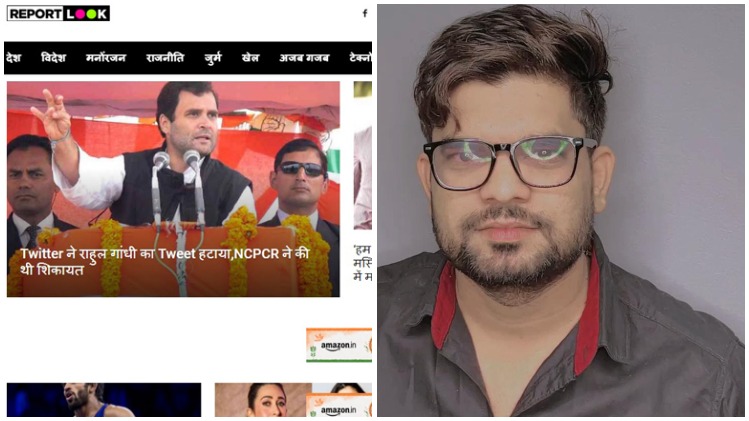
Kolkata: He had studied civil engineering, but as he was interested in computer science, he learnt software development. Now he not only does development work, he also founded a Hindi news website and that runs stories which are often ignored by Indian mainstream media.
Meet 29-year-old Jamil Khan, from Rajasthan, who along with pursuing his dream of becoming a developer also caters common masses the hate-less news that most media organizations serve these days.
“I had done civil engineering (SLBS Engineering College, Jodhpur) because my parents had wanted it. But, I was always interested in doing computer science. After finishing the study, when I got a job in a construction company, not only was it less paid, I realized I cannot pursue my career out of it. Now, my family had also agreed and given me time to follow my interest,” Jamil Khan told eNewsroom.
The young engineer turned newsman further said, “But, the challenge for me was neither I had money nor time to go back and attend any software development course. So I learned with the help of friends, books and online classes to become a developer. When I learned a bit, I started helping people on a pro-bono basis and when I got confidence, I launched my site ReportLook.com in 2017.”
ReportLook’s Hindi stories get translated from Indian and international media organizations’ English sites, and often go viral.
“We select those stories, which if run by major sites they twist it, means the story remains hate-filled or they ignore it because it did not fulfill their agenda,” Reportlook founder elaborated.
He mentioned, “Journalism is a vast field and I am still learning about it, but now at least I can differentiate which story is a good report and which one lacks a basic journalistic approach, one that basis we decide our news items.”
But, Khan is neither Pratik Sinha and Mohammed Zubair whose website AltNews has caught the imagination nationally and internationally or The Wire founded by Siddarth Vardarajan, which has become a pioneer in meaningful journalism in India and gets public support on a single call. So how does his site sustain itself in the market?
“Google is the answer,” he replied and added, “I earn from Google ads. As I know Search Engine Optimization (SEO) works, with this help, not only it fetches me viewers but also some money.”
However, the young founder is also planning to seek public support in future to strengthen more arms to his four year old venture.
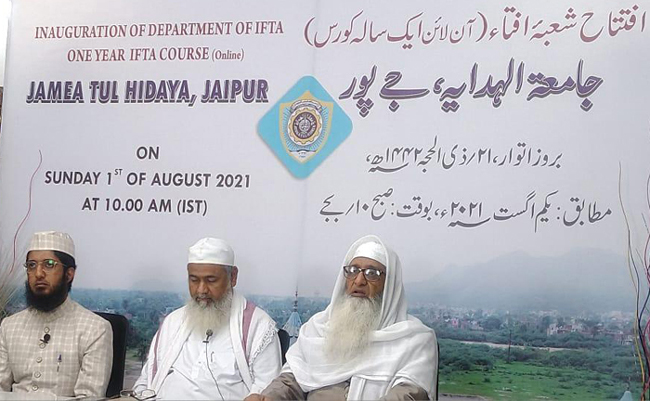
Jaipur: The Department of Ifta in the Jamea Tul Hidaya (University of Hidaya), Jaipur has been inaugurated with the commencement of one year Online Ifta Course from August 1.
In the Online inauguration ceremony Maulana Rabey Hussaini, president of All India Muslim Personal Law Board (AIMPLB), presided while Maulana Khalid Saifullah Rahmani, acting General Secretary of the AIMPLB, was the chief guest of the programme. Maulana Mufti Atiq Ahmad Bastavi, Professor of Hadith and Jurisprudence, Nadwat Ulema, Lucknow, was Guest of Honour at the function.
Maulana Fazlur Rahim Mujaddidi, Rector of Jamea Tul Hidaya, Jaipur, delivered the welcome address on the occasion.
Maulana Mufti Mohammad Zakir Nomani Kashifi, Mufti-e-Shahar Jaipur and a teaching faculty of Hidaya University inaugurated the online Ifta course by delivering a lecture to the students of Ifta. While Maulana Habibur Rahim recited verses from the Holy Qur’an.
The Online programme was attended by Muslim clerics and others from Saudi Arabia, United Arab Emirates, Bahrain, Qatar and Oman in the Gulf countries and the United States, the United Kingdom, Portugal, Canada and others in the West, as well as from various parts of India.
Spirit of Islam
Maulana Rabey Nadvi in his presidential speech said that we are in dire need of scholars who not only understand the spirit of the Islam religion but can also interpret Islam correctly. While appreciating the education system of Hidaya University which includes technical education also said that from the very beginning the university has stepped up with a curriculum compatible with modern and religious education. He said that Maulana Abdul Rahim Mujaddidi, the founder of the university, was one of the personalities who took a step in this direction realizing the dangers.
He said that Ifta is the interpreter of the Muslim world and the Muftis should be prepared from the Ifta Department who not only understand the religious consciousness and the spirit of Islam but also can unite the Ummah cut off from the religion and guide it properly.
Maulana Khalid Saifullah Rahmani speaking as the chief guest on the occasion said that there are three main areas of Ifta, Qaza and Accountability which are important. He said that this Department of Ifta is very important because it provides guidance to religion and the world. Due to this training was required for Ifta and Fatwa departments.
While Maulana Atiq Ahmad Bastavi, addressing said that it was important for the students of the Ifta Department not only to join the Ifta course for the title of Mufti but also to take up the course with sincerity and religious guidance.
Difference between ‘Fatwa’ & ‘Qaza’
While acting as a host on this occasion, Maulana Fazlur Rahim Mujaddidi, Head of Jamea Tul Hidaya Jaipur, Chairman of Abdul Rahim Educational Trust and renowned religious scholar, welcomed the guests and students at the inauguration of the online Ifta course. Speaking on the occasion he said that today is an invaluable and memorable day in the history of Jamea Tul Hidaya. Highlighting the importance of the Ifta course, he said that the main difference between “Fatwa” and “Qaza” is that the Mufti gives a Shar’i ruling on an issue in the light of Holy Quran and Hadith while the Qazi investigates the incident and applies the Shar’i ruling on it. He said that “Fatwa” is “newspaper” and “Qaza” is “accusation”.
He announced that new courses would be started in Jamea Tul Hidaya for creating awareness about the modern world among the students of madrasas. These include the soon-to-be-launched Accountancy and Management courses along with the English language, which will not only keep the students connected with religion but also provide them with employment. “Usually the relationship ends with an education that doesn’t have jobs and that doesn’t work with economics. We’re working on that at many levels, and where a number of schools have been opened, there is a Crescent Academy for Civil Services preparation,” he said. The Crescent Academy has been in operation since 2002 and has so far produced 170 civil service officers, he added.
He said that Maulana Shah Hidayat had realized that the policy of the British government would have a negative impact on Muslims due to the adoption of the English language. The doors of employment were closed for thousands of Urdu-speaking Muslims. Therefore, he was aware of the dangers and was concerned for the overall development of the Muslims. As such he established Jamea Tul Hidaya and developed a curriculum in tune with the prevailing situation encompassing both religious and modern & technical education.
Maulana Fazlur Rahim Mujaddidi said that our plan is to set up schools in every district of India and especially in Jaipur so that no Muslim child is deprived of education. He said that apart from Crescent Academy, Abdul Rahim Educational Trust is serving the nation through five schools, a welfare scheme for Muslims to benefit from welfare schemes, FFCL among others.
Revolutionary Step
It may be mentioned here that Jamea Tul Hidaya is a revolutionary step in the field of Islamic education taken by a well-known Islamic scholar as well as a great priest Hazrat Maulana Mohammed Abdur Rahim Mujaddidi. This great idea was introduced by Hazrat Maulana Mohammed Hidayat Ali Mujaddidi (a great priest of his era) 75 years ago, and Hazrat Maulana Mohammed Abdur Rahim Mujaddidi gave it a practical shape. He planted that sapling and then fed it with his sweats, tears and blood.
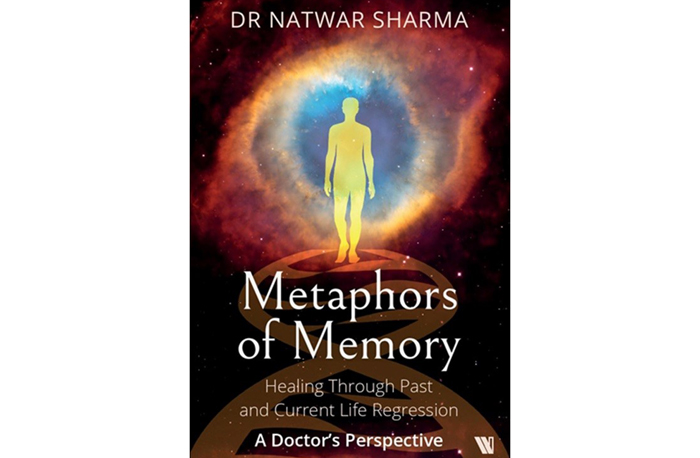
New Delhi: Covid-19 has brought permanent transformation to our day-to-day lives with online schooling, work from home and telemedicine bridging distances and making services available remotely to everyone. One of the deepest scars left by the pandemic is its impact on the mental health of people across sections of society. Can we find an online solution to this? According to Dr Natwar Sharma, a renowned paediatrician, it is possible. Regression therapy made available online can help people mitigate the stress caused by the pandemic, Dr Sharma says in his new book ‘Metaphors of Memory.’
“People have gone through tough times personally staying in hospitals, ICUs and also from the trauma of losing the loved ones. Hence post-traumatic stress disorder has increased during this pandemic and regression therapy can help people significantly in this regard,” says Dr Sharma who is currently in India to be with his family and for promoting his book. His new book, Metaphors of Memory: Healing Through Past and Current Life Regression (Westland), offers a window into his 11-year journey. Dr Sharma is a member of the Royal College of Paediatrics and Child Health (UK) and has served and trained at the Apollo Hospitals, Chennai.
“Many doctors are not open to regression therapy and I don’t blame them because I come from the same mindset and the way we are trained to practise evidence-based medicine. But some doctors read my book Metaphors of Memory and have said my books resonated well with them since they had the same curiosity and unanswered questions,” says Dr Sharma.
He further adds. “One doesn’t need to be a believer to undergo therapy,” His decision to start regression therapy was also to understand the reasons for certain chronic conditions, such as diabetes, hypertension, obesity, asthma, and even cancer, all of which, he believes, are not just genetic or lifestyle-related, but also a result of “an overflow of negative charge in our body, which has been accumulating bit by bit over some time”.
Regression therapy can also be a useful tool to gain clarity about the direction and purpose of the current life, even if there is no apparent physical ailment. According to Dr Natwar, “Sometimes people have mental or spiritual blocks without any physical ailments or phobias which could be addressed with regression. For example- I feel stuck, I am not good enough, I always feel betrayed, I can’t trust anyone, I don’t belong here, I feel empty, I can’t find true happiness, I keep procrastinating, I can’t connect with people, I always wake up tired and can’t get enough sleep, I always feel drained and have to drag myself among others.
Can regression therapy replace the regular line of treatment? “No,” It can supplement it, yes. As a doctor, he says “If you have a patient with kidney failure, there is no way that alternative therapy can come to their rescue. I let my patients know that. Yes, if the disease is a progressive one, it can inhibit the speed at which it is progressing.” He shares how many cancer patients who have come to him, were usually at the fourth stage of the disease. What was common to all was the way the disease was disclosed to them. “The power of the mind comes into play, which sets the ball rolling for the disease to either progress or regress.”
Guwahati, Kamrup and Rangapara (Sonitpur district), Assam – Sehar, Marget and Prathibha were teenagers, growing up in somewhat similar conditions a few hundred miles apart in the north-east state of Assam, which is visited by floods every year leaving in its wake destruction, devastation and consequent displacement. Sehar and Marget were in Assam’s flood-affected Sonitpur and Kamrup districts, while Prathibha was from a tea tribe community, a multi-ethnic group of tea garden workers that comprised 17 per cent of the Assam’s population, in Sonitpur district. Like other teenagers, they dreamt of finding love and settling down with the man of their choice, away from parental homes.
Contentious findings
They never in their wildest dreams thought they would be sold off like commodities, forced to lead lives of humiliation and torture with no apparent means of escape. Like so many others before them and after, the three became victims of trafficking and slavery, all a consequence of their abject poverty that is preyed upon by traffickers, often their own relatives or neighbours.
Raised in tiny rooms in a squalid neighbourhood, the three girls spent most of their childhood on their own. Khaleefa, who is Sehar’s mother, lost her parents when she was a kid, Marget lost her mother as she came to this world. And Prathibha’s parents were busy working hard, making a living, to give her any time.
Their destitution arose from the twin scourges of floods and soil erosion that destroy properties and force many to leave their village and migrate to find some means of livelihood.
Their story is not much different from the hundreds whose properties are damaged by flood and erosion, their farmlands becoming uncultivable owing to the silt and sand deposited by the flood waters entering fertile land across the state.
“During the winter, the water levels in the Haathai Naula, one of the three water bodies that flows very close to Marget’s village Ghogra in Sonitpur district, are depleted, but during monsoon it swells up, damaging houses and depositing silt and sand in our farmland. For a people dependent primarily on agriculture, “the loss of farmland was a heavy blow to us,” says Marget.
“The silt left by floods in the paddy fields turn the farmlands uncultivable. This made my father migrate from our ancestral village Ghogra in Sonitpur district when I was eight year-old,” she added. In the last two decades, Ghogra village has faced several internal and external natural calamities.
“We came to Sonitpur town where my father found work as a cycle-rickshaw driver”, she added.
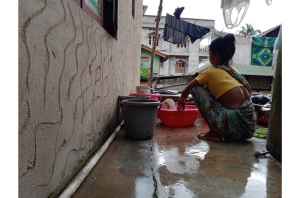
He made little ferrying passengers often unable to meet the household expenses. Soon he joined a local and started selling liquor, while Marget grew up cleaning the compound of her house, rooms, and kitchen, washing clothes and fetching water.
Desperate days
Unaware of how much her father made, Marget was forced to marry on January 3, 2003. But life was no better for her at her husband’s Dhulapadung village under the jurisdiction of Rangapara Police Station in Sonitpur district.
“My husband earned Rs 800 per week and that was not enough for the six of us including our four children, two sons and two daughters and my husband. Our hardships began after my husband started spending most of his earnings on liquor. I had no choice but to work in a tea garden,” she said, covering her face with a red dupatta.
Earnings from the tea garden were not enough also. Soon Marget began looking for work opportunities with better earnings.
She came in touch with traffickers who have gained notoriety in Assam’s tea gardens.
Unable to bear the financial challenge and the physical, sexual, emotional and psychological abuse at her in-laws, Marget left her village nestled on the background of hills and slopes and surrounded by Dhulapadung Tea Estate.
Khaleefa’s daughter Sehar was trafficked and rescued subsequently
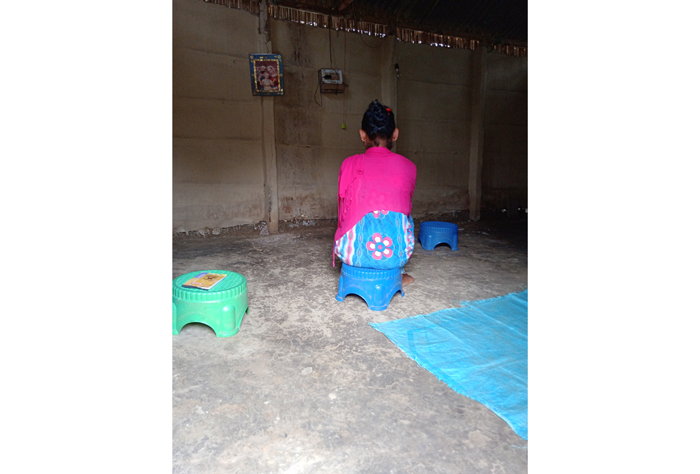
“I bought a train ticket for Rs 30 from the railway station and reached Guwahati Railway Station. Here, I bought another train ticket worth around Rs 200 and reached New Delhi Junction. During my journey, I was told by an unfamiliar face where I would be able to start as a house help immediately,” recounts Marget, whose back faces the camera as she speaks to us. She remains unemotional as she recalls the experience.
“The house was not very far away from the railway station. I came walking and stopped before a shop. The shopkeeper asked me to wait for a while, and probably made a call to my employer. As I was waiting before the shop, I noticed someone on the terrace looking at me. Meanwhile, the house gate was opened for me. When I entered the house, I was told to use the lift”, she said.
When the lift stopped on the floor, Marget was given a dress to change into because the one she was wearing was dirty and torn.
The next hour she became a cook, did house chores throughout the day till the family of four went to bed. She was given food twice a day from the meals Marget prepared for the household. The morning three hours were devoted to looking after a child. Then she had to take care of an old-age couple. In the meantime, she had to cook and finish routine chores. In the afternoon she had to spend time at a small stitching unit at where she was asked to clean up and work as a helper.
“I would only be able to sleep after the family members went to bed. I not only worked at home but was forced to work at the stitching unit too. I cried a lot and begged them to pay my wages and let me go home,” she said.
Meanwhile, her husband lodged a missing person complaint with the Rangapara Police Station in Sonitpur district.
“Probably, my employer saw my photo appearing in a newspaper and read that the police were looking for me. Hurriedly and for the second and last time I was allowed to use the lift to come down. From home I reached New Delhi Railway Station. And on the arrival of a train I was given a train ticket and Rs 200 by my employer. That was the only money which I have received working for 18-19 hours in the last eleven months in a hellish situation,” says Marget.
When asked how she got trafficked Marget said that while working as a daily wager in a tea estate, she came in touch with the agents/traffickers. The agents convinced her and offered her with a good job and money. One fine day, she made up her mind and left home. She reached Rangapara Railway Station and boarded a train to reach Guwahati. Probably, she was given instructions by the agents to reach Guwahati Railway Station. Here, she was told to board a train to reach New Delhi. During her journey, one of the fellow passengers, probably a trafficker, got friendly and told her where to find employment and shelter in the national capital. But for the eleven months she had spent at a house in New Delhi, she remained cut-off from the world. She never received the promised salary and had to work for more than 18-19 hours. She chose not to share more information about the agents/traffickers.
Marget was comparatively lucky as her husband’s missing person complaint helped her reunite with her family.
Currently, her case is under hearing before the Sonitpur district court.
Hard to escape
A similar story was told by Khaleefa, Sehar’s mother and a resident of flood-prone Nagarbera village on the south bank of the mighty Brahmaputra. Khaleefa’s daughter Sehar was lured by a trafficker with the false promise of seeing pretty places.
In Assam, where floods devastate usually the same marginalised people year after year, Nagarbera village has a very fragile agricultural economy.
Every year the swollen Brahmaputra submerge land and houses for some time, with erosion causing more damage in terms of the land and property. Agriculture suffers extensively, especially the kharif paddy crop.
“The floods caused by the Brahmaputra leaves behind more sand than silt. During the annual deluge we pray to Allah to save us from the floodwaters of the Brahmaputra submerging more and more areas of our village and land. Houses damaged by flood can be rebuilt, but the damage to our agricultural land refuse to heal,” says Khaleefa, who was raised by her relatives after she lost her parents at an early age.
Married at a young age (she says probably 17 as she is unsure of the year she was born) to a villager, Khaleefa had two daughters, but the flooded paddy fields left them impoverished.
“Food became scarce for us. Meanwhile, my husband remarried. I packed up a few belongings in a polythene bag and decided to migrate to Guwahati to raise my children,” said Khaleefa her eyes downcast as she tries to finish the household chores of her employer. She sits with her left profile to the camera unwilling to face it.
Pratibha was rescued by her uncle from Punjab
Khaleefa did back-breaking work to earn a living, collecting supplies from ration shops, cleaning houses, cleaning cooking utensils, and collecting water. And then she had to hurry back to send her children to school. Her youngest daughter Sehar was a pretty face with delicately chiselled features. Khaleefa knew the world would be unkind to a lovely soul like Sehar and tried to protect her. Sehar was not allowed to have any friends and could not go out of the house much, under Khaleefa’s instructions.
In search of better life
Despite her efforts, Sehar was lured by a local unemployed youth with the false promise of taking her to visit a big city. A free spirited beautiful girl always eager to smile, Sehar found herself in an unknown place with no knowledge of the local language in 2019.
“My daughter was shocked, when she found herself confined to a room in an urban town in Punjab – to be handed over to an unknown face any moment. She screamed and yelled for help,” Khaleefa narrated.
A cycle of hope
“Sehar’s scream alerted neighbours. The family who came to rescue Sehar decided to make her their daughter-in-law,” Khaleefa said.
Currently, due to Covid restrictions, Khaleefa is unable to meet her daughter but says Sehar regularly shares her happy moments with her new family through pictures. She regularly speaks to her mother and is planning to visit her whenever Covid restrictions are lifted. “She seems
to be safe and happy,” Khaleefa said, rolling tamul paan in a slow rhythm from her left jaw to right whose juice left red stains on her lips. She seems anxious about being speaking so long to this reporter.
Her voice is soft and barely audible, and her words trail off as she speaks. She used the smart phone of one of her employers to speak to Sehar on a Whatsapp Video Call on my request.
A damp July afternoon in the areas of Dhulapadung Tea estate in Rangapara in Sonitpur district. The gate to a typical Assamese house built on bamboo pillars, with walls of bamboo strips plastered with mud and thatched roof, is wide open, as the neighbourhood joins Royal Soreng, secretary of Akhil Bharatiya Chah Mazdoor Sangha [All India Tea Workers Organisation].
Inside, 19-year-old Prathibha, in a tee shirt and shorts, comes out, doing chores and serving guests with lukewarm water and bisoni [hand fan].
Prathibha was born in Moinapuli village, which is nearly 8 kms from the Rangapara Railway Station. She tells her tale in the company of her uncle and rescuer Royal, softly, punctuated with frequent smiles. Her nails are painted, her brown hair frames her face and a black thread is tied to her left knee to ward off the evil.
She grew up in the backdrop of tea gardens, where the exploitative structure of Assam’s tea economy continues.
A cycle of exploitation
Here tea workers are given a paltry daily wage of Rs 205 up from the previous rate of Rs 167, which was the lowest compared to the daily wages of tea workers in Kerala, Karnataka and Tamil Nadu at Rs 403, Rs 349 and Rs 333 respectively. And her parents were one of the 10 lakh tea workers in the organised sector working in 856 tea estates producing around 55 per cent of India’s tea.
Due to low wages, many parents can barely afford two square meals a day let alone the basic healthcare for their children, which makes the proposal of someone else taking responsibility for the child, while offering a small amount, too appealing to resist. In other words, they are ready to give up their children in return for some money, such is the plight of these workers.
Dream slowly dissolved
For girls like Prathibha, whose dreams have slowly dissolved into the background of harsh reality, she spent the first13 years of her life fighting to get a share of the scarce resources that were divided among her five brothers and sisters.
Prathibha would rise early with her parents who worked in a tea estate in Rangapara in Sonitpur district.
She helped her parents raise her brothers and sisters living in a ramschakle house that required immediate repairs. Like most rural settlements, there was no plumbing or tubewell, and water is sourced from wells within the community.
The rising insecurity and financial instability caused Prathibha to stay at home when girls of her age went to the school or played in the ground.
“There was no time and an opportunity to enrol myself in the school. The burden of raising five brothers and sisters and household work came naturally on me”, said Prathibha, an almond-eyed teenager.
In her case, traffickers established their contact with a relative who knows such families who are in dire financial circumstances and see their family members and children as a vehicle for financial support.
“But…nothing came in our hand”
In 2016 at the age of 13, Prathibha left her house from a quiet village located few metres away from the boundary of a tea garden in Sonitpur district, to the state of Haryana where the Government for last several years is running a campaign to save the girl child, some 2200 kms away.
“I was 13 when my uncle took me to a village in Haryana. I was told to do all the household work and prepare chapattis for 7-8 people. I was living completely in an isolated area where I was unable to understand the language and communicate with others. Life was hell there,” Pratibha, aged 18 recounts.
The monthly settled wages of Rs 3,500 never reached her or her family in the two years that she worked.
She added: “We were foolish to trust people. I left home thinking it will bring more food for the family and a proper roof to our house. But…nothing came in our hand”.
Officials working among the tea-gardens in Assam feel that poverty is likely to leave a daunting impact in future for the tea workers
“A fertile ground for human trafficking”
“Deplorable socio-economic problem resulting from poverty and illiteracy is making a fertile ground for human trafficking in and around tea gardens,” feels Dr Tilak Chandra Adhikari, chief medical officer Assam Govt’s Public Health Centre, Rangapara, Sonitpur district. Mr Adhikari said unhygienic living condition, inadequate sanitation make them vulnerable to deadly infections and diseases. Moreover, many women workers in the past have shown anaemic symptoms”.
Prathhiba’s uncle Royal Soreng who rescued her thinks that it is the relatives and friends who act as the go-between between families and traffickers.
They use a variety of trafficking methods, including relying on word of mouth or on phone numbers and contacting friends and family members who are in dire need of financial support.
“On the basis of collected information, they approach their target and do the deal. Everything happens very quietly. I feel many traffickers keep themselves informed about the people whom they prey. I am surprised at the vast network of traffickers. I think they enjoy the support of people in power”.
Royal said Prathibha was rescued due to timely intervention of the police.
“We had lodged a missing person complaint with the Rangapara Police Station who approached higher police officials in Sonitpur and adjoining Tezpur District. Quickly, a contact with the employer of Prathibha in Haryana was established. I was there in Haryana where my niece was held captive,” said Royal adding “no police case was registered in the entire matter”.
Never ending calamity
Assam is one of the most vulnerable states in India to climate change. Each year, like clockwork, three to four waves of flood ravage the flood-prone areas. The measure of devastation is increasing every year in the last six decades.
According to the Economic Survey of India, 10% of the country is flood prone. In Assam, approximately 40%, or 931,000 hectares of land is flood-prone. As per a report on climate change published by the Government of Assam in September 2015, erosion has destroyed more than 3,800 square kilometres of farmland, more than Goa’s total area since 1954. A civil engineering report says that between 1954 and 2008 about 4,27,000 hectares have been eroded at the rate of 8,000 hectares every year, like clockwork.
And one of the major problems facing the disaster-hit people is river erosion and the resultant landlessness.
According to Assam’s Disaster management records from 2010 to 2015, 880 villages were completely lost due to erosion, 67 villages were partially lost, and 36,981 families lost their homes. Experts feel that the government’s formation of a separate department of climate change is not going to change the plight of the hundreds who face the brunt of flooding and erosion.
“The state enjoys unique topography and physiographic location that has a dense network of rivers, horse-shoe lakes, natural wetlands, abandoned courses of rivers. The southwest monsoon completely dominates the lives of over 3.12 crore people and the agricultural economy to a large extent. The government’s effort for structural solutions like the construction of embankments, digging of canals, digging of river beds, digging of wetlands, creating reservoirs/ creation of reservoirs and to release the flood waters to deal the very issue of floods and erosion in the river, village and farming are insufficient,” Kulojyoti Lahkar, wildlife conservationist and conservation biologist said.
This is alarming
As per the crime in India 2019 report, Assam recorded 201 human trafficking cases which is third highest in the country and tops in India’s North Eastern region. Out of the total trafficked victims, 80 were minors among which 56 were female. Of all the immoralities that is used in the human trafficking is the enslavement of children for sexual gratification.
The National Crime Records Bureau data suggests that the number of victims above 18 years of age is 168 of which 132 were female.
New system
In the light of the alarming rise in cases of trafficking and forced labour in the country due to further impoverishment of poor families, Nobel Peace Laureate Kailash Satyarthi has demanded urgent passage of Anti- Trafficking Bill in the upcoming monsoon session of the parliament without further delay.
In 2018, India’s Union Cabinet Minister for Women & Child Development Ms Maneka Gandhi presented The Trafficking of Persons (Prevention, Protection and Rehabilitation) Bill, 2018. The Bill was passed in the Lok Sabha. However, the Bill was never tabled in Rajya Sabha and it lapsed with the dissolution of the last parliament.
“Climate victims becomes refugees”
Currently, Sehar is apparently happily married after her rescue and is planning to visit her native place once the Covid restrictions are lifted. Marget who is spending time with her four children, has started working as a daily wager in the tea estates or in the paddy fields in Rangapara in Sonitpur district, while Prathibha is looking after five brothers & sisters and manages all household work.
Amid little hope and little disappointment, Marget 38, the eldest among the three said: “No one trusts displaced families. The government trusts them on the basis of documents and for the villagers and neighbours displaced families remain an outsider for decades and decades. Actually, climate victims become refugees”.
This report was written and produced as part of a media skills development program delivered by the Thomson Reuters Foundation. The content is the sole responsibility of the author and the publisher.
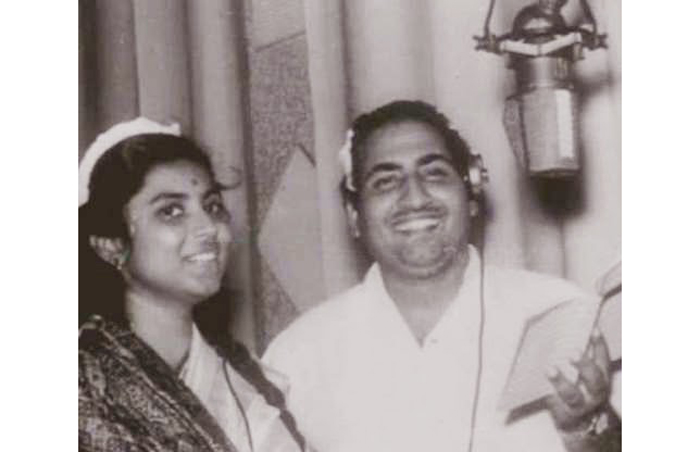
I was humming, Tere Hum O Sanam to myself. Memories of this lilting hit of mine with Mohammad Rafi Saab tuned by Sardar Malik flocked my mind. I was a new entry in the 60s to the world of playback singing. Mohd. Rafi was already the nationally acclaimed best playback crooner. A well-trained classical singer, Rafisaab was versatile. No other singer suited the voice of so many actors like Rafisaab did. While singing he delved deep into the philosophy of each song and understood well the acting style of the actor who was lip-syncing the song.
I am an introvert and shy person. I stuck to my singing and avoided mingling with film people. A truly affectionate senior, Rafisaab understood my nature well. When we rehearsed, he was very cooperative. During recordings, Rafisaab lent a divine touch to every song. Never did he try to dominate any singer who rendered duets with him. His diction was perfect and he could raise his vocal octaves to the highest pitch effortlessly. Similarly, he could bring down his voice equally well. The viberetto he used singing Aaja Re As Zara is still peerless.
I shared many sweet memories with the legendary Rafisaab. He was very seldom in pensive moods. Even if Rafisaab was not in a good state of mind he was never ill-behaved or whimsical. An emotional person, Rafisaab was a pious soul. Not a single day did he miss his prayers or riyaz. He believed in perfection and stuck to it.
There are many memorable duets Rafisaab sang with me composed by Shankar Jaikishan, Khayyam, Kalyanji Anandji, and Laxmikant Pyarelal. Each of these composers had their styles and was highly gifted. The duets which I remember fondly are Aap Ko Dil Mein, Na Na Karte Hue, Aajkal Tere Mere and Jaan Chali Jaye. To me, my eternal favorite is the climax song Dil Ek Mandir Hai from the film with the same name. As Rafisaab rendered the lovely Aa Aa Aa in the song I noticed tears in his eyes. So involved was he in singling.
I don’t believe in comparing creative people. Rafisaab, Mannada, Hemantda, Mukeshji, and Kishoreda are all institutions. They can never be compared. Just as S.D. Burman, Shankar Jaikishan, Kalyanji Anandji and Laxmikant Pyarelal are incomparable. Rafisaab admired my Marathi and Bengali songs. He was especially fond of the innocent romanticism conveyed by my solo Mone Koro Ami Nei in Bengali tuned by Ratu Mukhopadhyay. Rafisaab always said, “Ek Sachhe Phankar Ko Apne Gane Mein Dil Aur Dimag Dono Ka Sahi Istemal Karna Chahiye.”
No one ever said anything undignified about Rafisaab. He was a gem of a human being. Forty-one years ago when he passed away on this date, I was rendered speechless in grief. I remember the solo, Chale Ja Jahan Pyar Mile. Rafisaab rendered the male version and I the female one. I am sure he is now in that heavenly land where only love exists. There will never be a second Mohd. Rafi.
In the past few years, the physical barriers between our cities and remote villages have been rapidly eroding. Also shrinking is the consciousness for the rural poor.
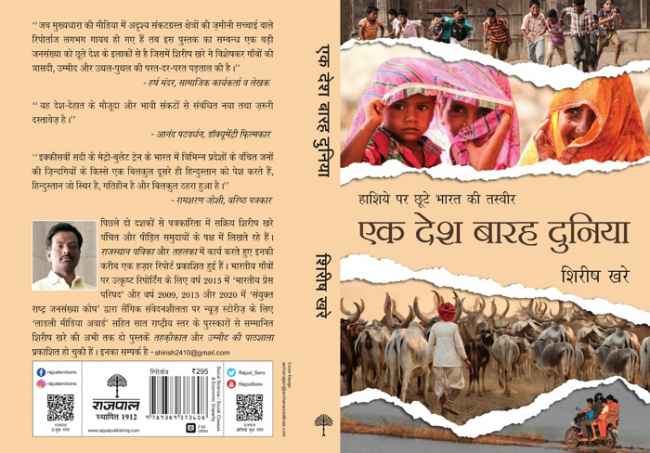
‘Ek Desh Barah Dunia’ from ‘Rajpal & Sons, New Delhi’ is written by Shirish Khare, a journalist known for his grassroots reporting for almost two decades now. It captures the voices of neglected people from twelve different parts of India. The author has highlighted the real faces that get hidden and obscured under the huge pile of statistical data.
A total of twelve reportages from seven states of the country in the period from 2008 to 2017 are included in this book.
Spanning this period, the author takes us on a journey; with the Korku tribes in Maharashtra, the nomadic or semi-nomadic community dominated areas like Tirmali and Sayeed Madari, the settlements affected by multi-displacement in big cities like Mumbai, Surat. In addition, are the new types of hazards on a large and beautiful river like Narmada, detailed descriptions have been given about the distressed villages of Chhattisgarh and Bastar in Chhattisgarh, Thar in Rajasthan, and Marathwada. The author writes in his foreword that he has kept the names of most of the characters and places as they are.
To get acquainted with the places and characters of Ek Desh Barah Dunia is to get acquainted with India and Indians who have been neglected for a long time, deprived, and fighting for their identity as well as their rights. Be it the malnourished, struggling Adivasis of Maharashtra’s Melghat or the very intimate glimpses of the lives of sex workers in Mumbai’s Kamathipura and Nagpada.
The book contains scenes from the life of the nomadic tribes of Marathwada, the life of the Nat community, and the Madari community. There are stories related to two sides of life and politics of Bastar, and those of the changing environment of Amarkantak. It is the book of close observations by a journalist, penned in such a way that will move you.
The Banjara community that once used to entertain people with their art, does not even has the rights of common citizens of the country. Marathwada is known for sugarcane production but who takes care of the sugarcane workers there? Even today they are treated like slaves. Hence, the author’s question, ‘does our system prevent the worker from becoming a citizen?’ is justified.
Published by Rajpal & Sons, this book is about travelling, but it is also a book of such journeys from which we do not want to get out often. It is a book about people whom, we see but do not recognize, whom we know about, but do not want to meet!
Ranchi: If seeing the profile of the arrested three persons makes you think that the attempt to overthrow the Hemant Soren-led Mahagathbandhan government in Jharkhand is not a serious issue, then you have to think twice.
The attempt to topple the Soren government has been going on since long. Soon after Uttar Pradesh’s Congress leader Jitin Prasada joined Bharatiya Janata Party (BJP), yours truly had learnt from veteran journalist that the BJP is persuading another senior Congress leader who has UP as well as Jharkhand connection.
The leader, being in the charge of Jharkhand Congress affairs, if jumped the fence, would mean he will allegedly work on bringing party MLAs from the state into the saffron fold.
But, as it seems things were going fine for the Hemant Soren government, on the complaint of Congress MLA Anup Singh, few people, with token money, have been arrested from the state capital by Ranchi police allegedly to overthrow the Soren government.
After the incident, JMM spokesperson Supriyo Bhattacharya while talking to media persons claimed that BJP leaders during Dumka, Bermo and Madhupur by-elections had claimed that they will form government in Jharkhand.
Bhattacharya expressed surprise as to why this issue got raised that BJP will form a government when there is an elected government already functioning in Jharkhand?
“But BJP should know that the Karnataka Model and Madhya Pradesh Model are not going to work in Jharkhand. This (Soren) government is here for five years,” added the spokesperson.
“We were also alert and any such development will be checked sooner or later. This incident has for sure, given the message that it is not easy for BJP in Jharkhand to operate ‘Operation Kamal’ in the state,” JMM MLA Sudivya Sonu told eNewsroom.
Humiliation of Congress leaders
Amid all these, the one factor that cannot be ignored is the role of Jharkhand Congress leaders.
Interestingly, in the entire episode, while three Congress leaders are being accused of being in touch with BJP leaders, another Congress leader registered FIR about the alleged attempt to purchase MLAs.
Anup Singh, Bermo’s Congress MLA, who informed Ranchi police, about people staying at Ranchi hotels to deal with Congress MLAs, is a first-time legislator. He had won from the seat which was earlier represented by his father Rajendra Singh. Anup is a leader of INTUC too, Congress’ trade union body.
Political observers believe that Anup has less chance to change the fence as then he has to leave INTUC as well, which is one of the largest trade unions in India and the young leader will not risk it. So when he was approached to leave the grand old party, the matter leaked.
But, where Anup, a Congress MLA informing police about their partymen, Jamtara MLA Irfan Ansari, being in touch with BJP has raised many questions too.
In Jharkhand politics, Ansari is known for being vocal against BJP’s anti-minority policies and remains in limelight for one or other statements against the saffron camp.
His name cropping along with two other MLAs, Umashankar Akela and Amit Yadav has surprised many.
Observers also say that other than tribal MLAs of Congress, nobody can vouch for the rest of Congress leaders.
After the arrest, a tribal Congress MLA Naman Bixal Kongari claimed that he was offered Rs one crore and a ministerial berth to topple the Jharkhand government. But he informed Hemant Soren as well as RPN Singh about it.
However, Ansari refuted all the charges, “To form government in Jharkhand, BJP needs 11 MLA, not just three, so all these charges are baseless.”
After the latest development, Singh also claimed that the party in Jharkhand is intact and there is no threat to the government.
However, what happened in Jharkhand, only hints that Congress’ national leadership has to set its house in order as the party, even being elected to rule, has already lost it in Karnataka and Madhya Pradesh.
A global database of hundreds of people whose phones may have been infected with the Pegasus software includes 300 Indians of which at least 40 are journalists. A forensic analysis of the phones of some of the journalists has confirmed that they were compromised and may have thus been spied upon.
Among the journalists targeted are Newsclick contributor Paranjoy Guha-Thakurta, Siddharth Varadarajan and M K Venu (The Wire), Vijaita Singh (The Hindu), Muzammil Jalil and Ritika Chopra (The Indian Express), Shishir Gupta, Prashant Jha, Rahul Singh, and Aurangzeb Naqshbandi (Hindustan Times), and independent journalists Swati Chaturvedi and Rohini Singh.
Speaking to Newsclick, Paranjoy Guha-Thakurta said the revelations prima facie looked like a case of the government impinging on the privacy and human rights of citizens.
He said that he had been contacted by representatives of the non-profit Forbidden Stories, which accessed the database, and who told him that his phone may have been compromised. Two rounds of tests revealed that it had been compromised around April-June 2018 when he and his associates were working on a book about the links between Facebook and the BJP, and stories on the Ambani family.
“This raises many questions about the role of the government as according to the NSO Agency (the manufacturer of the software), only governments or governmental agencies can purchase the software for investigating criminal activity. In India, for such surveillance to take place, there is a procedure according to which the Home Secretary has to approve it. Has this happened? Are all these 40 journalists accused of criminal activities?” he asked.
Other Indians include two ministers of the Modi government, opposition leaders, at least one Supreme Court judge, activists and business leaders.
The Pegasus software, manufactured by the Israeli NSO Group, is used to hack phones and monitor all communication. The NSO group claims that its clients are only ‘vetted governments.’
These revelations were published by 17 news organizations across the world, including The Wire, which will run a series of articles in the coming days on Indians in various spheres of life who were targeted.
Some of the other media organizations that are part of the ‘Pegasus Project’ are Washington Post, The Guardian, Suddeutsche Zeitung, and Le Monde. The leaked database containing thousands of telephone numbers is believed to have been listed by multiple governments, which are purportedly clients of an Israeli surveillance technology firm called the NSO group. The details of the leaked database were shared with these media outlets by Paris-based media non-profit Forbidden Stories and Amnesty International.
The investigation has further revealed that at least nine numbers appearing on the database belonged to eight activists, lawyers and academics arrested between June 2018 and October 2020 for their supposed role in the Elgar Parishad case.
Refuting any allegations regarding its involvement in surveilling Indian citizens, the Indian government, in a statement, said, “The allegations regarding govt surveillance on specific people has no concrete basis or truth associated with it whatsoever.” It also calls the investigative report a “fishing expedition” based on “conjectures and exaggerations”.
SPIN BOLDAK, Afghanistan, (Reuters) – Reuters journalist Danish Siddiqui was killed on Friday while covering a clash between Afghan security forces and Taliban fighters near a border crossing with Pakistan, an Afghan commander said.
Afghan special forces had been fighting to retake the main market area of Spin Boldak when Siddiqui and a senior Afghan officer were killed in what they described as Taliban crossfire, the official told Reuters.
Siddiqui had been embedded as a journalist since earlier this week with Afghan special forces based in the southern province of Kandahar and had been reporting on fighting between Afghan commandos and Taliban fighters.
“We are urgently seeking more information, working with authorities in the region,” Reuters President Michael Friedenberg and Editor-in-Chief Alessandra Galloni said in a statement.
“Danish was an outstanding journalist, a devoted husband and father, and a much-loved colleague. Our thoughts are with his family at this terrible time.”
Siddiqui told Reuters he had been wounded in the arm by shrapnel earlier on Friday while reporting on the clash. He was treated and had been recovering when Taliban fighters retreated from the fighting in Spin Boldak.
Siddiqui had been talking to shopkeepers when the Taliban attacked again, the Afghan commander said.
Reuters was unable to independently verify the details of the renewed fighting described by the Afghan military official, who asked not to be identified before Afghanistan’s Defence Ministry made a statement.
A Reuters photographer since 2010, Siddiqui’s work spanned covering the wars in Afghanistan and Iraq, the Rohingya refugees crisis, the Hong Kong protests and Nepal earthquakes.
Taliban fighters had captured the border area on Wednesday, the second-largest crossing on the border with Pakistan and one of the most important objectives they have achieved during a rapid advance across the country as U.S. forces pull out.
Writing by Kevin Krolicki Editing by Robert Birsel
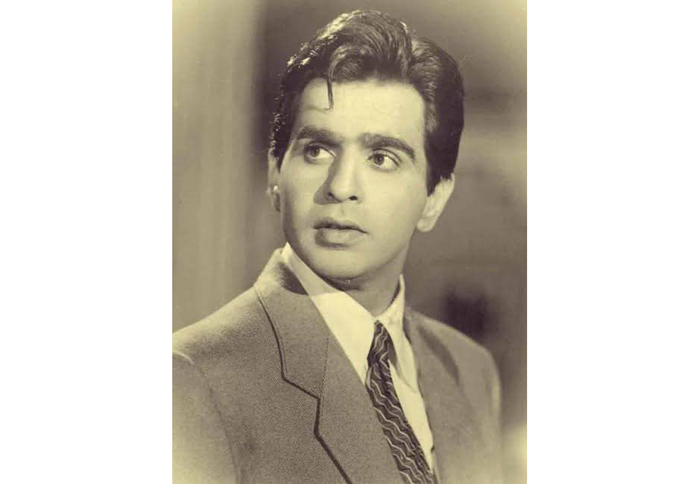
“How are you?” Kemon Achish? Dilip Kumar greeted me during a telephonic conversation a decade ago as I greeted him on his birthday, 11th December, 2013. “Thespian uncle“ I burst into tears of joy. After a pause I asked, “How did you become such a perfect method actor?” he smiled, “You think I am the last word in acting? I am not.”
The legendary actor continued, “The pioneers of natural acting were Ashok Kumar, Motilal, Chabi Biswas and Pahari Sanyal. Then there were Balraj Sahni, Uttam Kumar and Soumitra Chatterjee. I only perfumed some memorable characters in Andaz, Foothpath, Mughal-e-Azam, Ganga Jumna and Sagina Mahato. Devdas was a challenge for me too.”
Dilip Saab said with enthusiasm, “I did always follow the method of acting. I rehearsed for every character I performed and I agree with you many of my movements were calculated. For my swashbuckling characters like in Aan and comedies i.e. Kohinoor and Ram Aur Shyam I adopted a natural design to opt-out of the method form. One bright example of me coming completely out of the method mood is Sagina Mahato.”
I asked another question, “Uncle you were so effective emoting to brother Nasir Khan in Ganga Jumna, Hey Munna, Hum Ghar Se Beghar Ho Gaye Re Bhai.” After a minute’s silence, he answered, “It was not merely a crying protest to Ganga being rendered homeless by tyrant Anwar Hussain in the film. It was my feeling of cruel pangs of partition too that separated countless brothers.” Dilip Kumar canned the shot for director Nitin Bose in one take.
Through the past two decades, I had countless conversations with my beloved Lale Uncle. “Raj (Kapoor), Dev (Anand), Rajendra (Kapoor), Shammi (Kapoor) addressed me as Lale. You can also do so as you are close to me.” Dilip Kumar answered affectionately “Yeh To Us Din Main, Raj Aur Dev Ek Saath Khana Khaya, Mazak Kiya. Ab Koi Nahi Hai” he said in a pathos-oriented mood.
Dilip Kumar was nostalgic remembering his last interaction with Pandit Jawaharlal Nehru the first Prime Minister of India. He says in a melancholic voice. “Raj, Dev and I saw him for the last time in 1964 at New Delhi. Though he was courteous as usual, he appeared exhausted. Sadly, a few days after our interaction he passed away.”
I asked or in fact made him recall, “Is it true you writhed with pain and rolled on the floor after hearing the script of Devdas?” His eyes were glittering, “How did you know this? Bimalda (Bimal Ray) along with Nabenduda (Nabend Ghosh) were narrating the script to me. I did so to show how effective I could be as Devdas. Bimalda wanted to call a doctor and was pleasantly surprised when I got up and smiled.”
I was curious to know how he performed romantic scenes so effectively. Dilip Saab answered, “During our times peculiar, unrealistic love scenes were created. So as Meena Kumari lipped and danced to Jare Jare O Kali Badariya in Azad, I conveyed a silent look with an occasional smile to make the scene realistic. I vibe best with Meena Kumari, Nargis, Nimmi, Madhubala and Vyjayanthimala. One actress whom I found too difficult to confront histrionically was Suchitra Sen who was a magic speller with her eyes. Kamini Kaushal was withdrawn but an effortless performer.
“Thespian uncle, which song you lipped in your life’s theme?” I asked. “He smiled, “Aye Mere Dil Kahin Aur Chal by Talat Mehmood in Daag. Though Mohd. Rafi and Mukesh rendered brilliant numbers for me, Talat Mehmood was the true musical speaker of my soul.”