



Ranchi: The Governor of Jharkhand is yet to make the state election commission’s report on the issue of office of profit of chief minister Hemant Soren public. But Hemant Soren has used the time to sharpen attack on the center.
Speaking at a Vikas Mela in Netarhat, Hemant not only highlighted important work that has been done during his tenure but also attacked the center for not letting him work for the people of Jharkhand.
Later, the speech was shared through 12 tweets posted from his social media handle. Apart from his work, which includes several important political aspects—issue of insiders and outsiders in Jharkhand, Tribals being insulted and Soren being the son of the soil.
“As soon as we asked for Rs one lakh 36 thousands crore of state from the center, they sent central agencies behind me. And when they realized that they could not do anything, they tried to disturb ‘Guruji’ (Shibu Soren), a very senior person now to reach me,” Hemant Soren tweeted.
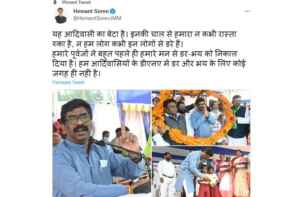
He further stated, “I being the son of a tribal, neither stopped midway nor got frightened. Our forefathers have taught us how not to be afraid. In our Tribal DNA, there is no place for fear.”
The tweet has been pinned to his profile.
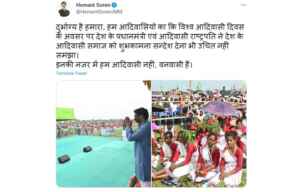
The only tribal chief minister of the country did not forget to remind that neither the tribal President nor Prime Minister greeted tribals on the occasion of World Tribal Day.
“It is our misfortune that the Tribal President and PM did not consider it worthy enough to wish us on World Tribal Day.”
On August 13, eNewsroom had published an exclusive report, how the Tribal community was in disbelief when they were not greeted by the President and Prime Minister on World Tribal Day.
Recently, the Jharkhand government has chosen not to renew notification of Netarhat Firing Range. The locals have been fighting against it for three decades. In the fair, Soren first talked about it and paid two minutes tribute to those killed during the movement.
He also pointed out that some ‘outside’ gang of powerful people are there in the state that have destroyed Jharkhand in the last 20 years, and when they have been rooted out in 2019, those conspirators are not able to digest it.
He also accused the center of being a group of businesses, which only knows how to take money but not give.
The chief minister said that constitutional bodies are being misused.
“Our rivals are not able to defeat us politically, so they are misusing the constitutional institutions. But it will not affect us,” he added.
Meanwhile, it is not just on the ground, but in the virtual world also, Jharkhand Mukti Morcha seems fighting it out on the issue.
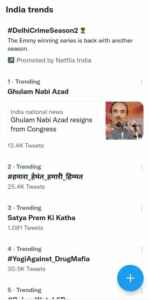
On Friday, a trend- Hemant Hai To Himmat Hai was among the top ones nationally on Twitter.

