



Ranchi: An activist and former Indian Administrative Service (IAS) officer Harsh Mander has filed a Public Interest Litigation (PIL) at the Jharkhand High Court for the compliance of Supreme Court orders given in Tahseen Poonawala versus Union of India.
In 2018, on the petition of social activist Tahseen Poonawala, the Apex Court had issued directives to state governments to curb the menace of mob lynching in India.
However, this did not curb the lynching menace and among all Indian states, Jharkhand remains to be the worst affected.
On the night of June 17, Tabrez Ansari, a resident of Kharsawan district, was mercilessly beaten by a mob on the allegation of theft. Tabrez succumbed to injuries on June 22.
In April, one Prakash Lakra, was lynched in Gumla on the allegation of skinning a cow.
Tabrez and Prakash happen to be first two mob lynching victims in 2019. In the past three years, a total of 18 have lost their lives because of mob lynching in Jharkhand.
Now Harsh Mander, who has travelled to many states of India and met the families of mob lynching victims, has filed a PIL seeking compliance of the Supreme Court directive in connection with mob lynching cases. It includes – preparing a lynching or mob violence victim compensation scheme in the light of the provisions of section 357A of CrPC and in the said scheme for computation of compensation. The state should give due regard to the nature of the bodily and psychological injury and loss of earnings among others.
To designate a court at the district level to trial lynching cases on daily basis and conclude the trial within six months from the day of cognizance to ensure that all families of the mob lynching victim receive commensurate compensation.
According to the directive, the state government and the police need to broadcast that mob violence and lynching shall invite serious consequences, on television, radio and other media platforms.
“Jharkhand is the worst affected with lynching incidents, but the state government is yet to follow Supreme Court orders, so to hold the government accountable, I have filed the PIL” Harsh Mander told eNewsroom over the phone.
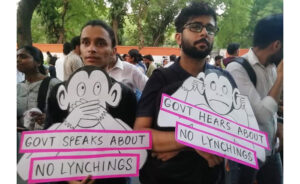
On June 26, in several cities of India and outside, including Delhi, Ranchi, Kolkata, Bhopal, Jaipur, Lucknow, Varanasi, Dhanbad, Ahmedabad, Araria and in the United States too, people hit the street to protest the lynching of Tabrez Ansari and demand justice.

