



Dubai: Literature enthusiasts from India and Dubai gathered at the India Club for a memorable evening with celebrated author and journalist Rasheed Kidwai. The engaging session was part of The Write Circle series — a prestigious initiative of the Prabha Khaitan Foundation that brings eminent authors, poets, and thought leaders to global audiences.
The event began with a warm and graceful welcome address by Kajal Sagar, the Ehsaas Woman of Dubai. The evening’s conversation was skilfully moderated by Madiha Saidi, also an Ehsaas Woman of Dubai, who guided the audience through Rasheed Kidwai’s remarkable literary and journalistic journey.
A noted author, political commentator, and columnist, Rasheed Kidwai is known for his insightful analysis of India’s political landscape and the intersection of cinema and power. His acclaimed books — Neta Abhineta: Bollywood Star Power in Indian Politics and House of Scindias — have been widely praised for their depth of research and engaging narratives that bridge the worlds of governance and glamour.
An Insightful Dialogue on Politics, Cinema, and Power
The conversation delved deep into House of Scindias and Neta Abhineta, as Kidwai shared fascinating insights and lesser-known anecdotes about India’s top political figures and film personalities, offering a behind-the-scenes glimpse into the corridors of power and celebrity.
Saidi’s incisive questions explored the complex relationship between Indian cinema and politics, and the challenges of reporting on influential public figures. Kidwai, known for his sharp political analysis and candid storytelling, kept the audience engaged with his trademark wit and depth of observation.
“The relationship between Bollywood and politics is an abiding one,” Kidwai observed. “Film stars from across the country have joined politics, won elections, and held important positions in government. At the Centre, Shatrughan Sinha, Sunil Dutt, Vinod Khanna, and Smriti Irani went on to become Union ministers. Kirron Kher and Paresh Rawal entered the Lok Sabha through the BJP, while Raj Babbar once headed the Uttar Pradesh Congress unit. Even Amitabh Bachchan served as a Congress MP from 1984 to 1986 and was a close aide of Rajiv Gandhi. Film icons such as Rajesh Khanna, Govinda, Jaya Bachchan, Jaya Prada, Dharmendra, and Hema Malini have all played a role in central politics — each with varying impact.”
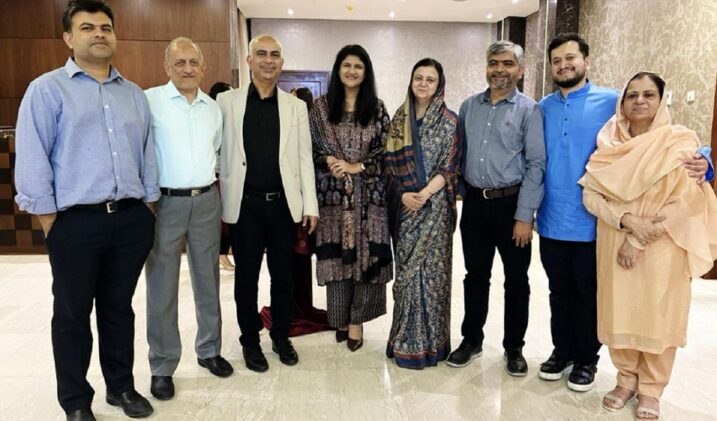
Cinema as a Unifying Force in Indian Society
Expanding on this theme, Kidwai reflected,
“At another level, this phenomenon highlights political parties’ inability to find credible leaders as candidates. The BJP, Trinamool Congress, Shiv Sena, and the Congress have all relied on reel-life heroes to further their political causes. Meanwhile, actors seek longevity and relevance in public life through electoral politics. In a country as diverse as India — divided by ethnicity, class, caste, religion, and language — cinema acts as a unifying and popularity-driving force. Film stars often provide a more consensual and likable alternative to conventional politicians, carrying an aura that inspires admiration and connects instantly with the masses.”
His reflections offered the audience a thoughtful understanding of how celebrity culture and electoral politics intersect in modern India.
A Celebration of Literature, Conversation, and Ideas
The Write Circle series, an initiative of the Prabha Khaitan Foundation, continues to promote literature, cultural dialogue, and meaningful exchange among global audiences. The Dubai edition once again proved how storytelling and reflective dialogue can bridge continents, languages, and ideas.
The evening concluded with an interactive Q&A session, where participants posed thought-provoking questions about political journalism, celebrity influence, and the evolving nature of India’s democracy. The discussion left the audience both informed and inspired — marking yet another successful and memorable chapter of The Write Circle in Dubai.
The programme was graced by several distinguished citizens of Dubai from diverse walks of life, including Shree Vasu Dada Shroff, Naved Saidi, Yasar Khan, and many others.

