



Kazi Mohammed Sherif Saheb spent his life among people, communities and movements, working for those whose voices were often unheard and standing firmly for equality, human dignity, secularism and social justice.
A social worker, public servant, social activist, writer, organiser and mentor, he was not merely associated with people’s movements—he helped nurture them, guide younger activists and build institutions that sought to empower marginalised communities.
His sudden demise on 11 August 2026 has left his family, friends, colleagues, fellow activists and countless people whose lives he touched deeply shocked and bereaved. For those who worked with him, however, his passing is not only the loss of an individual. It is the loss of a repository of experience, knowledge, wisdom and institutional memory built over decades of public service and social action.
Until the end of his life, Kazi Saheb remained the State Convener of the National Alliance of People’s Movements (NAPM), West Bengal. He was also a Founder Member and Vice-President of the Bengali Academia for Social Empowerment (BASE), an organisation whose development and work he helped shape.
His life was guided by a simple but deeply held belief: human beings deserve dignity, justice, equality and compassion.
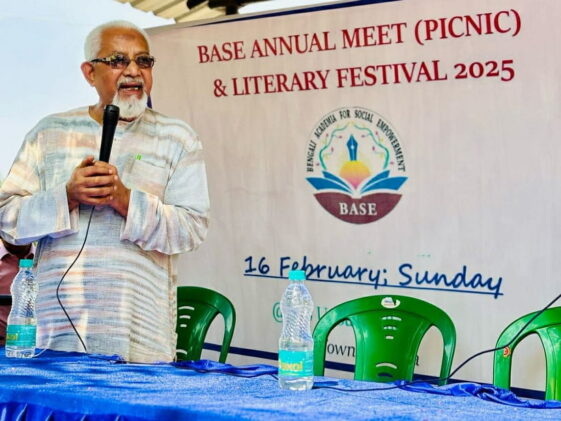
A Life Dedicated to People’s Movements and Social Justice
Kazi Saheb’s commitment to society extended far beyond his official responsibilities. Throughout his life, he remained actively associated with people’s organisations, social movements and initiatives for social justice.
He stood firmly against communalism, discrimination, exploitation and injustice in all their forms. He believed passionately in equality, human dignity, secularism and the rights of ordinary and marginalised people.
He understood that meaningful social transformation required both research and action. He encouraged younger activists and colleagues to study social realities carefully, understand the problems faced by marginalised communities, and translate that knowledge into meaningful collective action.
That combination of knowledge and action became one of the defining features of his public life.
Whether through meetings, campaigns, discussions, research or direct engagement with communities, he brought to social movements a rare combination of experience, knowledge, patience and determination.
Since joining NAPM, he remained alert, active and always ready to participate in people’s struggles and social actions. As its State Convener in West Bengal, he carried out his responsibilities with remarkable sincerity, commitment and a strong sense of public accountability.
His commitment to equity and social justice was recognised and remembered by many of his fellow activists.
Medha Patkar of the Narmada Movement and NAPM paid a heartfelt tribute to him, recalling his unforgettable commitment to equity and social justice and his readiness to participate in every social action. She remembered his strong vision against communalism and discrimination and described him as a guide to younger colleagues, motivating them towards both research and action.
Her tribute reflects what many who worked with him knew well: Kazi Saheb was not simply a participant in social movements. He was a mentor, guide, organiser and source of inspiration to those around him.
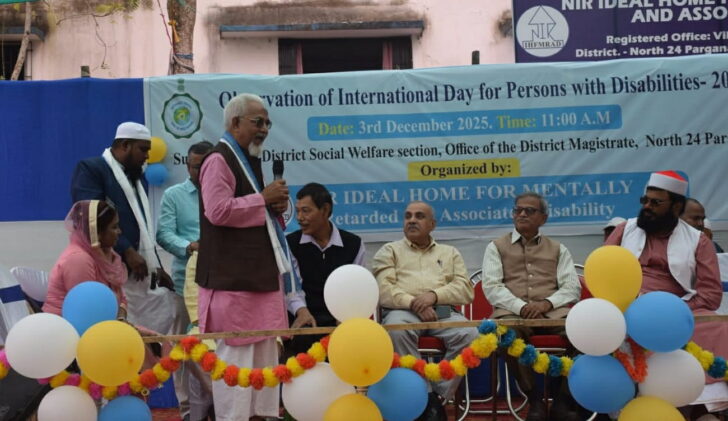
Building BASE and Empowering the Marginalised
Kazi Mohammed Sherif Saheb was closely associated with the Bengali Academia for Social Empowerment (BASE), where he was a Founder Member and Vice-President.
For BASE, his contribution went beyond organisational responsibilities. He was remembered as a beacon of light who guided the organisation through difficult times. For its members, he was a guardian and mentor whose wisdom, experience and understanding of society provided invaluable guidance.
His deep knowledge of the lives and struggles of marginalised sections of society, coupled with his determination to work for their empowerment, made his contribution particularly significant.
For an organisation built around social empowerment, his approach was deeply important: understand society, listen to people, study their problems and then work collectively towards change.
His legacy will continue to inspire BASE in its future endeavours.
From Government Service to People’s Struggles
Kazi Mohammed Sherif Saheb dedicated his professional life to public service. He served in the Department of Social Welfare, Government of West Bengal, and retired as Assistant Director.
His professional journey took him to different parts of West Bengal, including Medinipur, Murshidabad, South 24 Parganas and North 24 Parganas. Through his work, he came into close contact with people from diverse social backgrounds and developed a deep understanding of the difficulties faced by disadvantaged and marginalised communities.
His years in public service gave him an understanding of administration and the realities of people who depended upon public institutions. But his engagement with society did not end with his professional responsibilities.
He carried that experience into people’s organisations, social movements and campaigns, where it became a source of knowledge and guidance for others.
He was remembered by his colleagues in the West Bengal Joint Social Welfare Services (WBJSWS) as a skilled and dedicated officer. Alongside his professional responsibilities, he was also an active member of FORSWO, contributing to its activities with sincerity and commitment.
Those who worked with him remember not only his professional competence and dedication but also his ever-smiling face, warmth, generosity and approachable nature.
Behind that gentle and cheerful personality was a deeply committed social worker who remained concerned about the welfare and dignity of others throughout his life.
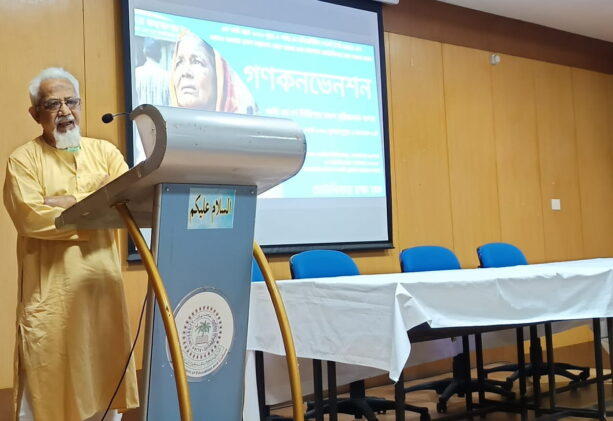
A Mentor Who Connected Generations
One of Kazi Saheb’s most lasting contributions was the inspiration he provided to younger colleagues and activists.
He encouraged them to ask questions, conduct research, understand the experiences of marginalised communities and participate actively in social action.
For many, he represented a bridge between generations of social workers and activists. His long experience of public service and people’s movements enabled him to offer perspective and guidance while remaining open to new ideas.
He believed that activism could not be separated from knowledge. Research was not an academic exercise for him; it was a means of understanding society and strengthening people’s struggles.
Those who came into contact with him often found in him not only an experienced activist but someone willing to listen, explain, guide and encourage.
His passing therefore represents not only the loss of an individual but also the loss of a repository of experience, knowledge, wisdom and institutional memory.
A Writer Who Brought Social Realities to Public Discourse
Kazi Saheb was a man of considerable wisdom and experience. His understanding of society was not confined to organisational work or public meetings.
He regularly expressed his views and reflections through articles published in various newspapers, bringing his knowledge and observations to a wider audience.
His writings reflected his concern for social justice and his deep engagement with the realities of ordinary people’s lives. He believed in informed public discourse and encouraged people to look beyond immediate events and understand the larger social forces shaping society.
Writing, for him, was another way of engaging with society—of documenting concerns, questioning injustice and encouraging people to think more deeply about the world around them.
His kindness, generosity, humility and wisdom touched innumerable lives. His colleagues and associates remember a person who could combine intellectual depth with warmth and humanity.
His smiling presence and gentle manner made him approachable to people across generations and backgrounds.
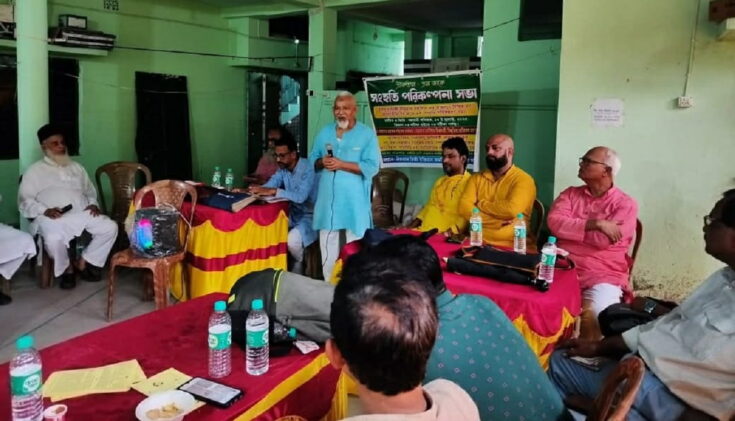
From Hooghly and Narkeldanga to a Life Across Bengal
Born on 1 March 1954 in Hooghly to Kazi Wasimuddin, Kazi Mohammed Sherif Saheb spent his formative years in Kolkata after his family moved there.
He received his early education in Kolkata and was brought up in Narkeldanga, old Kolkata, which remained an important part of his identity and memories.
He pursued higher education at the University of Calcutta and the Indian Institute of Social Welfare & Business Management (IISWBM).
Kazi Saheb was married in Birbhum and remained deeply connected to his family and roots. After spending many years in Narkeldanga, he eventually made Raigachi his permanent home.
Yet wherever life took him, his deepest commitment remained with people and society.
His professional journey, family life, writings, organisational work and activism were all connected by a common thread: a belief that human beings deserve dignity, justice, equality and compassion.
The Work He Leaves Behind
His sudden passing has created an irreplaceable void in the fields of social work and people’s movements.
We will miss his presence at meetings and campaigns, his thoughtful interventions, his guidance to younger colleagues, his willingness to stand beside people in difficult circumstances, and his quiet but steadfast commitment to justice.
But the best way to remember Kazi Mohammed Sherif Saheb is not merely to mourn his absence. It is to carry forward the values for which he lived.
His life reminds us that social justice requires perseverance; equality demands continuous effort; discrimination must be challenged wherever it appears; and knowledge becomes meaningful when it is placed at the service of people.
The tributes from NAPM, BASE, WBJSWS, FORSWO, and his many colleagues and fellow activists bear testimony to the breadth of his contribution.
Across professional service, social organisations, people’s movements, writing, research and community work, he remained guided by the same fundamental values—justice, equality, dignity, compassion and service to humanity.
As NAPM, West Bengal, has expressed, his ideals and commitment to people’s rights will remain a source of inspiration. The path he showed us—of solidarity, research, social action and collective struggle—must continue.
For BASE, NAPM, his professional colleagues, fellow activists, friends and all those who were inspired by him, his memory will remain a guiding force.
Kazi Mohammed Sherif Saheb leaves behind not only memories, but also ideas, values, relationships, institutions, writings and generations of people inspired by his example.
These will ensure that his contribution to society continues to live on.
His Final Journey
After a life spent among people, communities, movements, colleagues, friends and loved ones, Kazi Saheb has now begun his final journey.
The man who spent so many years walking through the lanes and streets of Bengal, travelling to meet people, listening to their concerns, participating in their struggles, writing about their lives and standing beside those who needed a voice, now rests in the quiet of his new home.
His final resting place is modest, but the life he lived was immense in its meaning. Beneath the earth lies a person whose work reached far beyond the boundaries of his profession and whose compassion touched countless lives.
There, beside the date palm tree and beneath the changing skies, the morning breeze and evening fragrance will pass over his resting place. The flowers that fall upon the earth may seem like nature’s own quiet tribute to a life devoted to humanity.
Those who stand beside his grave will not remember only the sadness of his departure. They will remember his smiling face, his wisdom, his gentle guidance, his willingness to stand with the vulnerable, his commitment to justice and his faith in the possibility of a better society.
His physical journey has ended, but the journey of his ideas continues.
Every young activist he encouraged, every person whose voice he helped strengthen, every organisation he nurtured, every article he wrote, every struggle in which he participated and every act of kindness he extended carries something of his presence forward.
His New Home
His new home is exquisite,
Just beside a date palm tree,
Surrounded by green grass
And variegated little plants.
A few Madhabilatas adorn the entrance,
While the grass-covered earth
Leads the quiet path towards his home,
At the far corner of the graveyard.
At Fajr, a gentle breeze will blow across his home;
At Maghrib, the evening air will carry the fragrance of flowers.
Petals will fall upon the earth above him,
As if nature itself were offering homage
To a great and gentle soul.
Through thunder, lightning and storm,
He will sleep in that humble bed alone.
Through sunshine, cloud and rain,
He will rest quietly,
Awaiting the summons of the Almighty.
That six-by-three-foot shelter—
His final destination and home—
Will hold him in peaceful rest
Until the day when he is summoned
Before the Almighty.
Standing beside his new home,
We prayed to Allah for the peace of his soul.
We prayed that his journey may lead
To Jannatul Firdaus,
For he spent his life in the service of others,
In compassion, justice and good deeds.
May his final home be peaceful.
May his grave be filled with light and mercy.
May Allah accept his good deeds, forgive his shortcomings and grant him eternal peace.
His journey on earth has ended.
His legacy has not.
We shall remember Kazi Mohammed Sherif Saheb not only with tears, but with gratitude—for a life lived with purpose, compassion, courage and an unwavering commitment to humanity.
Inna Lillahi wa inna ilayhi raji’un.
May Allah forgive his shortcomings, grant him Maghfirah and bless him with Jannatul Firdaus. May Allah grant his family, loved ones, colleagues and fellow activists the strength and sabr to bear this irreparable loss.
Ameen.
— This obituary is a collective tribute by the members of the Bengali Academia for Social Empowerment (BASE) to their beloved Founder, Kazi Mohammed Sherif Saheb.

