

Patients suffer as doctor’s strike cripples healthcare in Rajasthan

Date:

Share post:

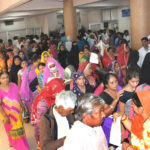
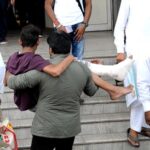
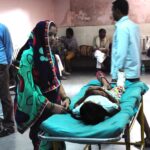
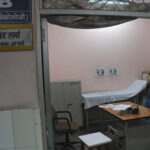
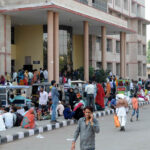
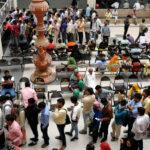
Jaipur: Strike by resident doctors in Rajasthan has entered 7th day, and it has crippled the health service of the desert state, for now only a handful of patients are available to treat thousand of patients who come to the hospital on a daily basis. The doctors have called for a strike seeking a higher pay scale and promotions. While state government claims that the strike is against a High Court order. Government also claimed on Saturday that at least 14 doctors have been arrested from across the state under RESMA (Rajasthan Essential Service Maintenance Act), for not returning to work, on the stipulated date fixed by the government. And that 100 doctors have resumed work, in fear of arrest. From Monday, patients will have to face more difficulties, as first three days of the week, see large turn out of the patients in government hospitals in Rajasthan. Watch the pictures clicked by Chandra Mohan Aloria, to understand the suffering of patients and their family members have to undergo because of the strike.
Related articles

History Is Made in Homes, Not Just Parliament: The Untold 1947 Partition Story of Maulana Azad’s Bengal In-Laws

Maulana Abul Kalam Azad is remembered across India as a freedom fighter, scholar, journalist and independent India's first...

Don’t Tell Bengal What to Read, Eat, or Think

From the November 17 College Street bookstall attack to the policing of food and public spaces in Kolkata, political intolerance is quietly eroding Bengal’s unwritten social compact. Defending the freedom to read, eat, and think cannot remain a Left-versus-Right turf war—it requires refusing to normalise intimidation

A Love That Outlived Loss: Unlearning a Generational Misunderstanding Through Sonia Gandhi’s Belonging, and Beyond

Stepping away from political noise and early reviews, a reader approaches Sonia Gandhi’s memoir Belonging: A Journey of Love through an anti-establishment lens—uncovering a deeply human story of grief, life inside Indira Gandhi’s household, and raising Rahul and Priyanka without cynicism.

Who Gets to Name Terrorism? Power, Knowledge and the Politics of Violence

When national security becomes the primary lens through which political dissent is judged, what happens to due process and democratic citizenship? Reviewing Irfan Ahmad’s Terrorism in Question: Decolonizing Anthropology and the Study of Islam, this essay examines how states acquire the power to classify political action—tracing the thread from post-9/11 counterterrorism and the SIMI ban to the 2013 Muzaffarnagar violence and the ongoing bail battles of Umar Khalid and Sharjeel Imam