



Kolkata: Tiger widows, mangroves, microplastics, natural calamities, community radio needs, migration and more came under sharp focus at Aliah University’s Park Circus campus, where students and researchers presented their findings from a recent study tour of the Sundarbans.
Speaking about the tour research exhibition, the Mangrove man of Bengal – Uma Shankar Mondal said, “Such study tours need to be encouraged. What made this special was the fact that it was multidisciplinary. I think this happened for the first time in the history of the Sundarbans.”
Students Flag Microplastic Threats and Community Needs
When asked, how good were the research reports of the students. He said: “A particular one that caught my attention related to my area of interest – the mangroves. It talked about how microplastic was affecting the mangrove sediments and its root system. There is ample scope to make this an in-depth study.
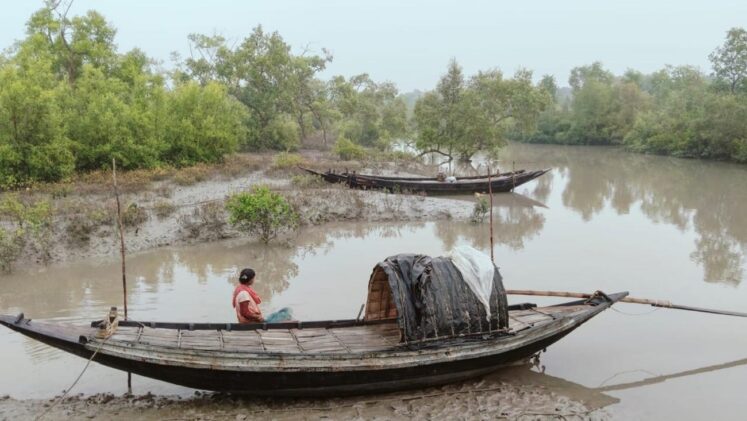
A few needs of the community inhabiting the Sundarbans – like the need of a community radio system; low cost tools to check purity of the honey collected by the honey collectors of the area and how the Bonobibi- the local deity is worshipped by the Hindu and Muslim locals of the area, were shared with the audience.
In the inaugural session, Professor Rafiqul Islam, VC, Aliah University underscored the importance of research that contributes directly to society, noting that the seminar supports the collaborative spirit of NEP 2020.
Speaking to eNewsroom, Ghazala Yasmin, assistant professor at the Department of Journalism and Mass Communication said: “This study tour was indeed an enriching experience for our students and we intend to do more such tours to understand the area.”
She added, “Our departmental study of the area, we discovered that the need for a community radio for the Sundarbans has been long ignored. The locals still rely on primitive modes of communications, which yield little result during disaster management.”
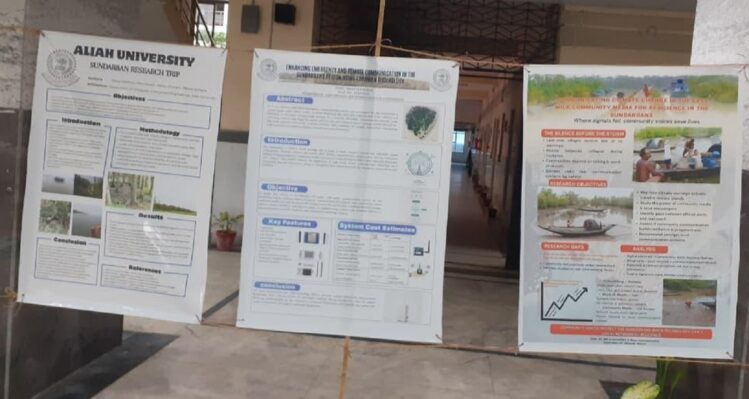
Affirming the need was Biplab Das, an IIM Bangalore graduate, who left his corporate job with Accenture to start the Kishalaya Foundation to serve the people of the area. Das said, “Having worked in the region, I feel that there is a pressing need for a community radio to help the women stay connected with the outside world. Such radios can even come handy during natural calamities.”
Arabic Influences and Climate Risks Documented
A parallel study conducted by the Department of Arabic found strong evidence of Arabic linguistic and cultural influence in the Sundarbans. Arabic words such as haqq (truth), mahalla (neighbourhood), adab (manners/literature), haqiqah (reality), baqi (remaining), and batil(false/void) have blended into the local Bengali dialect., thereby making researchers conclude that Arabic’s impact on the Sundarbans extends beyond language, shaping historical and spiritual identities across generations.
Results of other studies related to Climate change highlighted Mangrove degradation and species shift, bank erosion at Kaikhali and Jharkhali and loss of soil fertility. The study report stressed on Mangrove restoration, climate resilient embankments, rainwater harvesting can be some adaptation and mitigation measures.

