



Ranchi: A silent movement, Loktantra Bachao Abhiyan 2024, has been going on in Jharkhand for almost a year now. It is primarily a collective campaign for Jharkhand under the national campaign ‘Loktantrik Rashtra Nirman Abhiyan’ and Jharkhand Janadhikar Mahasabha.
A union of civil societies, Mahasabha comprises forty different civil groups, all ideologically against communal hatred spreading in the country. The campaigns are done in different formats, including Pad Yatras, seminars, public meetings and volunteer training.
“This March marks the completion of a year for Loktantra Bachao Abhiyan. During this period, we have reached 10 Lok Sabha constituencies and their panchayats with the message that parties that are anti-Constitution, anti-Democratic, and anti-Secularism, spreading hate, should be voted out,” informed social activist Siraj Dutta to eNewsroom.
Dutta further mentioned, “There are 14 Lok Sabha seats in Jharkhand, but we have covered ten parliamentary constituencies. We have left some constituencies like Koderma, where there is a strong presence of political parties like CPIML. CPIML, through its various activities, has already made people aware of the current political situation in the country. So, we are using our resources in other areas.”
Intervention of political parties needed in rural belts
The activist claimed that the challenges are significant, and in most rural areas, people are grappling with daily life issues, making it difficult for them to realize threats to India’s democratic values. “After visiting those places and meeting locals, we have also informed political parties that their outreach is a must if they want to support a party that is not dividing society,” he added.
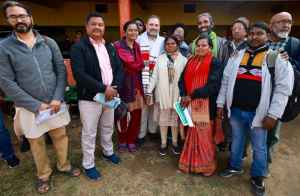
On February 5, the Abhiyan team also met Rahul Gandhi during his Bharat Jodo Nyay Yatra in Jharkhand. They handed over a letter containing suggestions for the Congress party regarding the Lok Sabha polls.
As the Lok Sabha 2024’s fight is between two alliances – INDIA and NDA, Dutta also mentioned that they have suggested to INDIA leaders which seat is suitable for which party.
Significantly, there is an attempt to conduct such outreach programs by civil society in Bengal as well.
However, compared to Mahasabha’s Abhiyan, no such intensive work has begun in Bengal. In the 2021 Bengal assembly polls, there was a ‘No Vote to BJP’ campaign was conducted by civil societies of the state.

