



Delhi: For the first time, a major protest took place at the national capital against the imprisonment of journalist Siddique Kappan. Siddiqui Kappan, who had not even done a story, but arrested and imprisoned a year ago in Uttar Pradesh, when he was on his way to cover the Hathras gang rape case.
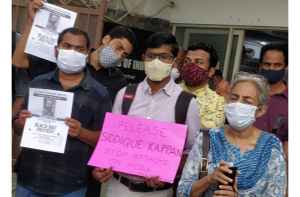
On October 5, 2021, to protest against one year of imprisonment of journalist Siddique Kappan, the Kerala Union of Working Journalists, the Press Club of India and the Delhi Union of Journalists held a rally.
Demanding his immediate release journalists of the three organisations gathered outside the Press Club of India in Delhi, holding posters and shouting slogans for press freedom.
Press Club of India President Umakant Lakhera said Kappan had been picked up by the police even before he could reach Hathras to report on the rape and death of a Dalit girl. He said the charges of UAPA, Sedition and other laws were arbitrary against Kappan, the police had no evidence and had been unable to file a chargesheet within the mandatory 90 days. Despite this, Kappan had been refused bail. He contracted Covid in jail and his mother died during this period but it is a shame that he is still behind bars, he said, calling for Kappan’s release.
Sujata Madhok, General Secretary of the Delhi Union of Journalists, said that the terrible case of Kappan illustrated the targeting of journalists. She said cases are deliberately filed in distant towns and police come from other states to arrest Delhi journalists, as happened to Vinod Dua. Cases are filed even for tweets and retweets, as happened to Rajdeep Sardesai, Mrinal Pande and others. She said a case was filed against Supriya Sharma of Scroll merely for filing a story about hunger in a village near Varanasi; Neha Dixit has multiple cases against her for a child trafficking story; Rana Ayyub faces cases for distributing rations during the Covid lockdown. She said laws like UAPA, Sedition, and NSA are being misused to victimise both journalists and activists and to throttle democracy and free speech.
Jigeesh A. M. of the DUJ said Kappan is severely diabetic, has twice had Covid during his incarceration and his present health status is not known. He said protesting farmers and workers had also expressed solidarity with journalists in the fight for justice for Kappan. UNI Front leader Mahesh Rajput also addressed the gathering. He requested support for the ongoing relay hunger strike of UNI employees against non-payment of wages and retrenchments.
Binu Basil of KUWJ called for the immediate release of Kappan and the withdrawal of false cases against him. Former secretaries of KUWJ PK Manikandan and D Dhanasumod, senior journalist and Press Club of India Executive committee member Basant P were also present during the protest meeting.
The rally ended with the chanting of slogans for press freedom and democracy.

