



Ranchi: After 25 years of battling with the system, around 19,000 of Jharkhand’s home guards will now benefit from the Equal Work, Equal Pay Act.
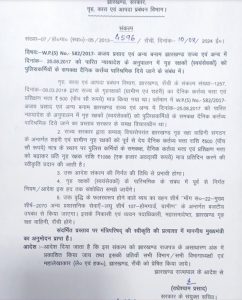
Sources said that Jharkhand Chief Minister Hemant Soren has agreed to increase the daily wage of home guards from Rs 500 to Rs 1088, bringing it in line with that of policemen. This decision is expected to be brought up in the next cabinet meeting, scheduled for August 13.
A Legacy of the Previous Government
The decision to pay home guards the same as police officers comes after a Jharkhand High Court order. The order was first issued during the tenure of the Raghubar Das-led BJP government in 2017. The Raghubar Das government also appealed against the order in the High Court. However, in 2019, the BJP government increased the daily wage of home guards– just 100 bucks, from Rs 400 to Rs 500.
It took the High Court five years to reject the appeal, doing so in 2023. That same year, the home guard union filed a petition in the High Court for the order’s implementation. In January 2024, the High Court once again ordered that home guards be paid similarly to policemen. The Hemant Soren government took three months to implement the order, instead filing a review petition in the Supreme Court, which was dismissed on July 18, 2024.
Recently, the home guard union filed a contempt petition in the Jharkhand High Court, with a hearing scheduled for August 16.
Living on Rs 500 a Day
Since 2019, a home guard in Jharkhand was paid Rs 500 for a day’s work if they were employed.
Out of 19,000 home guards, around 10,000 receive work sporadically, while nearly half remain idle without any financial support or benefits. Currently, 3,527 home guards are employed with the Jharkhand police, while the rest are deployed in banks, post offices, CCL, and other government sectors.
Is It Enough?
If implemented, Jharkhand will join Bihar and Uttar Pradesh, where equal pay like police to home guards has been given earlier.
But is it enough? “A home guard receives similar training to a policeman. They also undergo refresher courses from time to time. However, half of the home guards remain idle. They cannot leave the state or even their native city because they may be called for emergency duty at any time. If they fail to report for duty, they face disciplinary action. You can find home guards selling vegetables, doing private jobs (if their employer allows them to leave when the police department calls), or working in agriculture, just like me,” explained Shivshankar Gope, General Secretary of the Jharkhand State Home Guard Federation, to eNewsroom, whose federation had started the agitation for the equal pay demand from 1999. Shivshankar Gope is also a green crusader.
Gope expressed his happiness, saying, “We are thankful to the court and Hemant Soren for implementing the Equal Work, Equal Pay policy. We are also grateful to the late Mahendra Singh and Vinod Singh for continuously raising our issues, and to Sudviya Kumar Sonu for helping us reach CM Soren.”
He also noted, “However, our demand to make home guards permanent will continue. Currently, only half of the total number of home guards will benefit from this policy. Although it addresses pay, home guards still do not receive the same benefits as policemen.”
Gope proudly stated that home guards in Jharkhand have been killed during Naxal attacks and have died during election duties, adding, “They deserve better from the state.”

