



[dropcap]R[/dropcap]amzan or Ramadan, a month of severe self control distinguishes Muslims from the rest. It ends now with Eid-ul-Fitr for community prayers and feasting.
It has been recorded by Anas, a well-known companion of the Prophet, that when the Prophet arrived in Medina he found people celebrating two specific days with merriment and decided that these age-old celebrations must be directed to the Almighty. He fixed two days for complete community celebrations and prayers — as Eid al-Fitr and Eid al-Adha.
They also meant complete surrender to God and for strengthening brotherhood among men as well as to reinforce service to the poor.
Eid-ul-Fitr is the day of joy on the 1st of the month of Shawwal, when people return to their normal routine of life after completing the siam (restraint) and fasting in the holy month of Ramzan or Ramadan. What non-Muslims hardly know is that during this month Muslims are not only to keep toiling as normal and to keep anger, sex, senses and emotions, illusions and jealousy under restraint.
The sighting of the thin slice of the new moon is fairly well known to non-Muslims in India because they too get a public holiday revolving around it. The hallmark of this day has been the community prayer, after which there is a lot of bonhomie, when even complete strangers, rich and poor, hug each other to display camaraderie.
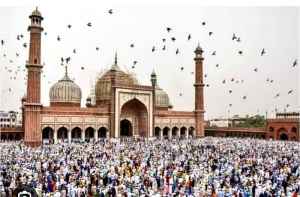
Another joyous task is visiting the elders of families and seeking their blessings. Children usually enjoy it more as they receive not only new clothes but cash or gifts as Eidi, which they look forward to.
But what appeals the most, is the grand meal spread on a big rug, the best of food. Eid meat dishes are proverbially delicious and Muslims of this subcontinent and elsewhere just love all sorts of delicious mutton preparations. Different countries have their specialities and Russian Muslims carry on the national fondness for all things in dumpling form by gorging on Manti, a meat-filled momo during Eid. In China, You Xiang (flour, water and yeast patties fried in oil) are either given as a gift or eaten as part of the Eid feast.
Eid also calls for a sweet sugary feast and it is said that lost energy needs to be recharged. It’s time for chocolate, nuts, cookies like Kahkaa, bakery goodies, and sweets of every conceivable type. Afghanistan does it with sweet cakes and jalebis, while Indonesians celebrate with a sticky rice preparation cooked in bamboo called Lemang. The lachcha and sweet sewaiyan and dozens of delicious condiments made of milk, nuts, dates and vermicelli.
In Turkey, classic sweets such as Baklava are given to friends, family and neighbours as a present during Eid, or Seker Bayrami as it’s commonly known in the country. In Arab countries, the eating of dates is a very important part of the month and people bake Kleichas, which are rose-flavoured biscuits that contain a filling of nuts and dates. Both Iraq and Saudi Arabia consider them to be their national cookie. In Yemen, Bint al sahn honey cake, topped with nigella seeds is the specialty.
Another touching quality of Islam is the mandate of charity to the poor. During Eid, the rich place large quantities of foodstuff at the doorsteps of the needy, while some keep money and delicacies.
Eid sermons invariably seek the mercy of the Almighty and pray for peace unto all mankind. The way hate is taking over the world, we may all need to pray much harder during this Eid for brotherhood and sanity to be restored.

