



As a devoted follower of Mahatma Gandhi’s principles of truth and non-violence, I often wonder what the Mahatma would have opined about our Hindi film songs if he had been alive today? While he would have surely been critical of the ‘abusive muse’ and cacophony of modern films especially since the Mahatma had expressed film art as “the evil that it has done and is doing” way back in the 1930s, it is highly likely that the wise man would have applauded many film songs of the Golden Era that not just inspire humanism but also strengthen India’s secular and pluralistic fabric.
I’ve always held that the Rafi–Sahir-N Dutta classic- Tu Hindu Banega Na Musalman Banega (Dhool Ka Phool) deserves to be a universal prayer for all academic institutions. It’s my fair guess that it would have found favour with him since the song advocates the Mahatma’s ideals of humanism. As a man deeply distressed by the holocaust of partition, each line of the above song as well as Insaan Bano Karlo Bhalai Ka Koi Kaam (Baiju Bawra) would have resonated with his prayers to unite people in sacred ties of love, peace and equality. Also, since the Mahatma was a tough taskmaster, the sentiments echoed by Insaaf Ki Dagar Pe Bachchon Dikhao Chal Ke (Ganga Jamuna) and Hum Laaye Hain Toofan Se Kashti Nikal Ke (Jagriti) would have been close to his heart especially since he wanted people to be conscientious of their duties and responsibilities towards the nation.
The Mahatma’s heart was full of love and he was willing to serve everyone. Spending a lifetime in ending vicious politics of caste and communal hatred, it is obvious that the heart-rending Kya Dharti Aur Kya Aakash Sabko Pyar Ki Pyaas (Pyaar Ki Pyaas) by Lata-Rafi as well as Rafi Sahab’s moving appeal for Pyaar Ki Raah Dikha Duniya Ko Roke Jo Nafrat Ki Aandhi (Lambe Haath) would have found affinity within his heart. I am convinced that his conviction that “an eye for an eye, only ends up making the whole world blind” and that “you must be the change you wish to see in the world” would have led him to bond with prayer-songs like Ae Malik Tere Bande Hum (Do Aankhein Barah Haath) and Tu Pyar Ka Sagar Hai (Seema) that sought enlightenment and blessings for everyone!
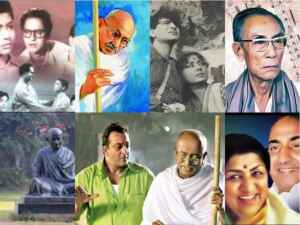
Not many know that Mahatma Gandhi was the inspiration behind Charlie Chaplin’s iconic film “Modern Times” and he would not have overlooked Pradeep’s rebuke, Dekh Tere Sansaar Ki Haalat Kya Ho Gayee Bhagwan (Nastik) that encapsulates convoluted forms of exploitation. Working for the dignity and welfare of the downtrodden, the Mahatma might have desired more sensitivity from the politician-bureaucrat-businessmen nexus since Deewana Aadmi Ko Banati Hain Rotiyan (Kali Topi Lal Rumaal) and would have also identified with the fervent appeal of the homeless made through Hamein Bhi Dedo Sahara Ke Besahare Hain Hum (Seema).
Alas, the modern world does not have a man of Mahatma Gandhi’s stature to shake it out of its slumber and self-destruction. Today, when the intoxicated political rulers are blind to the death and plight of the farmers and labour classes, perhaps the Mahatma could have jolted the masses with a piece of advice like Hai Bahar-e-Baag Duniya Chand Roz, Chand Roz (Bumbayi Ka Chor). It is reasonable to assume that Bapu as well as his puny but ‘gigantic’ follower Lal Bahadur Shastri, with whom he shares his birthday, would never have identified with the empty slogan shouting of Mere Desh Ki Dharti Sona Ugle (Upkaar) and despite all the jingoism and chest-thumping by saffron politicians, the Mahatma would have shed tears at the plight of the impoverished with Rafi’s Jinhen Naaz Hai Hind Par Woh Kahan Hain (Pyaasa). The dangerous rise in rape cases in the country and the pitiable condition of women folk would have moistened Mahatma’s eyes and he would have understood their pain expressed through Sahir’s biting sarcasm: Aurat Ne Janam Diya Mardon Ko, Mardon Ne Usey Bazaar Diya (Sadhana).
It is a misfortune that the Mahatma was killed by communal forces at the dawn of independence and we are constrained to dab our eyes with Toote Hue Khwabon Ne (Madhumati since the dream of Mahatma’s India lies in shambles. If Bapu was alive, I have no doubt that he would have tirelessly worked against all evil forces and sought an explanation from the Almighty with Bataa Mujhe O Jahan Ke Malik, Kyun Aadmi Ko Rula Raha Hai (Ek Shola). The Mahatma died in distress because of India’s partition and communal furies it unleashed but had he been alive, the frugal Mahatma would have identified with the immortal Rafi-Sahir-Barman classic Ye Duniya Agar Mil Bhi Jaye To Kya Hai. Probably, more than anyone else except Pandit Nehru, Bapu would have understood that ‘achche din’ (good days) was as empty a slogan to betray the masses as the fervent wish of Woh Subah Kabhi To Aayegi.

