



Kolkata: Rasrtiya Sawaysewak Sangh (RSS) may have plans of selling cow urine, online, sometime soon. But Bhartiya Janata Party’s (BJP) plan of making inroads into Bengal politics, using gau mutra, has failed to attract the Bengali bhadralok.
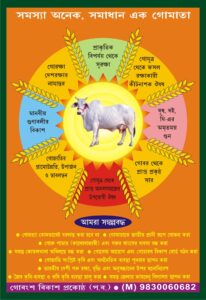
A cow development cell, created by Subrata Gupta, a state member of Bhartiya Janata Party (BJP) had called for a camp –Gau Dugdha Bitaran on Saturday at Kolkata’s Central Avenue area. The idea was to make people aware of the benefits of cow milk and the importance of ‘Gau Mutra’. Interestingly, this cell was established, only a year back.
Demand for national animal status
“Our demand is to make cow, our national animal. Not only cow milk is good for human health, its urine, too has many benefits. Daily consumption of gau mutra helps combat many diseases,” Gupta told eNewsroom.
Seventy-six-years-old, Gupta is also a member of BJP’s state committee, Bengal. Speaking about the beef ban, he clarified that they (BJP) are in no position to dictate what a person should to eat or not. According to him, their biggest concern was ‘developing healthy eating habits’ in Muslims.
Gupta even claimed, “Many Muslim countries have prohibited eating of beef. It’s not good for health. We only want our Muslim brothers to stay healthy. They should develop healthy eating habits.” However, to support his arguments, he could not mention a single Muslim country which had a beef ban in place.
Bengali Bhadralok not interested in cow urine
When questioned whether the intellectual Bengali Bhadrolok would be interested their campaign? Gupta maintained that Bengalis, were also keen on knowing about the benefits of cow urine. “Many come, wanting to know about the availability of cow urine,” he said.
The organizers, however, didn’t have samples of gau mutra for distribution. “It’s gradually gaining popularity among the Bengali middle class intelligentsia. Soon everyone will know about the benefits of cow urine,” he said.
When Mousumi Dutta, an IT professional, was asked about the gau mutra awareness programme, she bluntly said, “Events like this, will take our country several steps back. We shouldn’t encourage such ideas. The central government is trying to shift the attention of the masses from genuine problems. And they are partly successful in their agenda. To be honest, with such campaigns, we are going back to the stone age.”
Interestingly, the invitation letter and leaflet, indicated that the camp was being organised to also have a discussion over policy threatening issued by Bengal’s Chief Minister Mamta Banerjee to Gau sevaks and Gau rakhshaks in the state. However, they abstained from using Banerjee’s name, anywhere in the leaflet. For the uninitiated, post centre’s announcement seeking a ban on cattle slaughter, Banerjee had declared that she would not abide by the unconstitutional notification.
Around 1000 people had turned up for this camp. The organisers, distributed over 600 litres of milk to those attending this special camp, that aimed at promoting cow products like milk and urine.

