


[dropcap]I[/dropcap]f Jesus Christ died so painfully on the Cross on this Friday, why do we call it ‘Good Friday’? Actually, the term ‘good’ came from ‘God’s Friday’ or from an archaic translation of the term ‘Holy’ or ‘Pious’. Germans call it Karfreitag or ‘Sorrowful Friday’.
This celebration begins the ‘Easter’ weekend and Christians believe that on Easter Sunday Jesus arose from his dead state and began his journey to heaven.
Initially, they were both linked to Spring Equinox on the 21st-22nd of March, but after Roman Emperor Constantine of Byzantium (present-day Istanbul) recognised Christianity in 313 AD, the Church re-examined the volumes of myths and legends. It then decided that Jesus had died in 33 AD, on the 3rd of April.
As a festival, however, Easter goes back well before Christ arrived and the pre-Christian masses originally celebrated it in honour of a pagan goddess called Eostre or Ostara or even Astare. She was worshipped in Spring as the dead winter found fresh life through her.
The Easter Bunny is also older than Christianity because it was the companion or vahana of the goddess, called the Moon-hare and scholars like Homer Smith claim that this Christian festival was called ‘Easter’ only in the late Middle Ages. The Irish differed from the Roman Church and observed Easter on a date linked to the pagan goddess Eostre before the Christian Church imposed the Roman calendar in 623 AD.
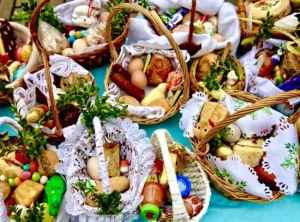
Eggs were always taken as symbols of rebirth, which is why Easter eggs were usually coloured red, especially in Eastern Europe, to symbolise the blood of Christ. The Russians used to place red Easter eggs on graves to serve as ‘resurrection charms’ and though the Czechs honoured Christ on Easter Sunday, his pagan rival was recalled on Easter Monday. This was the ‘Moon-day’ as opposed to the Sun-day. The older traditions used dyed chicken eggs, but now substitutes have come in chocolate, or plastic eggs filled with candy such as jellybeans.
In Poland and in the Slavic traditions of Eastern Europe, the old tradition of hand-painting eggs called Pisanka is still practised. In Bulgaria, traditional egg fights are a rage and the winning egg is titled as the Boark, the fighter. Germans and Swiss hang decorated eggs from branches or bushes and even on the top of wells that are all dressed up for Easter as Osterbrunnen. The celebrated House of Faberge created exquisite jewelled eggs for the Russian Imperial Court that took this humble folk art to new heights.
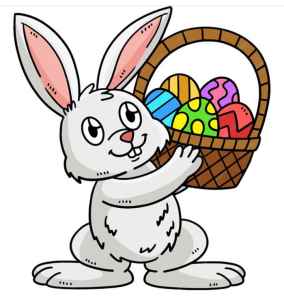
Like the celebration of Christmas, many such traditions of Easter were altered, censored and banned during the Protestant Reformation. Modern Easter is a thriving industry that runs on Easter eggs, bunnies and baskets of condiments, chocolate eggs, jelly beans and marshmallow chicks. The Easter Bunny has become a popular legendary Easter gift-giving character, somewhat like Santa Claus.
Easter is, however, not just food and fun, for it is also associated with the painful emulation of bodily tortures that were heaped upon Christ, called ‘The Passion’. Filipinos and Mexicans go through Christ’s last journey dragging heavy crosses on their shoulders and they whip themselves till they bleed. Some also pierce their heads with crowns of prickly thorns. This self-hurt reminds us of the rites of Muharram or Baan-phors in Bengal or the Tai Pusam in Tamil Nadu and of Charak.
Easter reminded people in ancient and medieval Europe, who hardly ever bathed in winter, that it was time for a bath. In Hungary and some neighbouring countries, there was a custom of pouring buckets of cold water on shivering humans in the name of Easter. Men often wooed women with perfumes or scented water during this season.
The piece has also been posted on Facebook by the author.