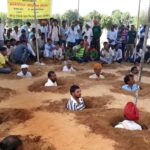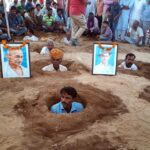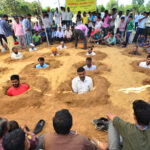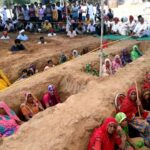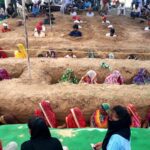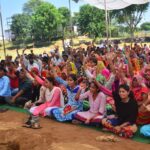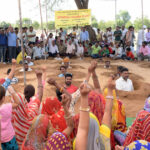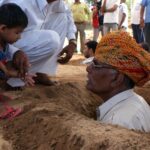

Nindar/Jaipur: Hundreds of farmers from Jaipur, Rajasthan are protesting against alleged forced land acquisition by Jaipur Development Authority (JDA) and termed it as Zameen Samadhi Satyagrah (land burial satyagrah). The heart-wrenching protest by farmers began on Gandhi Jayanti, October 2 and they are demanding to enhance their compensation from JDA. The photographs of the peasant protest, shows them demonstrating against the government in a unique way. Half buried in pits, the farmers, have a large number of women folks to boost their morale. Its a back to back protest by farmers in desert state, as last month only, Shekhawati region farmers had also a fortnight long movement against the Vasundhara Raje government to waive off their loan. They were successful in forcing the government to meet their demands. However, the Jaipur farmer’s protest is more similar in nature like the farmers from Tamil Nadu, who had sat in Jantar Mantar, New Delhi and even ate rats, drunk urine while making the demands from center government to waive off their loans. Witness the peasant movement in Jaipur, through some captivating pictures clicked by our photo journalist Chandra Mohan Aloria.