



Natural landscapes, such as beaches, water, forests, parks, and mountains, the availability of public open spaces used for public entertainment and sports reduce attention deficit disorders. Green restoration improves preschooler spatial working memory and cognitive functioning improves when children walk in nature.
According to the latest IPBES report, urbanization can increase isolation from nature, which in turn prevents people from harnessing mental health benefits of being surrounded by natural environments. It also creates risky exposure to the type of air pollution that primarily affects mental health.
“The positive impact of nature, including green environment and clean air, is significant for soft mental health problems like depression and anxiety, which have become the focal points in the 21st Century human situation, especially after the recent epidemic,” says Dr Nimesh G Desai, Senior Consultant in Mental Health, Public Health Expert, Former Director of IHBAS, Delhi.
Children who play in greenspace for 30 minutes have an increase in sustained mental ability and found greenspace to be restorative. Taking micro-breaks to view nature can help with attention restoration.
“Environment is before human beings. Animals and plants do not do anything harmful. Human beings create climate change. Through my actions, I am creating awareness about growing plants and conducting plantation drives, and workshops in schools – to bring awareness and behavioural change, says Vibhu Rakesh, an environmentalist, and sustainability entrepreneur.
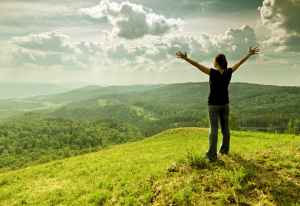
Nature has healing effects
In elementary-level classrooms, green walls (described as a wall with green plants) can provide restorative impacts to school children. Results show that children in classrooms where a green wall was placed scored better on tests for selective attention. The green wall also positively influenced children’s classroom evaluations. When integrating a school garden into the curriculum, children’s physical activity increased and sedentary behavior decreased. Children who receive breaks and time outside in nature, exhibit improved concentration. According to a study, by placing plants in a classroom can improve performance, with children progressing through the school curriculum 20-26% faster.
Interacting with nature, especially with the presence of water, can increase self-esteem and mood, reduce anger, and improve general psychological well-being with positive effects on emotions or behavior. In fact, moving to homes with greener areas positively influences mental health even after three years post-move. Moving to a less-green area significantly worsens mental health within one-year post-move, but returns to pre-move mental health status thereafter. This is true for public green spaces as well. City park area quantity and accessibility are strong predictors of physical and community well-being. Similarly, studies in Perth, Australia found that people in neighborhoods with high-quality public open spaces had better mental health than those with low-quality public open spaces. Features that made an open space “high quality” included irrigated lawns, walking paths, lighting, water features, playgrounds, and birdlife.
Environment enhances physical and mental health
A study by the Cincinnati Children’s Hospital Medical Center shows a link between high traffic-related air pollution and anxiety levels. While air pollution and other environmental hazards pose a threat to our mental health, healthy environments can help us feel better and even have a curative effect. Local governments can play a key role in tackling mental health crisis by reducing air pollution, enhancing the availability of green spaces or establishing electric and non-motorized transport initiatives, for instance.
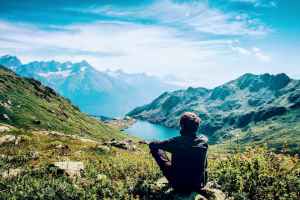
The natural world presents countless other health benefits. According to the latest Global Environmental Outlook, forests for example can promote physical and mental well-being. “The full health benefits of the natural world are too extensive to list,” said Inger Andersen, Executive Director of the UN Environment Programme, adding that nature is “the ultimate healthcare system”.
“Whenever I want to rejuvenate and replenish my spirit, I go for a walk in a garden or some forest.
A few days back while taking a walk in a beautiful garden, I saw a bee, trying to extract nectar from a red flower. I paused and continued looking at it, while she was busy doing her job. I was watching her in awe, time stood still like I was going through this mindfulness meditation. Suddenly this beautiful poetry came out of that moment;
Aren’t we all searching for the nectar
Not knowing
That like a flower carries it within
So do we.
“Being in nature is the best way to set the mind free and soar,” says Dr Jitesh Khanna, Multi Awardee entrepreneur, social activist, writer, and poet.
Nature certainly has a positive, calming impact on the well-being of a person. One needs to find ways to co-exist with nature.
“I look forward to my time in the garden I created 35 years ago. I don’t need therapy as long as I have my green buddies. I don’t remember when and how I got into gardening but it helps me stay sane amidst everything,” says Manju Boruah, Sustainable environment entrepreneur.

