
I am Muslim, I am India protest against hate crimes

Date:

Share post:

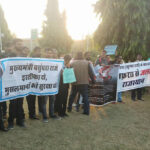
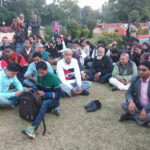
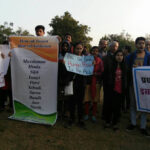
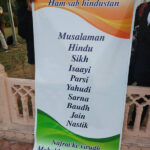
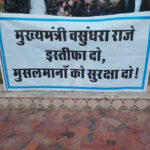
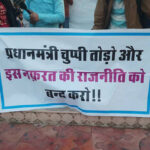
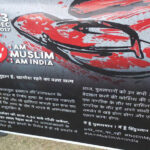
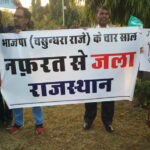
Jaipur:  Since 2015, there has been a drastic rise in hate crimes in India and intensity of every incident after another has been more than previous ones. More than three dozen people have been killed within three years in the name of cow worship, beef eating and now in the name of love-jihad, a term coined by Hindutva forces for inter-religious marriages. On December 6, when Muslims mourned the destruction of Babri Mosque, Malda’s Afrazul (Ifrazul) Khan was murdered in the most gruesome manner by one Shambhu Lal Regar in Rajsamand, Rajasthan. In the last two years, Rajasthan has witnessed several murders of Muslims. But this time, the cruelty broke all parameters. Since then civil societies have been protesting across India. On December 13, when Indian Parliament was attacked by militants, people gathered at Gandhi Circle in Jaipur to say — I am Muslim, I am India to stand against religious militants of India. In Delhi too, a protest under Not In My Name took place and people from all walks of life participated in it.
 

spot_img

Related articles

Vande Mataram and the Crisis of Inclusive Nationalism: A Minority Perspective India Can’t Ignore

As India marks 150 years of Vande Mataram, political celebration has reignited long-standing objections from Muslims and other minorities. The debate highlights tensions between religious conscience, historical memory, and the risk of imposing majoritarian symbols as tests of national loyalty.

Bengal SIR Exercise Reveals Surprising Patterns in Voter Deletions

ECI draft electoral rolls show 58 lakh voter deletions in West Bengal. Data and independent analysis suggest non-Muslims, particularly Matuas and non-Bengali voters, are more affected. The findings challenge claims that voter exclusions under the SIR exercise primarily target Muslim infiltrators.

A Veil Pulled, a Constitution Crossed: The Nitish Kumar Hijab Controversy

A video showing Bihar Chief Minister Nitish Kumar pulling Dr Nusrat Parveen’s veil during an official event has sparked constitutional concern. Critics say the act violated bodily autonomy, dignity, and Article 21, raising questions about state restraint, consent, and the limits of executive power in a democracy.

গীতা পাঠের অনুষ্ঠানের আক্রমণকারীদের সম্বর্ধনা দেওয়ার নিন্দা করা জরুরী

গত ৭ই ডিসেম্বর, কলকাতার ঐতিহাসিক ব্রিগেড প্যারেড গ্রাউন্ডে সনাতন সংস্কৃতি সংসদ আয়োজন করেছিল, ৫ লক্ষ কন্ঠে গীতাপাঠের অনুষ্ঠান।...