



Ranchi: Jharkhand, which had witnessed around 30 mob lynchings between 2016 and 2020, is again witnessing a rise. Within a week two people got killed by lynching. On March 14, a 27-year-old man was beaten to death in the state capital, Ranchi.
Amid these, Shaishta Perween, wife of Tabrez Ansari, who was beaten to death in June 2019, that led to an uproar all over the country and his issue was raised even at the United Nations, released a video appeal to chief minister Hemant Soren for speedy justice for her late husband.
25-year-old Tabrez was lynched for allegedly stealing a bike. He had got married only two months back, in April. After Tabrez’s killing, Shaishta had a miscarriage and lost her unborn child.
While 13 people were named as accused in the heinous crime, at present only prime accused Pappu Mandal is in jail, the rest all are all out on bail. The case is under-trial at court of 1st Additional Session Judge, Saraikela.
Shaishta Perween’s appeal to CM Soren:
“I met chief minister Hemant Soren three times since he came to power in Jharkhand. I had also met ministers Alamgir Alam and Haji Hussain Ansari when he was alive. Hemant Soren and others assured me that justice will be done soon, but it has been more than three months and I have not noticed any progress. I do not know when I will get justice,” Shaishta told eNewsroom.
In the video statement Shaishta mentioned that had people like her got speedy justice such lynching cases would not have taken place again.
When contacted Tabrez’s lawyer Altaf Hussain informed, “On March 12 charges were framed against 13 accused. The next hearing is scheduled for April 12.”
In June, Tabrez’s lynching will complete two years. In the absence of fast track court and not hearing of case on day to day basis, it will take few more years to deliver justice.
“There are around forty eyewitnesses in the case. And if the court will give a date in one month’s difference, it will take many more years to complete. I request to the court to hear the case on day to day basis,” added the lawyer.
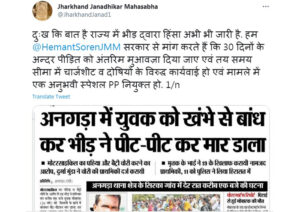
Meanwhile, Jharkhand Janadhikar Mahasabha, an umbrella body of civil society also tweeted after the Ranchi mob lynching case and regretted that since no system of the time-bound trial has been developed so far, which is why lynching of people is continued in the state. Along with a time-bound trial, the Mahasabha demanded from the Soren government to appoint experienced Public Prosecutors in lynching cases and compensation to victims within a month.

