



New Delhi: Caught in the nationwide lockdown without work or money, thousands of migrant workers are still stranded in different states despite the Indian Railways starting “Shramik Special” trains to take them home.
Countless migrant families amid the confusion about transport have been walking to reach their native places in the blazing summer, most of them unable to afford the cost of travel. Tales of others languishing in the capital’s major railway stations hoping to get help to travel, often without getting three meals a day, are common.
In hope to get financial help to reach their native village Kanhauli in Bihar’s Sithamari, a migrant family with small kids spent three days at New Delhi railway station with having food only two times.
Hari Kishor (35), a daily wager who used to swing cloth for a living, had his misery in unemployment compounded when he fractured his right leg in a road accident. He has a wife, four children aged 1 to 7 and a 60-year old mother to feed. Unable to pay rent, he vacated the dwelling a week back under pressure from the landlord.
“As I heard about trains available for us, we decided to go to the station where we for three days with no food and money. We begged for money to go to home, but nobody helped,” said Kishor.
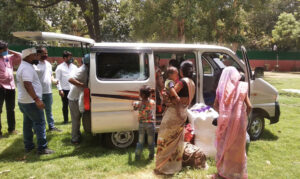
The family members were weeping hopelessly at the railway station on Monday night when some people walked them Indian Youth Congress (IYC) local office. IYC gave them food and arranged a permit vehicle to take them to their village.
Though the family was pleased they were able to leave Delhi, they fear for an uncertain future. Kishor’s wife Anita Devi (28) rued, “In these days we have starved a lot. We have nothing to eat after reaching at home too. I have four kids along with my husband and mother in law. We have no one else to earn bread.”
National President of IYC, Srinivas BV said that some locals contacted him and told about this stranded migrant family.
“We have been trying to help all such migrant workers during this lockdown as they are suffering most. Our leader Rahul Gandhi has clearly instructed us to help all such migrant laborers who are in urgent need such as food etc and reach them to their homes by our own vehicles.”
Efforts made by Priyanka Gandhi, Congress’ General Secretary to help stranded migrants in Uttar Pradesh were turned down by Yogi Adityanath’s government but it seems party workers are reaching out to migrants and helping them reach their destinations.

