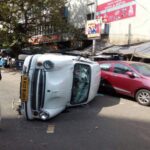
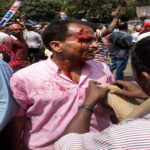
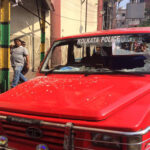
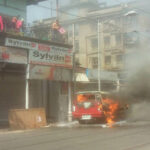
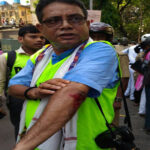
Kolkata: The rally organised by the Bengal unit of BJP, Chalo Lal Bazar (Lets go to Lal Bazar), took a violent turn, when the police stopped the procession led by BJP state president Dilip Ghosh near a barricade set up by the police. But the rallyists were in no mood to listen to the announcements made by the police, thereby, making them resort to using tear gas shells and water cannons to disperse the crowd. The participants attacked the police with water bottles and eggs. However, around this time a bomb was hurled at a police post. Despite no one being injured by the bomb, it made many wonder about the eighties, when such bomb attacks were a norm during rallies. The BJP supporters, also torched the officer-in-charge’s vehicle. The scuffle led to injury of over a hundred BJP volunteers and 21 policemen. Kolkata police also shared a clipping on its twitter account, how BJP workers were damaging police vehicle, a government property. Interestingly, Bengal BJP’s social media accounts have also shared a fake picture of an accident victim to highlight police atrocity. When one Deepak Roy, a friend of diseased revealed about it, on his Facebook, that Rupak Debnath had died from road accident, the party removed the post from its accounts.