



Ranchi: A fact-finding team of Jharkhand Narega Watch, has found out that the farmer who committed suicide at his own well, in Ranchi, had never been an alcoholic, as it is being claimed by local administration, which is determined to prove that the farmer had not committed suicide due to debt but had accidentally slipped into the well in an inebriated state.
On July 25, 2019, 43-year-old Lakhan Mahto, a resident of Patratu village of Patratu Gram Panchayat in Chanho block, jumped into a well to end his life. Ironically, he himself had constructed the same well.
Lakhan was the lone earning member of the household, which was dependent on agriculture. And to eke out a living Lakhan also had to work as a labour to earn some extra money to clear off his debt. And his failure to clear his debt, was stressing him out.
Lakhan is survived by his 85-year-old mother – Gujari Devi, 36-year-old, wife Vimla Devi and his three children – Suraj (18 years), Neeraj (15 years) and Praveen (12 years).
The scheme code of Lakhan’s work was 3401005010/IF/7080901221509, which had been sanctioned in December 2017.
He had to pay for the materials as well as for the labour wages as the payments had not been made on time. He had to take loans for this purpose and was hoping that he would soon be receiving money from the government. However despite putting in a lot of efforts he could not get back the money that he had already invested.
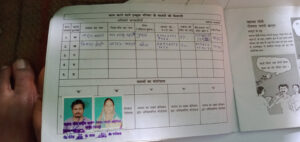
The fact-finding team found that all these resulted in a lot of stress and soon, Lakhan was under great psychological trauma and depression.
On the day of the tragedy, Lakhan woke up at around four in the morning and went to the nearby farm where he had constructed the well. When he did not return for a long time, people went out searching for him. However, the search ended with his dead body being discovered in the well.
Lakhan’s wife, Vimla Devi said that her husband had to borrow a total Rs 1,70,000 from three of his relatives between January and February 2018 for the completion of the well, but he could not repay the loan even after 14 months as the wages and material payments had not been released to the concerned labours and vendors in their bank accounts by the government.
Didn’t get MGNREGA payment on time
It is a great administrative failure that Lakhan was literally forced to take risky loans while the government has the responsibility of making all the payments under MGNREGA and the beneficiaries are not supposed to invest a single penny. Further it is important to understand that Lakhan had to pay to the laborers at a local rate which is much higher than the MGNREGA wage rate of Rs 168 per day. The block administration could not ensure timely material supply to the work site which compelled him to take the loan from others to procure materials in order to complete the scheme.
Lakhan, for the last 13 months had been regularly visiting the block office, hoping for reimbursement of the outstanding amount of Rs 1,18,545 (one lakh eighteen thousand five hundred and forty five) from the government for the wages and payments to be made for the raw materials. Apart from Lakhan Mahto, in Patratu Panchayat, 28 other MGNREGA beneficiaries for the well are also facing similar situations.
MGNREGA
Even after five days of this tragic event, the government has neither offered a single benefit or compensation to the family and nor had paid the outstanding money which led to the tragic death of Lakhan Mahto. Gujri Devi, mother of Lakhan, an eighty-five-year-old lady, did not get the benefit of old age pension under the central pension scheme despite being eligible for the benefit. The ration received under the Annapurna Anna Yojana was discontinued in December 2010, despite her having submitted applications at the Panchayat and Block level several times. Her grievances still remain unheard and unaddressed. The family has not yet been offered the benefits of National Family Benefit Scheme (NFBS) under the National Social Assistance programme (NSAP) wherein the family is supposed to get a one-time compensation of Rs 20000 after the death of the earning member of the family.
During interaction with the family members the fact finding committee has found out that the claims made by the Block administration that Lakhan was drunk and intoxicated during the time of the incident, is baseless and false. The neighbours and family members had shared that the farmer was never addicted to alcohol.
Jharkhand NREGA Watch demanded:
- As per the notification 4-110 (NREGA)/ 10 RDD 4716, Ranchi, dated August 1, 2018, immediate compensation should be paid to the dependents of Lakhan Mahto
- The family members should immediately be provided Rs 20000 as per the National Family Benefit Scheme (NFBS)
- Vimla Devi, wife of late Lakhan Mahto should be enrolled under the widow pension scheme and the administration must ensure the payments of the same with immediate effect
- Pending material payments for the scheme should be made immediately and re-imbursement of the to Lakhan’s family must be ensured
- The watch also demand strong administrative action against the responsible officials who had failed to make on time payments which in turn led to the tragic incident. The department should identify the responsible persons and file criminal cases against them as soon as possible
- The state government should take appropriate and effective steps to eradicate the complexity in material procurement and payments

