



Bambhola came to me, an android phone in hands, to say that the Indian Prime Minister, Narendra Modi and his Pakistan counterpart, Imran Khan stayed in a room for nine hours at Brishkek.
Quoting a news report from his mobile phone, he expressed surprise that how could the two leaders could not talk to each other even after spending so much time together in the same enclosure. Bambhola is a retired Army soldier who has returned to Daraili Mathia—our village in Siwan district in northern Indian state of Bihar—doing farming. As usual I too had gone to my native place to see my mother and meet my old friends at the village.
After a pause, I told Bambhola, “What is so unusual? You too don’t speak to your octogenarian mother despite you live in the same house”. Bambhola turned uneasy, saying, “You are bringing the family matters whereas I am talking about the national and international issue”.
Bambhola was not wrong. In fact, he wanted to engage me on the hot topic of diplomacy and relationship between the two neighbouring countries.
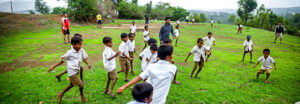
But I found it bizarre in the sense that the villagers no longer talk among themselves. They don’t play and sing together. The youths no longer gather under the shades of mango and jamun trees and eat the seasonal fruits together. The orchards of mango and jamun have vanished. They no longer play guilli–danda, chikka and kabaddi—the local games their fathers and forefathers used to play during the month of Jeth (coinciding with June) in the barren fields awaiting rains and sowing of paddy crops. Jeth also marked marriage season. The local folk artists would play the drama replicating the chivalry of old kings Alha and Rudal or love stories of Siri and Farhad on the wedding venues, drawing a huge number of people to entertain themselves. The community of peasants would sit in groups cracking jokes and telling fables. Bambhola’s father, Patru Ahir used to sing ballad based on the love story of Rani Saranga and Sadabrij for whole night getting other villagers to listen and get emotional at the pangs of the struggle in the love life of Saranga and Sadabrij. The people would tell many stories about the cows, crows, sparrows, roosters and peacocks which were in plenty in the village.
In the last 30-40 years, the villager life has changed dramatically. The ponds in which the children used gather, fish, bathe, play with their buffaloes have dried. The singers of Alha-Rudal and Rani-Saranga Sadabrij ballad have died. So have the nest of sparrows and sparrows themselves. The crows too are not visible.
The community life based on co-existence has gone. The youths neither play among themselves nor are interested in talking to their grandfathers or grandmothers and listening to their stories. The akhara (local wrestling grounds) in which the previous generation youths used to gather and wrestle too have vanished. The modern day youth don’t have friends on the streets. If they are getting them on Facebook and WhatsApps.
Thus, these youths talk about the topics—Narendra Modi, Imran Khan, Gauraksha (cow protection), terrorism, Hindutva etc—that they encounter on their mobile phones. Their forefathers were dependent on the weather predictions on the basis of legendry folklorists, Ghagh-Bhaddri’s couplets. They had no mobile phones and, thus, were largely unaware of the information about the big national and international leaders and film stars. They were seized with their cattle, farms and their dialogue revolved around what they were doing in their day today life. Despite they had no connection with the national and international affairs; they were very much connected to each other and shared their grief and sorrow among themselves. The local bard and folksingers were their heroes and the local faith healers and successors were their benefactors.
Bambhola who turned uneasy when I asked about his relationship with his old mother too was suffering from this syndrome. Working as a Jawan, he earned handsomely and gifted mobile phones to his sons. His sons stay more engrossed in mobile phone. They too don’t talk to Bambhola either. Bambhola doesn’t have their authority over his sons the way his father and mother had on him when he was young.
In fact, there is a loss of dialogue and disconnection all around. My mother sums up, “Ab Jeevan Mein Ras Nahin Hai (There is no flavour in life now)”. She waits for Harishankar Choudhary—an old villager and her contemporary to come to her and talk to her. But the old people are dying and the new generation that is taking over is going to make New India.
I will be able tell the story of New India in next 20-30 years if I remain alive.
Nalin Verma is senior journalist and author of Gopalganj to Raisina– Lalu Prasad’s autobiography

