

Surjyapur, Baruipur: On Saturday afternoon, July 4, eleven-year-old stepped out of her home carrying a simple plan.
She was going to buy a birthday gift for a friend.
The market was only a short walk away. In Surjyapur, a semi-rural settlement in South 24 Parganas district, people know one another by name. The road from her house to the shops takes only a few minutes on foot. Her family expected her back almost immediately.
She never returned.
By evening, concern had spread beyond her home. Relatives began searching nearby lanes. Neighbours joined in. Shopkeepers were asked if they had seen the child. As daylight faded, the search expanded across the village.
No one imagined that over the next several hours the residents of Surjyapur would reconstruct the movements of a missing child, identify a suspect, confront him, and eventually recover her body from a pond hidden beneath dense water hyacinths.
The story that unfolded over the next two days is not only about the brutal rape and murder of an eleven-year-old girl. It is also about what happens when an entire community believes it cannot afford to wait.
A village begins looking for answers
The family first approached Baruipur Police Station after the child failed to return home. According to relatives and residents, they expected a swift search for a missing minor.
Instead, they say, the urgency they hoped for never materialised.
As anxiety turned into desperation, the search gradually shifted from homes and fields to electronic evidence.
Young men from local clubs began visiting shops one after another, requesting CCTV recordings. Shopkeepers willingly opened their systems. Residents moved from one camera to the next, trying to establish the girl’s last known movements.
By early morning, they had collected nearly ten CCTV clips from different locations.
Among them, two pieces of footage stood out.
Recorded at approximately 4.27 pm and 4.42 pm, they appeared to show the girl walking with a man known in the locality.
The timestamps puzzled the villagers.
The distance between the market and the girl’s home could normally be covered in just two or three minutes. Why had she remained on the road for so much longer?
The discrepancy became the first significant clue.
Long before forensic experts arrived or investigators reconstructed the sequence of events, residents had begun doing it themselves.
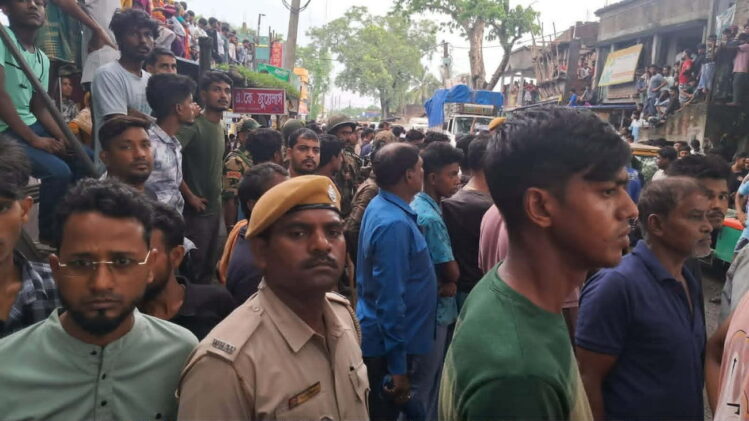
Following the CCTV trail
The footage quickly became the centre of the search.
People who knew the area began comparing routes, timings and locations. Residents discussed where the child had last been seen, which roads she might have taken and who had accompanied her.
The man appearing beside her in the footage was recognised almost immediately.
His name was Prabhas Mondal.
The villagers informed the police and continued requesting immediate intervention. According to residents, repeated calls were made to the police station as the night progressed.
But with every passing hour, they felt the search was slipping away.
Unable to wait any longer, local club members turned to civic volunteers stationed nearby, asking them to join the search.
Together, residents and three civic police personnel headed towards Mondal’s house.
The shoes inside the house
When the group reached the suspect’s residence, his wife told them he was not home.
Some residents were unconvinced.
Standing outside, they noticed a pair of shoes inside the house.
If he had gone out, they wondered, whose shoes were they?
The crowd refused to leave.
The house was surrounded until Mondal eventually emerged.
He was taken to a nearby civic volunteer barrack where questioning began.
Residents who were present say Mondal repeatedly changed his account before finally admitting that he was the man seen with the child in the CCTV footage.
According to those present, he also disclosed the names of several others allegedly involved in the crime.
Yet even then, villagers say, they continued waiting for additional police personnel to arrive.
Residents claim that more than ten calls were made from the barrack requesting reinforcement.
They say no regular police team reached them during that period.
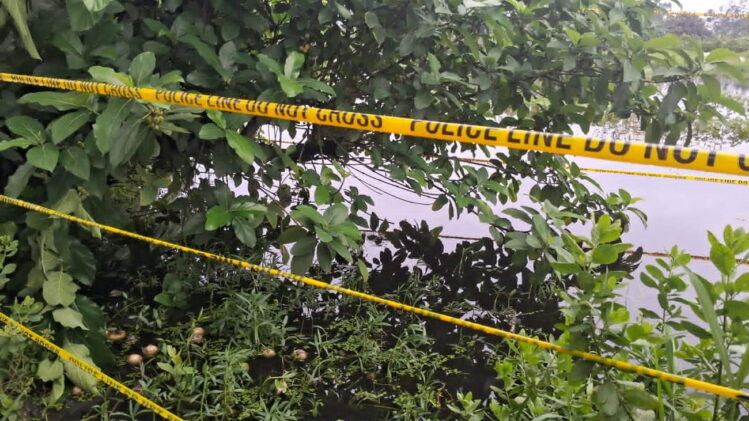
Pond at Surjyapur from where the dead body of the 11-year-old was recovered | Antara SwarnakarThe search enters the marshland
Questioning alone was no longer enough.
The child was still missing.
Residents insisted that Mondal lead them to wherever he had last seen her.
Accompanied by civic volunteers and villagers, he walked through muddy tracks, overgrown vegetation and narrow embankments near Surjyapur railway station.
The journey became increasingly slow as the landscape turned marshy.
After repeatedly changing direction, Mondal eventually pointed towards a small pond almost entirely concealed beneath thick water hyacinths.
Nothing about it suggested that it concealed evidence of a crime.
Villagers entered the water.
Some pulled away the floating vegetation while others searched beneath it.
Then they found a plastic sheet.
Wrapped inside it was a sack.
As residents pulled it towards the bank, the covering tore slightly.
A child’s leg became visible.
“I was stunned,” recalled Julie Seikh, who helped recover the body.
“I couldn’t believe what I was seeing. Since that day I haven’t been able to eat or sleep.”
Another resident, Sagir Ali, said he remained some distance away.
“I was there,” he said. “But I couldn’t go closer. She was just a little girl.”
Residents insist there were no regular police officers at the site when the body was recovered.
For many in Surjyapur, that moment changed the nature of the tragedy.
Until then, they had been searching for a missing child.
Now they believed they had become the first people to uncover a murder.
A Body Recovered, A Village in Revolt
When the sack was pulled from the pond, the search ended.
Another story had just begun.
The child was found naked, her body wrapped first in plastic and then stuffed into a sack. Villagers say it had been hidden beneath thick layers of water hyacinths, suggesting an attempt to conceal both the body and the crime scene.
For those who had spent the entire night searching, the discovery was overwhelming.
Seikh, who helped recover the body, says the image has remained with him ever since.
“I saw her leg when the sack tore,” she recalled. “I have not been able to eat or sleep since.”
Sagir Ali, another resident, chose to stand at a distance.
“I was afraid to go near,” he said. “She was just a little girl.”
Residents say there were no regular police officers present when the body was recovered. That allegation has become one of the central questions surrounding the case.
Questions over the police response
According to villagers, the suspect had already admitted to appearing in the CCTV footage and had identified others allegedly involved in the crime while being questioned at the civic volunteer barrack.
Yet confusion persisted over what happened next.
Members of the victim’s family allege that despite the suspect’s statements, there was no immediate move to formally secure him or begin a coordinated investigation.
One relative described what followed as deeply disturbing.
According to the family, a local political functionary who had joined the search eventually transported one of the accused from the civic barrack to Baruipur Police Station in an electric rickshaw rather than in a police vehicle.
The allegation has not been independently verified, but it has become one of the questions repeatedly raised by the family.
“When someone admits involvement in such a crime, the responsibility of taking him into custody rests with the police,” the relative said. “Instead, we felt we were left to manage everything ourselves.”
The family believes the investigation initially failed to receive the urgency that the disappearance of a child demanded.
From grief to protest
By Sunday morning, word of the recovery had spread across Surjyapur and neighbouring villages.
Residents placed the child’s body on a bench, wrapped in cloth and plastic, refusing to allow it to be taken away until senior officials reached the spot.
Some members of the family also contacted Childline (1098), seeking intervention.
When police eventually attempted to remove the body, the situation deteriorated rapidly.
Residents blocked roads.
Thousands gathered around Surjyapur.
The Sealdah-Namkhana railway line was brought to a halt.
The Baruipur-Joynagar Road was blocked for hours.
Tyres were set on fire.
A police vehicle was damaged.
Police responded with a lathi charge.
Some protesters threw stones.
The confrontation reflected something larger than anger over a single crime. For many residents, it was also about a growing belief that they had been forced to investigate the disappearance themselves before the machinery of the State responded.
Amid the unrest, another tragedy unfolded.
A man identified as Indrajit Mondal, suspected by sections of the crowd to have been involved in the crime, was lynched by an angry mob.
Police later arrested 32 people in connection with the violence and the lynching.
The case had now moved beyond a criminal investigation.
It had become a test of public trust.
What the post-mortem revealed
The preliminary autopsy report introduced another devastating dimension.
Doctors found mud and silt inside the child’s lungs and stomach.
According to the medical findings, she was still alive when she entered the pond.
The report also recorded a severe blunt-force injury to the back of her head, which had caused extensive bleeding and rendered her unconscious before she was thrown into the water.
Investigators believe she had been sexually assaulted before the killing.
The post-mortem findings transformed public outrage into horror.
For residents who had recovered the body themselves, the report deepened the trauma of what they had witnessed.
The encounter that shifted the debate
Two days later, the investigation took another dramatic turn.
Prabhas Mondal, one of the principal accused and the man allegedly seen with the victim in CCTV footage, was killed during a police operation.
According to Baruipur Superintendent of Police Palash Chandra Dhali, the accused attempted to snatch a firearm from a police officer shortly before investigators were to reconstruct the crime scene.
Police said he fired at officers while attempting to escape, prompting retaliatory firing in which he was fatally injured.
Before his death, police said, Mondal had helped investigators identify other accused and had disclosed that he had allegedly been offered money to bring the child to them.
The encounter immediately divided public opinion.
Some residents welcomed it, saying the accused had received the punishment he deserved.
Others questioned whether the death of a key accused could affect the investigation into the wider conspiracy.
Legal experts and political leaders also raised constitutional concerns.
The Supreme Court’s 2014 judgment in People’s Union for Civil Liberties vs State of Maharashtra requires every police encounter resulting in death to be independently investigated through procedures designed to protect the rule of law.
Critics argued that regardless of the allegations against the accused, the investigation had lost a crucial witness whose testimony might have revealed the complete sequence of events.
Perhaps the most striking response came from Mondal’s own mother.
She refused to accept her son’s body.
“He got the punishment for what he did,” she told reporters.
“I don’t want to take his body.”
Her words captured the moral complexity surrounding the case.
For one family, there was grief without justice.
For another, there was shame without defence.
Beyond Surjyapur
Senior police officers later visited the village.
The Director General of Police inspected the crime scene.
The National Commission for Women sought a detailed report.
Political leaders across party lines met the victim’s family.
A Special Investigation Team continues to examine the crime, the roles of the accused and the circumstances surrounding the encounter.
But in Surjyapur, many residents continue to return to an earlier question.
Not how the child died.
Not how many people were involved.
But why, when an eleven-year-old girl disappeared on a short walk to buy a birthday gift, it was ordinary villagers who first pieced together her final journey.
That question reaches beyond one village in South 24 Parganas.
It speaks to a larger concern about policing, public confidence and what happens when citizens believe they cannot afford to wait for the State to act.
When Citizens Become Detectives
By the time senior police officers, politicians and investigators reached Surjyapur, the village had already answered many of the questions that usually confront investigators after a child goes missing.
Residents had reconstructed the girl’s last known movements.
They had identified the man seen with her in CCTV footage.
They had confronted him.
They had searched the marshland where he led them.
And they had recovered the body.
The formal investigation would continue for days.
But its first breakthrough had come not from the State, but from ordinary citizens.
That sequence of events has transformed the Surjyapur case into something larger than a criminal investigation. It has become a story about public trust, policing and the increasingly active role that communities are playing when institutions appear slow to respond.
The investigation before the investigation
There was nothing sophisticated about the methods adopted by the villagers.
No forensic laboratories.
No cyber experts.
No surveillance command centres.
Instead, there was familiarity with the locality.
Shopkeepers who willingly opened their CCTV systems.
Young men who walked from one camera to another comparing timestamps.
Neighbours who knew every shortcut and every face.
Residents who recognised a man walking beside a child.
It was local knowledge that connected the first pieces of evidence.
The technology merely preserved them.
That distinction matters.
The CCTV cameras did not solve the case.
People did.
A changing relationship with policing
Across India, mobile phones, CCTV cameras and neighbourhood messaging groups have increasingly become part of how communities respond to emergencies.
When children go missing, photographs circulate within minutes.
Local volunteers organise search parties.
Residents begin looking for digital evidence before investigators arrive.
The Surjyapur case illustrates both the strengths and the risks of that transformation.
Without the persistence of villagers, crucial evidence might have taken longer to emerge.
Yet the same anger that drove the search also fuelled violent protests and, eventually, the lynching of a man suspected by the crowd of involvement.
The story therefore carries two truths at the same time.
Collective action helped uncover the crime.
Collective anger also crossed into violence.
Both deserve equal attention.
Justice and due process
The police encounter that killed one of the principal accused introduced another difficult question.
Many residents welcomed it.
Others questioned whether the death of a key accused could complicate efforts to establish the complete chain of events.
India’s Constitution promises justice through legal process, not public sentiment.
The Supreme Court has repeatedly held that every encounter death must be independently investigated, regardless of the allegations against the deceased.
Those safeguards exist not to protect criminals, but to protect the integrity of criminal investigations and public confidence in the justice system.
In Surjyapur, both demands now exist side by side.
The demand for swift punishment.
And the demand for lawful justice.
Neither cancels the other.
The burden carried by witnesses
Long after television cameras leave, villages continue living with what they have witnessed.
Seikh says he still struggles to sleep after helping recover the child’s body.
Others describe avoiding the pond where she was found.
Parents now accompany children on walks that once seemed routine.
The water hyacinths have begun growing again across the pond’s surface.
But residents say they cannot look at the place without remembering what lay beneath them.
Trauma rarely ends when an investigation begins.
For communities that become unwilling witnesses, it often lasts much longer.
A question beyond Surjyapur
Every crime leaves behind evidence.
Some also leave behind questions that extend far beyond the place where they occurred.
The question emerging from Surjyapur is not simply how an eleven-year-old girl was abducted, assaulted and killed.
Investigators will continue searching for those answers.
The larger question is different.
What happens when citizens believe they cannot wait for institutions to act?
In Surjyapur, the answer was extraordinary.
An entire village became investigators.
It gathered evidence.
It identified a suspect.
It recovered a child.
It demanded accountability.
That determination deserves recognition.
So does the uncomfortable question it leaves behind.
In a constitutional democracy, should grieving citizens ever have to do the work that they believe belongs to the State?
That question may outlive the investigation itself.
