



Kolkata: The first signs of trouble came long before the bulldozers arrived.
For days, whispers spread across Jadavpur Railway Station that demolition squads would soon reach the bustling marketplace where hundreds of families had earned their livelihood for decades. Hawkers spoke in hushed voices, some hurriedly reducing their stock, others wondering whether the rumours would pass like so many before them.
Then, in the darkness of June 7, the rumours became reality.
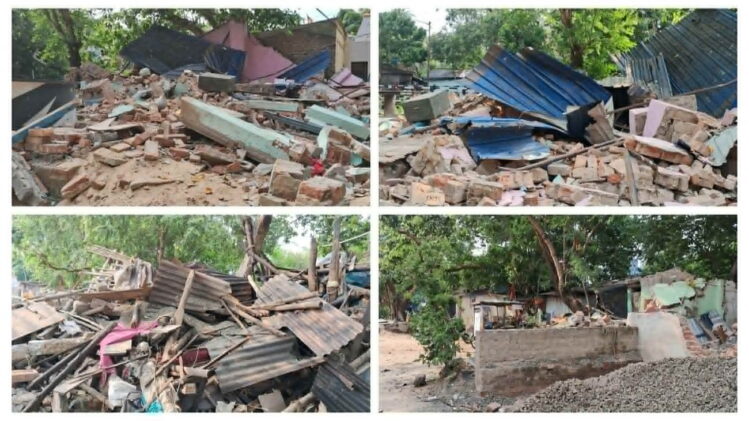
Police personnel and central forces descended on the area in a midnight anti-encroachment operation. Makeshift shops were dismantled, roadside stalls flattened, and temporary shelters demolished. As residents, vendors, students and political activists rushed to protest, the situation spiralled into violence. Baton charges followed, several people were injured, and multiple protesters—including CPI(M) leaders Srijan Bhattacharya and Sujan Chakraborty—were detained before later securing bail.
By dawn, much of what had stood there for years had disappeared.
For many commuters, the drive promised wider roads and less congestion. For hundreds of vendors, however, it marked the collapse of livelihoods painstakingly built over decades.
“I don’t know where we will live if our home is demolished,” said one woman whose makeshift dwelling was partially razed during the operation. “The government has already left us for dead. After this, we will live wherever God wills.”
Nearby, two migrant construction workers from Bihar stood beside the remains of their shelter, trying to salvage whatever little had survived the demolition.
“We came here to earn a living,” one of them said. “Despite a stay order, our shelter was demolished overnight. Now we have no choice except to rent another room somehow.”
Their stories are now being repeated across West Bengal.
From Promise of Change to Fear of Eviction
The demolition at Jadavpur was not an isolated operation.
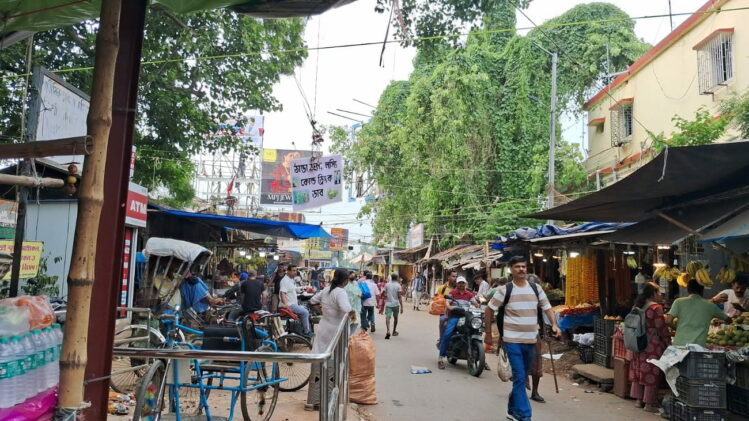
Since assuming office on May 9, Chief Minister Suvendu Adhikari has launched an aggressive campaign against illegal encroachments across the state. From Kolkata to Howrah and Hooghly, police, railway authorities and civic officials have been directed to clear pavements, railway land and public spaces occupied by unauthorised structures.
The government’s argument is straightforward.
Public roads, railway platforms and footpaths, officials say, are meant for pedestrians and commuters—not permanent commercial occupation. Authorities have repeatedly argued that illegal encroachments obstruct movement, compromise safety and undermine ongoing infrastructure projects, including the redevelopment of railway stations under the Amrit Bharat Station Scheme.
The administration has also invoked provisions of the Railways Act, 1989, under which unauthorised hawking and vending on railway property are prohibited.
Yet, on the ground, the debate is proving far more complicated.
For many of those facing eviction, the question is not whether the government has the authority to remove illegal structures. It is whether people who have spent twenty, thirty or even forty years earning their livelihood from the same place can simply be erased overnight without meaningful rehabilitation.
That uncertainty hangs over nearly every conversation inside Jadavpur’s shrinking marketplace.
“We have run this shop for more than twenty-six years,” said Sumit Roy, who sells mobile accessories. “No previous government removed us. We wanted change because we were tired of corruption. Instead, we received eviction notices.”
He paused before adding quietly, “We voted for this government. Today, we are paying the price.”
His disappointment is shared by many vendors who openly acknowledge supporting the BJP during the Assembly election, hoping for better governance and employment opportunities.
Instead, many now fear becoming unemployed themselves.
‘Where Will We Go at This Age?’
Inside a modest tea stall that has survived countless elections but now faces demolition, Ratan Das struggles to imagine life beyond the railway station.
For thirty-six years, he has sold tea, toast and simple meals to daily commuters.
Every cup of tea, every biscuit sold, has helped support an entire family.
Today, he sees no future.
“Four or five people depend on every shop,” he said. “At this age, who will employ me? Either I will have to beg at the station or end my life.”
His voice reflected not anger but exhaustion.
Like many others, he says he understands the government’s desire to improve public spaces. What he cannot understand is why rehabilitation appears to remain uncertain.
“The government talks about removing us,” he said. “Nobody talks about where we are supposed to go.”
That fear has forced many vendors to change the way they do business, even before demolition squads arrive.
Mamoni Sinha, who has been selling household goods for nearly twenty-five years, now keeps only a fraction of her usual stock.
Plastic buckets, water bottles, mugs and kitchen containers that once filled her shop have disappeared.
“I am afraid,” she admitted. “If officials come suddenly, everything will be destroyed.”
Her husband works as a private security guard. Together, their earnings barely sustain the family.
“We voted believing this government would help ordinary people and end corruption,” she said. “But if they take away our livelihood without giving us another place to work, how will we survive?”
The uncertainty extends well beyond Kolkata.
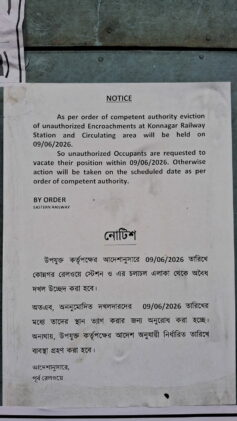
In Konnagar, where more than 350 shops are threatened with eviction, sixty-two-year-old grocery seller Dulal Saha has spent forty-two years building his business.
He says vendors are not refusing to relocate.
“What we are asking for is rehabilitation,” he explained. “If all the shops are shifted together to another suitable place, we are ready. But removing us without any alternative will destroy hundreds of families.”
Local representatives have reportedly assured vendors that rehabilitation will be considered, but many traders say they are still waiting for written guarantees.
Until then, every passing police vehicle, every fresh notice pasted on a wall and every rumour of another overnight operation brings renewed anxiety.
For thousands of informal workers across West Bengal, life has become a daily wait for the next demolition drive.
‘They Talk About Eviction, Not Employment’
While vendors describe sleepless nights and shrinking incomes, the West Bengal government has defended its anti-encroachment campaign as an essential step towards restoring public spaces and improving civic infrastructure.
Since taking office, Chief Minister Suvendu Adhikari has repeatedly maintained that roads, footpaths and railway premises cannot remain occupied indefinitely. The administration argues that illegal encroachments inconvenience millions of commuters every day, obstruct emergency services and undermine large-scale infrastructure projects, including the redevelopment of railway stations under the Amrit Bharat Station Scheme.
Officials have also pointed to provisions of the Railways Act, 1989, under which unauthorised vending on railway property is prohibited.
At a press conference on June 12, Adhikari sought to reassure affected vendors by promising compensation and rehabilitation measures, while reiterating that encroachments on public land would not be allowed to continue.
On the ground, however, those assurances have done little to calm anxieties.
Many vendors say they have heard promises before but have yet to receive written rehabilitation plans, designated vending spaces or timelines for relocation.
“If the government gives us a proper place to work, we will gladly shift,” said Mamoni Sinha. “The local MLA assured us that rehabilitation would be arranged, but nobody has told us where or when. Until then, we live in fear every single day.”
Her uncertainty is echoed by vendors across railway markets in Kolkata and neighbouring districts.
Unlike organised businesses, most hawkers operate on razor-thin margins. A day’s closure often means a day’s income lost. An unexpected demolition can wipe out years of savings within minutes.
Some have already begun downsizing voluntarily, reducing inventory to minimise losses if officials arrive without warning.
Others are preparing for something far more painful—the possibility of abandoning the only profession they have ever known.
“I have worked here for twenty years,” said Sushama Halder, who sells homemade snacks near Jadavpur Railway Station.
“I have no choice except to accept whatever the government decides. But they only speak about removing us. Nobody speaks about creating jobs.”
She recalled that there had been no consultation before notices were served.
“There was no discussion with us,” she said. “No written agreement. They simply handed over the notice.”
For thousands of workers in the informal economy, the question is no longer whether eviction will come—but what life will look like after it.
When the Constitution Meets the Bulldozer
The battle unfolding across West Bengal is not merely administrative or political. It also raises complex constitutional questions that have shaped public debates for decades.
Successive governments have invoked laws governing public land and railway property to justify eviction drives. Equally, courts have repeatedly recognised that the Constitution protects not only the right to movement but also the right to livelihood and human dignity.
These two principles now find themselves in direct conflict.
Social activist Rupam Chatterjee of the Association for Protection of Democratic Rights (APDR) believes the issue cannot be reduced to a simple question of legality.
“The Street Vendors Act, 2014, applies primarily to public streets and does not extend to railway land,” he acknowledged. “But authorities also need to remember the history of these spaces. Much of this land originally belonged to ordinary people before being acquired for railway projects. Before removing families who have survived here for decades, the government must ask whether rehabilitation is its responsibility.”
He also questioned the lack of clarity surrounding official assurances.
“Local representatives have spoken about rehabilitation,” he said. “But vendors have not been shown any formal document. At the moment, everything depends on verbal promises.”
That uncertainty has become one of the biggest sources of fear.
Legal experts point out that while unauthorised occupation cannot automatically become a permanent right, governments also have constitutional obligations towards citizens whose livelihoods depend on such spaces.
Article 19(1)(g) guarantees citizens the freedom to practise any profession or carry on any trade or business, subject to reasonable restrictions.
Article 21, interpreted expansively by the Supreme Court over several decades, recognises that the right to life includes the right to live with dignity—and, by extension, the right to earn a livelihood.
Perhaps the most significant judicial precedent remains the Supreme Court’s landmark judgment in Olga Tellis vs Bombay Municipal Corporation (1985), where the Court observed that depriving pavement dwellers of their livelihood without providing alternatives could amount to depriving them of their right to life.
That judgment has since become a reference point in debates over urban evictions across India.
Yet translating constitutional principles into administrative policy remains an enduring challenge.
Across West Bengal, demolition drives continue even as several cases remain under judicial consideration.
The Calcutta High Court has, in several matters relating to railway land, granted interim protection to affected vendors while encouraging authorities to evolve a fair rehabilitation mechanism wherever applicable.
Still, demolition operations have continued in several locations, including Park Circus, where hundreds of structures were cleared after prior notices were issued.
For vendors, every new operation reinforces a troubling perception—that legal protections often arrive too slowly to prevent livelihoods from being destroyed.
As excavators move from one railway station to another, the debate grows sharper.
Can a city reclaim its pavements without first creating space for those who have depended on them for decades?
Can urban order be achieved without deepening economic insecurity?
Those questions extend far beyond West Bengal. They go to the heart of how Indian cities balance development, legality and social justice.
History Repeats Itself, Only the Governments Change
For veterans of Kolkata’s hawkers’ movement, the current eviction drive evokes memories that stretch back decades.
Governments have changed. Political slogans have changed. But the conflict between reclaiming public spaces and protecting livelihoods has remained remarkably constant.
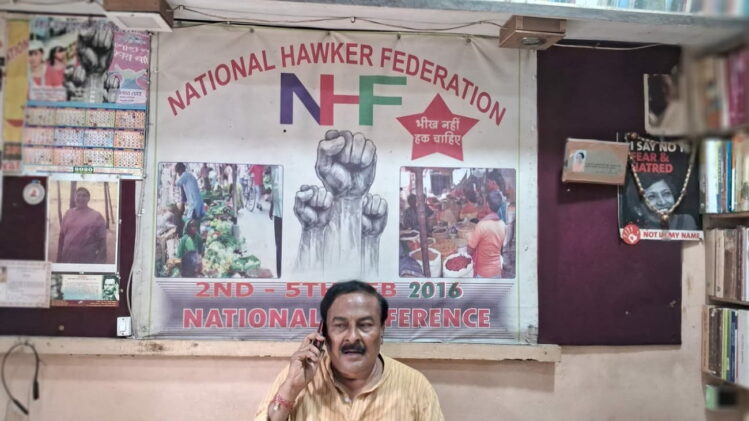
Shaktiman Ghosh, Secretary of the National Hawkers Federation, has spent nearly six decades organising street vendors across the country. To him, today’s crisis is another chapter in a long struggle that successive governments have failed to resolve.
“No hawker should be evicted without proper rehabilitation,” he said. “That has been our position for decades.”
He recalled that the demand for a national policy on street vendors gathered momentum in the early 2000s, eventually leading to the enactment of the Street Vendors (Protection of Livelihood and Regulation of Street Vending) Act, 2014. The law was intended to regulate vending while safeguarding the livelihoods of millions working in India’s informal economy.
“But railway land remains outside the Act,” Ghosh pointed out. “That has created one of the biggest legal grey areas.”
According to him, the present confrontation is not simply about the illegal occupation of land. It reflects a decades-long failure of governments—both at the Centre and in the states—to create planned vending zones, implement rehabilitation policies and recognise the contribution of hawkers to urban life.
“The government speaks about making railway stations world-class,” he said. “We are not opposed to development. But development cannot mean pushing poor people into destitution.”
Ghosh also rejected the perception that the present government alone should bear responsibility.
“Evictions have happened under every regime,” he said. “The faces in power change, but the policy often remains the same.”
His words find support in West Bengal’s own history.
In 1996, the Left Front government launched the controversial Operation Sunshine, one of the largest anti-encroachment drives in Kolkata’s history. Thousands of hawkers were removed from major commercial roads in an operation that triggered widespread protests, strikes and years of political controversy.
Subsequent governments, including the Trinamool Congress administration, also carried out eviction drives in areas such as New Town, Salt Lake and Sector V, arguing that public spaces had to be reclaimed for planned urban development.
The current BJP government has inherited a debate that no political party has been able to settle.
Every administration has promised a balance between development and livelihood.
Every administration has struggled to achieve it.
An Economy That Runs on Informal Workers
Behind every demolished stall lies an economic reality that rarely appears in official statistics.
The tea seller who serves office-goers before sunrise.
The woman selling vegetables outside a railway station.
The migrant worker is running a small snack stall.
The elderly vendor repairing umbrellas during the monsoon.
Together, they form one of the largest informal economies in the country.
West Bengal is estimated to have more than 1.6 million street vendors, while Kolkata alone is home to nearly three lakh hawkers. They sell affordable food, clothes, vegetables, household goods and countless everyday essentials that millions of people rely upon.
For economist Anamitra Roychowdhury, the consequences of large-scale evictions extend far beyond individual shopkeepers.
“Hawkers occupy the final stage of the supply chain,” he explained. “When their livelihoods are disrupted, the effects ripple through wholesalers, transporters, suppliers and consumers.”
He cautioned that informal vending already represents one of the most precarious forms of employment.
“Most people do not become hawkers because they dream of it,” he said. “They become hawkers because the economy has failed to generate enough secure and dignified jobs.”
That vulnerability becomes especially acute for vendors dealing in perishable goods.
Unlike shopkeepers operating from permanent establishments, many street vendors invest their limited savings each morning, hoping to recover their costs before nightfall.
A single demolition drive can destroy not only their place of business but also the day’s inventory, leaving families with debts they may never recover.
Roychowdhury also highlighted another overlooked reality.
Many vendors working in Kolkata are migrants from districts where agriculture no longer provides sufficient income. Others have travelled from neighbouring states in search of opportunities unavailable in their villages.
For them, relocation is rarely simple.
Moving to another vending site means rebuilding an entire customer base from scratch.
Finding another occupation, particularly for elderly workers, is often impossible.
“The question,” Roychowdhury observed, “is not merely whether hawkers can move elsewhere. It is whether meaningful alternatives actually exist.”
A Question That Will Outlast This Government
As dusk settles over Jadavpur Railway Station, commuters continue to rush past platforms where fragments of broken tin sheets, splintered wooden counters and scattered belongings still bear witness to the night’s demolition.
Some vendors have returned, sitting quietly beside whatever remains of their businesses.
Others are still waiting.
Waiting for rehabilitation.
Waiting for compensation.
Waiting for clarity.
Among them is 65-year-old Dulal Dutta, who has spent decades selling conch-shell products near the station.
Like many others, he openly admits that he had campaigned for political change, believing a new government would improve the lives of ordinary people.
Instead, he now fears losing the only livelihood he has ever known.
“We are poor people,” he said softly. “We earn just enough to survive. If our shops disappear, our stomachs disappear with them.”
His words capture the dilemma confronting West Bengal today.
Few would dispute that pavements, roads and railway stations should remain accessible to the public.
Equally difficult to ignore is the reality that millions of Indians survive because those very spaces became their workplaces when the formal economy failed to provide opportunities.
The conflict, therefore, is no longer simply about hawkers versus commuters.
Nor is it merely about legality versus illegality.
It is about two constitutional promises colliding in the same public space—the citizen’s right to walk freely and the citizen’s right to earn an honest living.
Until governments find a way to protect both, bulldozers may continue clearing roads, but they will also continue raising questions that no demolition can erase.
For the families watching their shops disappear overnight, the debate is no longer about urban planning or politics.
It is about tomorrow’s meal.
And for a state that has witnessed similar battles under governments of every political colour, one question refuses to fade:
Can development truly be called inclusive if it creates cleaner streets but emptier homes?

