



Giridih/Ranchi: No More ‘Educationally Backward’ Tag for Giridih District
Since the formation of Jharkhand, education has not been a priority for the state’s political leaders. However, in the last five years, this has changed, especially in the Giridih assembly segment. Over the past five years, Giridih has become the only assembly constituency to see the establishment of a university, a medical college, an engineering college, three CM Schools of Excellence, a new building for RK Mahila College, and a 1,000-student-capacity Pariksha Bhavan (Examination Hall), among other developments. These developments took place between 2019 and 2024, during the tenure of Giridih MLA Sudivya Kumar Sonu.
“The first major improvement we saw was the complete renovation of the Giridih Central Library, now Master Sobran Manjhi Library. Located in the heart of the city, the Central Library was in shambles when Sudivya Sonu became an MLA. Thanks to his active role, the library is now fully functional, and the number of visitors has increased,” Prabhakar, a social activist, told eNewsroom. This was just the beginning of an educational transformation in one of India’s most educationally backward districts—Giridih.
During the COVID lockdown, Giridih MLA Sudivya Kumar Sonu initiated online teaching for senior students in government schools within his constituency. He helped set up an online teaching facility at a private school, where teachers recorded their lessons, which were then made available to students through YouTube channels.
According to the 2011 Census, the literacy rate of Giridih district was 63.14%, while the Sadar block of Giridih was slightly better, at 70.12%. However, Pirtand, which is also part of the Giridih assembly segment, had a literacy rate of only 52.6%, the lowest among all blocks in the district. Jharkhand’s literacy rate was 66.41%, while India’s average was 74.04%.
“Giridih district has produced chief ministers for both Bihar and Jharkhand—KB Sahay and Babulal Marandi. After Jharkhand was separated, Giridih also gave an education minister to the state. Later, during the ‘Double Engine’ 2014-19 BJP government, Giridih had both a minister and an MLA from the BJP, Chandra Mohan Prasad and Nirbhay Shahabadi respectively. Despite this, Giridih remained backward in education, impacting several other social indicators,” Prabhakar pointed out.
There was a dire need for major government educational institutions, as students had to migrate elsewhere for higher studies. While upper-middle-class and wealthy families could send their children outside the district for studies, students from lower-middle-class and economically weaker families faced difficulties pursuing higher education. Recent developments, however, have brought hope.
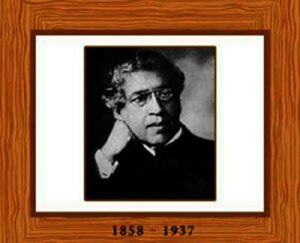
Sir JC Bose University — First Government Varsity Named After a Great Scientist
It is well known that Sir JC Bose, the inventor of the Crescograph, which demonstrated that plants are living organisms, made Giridih his field of work. It is believed that he invented the Crescograph during his stay in Giridih. There was a strong demand for a major institution in his name, and the Jharkhand Cabinet as well as the Governor approved the creation of the university. The Giridih administration has also identified land for the university, which will cater to students from Giridih and Koderma districts.
Currently, Giridih falls under Vinoba Bhave University, Hazaribagh, and faces several difficulties. For example, Giridih College suffers from a shortage of faculty, a problem that might be alleviated once JC Bose University starts functioning, the activist noted.
Medical and Engineering Colleges — A Much-Needed Initiative
In terms of technical higher education, Jharkhand has long lacked both medical and engineering colleges. The upcoming colleges will benefit local students as well as students from across the state. Land for both the medical and engineering colleges has also been identified.
“A university in the name of Sir JC Bose and a medical college are among my dream projects. I have worked hard throughout my tenure. Despite disruptions caused by the BJP, I have remained focused on our projects,” JMM MLA Sudivya Sonu told eNewsroom.
Sonu also said, “I aim to lay the foundation stones for all these projects—the university, medical college and engineering college—by August 15, in the presence of Chief Minister Hemant Soren.”
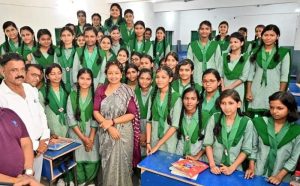
Giridih — Only Assembly Segment with Three CM Schools of Excellence
Not only has the current MLA helped secure major educational institutions for Giridih, but Sonu has also leveraged his connections to secure a significant share of state-level educational schemes for the constituency. All schools in Giridih now have libraries and solar lights.
“A drastic change has occurred since 2019, especially in education. You might not believe it, but there is now a waiting list for admission to CM Schools of Excellence. This is an extraordinary situation for a government school anywhere in India,” Prabhakar added.
Every CM School of Excellence follows the CBSE curriculum and is equipped with smart classrooms. Modern science laboratories and English-language laboratories have also been established in these schools.
“I have been studying at Sir JC Bose Girls High School, now a CM School of Excellence, since April this year. In the last three months, my studies have become easier, and I can understand every lesson well thanks to the smart board. The teachers are also good,” Shifa, a Class IX student, told eNewsroom.
Shifa, who previously studied at an English-medium school but could not continue because of COVID-19, is now happy with her education at the School of Excellence. She added, “Not only do I study in a better school now, but I also believe that after passing secondary school, I can continue my education in my hometown, as it is going to have a medical college and a university.”
“From nursery to Class Ten, I studied in an English-medium school. Before joining the CM School of Excellence, I had many questions in my mind: How would it be? I had heard that there was no such infrastructure and that government schools did not have good teachers. But after attending the school for one month, my perception changed,” Kumari Amisha, another student of Sir JC Bose CM School of Excellence, told eNewsroom.
The Class XI science student had secured 92.02% in her secondary school examination in 2024. Amisha, who spoke in English, wants to become a civil servant.
“The best thing I found in the CM School is the Language Lab. It is excellent and will improve our language skills,” she said. However, she quickly added, “There should be more books in the library, which have not been provided yet.”

