



Ranchi: “Rupaya Nahi, Ration Chahiye… DBT Hatao, Ration Bachao (We do not want money but ration.. Remove DBT, save ration),” was the collective chant of women carrying placards, including the likes of Rashmi Tirkey, Neelu Tigga, and Hindiya Oraon. These women marched from Nagri block’s Kathal More to the residence of Jharkhand’s Chief Minister Raghubar Das, on Monday afternoon, to mark their protest against DBT.
The full form of DBT is, Direct Benefit Transfer.
The march included men and women residents of Nagri, the area where DBT has been introduced as pilot project. Representatives of five political parties of Jharkhand and at least ten civil society organizations assembled together to protest against it. However, the protestors were stopped much ahead of the CM’s residence, following which they diverted the protest procession to the residence of Draupadi Murmu, the Governor of Jharkhand.
As per DBT, the food subsidy is credited to beneficiary’s bank account, so that they can use the money to buy rice at the ration shop at a rate of Rs 32 per kilogram. Earlier, they were able to buy rice from the same shop at a subsidized rate of Re 1 per kg. DBT was launched in October 2017 at Nagri.
But, thereafter, the residents of Nagri have had to face a lot of difficulties in getting the ration, for now they have to first collect the money from the bank or Pragya Kendra and then queue at the ration shops to collect the food grain. Even in normal condition they have to spend at least 12 hours and in some cases, 15 hours to get ration. But several villagers have to face bigger problems like not getting money credited into their accounts. They were also not entertained by bank officials as amount remained very small.
A survey conducted by Ration Bachao Manch has also narrated the same by documenting several villager’s plight in their study.
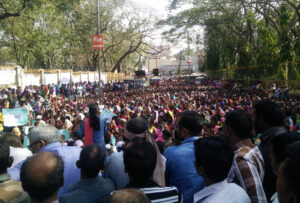
On these issues, in last four months, the residents of Nagri have demonstrated many a time at both the block and district headquarters, but the protests have gone unheard.
In Monday’s march, Prem Prakash Shahdeo, Congress leader said, “DBT system forces people to make repeated trips to the bank, often foregoing their wages or spending on transport.”
While Nand Kishore Mehta of Jharkhand Mukti Morcha said, “If the Jharkhand government does not withdraw the DBT system, Ration Bachao Manch will intensify its agitation.”
Afzal Anil of United Mili Forum mentioned that in the past six months, at least seven persons in Jharkhand had died due to starvation.
Nadeem Khan of All India People’s Forum Jharkhand condemned the Food Minister’s allegation that the rally organisers were playing politics. He said, “If defending people’s rights is politics then we stand for such politics.”
However amid all these, Raghubar Das government has claimed – against all evidence – that the pilot project at Nagri has been a success and should be implemented across the state. The civil right activists fear that this could exacerbate the number of deaths due to hunger and malnutrition in Jharkhand.

