



Kolkata: People forwarding, sharing and abusing each other for two posts shared by alleged Pakistani nationals – MD Irshad and Rajiya Bano endorsing the brutal rape of a seven-year-old child in Mandsaur, Madhya Pradesh. Both Rajiya and MD Irshad, claim to be Pakistani nationals, who are residents of port city Karachi. And they both were seen making obnoxious posts on various social media platform. They maliciously wrote – “Hindustan ka sher jisne A**** ka badla liya” along with sharing the picture of the rapist of the girl-child.
Alerted by the kind of reaction that it was evoking, eNewsroom, began searching about MD Irshad. A customary glance through his Facebook profile, confirmed that the account is a fake one, created with the intention of spewing hatred on social media. The account just lists his name as MD Irshad, alias Hyder Ali, a resident of Karachi Pakistan. But strangely enough all the pages that he likes are of India, all his friends are Indians and predictably he posts about Indian issues, in perfect Devnagri script and not Urdu.
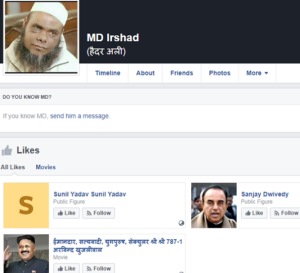
A Google reverse image search of Irshad’s profile picture took us to a 2016 news report of Independent, which identified the person a Mujibur Rahman, a 43-year-old, a New York man of Bangladeshi origin, had been beaten to a pulp by an American teenager, after yelling ISIS. It was during this investigation that eNewsroom stumbled upon, a similar profile by another name, Rajiya Bano, about which Alt News has also carried an expose.
“The most interesting part is that most people don’t even use their common sense, like how can Urdu-speaking Pakistanis post in Hindi. How come, Rajiya a faculty with Our Lady of Fatima University (OLFU), specialize in Fashion? OLFU is a Phillipines University, which offers courses in Medicine and Nursing,” points out Samirul Islam, social activist and founder of Bangla Sanskriti Manch.
Most activists have raised concern about the ease with which a fake FB identity can be created. “I have worked as an undercover agent for the BJP IT Cells and am well aware of the loopholes that exist in Facebook, which are used to create fake ids to spread communal hatred. It’s a child play. You see the internet is an open source for so many pictures and documents, that one can easily use them to even verify the accounts,” says Soibal Dasguta, an upcoming author, who is penning down a memoir about his days spent in the RSS camp.
He maintains that even documents like pan card, Aadhaar and passport can be easily accessed and used to create accounts. He says, “Using legal documents of the dead is the easiest way out or of people hailing from other nations is the easiest way out, as it cuts down on the chances of any one contesting the authenticity of these verified fake accounts.”
Interestingly, Rajiya’s account and all posts with “Hindustan ka sher jisne A**** ka badla liya” on Mandsaur rape incident have been deactivated, after several alert citizens began ringing the alarm bell. But, that doesn’t mean that people with malicious intentions have stopped working. “Always cross check facts and authenticity of the source before hitting the share button,” warns Samirul.

